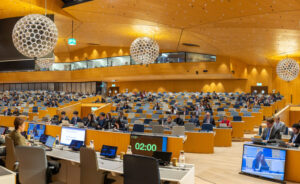

At the 47th session of WIPO’s Standing Committee on Copyright and Related Rights (SCCR), the African Group tabled a proposal for an instrument on limitations and exceptions aimed at supporting education, research, cultural heritage, and access for persons with disabilities.
For years, discussions at SCCR on limitations and exceptions have been marked by resistance from developed countries to advancing text-based work. This position has started to shift in recent SCCR sessions, with the EU signaling a willingness to engage in discussions on non-binding instruments. However, it remains unclear whether this shift implies a willingness to engage with the African Group proposal.
Against this background, we have taken a closer look at how the African Group proposal compares with EU copyright law. Looking at the two frameworks side by side, the gap between them appears smaller than it is often presented. Shifting the focus to the common ground could therefore help make the ongoing discussions at SCCR more constructive.
Below is a table with a presentation of the African Group Proposal side-by-side with EU law, organised by topic. A third column summarises the similarities and differences. Expand a topic to see the detailed text. Below the table is further analysis of the areas of convergence and divergence, and a PDF version to download and print.
| Expand a section below to compare: | |||
|---|---|---|---|
| African Group Proposal | EU Copyright Law | Commentary | |
| Article 4 1. It shall be permissible to use a work or other subject matter for educational or research purposes to the extent justified by the purpose and provided such utilization is compatible with fair practice. | Article 5, InfoSoc Directive 3. Member States may provide for exceptions or limitations to the rights provided for in Articles 2 and 3 in the following cases: (a) use for the sole purpose of illustration for teaching or scientific research, as long as the source, including the author’s name, is indicated, unless this turns out to be impossible and to the extent justified by the non-commercial purpose to be achieved, without prejudice to the exceptions and limitations provided for in Directive (EU) 2019/790; 4. Where the Member States may provide for an exception or limitation to the right of reproduction pursuant to paragraphs 2 and 3, they may provide similarly for an exception or limitation to the right of distribution as referred to in Article 4 to the extent justified by the purpose of the authorised act of reproduction. 5. The exceptions and limitations provided for in paragraphs 1, 2, 3 and 4 shall only be applied in certain special cases which do not conflict with a normal exploitation of the work or other subject-matter and do not unreasonably prejudice the legitimate interests of the rightholder. | Users: AG & EU: open-ended Purposes: AG: “research” EU: “scientific research” Usage: AG: open-ended EU: open-ended Subject matter: AG: “work or other subject matter” EU: work, performance, phonogram, film fixation, broadcast, press publications Other conditions: AG: “compatible with fair practice” EU: attribution; “non-commercial purpose”; three-step test | RESEARCH | Open-ended research uses |
| Article 6, Database Directive 2. Member States shall have the option of providing for limitations on the rights set out in Article 5 in the following cases: (b) where there is use for the sole purpose of illustration for teaching or scientific research, as long as the source is indicated and to the extent justified by the non-commercial purpose to be achieved; 3. In accordance with the Berne Convention for the protection of Literary and Artistic Works, this Article may not be interpreted in such a way as to allow its application to be used in a manner which unreasonably prejudices the rightholder’s legitimate interests or conflicts with normal exploitation of the database. | Users: AG & EU: open-ended Purposes: AG: “research” EU: “scientific research” Usage: AG: open-ended EU: open-ended Subject matter: AG: “work or other subject matter” EU: copyright-protected databases Other conditions: AG: “compatible with fair practice” EU: attribution; “non-commercial purpose”; three-step test | RESEARCH | Open-ended research uses | |
| Article 9, Database Directive Member States may stipulate that lawful users of a database which is made available to the public in whatever manner may, without the authorization of its maker, extract or re-utilize a substantial part of its contents: (b) in the case of extraction for the purposes of illustration for teaching or scientific research, as long as the source is indicated and to the extent justified by the non-commercial purpose to be achieved; | Users AG: open-ended EU: “lawful users of a database” Purposes: AG: “research” EU: “scientific research” Usage: AG: open-ended EU: “extraction” Subject matter: AG: “work or other subject matter” EU: databases protected by sui generis right, made available to the public Other conditions: AG: “compatible with fair practice” EU: attribution; “non-commercial purpose” | RESEARCH | Open-ended research uses | |
| Article 4 2. Uses within the scope of paragraph 1 shall include, but need not be limited to: d) Uses in the course of scientific research activities, such as: i. making, modifying and translating private copies for research purposes; | Article 5, InfoSoc Directive 2. Member States may provide for exceptions or limitations to the reproduction right provided for in Article 2 in the following cases: (b) in respect of reproductions on any medium made by a natural person for private use and for ends that are neither directly nor indirectly commercial, on condition that the rightholders receive fair compensation which takes account of the application or non-application of technological measures referred to in Article 6 to the work or subject-matter concerned; 4. (see above) 5. (see above) | Users AG: open-ended EU: “a natural person” Purposes: AG: “research purposes” EU: “private use” Usage: AG: “making, modifying and translating private copies” EU: reproduction, distribution Subject matter: AG: “work or other subject matter” EU: work, performance, phonogram, film fixation, broadcast, press publications Other conditions: AG: “compatible with fair practice”; “in the course of scientific research” EU: “neither directly nor indirectly commercial”; “fair compensation”; three-step test | RESEARCH | Private copies |
| Article 6, Database Directive 2. Member States shall have the option of providing for limitations on the rights set out in Article 5 in the following cases: (a) in the case of reproduction for private purposes of a non-electronic database; 3. (see above) | Users AG & EU: open-ended Purposes: AG: “research purposes” EU: “private purposes” Usage: AG: “making, modifying and translating private copies” EU: “reproduction” Subject matter: AG: “work or other subject matter” EU: non-electronic copyright-protected databases Other conditions: AG: “compatible with fair practice”; “in the course of scientific research” EU: three-step test | RESEARCH | Private copies | |
| Article 9, Database Directive Member States may stipulate that lawful users of a database which is made available to the public in whatever manner may, without the authorization of its maker, extract or re-utilize a substantial part of its contents: (a) in the case of extraction for private purposes of the contents of a non-electronic database; | Users AG: open-ended EU: “lawful users of a database” Purposes: AG: “research purposes” EU: “private purposes” Usage: AG: “making, modifying and translating private copies” EU: “extraction” Subject matter: AG: “work or other subject matter” EU: non-electronic databases protected by sui-generis right, made available to the public Other conditions: AG: “compatible with fair practice”; “in the course of scientific research” EU: N/A | RESEARCH | Private copies | |
| Article 4 2. Uses within the scope of paragraph 1 shall include, but need not be limited to: d) Uses in the course of scientific research activities, such as: ii. making quotations or translating excerpts for the purpose of illustration or for comment, criticism or review; | Article 5, InfoSoc Directive 3. Member States may provide for exceptions or limitations to the rights provided for in Articles 2 and 3 in the following cases: (d) quotations for purposes such as criticism or review, provided that they relate to a work or other subject-matter which has already been lawfully made available to the public, that, unless this turns out to be impossible, the source, including the author’s name, is indicated, and that their use is in accordance with fair practice, and to the extent required by the specific purpose; | Users: AG & EU: open-ended Purposes: AG: “purposes of illustration or for comment, criticism or review” EU: “purposes such as criticism or review” Usage: AG: “making quotations or translating excerpts” EU: “quotations” (Note: the adaptation right is not harmonised at EU level except for software and copyrighted databases) Subject matter: AG: “work or other subject matter” EU: “work or other subject matter lawfully made available to the public” Other conditions: AG: “compatible with fair practice”; “in the course of scientific research” EU: attribution; “in accordance with fair practice”; three-step test (see Article 5(5) InfoSoc Directive) | RESEARCH | Quotations and adaptations |
| Article 4 2. Uses within the scope of paragraph 1 shall include, but need not be limited to: d) Uses in the course of scientific research activities, such as: iii. for scientific study and analysis, including search, organization and analysis of data, and computational research; | Article 3, DSM Directive 1. Member States shall provide for an exception to the rights provided for in Article 5(a) and Article 7(1) of Directive 96/9/EC, Article 2 of Directive 2001/29/EC, and Article 15(1) of this Directive for reproductions and extractions made by research organisations and cultural heritage institutions in order to carry out, for the purposes of scientific research, text and data mining of works or other subject matter to which they have lawful access. 2. Copies of works or other subject matter made in compliance with paragraph 1 shall be stored with an appropriate level of security and may be retained for the purposes of scientific research, including for the verification of research results. 3. Rightholders shall be allowed to apply measures to ensure the security and integrity of the networks and databases where the works or other subject matter are hosted. Such measures shall not go beyond what is necessary to achieve that objective. 4. Member States shall encourage rightholders, research organisations and cultural heritage institutions to define commonly agreed best practices concerning the application of the obligation and of the measures referred to in paragraphs 2 and 3 respectively. Article 7, CDSM Directive 2. Article 5(5) of Directive 2001/29/EC shall apply to the exceptions and limitations provided for under this Title. | Users: AG: open-ended EU: “research organisations and cultural heritage institutions” Purposes: AG: “for scientific study and analysis, including search, organization and analysis of data, and computational analysis” EU: “in order to carry out, for the purposes of scientific research, text and data mining” Usage: AG: open-ended EU: “reproductions and extractions” Subject matter: AG: “work or other subject matter” EU: “works or other subject matter to which they have lawful access” Other conditions: AG: “compatible with fair practice”; “in the course of scientific research” EU: “copies (…) shall be stored with an appropriate level of security”; “rightholders shall be allowed to apply measures to ensure the security and integrity of the networks and databases”; three-step test (Art. 5(5) InfoSoc) | RESEARCH | Computational research and data analysis |
| Article 4, DSM Directive 1. Member States shall provide for an exception or limitation to the rights provided for in Article 5(a) and Article 7(1) of Directive 96/9/EC, Article 2 of Directive 2001/29/EC, Article 4(1)(a) and (b) of Directive 2009/24/EC and Article 15(1) of this Directive for reproductions and extractions of lawfully accessible works and other subject matter for the purposes of text and data mining. 2. Reproductions and extractions made pursuant to paragraph 1 may be retained for as long as is necessary for the purposes of text and data mining. 3. The exception or limitation provided for in paragraph 1 shall apply on condition that the use of works and other subject matter referred to in that paragraph has not been expressly reserved by their rightholders in an appropriate manner, such as machine-readable means in the case of content made publicly available online. 4. This Article shall not affect the application of Article 3 of this Directive. Article 7, CDSM Directive 2. (See above) | Users: AG & EU: open-ended Purposes: AG: “for scientific study and analysis, including search, organization and analysis of data, and computational analysis”; EU: “for the purposes of text and data mining” Usage: AG: open-ended EU: “reproductions and extractions” Subject matter: AG: “work or other subject matter” EU: “lawfully accessible works or other subject matter” Other conditions: AG: “compatible with fair practice”; “in the course of scientific research” EU: “reproductions and extractions (…) may be retained for as long as is necessary”; “on condition that the use (…) has not been expressly reserved by their rightholders”; three-step test (Art. 5(5) InfoSoc) | RESEARCH | Computational research and data analysis | |
| Article 4 2. Uses within the scope of paragraph 1 shall include, but need not be limited to: d) Uses in the course of scientific research activities, such as: iv. for testing, reverse engineering, and enabling interconnection and interoperability of products lawfully possessed by the user. | Article 5, Software Directive 3. The person having a right to use a copy of a computer program shall be entitled, without the authorisation of the rightholder, to observe, study or test the functioning of the program in order to determine the ideas and principles which underlie any element of the program if he does so while performing any of the acts of loading, displaying, running, transmitting or storing the program which he is entitled to do. | Users: AG: open-ended EU: “the person having a right to use a copy of a computer program” Purposes: AG: “for testing, reverse engineering, and enabling interconnection and interoperability of products” EU: “to observe, study or test the functioning of the program in order to determine the ideas and principles which underlie any element of the program” Usage: AG: open-ended EU: open-ended Subject matter: AG: “products lawfully possessed by the user” EU: “computer program” Other conditions: AG: “compatible with fair practice”; “in the course of scientific research” EU: “while performing any of the acts of loading, displaying, running, transmitting or storing the program which he is entitled to do” | RESEARCH | Testing and interoperability |
| Article 6, Software Directive 1. The authorisation of the rightholder shall not be required where reproduction of the code and translation of its form within the meaning of points (a) and (b) of Article 4(1) are indispensable to obtain the information necessary to achieve the interoperability of an independently created computer program with other programs, provided that the following conditions are met: (a) those acts are performed by the licensee or by another person having a right to use a copy of a program, or on their behalf by a person authorised to do so; (b) the information necessary to achieve interoperability has not previously been readily available to the persons referred to in point (a); and (c) those acts are confined to the parts of the original program which are necessary in order to achieve interoperability. 2. The provisions of paragraph 1 shall not permit the information obtained through its application: (a) to be used for goals other than to achieve the interoperability of the independently created computer program; (b) to be given to others, except when necessary for the interoperability of the independently created computer program; or (c) to be used for the development, production or marketing of a computer program substantially similar in its expression, or for any other act which infringes copyright. 3. In accordance with the provisions of the Berne Convention for the protection of Literary and Artistic Works, the provisions of this Article may not be interpreted in such a way as to allow its application to be used in a manner which unreasonably prejudices the rightholder’s legitimate interests or conflicts with a normal exploitation of the computer program. | Users: AG: open-ended EU: “by the licensee or by another person having a right to use a copy of a program, or on their behalf by a person authorised to do so” Purposes: AG: “for testing, reverse engineering, and enabling interconnection and interoperability of products” EU: “to obtain the information necessary to achieve the interoperability of an independently created computer program with other programs” Usage: AG: open-ended EU: “reproduction of the code and translation” Subject matter: AG: “products lawfully possessed by the user” EU: “computer program” Other conditions: AG: “compatible with fair practice”; “in the course of scientific research” EU: “the information (…) has not previously been readily available”; “confined to the parts of the original program which are necessary”; restrictions on the use of the information obtained through its application; three-step test | RESEARCH | Testing and interoperability | |
| Article 4 3. For the purposes of this Instrument, the term ‘scientific research’ should be understood to cover both the natural sciences and the human sciences, including research performed by public or non-profit research organizations. | Recital 12, DSM Directive The term ‘scientific research’ within the meaning of this Directive should be understood to cover both the natural sciences and the human sciences. Due to the diversity of such entities, it is important to have a common understanding of research organisations. They should for example cover, in addition to universities or other higher education institutions and their libraries, also entities such as research institutes and hospitals that carry out research. Despite different legal forms and structures, research organisations in the Member States generally have in common that they act either on a not-for-profit basis or in the context of a public-interest mission recognised by the State. Such a public-interest mission could, for example, be reflected through public funding or through provisions in national laws or public contracts. Conversely, organisations upon which commercial undertakings have a decisive influence allowing such undertakings to exercise control because of structural situations, such as through their quality of shareholder or member, which could result in preferential access to the results of the research, should not be considered research organisations for the purposes of this Directive. | RESEARCH | Definition of “scientific research” | |
| Article 4 1. It shall be permissible to use a work or other subject matter for educational or research purposes to the extent justified by the purpose and provided such utilization is compatible with fair practice. | Article 5, InfoSoc Directive 3. Member States may provide for exceptions or limitations to the rights provided for in Articles 2 and 3 in the following cases: (a) use for the sole purpose of illustration for teaching or scientific research, as long as the source, including the author’s name, is indicated, unless this turns out to be impossible and to the extent justified by the non-commercial purpose to be achieved, without prejudice to the exceptions and limitations provided for in Directive (EU) 2019/790; 4. Where the Member States may provide for an exception or limitation to the right of reproduction pursuant to paragraphs 2 and 3, they may provide similarly for an exception or limitation to the right of distribution as referred to in Article 4 to the extent justified by the purpose of the authorised act of reproduction. 5. The exceptions and limitations provided for in paragraphs 1, 2, 3 and 4 shall only be applied in certain special cases which do not conflict with a normal exploitation of the work or other subject-matter and do not unreasonably prejudice the legitimate interests of the rightholder. | Users: AG & EU: open-ended Purposes: AG: “educational” EU: “illustration for teaching” Usage: AG: open-ended EU: open-ended Subject matter: AG: “work or other subject matter” EU: work, performance, phonogram, film fixation, broadcast, press publications Other conditions: AG: “compatible with fair practice” EU: attribution; “non-commercial purpose”; three-step test | EDUCATION | Open-ended educational uses |
| Article 6, Database Directive 2. Member States shall have the option of providing for limitations on the rights set out in Article 5 in the following cases: (b) where there is use for the sole purpose of illustration for teaching or scientific research, as long as the source is indicated and to the extent justified by the non-commercial purpose to be achieved; 3. In accordance with the Berne Convention for the protection of Literary and Artistic Works, this Article may not be interpreted in such a way as to allow its application to be used in a manner which unreasonably prejudices the rightholder’s legitimate interests or conflicts with normal exploitation of the database. | Users: AG & EU: open-ended Purposes: AG: “educational” EU: “illustration for teaching” Usage: AG: open-ended EU: open-ended Subject matter: AG: “work or other subject matter” EU: copyright-protected databases Other conditions: AG: “compatible with fair practice” EU: attribution; “non-commercial purpose”; three-step test | EDUCATION | Open-ended educational uses | |
| Article 9, Database Directive Member States may stipulate that lawful users of a database which is made available to the public in whatever manner may, without the authorization of its maker, extract or re-utilize a substantial part of its contents: (b) in the case of extraction for the purposes of illustration for teaching or scientific research, as long as the source is indicated and to the extent justified by the non-commercial purpose to be achieved; | Users AG: open-ended EU: “lawful users of a database” Purposes: AG: “educational” EU: “illustration for teaching” Usage: AG: open-ended EU: “extraction” Subject matter: AG: “work or other subject matter” EU: databases protected by sui generis right, made available to the public Other conditions: AG: “compatible with fair practice” EU: attribution; “non-commercial purpose” | EDUCATION | Open-ended educational uses | |
| Article 4 2. Uses within the scope of paragraph 1 shall include, but need not be limited to: a) Uses in the course of teaching activities, such as: i. making private copies, including in preparation of a course of instruction; b) Uses in the course of learning activities, such as: i. making private copies for purposes of study; | Article 5, InfoSoc Directive 2. Member States may provide for exceptions or limitations to the reproduction right provided for in Article 2 in the following cases: (b) in respect of reproductions on any medium made by a natural person for private use and for ends that are neither directly nor indirectly commercial, on condition that the rightholders receive fair compensation which takes account of the application or non-application of technological measures referred to in Article 6 to the work or subject-matter concerned; 4. (see above) 5. (see above) | Users AG: open-ended EU: “a natural person” Purposes: AG: “including in preparation of a course of instruction” or “for purposes of study” EU: “private use” Usage: AG: “making private copies” EU: reproduction, distribution Subject matter: AG: “work or other subject matter” EU: work, performance, phonogram, film fixation, broadcast, press publications Other conditions: AG: “compatible with fair practice”; “in the course of teaching activities” or “in the course of learning activities” EU: “neither directly nor indirectly commercial”; “fair compensation”; three-step test | EDUCATION | Private copies |
| Article 6, Database Directive 2. Member States shall have the option of providing for limitations on the rights set out in Article 5 in the following cases: (a) in the case of reproduction for private purposes of a non-electronic database; 3. (see above) | Users AG & EU: open-ended Purposes: AG: “including in preparation of a course of instruction” or “for purposes of study” EU: “private purposes” Usage: AG: “making private copies” EU: “reproduction” Subject matter: AG: “work or other subject matter” EU: non-electronic copyright-protected databases Other conditions: AG: “compatible with fair practice”; “in the course of teaching activities” or “in the course of learning activities” EU: three-step test | EDUCATION | Private copies | |
| Article 9, Database Directive Member States may stipulate that lawful users of a database which is made available to the public in whatever manner may, without the authorization of its maker, extract or re-utilize a substantial part of its contents: (a) in the case of extraction for private purposes of the contents of a non-electronic database; | Users AG: open-ended EU: “lawful users of a database” Purposes: AG: “including in preparation of a course of instruction” or “for purposes of study” EU: “private purposes” Usage: AG: “making private copies” EU: “extraction” Subject matter: AG: “work or other subject matter” EU: non-electronic databases protected by sui-generis right, made available to the public Other conditions: AG: “compatible with fair practice”; “in the course of teaching activities” or “in the course of learning activities” EU: N/A | EDUCATION | Private copies | |
| Article 4 2. Uses within the scope of paragraph 1 shall include, but need not be limited to: a) Uses in the course of teaching activities, such as: ii. performing or communicating by way of illustration, or for comment, criticism, or review, in the course of instruction, including in online education; b) Uses in the course of learning activities, such as: iv. performing or otherwise communicating in an educational context, including by wire or wireless means; | Article 5, CDSM Directive 1. Member States shall provide for an exception or limitation to the rights provided for in Article 5(a), (b), (d) and (e) and Article 7(1) of Directive 96/9/EC, Articles 2 and 3 of Directive 2001/29/EC, Article 4(1) of Directive 2009/24/EC and Article 15(1) of this Directive in order to allow the digital use of works and other subject matter for the sole purpose of illustration for teaching, to the extent justified by the non-commercial purpose to be achieved, on condition that such use: (a) takes place under the responsibility of an educational establishment, on its premises or at other venues, or through a secure electronic environment accessible only by the educational establishment’s pupils or students and teaching staff; and (b) is accompanied by the indication of the source, including the author’s name, unless this turns out to be impossible. 2. Notwithstanding Article 7(1), Member States may provide that the exception or limitation adopted pursuant to paragraph 1 does not apply or does not apply as regards specific uses or types of works or other subject matter, such as material that is primarily intended for the educational market or sheet music, to the extent that suitable licences authorising the acts referred to in paragraph 1 of this Article and covering the needs and specificities of educational establishments are easily available on the market. Member States that decide to avail of the first subparagraph of this paragraph shall take the necessary measures to ensure that the licences authorising the acts referred to in paragraph 1 of this Article are available and visible in an appropriate manner for educational establishments. 4. Member States may provide for fair compensation for rightholders for the use of their works or other subject matter pursuant to paragraph 1. Article 7, CDSM Directive 2. Article 5(5) of Directive 2001/29/EC shall apply to the exceptions and limitations provided for under this Title. Recital 21, CDSM Directive The exception or limitation provided for in this Directive for the sole purpose of illustration for teaching should be understood as covering digital uses of works or other subject matter to support, enrich or complement the teaching, including learning activities. | Users: AG: open-ended EU: “takes place under the responsibility of an educational establishment, on its premises or at other venues, or through a secure electronic environment accessible only by the educational establishment’s pupils or students and teaching staff” Purposes: AG: “by way of illustration, or for comment, criticism, or review, in the course of instruction, including in online education” or “in an educational context, including by wire or wireless means” EU: “to allow the digital use (…) for the sole purpose of illustration for teaching” Usage: AG: performance, communication EU: performance (copyrighted databases), communication to the public (including make available to the public) (Note: the performance right is not harmonised at EU level except for copyrighted databases) Subject matter: AG: “work or other subject matter” EU: “works or other subject matter” Other conditions: AG: “compatible with fair practice”; “in the course of teaching activities” or “in the course of learning activities” EU: “non-commercial purpose”; attribution; subject to license availability (optional); “fair compensation” (optional); three-step test (Art. 5(5) Infosoc) | EDUCATION | Performance and Communication |
| Article 4 2. Uses within the scope of paragraph 1 shall include, but need not be limited to: a) Uses in the course of teaching activities, such as: iii. making and distributing copies or excerpts for use in a course of instruction; c) Uses in the course of creating educational materials, such as: vi. making and providing accessible format copies of works to teachers, students, or researchers with disabilities, including by import and export; vii. importing lawfully made copies; viii. archiving course materials for subsequent teacher or learner uses. | Article 5, CDSM Directive (See above) Article 7, CDSM Directive 2. (See above) Recital 21, CDSM Directive The exception or limitation provided for in this Directive for the sole purpose of illustration for teaching should be understood as covering digital uses of works or other subject matter to support, enrich or complement the teaching, including learning activities. (…) Uses allowed under the exception or limitation should be understood to cover the specific accessibility needs of persons with a disability in the context of illustration for teaching. | Users: AG: open-ended EU: “takes place under the responsibility of an educational establishment, on its premises or at other venues, or through a secure electronic environment accessible only by the educational establishment’s pupils or students and teaching staff” Purposes: AG: “in a course of instruction” or “providing accessible format copies of works to teachers, students, or researchers with disabilities” or “for subsequent teacher or learner use” EU: “to allow the digital use (…) for the sole purpose of illustration for teaching” Usage: AG: reproduction, distribution EU: reproduction, communication to the public (including make available to the public), distribution (software), adaptation (software and copyrighted databases), extraction and/or re-utilization (databases protected by sui generis right) (Note: the adaptation right is not harmonised at EU level except for software and copyrighted databases) Subject matter: AG: “copies or excerpts” or “lawfully made copies” or “course materials” EU: “works or other subject matter” Other conditions: AG: “compatible with fair practice”; “in the course of teaching activities” or “in the course of creating educational materials” EU: “non-commercial purpose”; attribution; subject to license availability (optional); “fair compensation” (optional); three-step test (Art. 5(5) Infosoc) | EDUCATION | Reproduction and Distribution |
| Article 4 2. Uses within the scope of paragraph 1 shall include, but need not be limited to: a) Uses in the course of teaching activities, such as: iv. making and administering examinations, including the drafting of questions and communicating the questions to students. b) Uses in the course of learning activities, such as: ii. including works of visual arts, short works and other subject matter, and excerpts of longer works or other subject matter in assignments and in responses to examinations; iii. translating or otherwise adapting for use in assignments and examinations; | Article 5, CDSM Directive (See above) Article 7, CDSM Directive 2. (See above) Recital 22, CDSM Directive The use of works or other subject matter under the exception or limitation for the sole purpose of illustration for teaching provided for in this Directive should only take place in the context of teaching and learning activities carried out under the responsibility of educational establishments, including during examinations or teaching activities that take place outside the premises of educational establishments, for example in a museum, library or another cultural heritage institution, and should be limited to what is necessary for the purpose of such activities. | Users: AG: open-ended EU: “takes place under the responsibility of an educational establishment, on its premises or at other venues, or through a secure electronic environment accessible only by the educational establishment’s pupils or students and teaching staff” Purposes: AG: “making and administering examinations” or “in assignments and in responses to examinations” EU: “to allow the digital use (…) for the sole purpose of illustration for teaching” Usage: AG: reproduction, communication, adaptation EU: reproduction, communication to the public (including make available to the public), distribution (software), performance (copyrighted databases), adaptation (software and copyrighted databases), extraction and/or re-utilization (databases protected by sui generis right) (Note: the adaptation right is not harmonised at EU level except for software and copyrighted databases) Subject matter: AG: “work or other subject matter” EU: “works or other subject matter” Other conditions: AG: “compatible with fair practice”; “in the course of teaching activities” or “in the course of learning activities” EU: “non-commercial purpose”; attribution; subject to license availability (optional); “fair compensation” (optional); three-step test (Art. 5(5) Infosoc) | EDUCATION | Examinations |
| Article 4 2. Uses within the scope of paragraph 1 shall include, but need not be limited to: c) Uses in the course of creating educational materials, such as: i. using by way of illustration or for comment, criticism, or review in publications, broadcasts, audiovisual works, or sound recordings; ii. including works of visual arts, short works and other subject matter, and excerpts of longer works or other subject matter, in anthologies and other compilations; iii. translating works when they are not available in languages required by users; iv. adapting, altering or arranging for use in a course of instruction; | Article 5, InfoSoc Directive 3. Member States may provide for exceptions or limitations to the rights provided for in Articles 2 and 3 in the following cases: (d) quotations for purposes such as criticism or review, provided that they relate to a work or other subject-matter which has already been lawfully made available to the public, that, unless this turns out to be impossible, the source, including the author’s name, is indicated, and that their use is in accordance with fair practice, and to the extent required by the specific purpose; | Users: AG & EU: open-ended Purposes: AG: “by way of illustration or for comment, criticism or review” or “in a course of instruction” EU: “purposes such as criticism or review” Usage: AG: quotations and adaptations EU: “quotations” (Note: the adaptation right is not harmonised at EU level except for software and copyrighted databases) Subject matter: AG: “work or other subject matter” EU: “work or other subject matter lawfully made available to the public” Other conditions: AG: “compatible with fair practice”; “in the course of learning activities” or “in the course of creating educational materials” EU: attribution; “in accordance with fair practice”; three-step test (see Article 5(5) InfoSoc Directive) | EDUCATION | Quotations and adaptations |
| Article 4 2. Uses within the scope of paragraph 1 shall include, but need not be limited to: c) Uses in the course of creating educational materials, such as: v. reproducing and making available works or other subject matter for which the author or other right holder cannot be identified or located after reasonable inquiry; | Orphan Works Directive (text available in this link https://eur-lex.europa.eu/eli/dir/2012/28/oj/eng ) | Users: AG: open-ended EU: publicly accessible libraries, educational establishments and museums, as well as by archives, film or audio heritage institutions and public-service broadcasting organisations Purposes: AG: “educational” EU: Usage: AG: reproduction, make available EU: reproduction, make available to the public Subject matter: AG: “works of other subject matter” EU: works published in the form of books, journals, newspapers, magazines or other writings or phonogram, cinematographic or audiovisual works and phonograms contained in the collections of certain institutions Other conditions: AG: provided that “the author or other right holder cannot be identified or located after reasonable inquiry” is required; “compatible with fair practice”; “in the course of creating educational materials” EU: “if none of the rightholders in that work or phonogram is identified or, even if one or more of them is identified, none is located despite a diligent search for the rightholders having been carried out and recorded” | EDUCATION | Orphan works |
| Article 5 1. Contracting Parties shall provide for a limitation or exception to the right of reproduction in order to allow cultural heritage institutions to make copies of any works or other subject matter that are permanently in their collections, in any format or medium, for the purposes of preservation of such works or other subject matter and to the extent necessary for such preservation. | Article 6, CDSM Directive Member States shall provide for an exception to the rights provided for in Article 5(a) and Article 7(1) of Directive 96/9/EC, Article 2 of Directive 2001/29/EC, Article 4(1)(a) of Directive 2009/24/EC and Article 15(1) of this Directive, in order to allow cultural heritage institutions to make copies of any works or other subject matter that are permanently in their collections, in any format or medium, for purposes of preservation of such works or other subject matter and to the extent necessary for such preservation. | Users: AG: “cultural heritage institutions” EU: “cultural heritage institutions” Purposes: AG: “preservation” EU: “preservation” Usage: AG: reproduction EU: reproduction, extraction and/or re-utilization (databases protected by sui generis right) Subject Matter: AG: “works or other subject matter that are permanently in their collections, in any format or medium” EU: “works or other subject matter that are permanently in their collections, in any format or medium” Other conditions: AG: “to the extent necessary for such preservation” EU: “to the extent necessary for such preservation” | CULTURAL HERITAGE | Preservation |
| Article 5 2. Contracting Parties shall provide for a limitation or exception to the right of reproduction, the right of distribution, and the right of making available in order to allow cultural heritage institutions to provide access to preserved works and other subject matter in their collections as follows: a. Cultural heritage institutions shall be permitted to provide on the premises access to copies in any format or medium. b. Cultural heritage institutions shall be permitted to provide copies in any format or medium to persons for the purpose of private study, scholarship, or research. | Article 5, InfoSoc Directive 3. Member States may provide for exceptions or limitations to the rights provided for in Articles 2 and 3 in the following cases: (n) use by communication or making available, for the purpose of research or private study, to individual members of the public by dedicated terminals on the premises of establishments referred to in paragraph 2(c) of works and other subject-matter not subject to purchase or licensing terms which are contained in their collections; 5. The exceptions and limitations provided for in paragraphs 1, 2, 3 and 4 shall only be applied in certain special cases which do not conflict with a normal exploitation of the work or other subject-matter and do not unreasonably prejudice the legitimate interests of the rightholder. | Users: AG: “cultural heritage institutions” EU: publicly accessible libraries, educational establishments or museums, or by archives Purposes: AG: “in order to allow cultural heritage institutions to provide access” or “in order to allow cultural heritage institutions” “to provide copies to persons for the purpose of private study, scholarship, or research” EU: “for the purpose of research or private study, to individual members of the public” Usage: AG: reproduction, distribution, make available to the public EU: communication, make available to the public Subject Matter: AG: “preserved works and other subject matter in their collections” “in any format or medium” EU: “works and other subject-matter (…) which are contained in their collections” Other conditions: AG: access must be provided “on the premises”, unless it is for the purposes listed in b. and c. EU: access must be provided “by dedicated terminals on the premises of establishments”; the subject matter must not be subject to purchase or licensing terms; three-step test | CULTURAL HERITAGE | Access to preserved works |
| Article 5 2. Contracting Parties shall provide for a limitation or exception to the right of reproduction, the right of distribution, and the right of making available in order to allow cultural heritage institutions to provide access to preserved works and other subject matter in their collections as follows: c. Cultural heritage institutions shall be permitted to reproduce and make available to the public any work or other subject matter which is out of commerce, where no suitable licences covering the needs and specificities of cultural heritage institutions are easily available on the market. | Article 8, CDSM Directive 1. Member States shall provide that a collective management organisation, in accordance with its mandates from rightholders, may conclude a non-exclusive licence for non-commercial purposes with a cultural heritage institution for the reproduction, distribution, communication to the public or making available to the public of out-of-commerce works or other subject matter that are permanently in the collection of the institution, irrespective of whether all rightholders covered by the licence have mandated the collective management organisation, on condition that: (a) the collective management organisation is, on the basis of its mandates, sufficiently representative of rightholders in the relevant type of works or other subject matter and of the rights that are the subject of the licence; and (b) all rightholders are guaranteed equal treatment in relation to the terms of the licence. 2. Member States shall provide for an exception or limitation to the rights provided for in Article 5(a), (b), (d) and (e) and Article 7(1) of Directive 96/9/EC, Articles 2 and 3 of Directive 2001/29/EC, Article 4(1) of Directive 2009/24/EC, and Article 15(1) of this Directive, in order to allow cultural heritage institutions to make available, for non-commercial purposes, out-of-commerce works or other subject matter that are permanently in their collections, on condition that: (a) the name of the author or any other identifiable rightholder is indicated, unless this turns out to be impossible; and (b) such works or other subject matter are made available on non-commercial websites. 3. Member States shall provide that the exception or limitation provided for in paragraph 2 only applies to types of works or other subject matter for which no collective management organisation that fulfils the condition set out in point (a) of paragraph 1 exists. 4. Member States shall provide that all rightholders may, at any time, easily and effectively, exclude their works or other subject matter from the licensing mechanism set out in paragraph 1 or from the application of the exception or limitation provided for in paragraph 2, either in general or in specific cases, including after the conclusion of a licence or after the beginning of the use concerned. 5. A work or other subject matter shall be deemed to be out of commerce when it can be presumed in good faith that the whole work or other subject matter is not available to the public through customary channels of commerce, after a reasonable effort has been made to determine whether it is available to the public. Member States may provide for specific requirements, such as a cut-off date, to determine whether works and other subject matter can be licensed in accordance with paragraph 1 or used under the exception or limitation provided for in paragraph 2. Such requirements shall not extend beyond what is necessary and reasonable, and shall not preclude being able to determine that a set of works or other subject matter as a whole is out of commerce, when it is reasonable to presume that all works or other subject matter are out of commerce. 6. Member States shall provide that the licences referred to in paragraph 1 are to be sought from a collective management organisation that is representative for the Member State where the cultural heritage institution is established. 7. This Article shall not apply to sets of out-of-commerce works or other subject matter if, on the basis of the reasonable effort referred to in paragraph 5, there is evidence that such sets predominantly consist of: (a) works or other subject matter, other than cinematographic or audiovisual works, first published or, in the absence of publication, first broadcast in a third country; (b) cinematographic or audiovisual works, of which the producers have their headquarters or habitual residence in a third country; or (c) works or other subject matter of third country nationals, where after a reasonable effort no Member State or third country could be determined pursuant to points (a) and (b). By way of derogation from the first subparagraph, this Article shall apply where the collective management organisation is sufficiently representative, within the meaning of point (a) of paragraph 1, of rightholders of the relevant third country. | Users: AG: “cultural heritage institutions” EU: “cultural heritage institutions” Purposes: AG: “in order to allow cultural heritage institutions to provide access” EU: “in order to allow cultural heritage institutions to make available” “on non-commercial websites” Usage: AG: reproduction, distribution, make available to the public EU: reproduction, communication to the public (including make available to the public), distribution (software), performance (copyrighted databases), adaptation (software and copyrighted databases), extraction and/or re-utilization (databases protected by sui generis right) Subject Matter: AG: “preserved works or other subject matter in their collection” “which is out of commerce” EU: “out-of-commerce works or other subject matter that are permanently in their collections” Other conditions: AG: subject to license availability EU: subject to no collective management organisation being sufficiently representative; subject to opt-out; attribution; non-commercial purposes | CULTURAL HERITAGE | Access to preserved out-of-commerce works |
| Article 5 3. For purposes of this Instrument, “cultural heritage institution” means a publicly accessible library or museum, an archive, or a film or audio heritage institution. | Article 3, CDSM Directive For the purposes of this Directive, the following definitions apply: (3) ‘cultural heritage institution’ means a publicly accessible library or museum, an archive or a film or audio heritage institution; | CULTURAL HERITAGE | Definition of “cultural heritage institution” | |
| Article 6 It shall be permissible to produce, distribute, and make available accessible format copies of works for the benefit of people with any disability that requires such format to enjoy the work on an equitable basis with others. | Article 5, InfoSoc Directive 3. Member States may provide for exceptions or limitations to the rights provided for in Articles 2 and 3 in the following cases: (b) uses, for the benefit of people with a disability, which are directly related to the disability and of a non-commercial nature, to the extent required by the specific disability, without prejudice to the obligations of Member States under Directive (EU) 2017/1564 of the European Parliament and of the Council; 4. Where the Member States may provide for an exception or limitation to the right of reproduction pursuant to paragraphs 2 and 3, they may provide similarly for an exception or limitation to the right of distribution as referred to in Article 4 to the extent justified by the purpose of the authorised act of reproduction. 5. The exceptions and limitations provided for in paragraphs 1, 2, 3 and 4 shall only be applied in certain special cases which do not conflict with a normal exploitation of the work or other subject-matter and do not unreasonably prejudice the legitimate interests of the rightholder. | Users: AG: open-ended UE: open-ended Purposes: AG: “for the benefit of people with any disability” UE: “for the benefit of people with a disability” Usage: AG: open-ended UE: open-ended Subject matter: AG: “works” UE: work, performance, phonogram, film fixation, broadcast, press publications Other conditions: AG: the person must require “such format to enjoy the work on an equitable basis with others” UE: the use must be “directly related to the disability and of a non-commercial nature, to the extent required by the specific disability” | PEOPLE WITH DISABILITIES | Permitted Used for People with Disabilities |
| Article 7 Limitations and exceptions adopted pursuant to this Instrument shall permit cross-border uses. | Article 5, CDSM Directive 3. The use of works and other subject matter for the sole purpose of illustration for teaching through secure electronic environments undertaken in compliance with the provisions of national law adopted pursuant to this Article shall be deemed to occur solely in the Member State where the educational establishment is established. | Scope: AG: applies to all limitations and exceptions under the Instrument EU: applies only to a closed list of exceptions Legal approach: AG: right to cross-border use EU: legal fiction of localization | CROSS-BORDER USES | Permitted Cross-Border Uses |
| Article 8, CDSM Directive 2. The uses of works and other subject matter under the exception or limitation provided for in Article 8(2) shall be deemed to occur solely in the Member State where the cultural heritage institution undertaking that use is established. | CROSS-BORDER USES | Permitted Cross-Border Uses | ||
| Article 7 Contracting Parties shall provide that if a copy is lawfully made under a limitation or exception, that copy may be distributed or made available to or from another Contracting Party for the same purposes for which the copy was lawfully made. | Article 4, Marrakesh Directive Member States shall ensure that an authorised entity established in their territory may carry out the acts referred to in point (b) of Article 3(1) for a beneficiary person or another authorised entity established in any Member State. Member States shall also ensure that a beneficiary person or an authorised entity established in their territory may obtain or may have access to an accessible format copy from an authorised entity established in any Member State. | Scope: AG: applies to any copy lawfully made under a limitation or exception EU: applies only to accessible format copies under the Marrakesh regime | CROSS-BORDER USES | Importation of copies |
| Article 8 A Contracting Party may authorize uses for purposes beyond those promoted by this Instrument where such uses are subject to adequate remuneration, such as through statutory licenses or limitations of remedies for infringement. | Article 5, InfoSoc Directive 3. Member States may provide for exceptions or limitations to the rights provided for in Articles 2 and 3 in the following cases: (o) use in certain other cases of minor importance where exceptions or limitations already exist under national law, provided that they only concern analogue uses and do not affect the free circulation of goods and services within the Community, without prejudice to the other exceptions and limitations contained in this Article. 4. Where the Member States may provide for an exception or limitation to the right of reproduction pursuant to paragraphs 2 and 3, they may provide similarly for an exception or limitation to the right of distribution as referred to in Article 4 to the extent justified by the purpose of the authorised act of reproduction. 5. The exceptions and limitations provided for in paragraphs 1, 2, 3 and 4 shall only be applied in certain special cases which do not conflict with a normal exploitation of the work or other subject-matter and do not unreasonably prejudice the legitimate interests of the rightholder. | Users: AG: open-ended UE: open-ended Purposes: AG: open-ended UE: open-ended Usage: AG: open-ended UE: open-ended Subject matter: AG: open-ended UE: open-ended Other conditions: AG: “where such uses are subject to adequate remuneration” UE: “in certain other cases of minor importance where exceptions or limitations already exist under national law, provided that they only concern analogue uses”; three-set test | REMUNERATED USES | Provisions for Remuneration |
| Article 9 1. Any contractual provisions that prohibit or restrict the exercise or enjoyment of the limitations and exceptions provided by the Contracting Parties consistent with this Instrument shall be unenforceable. | Article 7, CDSM Directive 1. Any contractual provision contrary to the exceptions provided for in Articles 3, 5 and 6 shall be unenforceable. | Scope: AG: “contractual provisions that prohibit or restrict the exercise or enjoyment of the limitations and exceptions” EU: “contractual provision contrary to the exceptions” Legal effect: AG: “unenforceable” EU: “unenforceable” | CONTRACTUAL OVERRIDES | Protection Against Contractual Interference |
| Article 9 2. The respect for the limitations and exceptions provided by the Contracting Parties consistent with this Instrument is regarded as crucial by the Contracting Parties for safeguarding their public interests, to such an extent that they are applicable to any situation falling within their scope, irrespective of the law otherwise applicable to the contract. | N/A | CONTRACTUAL OVERRIDES | Protection Against Contractual Interference | |
| Article 10 Contracting Parties shall ensure that legal remedies against the circumvention of effective technological protection measures do not prohibit or prevent the uses enabled by the limitations and exceptions provided by the Contracting Parties consistent with this Instrument. | Article 6, InfoSoc Directive 4. Notwithstanding the legal protection provided for in paragraph 1, in the absence of voluntary measures taken by rightholders, including agreements between rightholders and other parties concerned, Member States shall take appropriate measures to ensure that rightholders make available to the beneficiary of an exception or limitation provided for in national law in accordance with Article 5(2)(a), (2)(c), (2)(d), (2)(e), (3)(a), (3)(b) or (3)(e) the means of benefiting from that exception or limitation, to the extent necessary to benefit from that exception or limitation and where that beneficiary has legal access to the protected work or subject-matter concerned. A Member State may also take such measures in respect of a beneficiary of an exception or limitation provided for in accordance with Article 5(2)(b), unless reproduction for private use has already been made possible by rightholders to the extent necessary to benefit from the exception or limitation concerned and in accordance with the provisions of Article 5(2)(b) and (5), without preventing rightholders from adopting adequate measures regarding the number of reproductions in accordance with these provisions. The technological measures applied voluntarily by rightholders, including those applied in implementation of voluntary agreements, and technological measures applied in implementation of the measures taken by Member States, shall enjoy the legal protection provided for in paragraph 1. The provisions of the first and second subparagraphs shall not apply to works or other subject-matter made available to the public on agreed contractual terms in such a way that members of the public may access them from a place and at a time individually chosen by them. When this Article is applied in the context of Directives 92/100/EEC and 96/9/EC, this paragraph shall apply mutatis mutandis. | Scope: AG: applies to all limitations and exceptions under the Instrument EU: applies only to a closed list of exceptions Legal approach: AG: exceptions prevail over TPM protection EU: TPM protection prevails in principle, with limited corrective mechanisms (Member States must ensure access to exceptions only in absence of voluntary measures by rightholders) | TECHNOLOGICAL PROTECTION MEASURES | Provisions for TPMs |
| Article 11 1. Any person using a work or other subject matter for a purpose promoted by this Instrument shall be protected from claims for damages and from criminal liability when the action is performed in good faith in the belief, and where there are reasonable grounds for believing, that the use is permitted by law or by an applicable license. 2. When a Contracting Party provides for secondary liability regimes, educational, research, and cultural heritage institutions shall be exempt from liability for the actions of their users. | Article 13, Enforcement Directive 2. Where the infringer did not knowingly, or with reasonable grounds know, engage in infringing activity, Member States may lay down that the judicial authorities may order the recovery of profits or the payment of damages, which may be pre-established. | Legal nature: AG: limitation of liability EU: gives Member States discretion to regulate damages Conditions: AG: good faith and reasonable belief of lawfulness EU: lack of knowledge or reasonable grounds to know of infringement | LIMITATION ON LIABILITY | Provisions Limiting Liability |
Uses for purposes of education and research
Both the African Group proposal and EU copyright law allow Member States to provide for an open-ended exception covering uses for illustration for teaching or scientific research. In this respect, the two approaches are very similar, both recognising that a degree of flexibility is needed to accommodate a wide range of educational and research activities.
Beyond this general provision, all key educational and research activities listed in the African Group proposal also find parallels in EU law. EU legislation includes optional exceptions for private copies and quotations, and a range of mandatory exceptions that address key aspects of research and education. These include the text and data mining exceptions, the exception for testing and interoperability of computer programs, the exception for digital teaching activities, and the framework for orphan works. Taken together, these provisions cover a broad spectrum of uses that support research and education, from data analysis and computational research to classroom activities and access to materials.
The differences emerge primarily in the conditions attached to these more specific exceptions. EU law often limits them to particular beneficiaries, ties them to non-commercial purposes, or subjects them to additional requirements. The African Group proposal, by contrast, relies on more general standards such as fair practice and purpose-based use.
Uses by cultural heritage institutions
The comparison in the area of cultural heritage also reveals a strong degree of alignment between the African Group proposal and EU law. Both frameworks recognise the need to enable cultural heritage institutions to preserve works in their collections. The provision in the African Group proposal closely mirrors the corresponding rule in EU law, which allows cultural heritage institutions to make copies of works and other subject matter, in any format, to the extent necessary for preservation.
Both frameworks also address access to works held in institutional collections. The African Group proposal allows institutions to provide access to preserved works on their premises, while also permitting the provision of copies for research and study purposes outside their premises. EU law allows cultural heritage institutions to make works available to the public for research and private study through dedicated terminals on their premises. While copies made under the preservation exception cannot as such be used to provide access, access to preserved works may nevertheless be permitted where it independently complies with the conditions of the dedicated terminals exception.
In relation to out-of-commerce works, both approaches acknowledge that access should be enabled under certain conditions. The African Group proposal allows uses where suitable licences are not easily available, while the EU framework relies on licensing by collective management organisations, complemented by an exception that applies where such organisations are not sufficiently representative. In practice, the EU system has so far seen limited uptake, with relatively few out-of-commerce works being made available through this mechanism.
Other permitted uses
The provisions are relatively similar when it comes to access for persons with disabilities. Like the African Group proposal, EU law already allows Member States to provide for an open-ended exception covering uses for the benefit of people with any disability. In both frameworks, the beneficiaries are defined in broad terms and the permitted uses are not exhaustively listed. The main differences lie in the conditions attached to those uses. The African Group proposal requires that the person need the accessible format in order to enjoy the work on an equitable basis with others, while EU law requires that the use be directly related to the disability, non-commercial in nature, and limited to what is required by the specific disability.
Cross-border uses are another area where both frameworks build on similar concerns. EU law addresses cross-border situations in three specific contexts: digital teaching activities, the use of out-of-commerce works, and the exchange of accessible format copies under the Marrakesh framework. The African Group proposal takes a broader approach, providing that limitations and exceptions should permit cross-border uses as a general rule, including the circulation of copies made under those exceptions.
The picture is different when it comes to remunerated uses. The African Group proposal expressly allows for uses beyond those specifically covered, provided that they are subject to adequate remuneration. EU law, by contrast, only leaves room for additional exceptions in narrowly defined situations of minor importance and subject to strict conditions. Here, the difference between the two approaches is more pronounced, with the proposal offering a broader and more flexible framework than what is currently available under EU law.
Additional protections
The comparison also shows that both the African Group proposal and EU law recognise the need for safeguards to ensure that limitations and exceptions remain effective in practice, although they approach this issue with different levels of generality.
On contractual interference, there is a clear point of convergence. EU law already provides that certain exceptions cannot be overridden by contract, most notably in the CDSM Directive and in the Marrakesh framework. The African Group proposal builds on the same idea, but formulates it as a general rule applicable to all limitations and exceptions, and reinforces it by clarifying that these protections apply irrespective of the law governing the contract.
A clearer divergence appears in relation to technological protection measures. The African Group proposal establishes that the protection of technological measures must not prevent the exercise of the uses permitted by the proposed instrument. Under EU law, access is ensured only through corrective mechanisms, and typically only in the absence of voluntary measures taken by rightholders. While both frameworks recognise the need to preserve the effectiveness of exceptions, they differ significantly in scope and in the balance they strike between user rights and the protection of technological measures.
The approaches also diverge when it comes to limitation of liability. The African Group proposal introduces a general safeguard for users acting in good faith, protecting them from damages and criminal liability when they reasonably believe that their use is lawful, and shielding certain public interest institutions from secondary liability. EU law does not provide an equivalent rule. While it allows Member States to take into account the lack of knowledge or reasonable grounds to know when determining damages in infringement cases, it does not establish a general exemption from liability for users relying on exceptions.
Why this matters
Looking across these areas, the comparison suggests that the African Group proposal is not so much a departure from existing approaches, but an attempt to adhere to principles that are already present in EU law (and elsewhere). In many cases, EU law relies on more detailed and conditional mechanisms, while the African Group proposal sets out more general permissions, but the underlying goals remain closely aligned.
While the differences are not insignificant, they should not obscure the underlying convergence. Shifting the focus to the common ground could help make the ongoing discussions at SCCR more constructive.
You can also view, download and print this table in PDF format below.