Unfair Licensing Practices in the Library Sector
Teresa Nobre outlines a chilling range of practices by publishers to try to restrict the ability of researchers to conduct computational research. From ‘choice of law’ clauses which seek to
Tracking trending news and debates in intellectual property law and policy. Read our latest posts below, or use the buttons to access our other publications.

Teresa Nobre outlines a chilling range of practices by publishers to try to restrict the ability of researchers to conduct computational research. From ‘choice of law’ clauses which seek to

This post was originally published on KEI Online by Thiru Balasubramaniam On Tuesday afternoon, 24 June 2025, the Core Group (Bangladesh, Brazil, China, Egypt, India, Indonesia, Senegal, South Africa, Thailand) convened an

‘Boring’ is not a word that can be used to describe the past few days for those interested in litigation involving copyright issues in the development and use of Generative

Despite the weight of a packed agenda and the significance of several recent treaty milestones, the Sixty-Sixth Series of Meetings of the WIPO General Assembly is expected to unfold key

LATAM-GPT is a groundbreaking large language model developed by the National Center for Artificial Intelligence (CENIA) in Chile, in partnership with over thirty institutions and twelve Latin American countries. The

An initiative led by Christo de Klerk at Blind South Africa focuses on promoting the use of accessible mobile and digital applications for blind and visually impaired people in South

A project at the Data Sciences for Social Impact (DSFSI) group, University of Pretoria, led by Professor Vukosi Marivate, is developing a talking health chatbot in African languages to provide

The Masakhane Project showcases the transformative power of open, collaborative efforts in advancing natural language processing (NLP) for African languages. However, its reliance on the JW300 dataset—a vast multilingual corpus

At the close of WIPO’s 39th Program and Budget Committee (PBC) session, a modest yet symbolically significant proposal—to allocate regular budget funds, on an exceptional basis, to support the participation

Despite a full agenda and spirited debate, WIPO’s 39th Program and Budget Committee ended with little to show in terms of any concrete modifications to the proposed 2026/2027 Program and

The Global Expert Network on Copyright User Rights Symposium public event took place from June 16-17, 2025, at the Geneva Graduate Institute. Organized by American University’s Program on Information Justice

Across Africa and Latin America, researchers are using Artificial Intelligence to solve pressing problems: from addressing health challenges and increasing access to information for underserved communities, to preserving languages and

This post was originally published on KEI Online by Thiru The World Intellectual Property Organization (WIPO) convened the 39th session of its Program and Budget Committee (PBC) from 16 June 2025 to 20

This post was originally published on KEI Online by Thiru On 18 March 2025, the World Trade Organization (WTO) published a communication (IP/C/W/719) by Brazil, India, and Peru entitled, “Revising discussions on

At the 38th session of WIPO’s Program and Budget Committee (PBC), the Delegation of Colombia, speaking on behalf of the Group of Latin American and Caribbean Countries (GRULAC), introduced a

By Yuanxiao Xu. This post was originally published on Authors Alliance. “One need not be a copyright scholar to evaluate fair use. One need only understand the purpose of copyright. — Leval

Brook K. Baker, Prof. Emeritus, Northeastern U. School of Law, Senior Policy Analyst, Health GAP The MEEPA is a tentatively concluded trade agreement between Malaysia and EFTA (the European Free

by Chidi Oguamanam* First Published by ABS Canada here. Republished on Infojustice with the permission of the author. Delegates to the World Intellectual Property Organization Special Committee on Intellectual Property

With the increasing prominence of AI in all sectors of our economy and society, access to training data has become an important topic for practitioners and policy makers. In the

By Lokesh Vyas and Yogesh Badwal. This post was originally published on Spicy IP. In the previous part, we examined whether the opt-out mechanism, as claimed in Gen-AI litigations, constitutes a prohibited formality

By Lokesh Vyas and Yogesh Badwal. This post was originally published on Spicy IP. Bonjour, Lately, we’ve been cogitating on this curious concept called the “opt-out”, which has been cropping

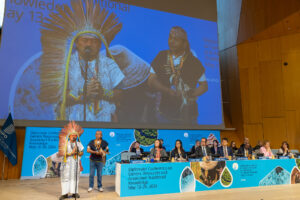
The United States delegation, in its opening statement to the World Intellectual Property Organization’s Intergovernmental Committee on Intellectual Property and Genetic Resources, Traditional Knowledge and Folklore, expressed its desire to

EIFL Draft Law on Copyright On May 27, 2025, EIFL launched an updated version of its Draft Law on Copyright, featuring a new provision on Secondary Publication Rights (SPRs) (more

At the beginning of May, the report “Copyright and Artificial Intelligence. Part 3: Generative AI Training” was released, sparking a wide range of debates due to its content and the

In Part I of this blogpost, I briefly set out the procedural history of the copyright reform process that led to the Presidential Referral of the Bill to the Constitutional

On 21 and 22 May 2025, the South African Constitutional Court heard the matter of Ex Parte President of the Republic of South Africa: In re Constitutionality of the Copyright

Traditional Knowledge (TK) has become a key consideration in discussions on intellectual property. In May 2024 the WIPO Treaty on Intellectual Property, Genetic Resources and Associated Traditional Knowledge was adopted,

About the Report In February 2025, the U.S. Copyright Office released the report “Identifying the Economic Implications of Artificial Intelligence for Copyright Policy: Context and Direction for Economic Research”, edited

One of the questions swirling around Geneva these days is whether one country can block all progress alone. In WIPO last week, the U.S. laid down a couple gauntlets that

By Faranaaz Veriava and Anne Marie Strohwald The Constitutional Court [in South Africa] will on 21 and 22 May 2025 hear submissions relating to the constitutionality of the Copyright Amendment Bill


Luca has a PhD from the UFRJ Graduation Program on Public Policy, Development and Strategies (PPED/UFRJ) with a thesis on ‘Copyright and AI Generated Works’ and is a Director of the Brazilian Copyright Institute. He is a research fellow at the Centre for IT & IP Law (KU Leuven) and a post-doctoral researcher at the National Institute of Citizen Science in Brazil. He is a guest professor at the Graduation Program on Public Policy, Development and Strategies (PPED/UFRJ) and professor at the Specialization Program on Intellectual Property Law at PUC-RJ.

Dr. Susan Isiko Štrba combines teaching and research with providing policy and legislative advice and technical training to governments, intergovernmental organizations and civil society. She focuses mainly on human rights, intellectual property (IP), trade and development. Dr Isiko Štrba is the author of International Copyright Law and Access to Education in Developing Countries: Exploring Multilateral Legal and Quasi-Legal Solutions, a leading guide to the functioning of international copyright law for the public interest in developing countries. She has also published numerous journal articles in the field of human rights, trade, IP and development.
She currently researches the interface of technology, intellectual property and the African Continental Free Trade Area. She is a member of the International Association for the Advancement of Teaching and Research in Intellectual Property (ATRIP) and a member of the Executive Council of the Society of International Economic Law (SIEL). Dr Isiko Štrba has taught Intellectual property, competition law and human rights in various institutions including: the Boston University (Geneva International Campus), The Graduate Institute, Trade Policy Training Centre in Africa (TRAPCA), the International University in Geneva, University of the Witwatersrand, South Africa and the WIPO Academy.

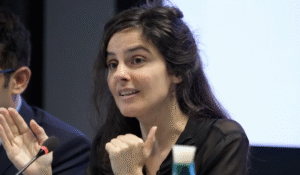
Andrés Izquierdo is Senior Research Analyst for our project on the Right to Research in International Copyright. He conducts high-impact research, provides training to a global network of change-makers, and connects a global academic network to the work of global and domestic organizations that represent researchers, libraries, museums, archives, educational and research institutions.
Before joining PIJIP, Andrés Izquierdo practiced law through his award-winning intellectual property and cyber law practice in Colombia. He has been named one of the best entertainment law attorneys in Colombia by the publications Best Lawyers (2020), and top Intellectual Property practitioner by Chambers and Partners (2014-2020), and is author of the book Cyberlaw by Wolters Kluwer. Izquierdo was previously Business and Legal Director for Sony Music Entertainment in the Andean Region, and litigation partner in Palacio, Izquierdo & Ballesteros, an intellectual property law firm in Colombia. He has LLM degrees in Intellectual Property from American University Washington College of Law and from the University of Turin – WIPO, and a law degree from Universidad de Los Andes.

Ben Cashdan is a economist and television producer in South Africa. He was an economic advisor in the South African Presidency under President Nelson Mandela, focusing on capacity building and local economic development. Since 2000 Ben has served as executive producer of a number of television series on democracy and development for global broadcasters. In 2015 Ben co-founded ReCreate South Africa, a coalition of creators and users of copyrighted material in South Africa, working together for fair and balanced copyright reform and access to knowledge.
Ben has a masters degree in Social and Political Sciences from Kings College Cambridge and a Postgraduate Certificate in Economics from the London School of Economics. Ben also continued his postgraduate studies at Johns Hopkins University in Baltimore, Maryland in the Department of Economic Geography. He was South African producer for Harry Belafonte’s biographical documentary Sing Your Song. Ben has also produced 4 episodes of The World Debate on BBC World News. He developed and produced the first season of South2North on Al Jazeera English, the first global talk show to be produced in Africa for a major global broadcaster. In December 2013 Cashdan produced an episode of BBC Question Time on South Africa after Mandela.
Ben has directed a number of broadcast media projects on democracy and development in partnership with agencies including the World Economic Forum, the United Nations Development Programme and the African Leadership Academy.

Professor Flynn researches and teaches on the intersection of intellectual property, international law, and human rights. Professor Flynn designs and manages a wide variety of research and advocacy projects that promote the public interest in intellectual property and information law. Professor Flynn Chairs the Global Expert Network on Copyright User Rights and is a founding member of the Global Congress on Intellectual Property and the Public Interest.
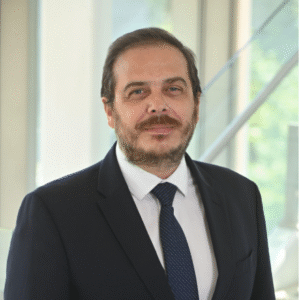
He is Editor in Chief of Infojustice.org, a leading public interest law and policy blog. He is a special faculty appointment at American University Washington College of Law, visiting Scholar at the University of Amsterdam’s Institute for Information Law (IViR), and Senior Research Associate at the University of Cape Town’s Intellectual Property Unit. Prior to joining WCL, Professor Flynn completed a Fulbright Fellowship, was clerk to Chief Justice Arthur Chaskalson, South African Constitutional Court and Judge Raymond Fisher, U.S. Court of Appeals for the Ninth Circuit, practiced law at Spiegel & McDiarmid and the Consumer Project on Technology, and served on the policy team advising then Assistant Attorney General for Civil Rights Deval Patrick.