education

Blog

Unfair Licensing Practices in the Library Sector

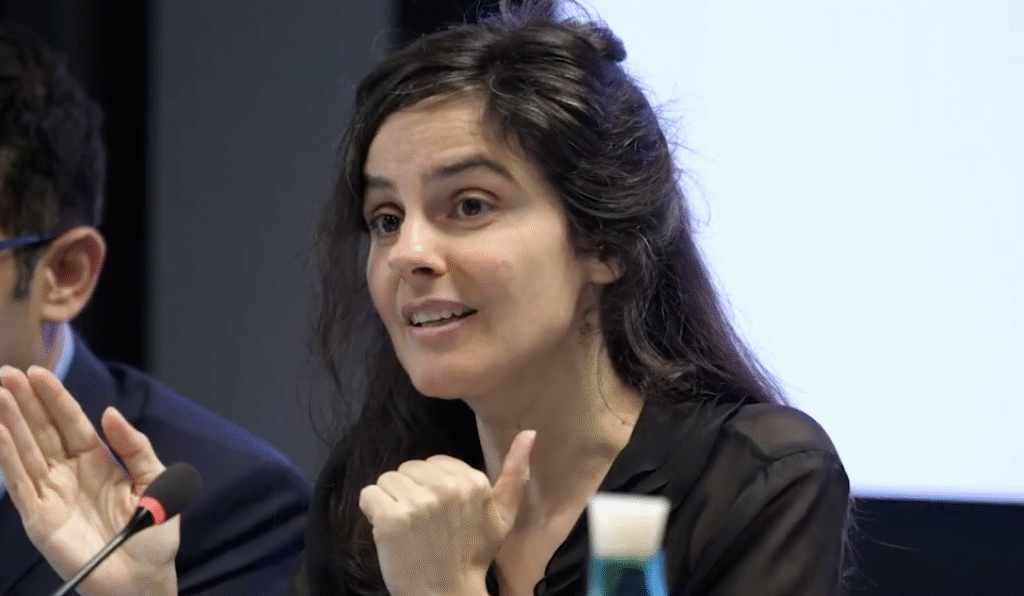
Teresa Nobre outlines a chilling range of practices by publishers to try to restrict the ability of researchers to conduct computational research. From ‘choice of law’ clauses which seek to circumvent EU law, to increased liability and penalties on libraries which fail to police their users. Nobre suggests a series of urgent measures to tip the balance back in favour of libraries and their users, and ultimately in favour of the right to research. This presentation was delivered at the User Rights meeting in Geneva on 17 June 2025. The full text is available below. The transition to licensing We have transitioned from a sales-based model in printed publications to a licence-based model in digital publications. What happens is that even if you have a fit-for-purpose framework that allows libraries to make certain uses of copyrighted works, they still need to rely on licences to have a first access to the material, and that gives publishers a lot of power in determining what libraries can and cannot do with the licensed materials, even if you have exceptions that allow them to make certain uses. Communia’s research We know that these licences tend to be subject to confidentiality agreements, which means that we don’t know what are the terms of these licences.  Communia is a non-profit based in Brussels, we have been involved in copyright reform for many years, we have been coming to the SCCR for many years, and we decided in February this year, we invited licensing managers, so people that are from the library sector, public library and academic library sector in Europe, we invited them to come to Brussels and we held a Chatham House rules meeting. We also invited the European Commission to attend this meeting and observe this meeting. And this environment where people could not attribute each other was the right environment for licensing managers to come and talk about the issues that they are facing with the licences, so the unfair licensing practices, the unfair terms that they are being subject to. So I will be mentioning some of those practices, and I will start with a very hot topic right now, which is the topic of AI, but also text and data mining for scientific research. Maybe I should also tell you that in addition to inviting librarians to come and talk to us in private, in front of the Commission, we also invited them to share with us in confidence clauses that they considered unfair, clauses that are part of those licensing agreements or licensing offers. Efforts to Circumvent the European TDM Directive Maybe here for those that are not European, I should give you a bit of a legal context of Europe. In Europe, six years ago we passed a new directive that guarantees that researchers in Europe can make text and data mining uses of copyrighted materials for scientific research. So we have a mandatory exception for these research uses. And this mandatory exception is protected against contractual overrides. And what does that mean? It means that if a licence says that you cannot make those uses, you don’t need to follow the licence because the law, the European law, protects you.  And what we realised, and we were very surprised, that publishers were actually concerned about prohibiting these uses in Europe when we have a law that allows these uses and prohibits contractual overrides. But that was indeed the case. So we noticed, and they told us, that since 2023, so place it at the same time where generative AI is raising, suddenly all the contracts are saying library users cannot conduct text and data mining on e-books and e-journals that are available in the libraries.  They cannot conduct any related AI uses with those materials.  ‘Choice of Law’ clauses And surprisingly, what was interesting to see was that, well, they were actually concerned about putting those prohibitions in those contracts, although the law would not allow for those prohibitions, because they could circumvent the EU policy, the EU law, and our contractual overrides prohibition by selecting a law that’s outside of Europe. So we know that ‘choice of law’ is typically a clause that the parties need to negotiate and takes time to negotiate. Everyone wants to choose their own law. But in this case, by choosing a law that’s not the national law where the library is located, meaning that’s not the EU law which would protect these uses against contractual overrides, they are able to circumvent basically the EU law and the prohibition of contractual overrides. And that’s enough. So imagine all of the work that we have done throughout the years to have exceptions in place, exceptions that are protected against contractual overrides, is simply circumvented by a choice of law clause. I’m going to give you an example of what prohibition of AI uses in these licences means. And, you know, there’s different ones. And you can see in our report, we gave some examples of it. Prohibition of AI-enabled browsers But publishers go as far as prohibiting the use of browsers with connected AI functionality. People, nowadays, there’s no browsers that do not use AI.  And publishers are prohibiting the library users from using browsers with AI functionality. This is how far it goes. We saw different variations of this. For instance, you see one that’s very simple, straightforward. You cannot conduct text and data mining, which is exactly what the EU law allows you to do. And when it comes to the choice of law, I think typically what we are seeing is that they are choosing U.S. law, maybe because the U.S. law right now, it’s not very clear if it allows these sort of uses or not. If it’s a UK publisher, they will select the U.K. law, which also doesn’t permit as many text and data mining uses as the EU law. So this is the first, let me say, the first category of obstacles and really

Africa: Copyright & Public Interest, Blog

The South African Copyright Amendment Bill at the Constitutional Court: Notes from the Presidential Referral of the Bill (Part II)

In Part I of this blogpost, I briefly set out the procedural history of the copyright reform process that led to the Presidential Referral of the Bill to the Constitutional Court. I also briefly explained the scope of Referral proceedings and the parties involved. In this Part, I discuss the issues raised during the hearing and what to expect going forward. Issues raised during the hearing In line with the Court’s past jurisprudence, the proceedings centred around the constitutionality of the two sets of provisions referred by the President on the basis that he referred them – the fair and equitable remuneration provisions and the new exceptions and limitations. I discuss the arguments raised regarding each set in turn. I focus here on the oral submissions – the full written submissions on record are available here. Fair and equitable remuneration (proposed sections 6A, 7A, 8A) On the fair and equitable remuneration provisions, the President remained concerned that these provisions apply retrospectively which, in his view, would constitute arbitrary deprivation of property. The President explained that although Parliament deleted the specific subsections that explicitly provided for the retrospective application of the provisions, he believed that the provisions were still applicable retrospectively. Retrospectivity, he argued, would constitute a substantial interference in the copyright owner’s enjoyment of their property (and the profits derived from it) as it would open up the possibility for windfall gains for authors notwithstanding whether their original historical assignment of copyright was unfair. Moreover, the President argued that the indiscriminate application of these provisions to all past and future assignments constituted an arbitrary deprivation of property. To prevent retrospective application, the President argued that it was necessary for the language of the provisions to explicitly state that they would apply prospectively. Underlying this argument, the President confirmed that in his view, copyright constituted a constitutionally protectable set of property interests. When questioned, the President conceded that should these provisions be read exclusively prospectively they would not be unconstitutional. The President’s initial position was supported by the Freedom Front Plus. It was also supported by the Democratic Alliance who argued that the only reasonable interpretation of these provisions was that they applied retrospectively to past and future profits derived from the exploitation of the work under copyright. On a prospective interpretation, the DA argued, the language that allows the existence of an agreement to the contrary in proposed section 6A(2) would render the provision a nullity. The DA also supported the proposition that these provisions ran the risk of arbitrarily depriving copyright owners of their property on the basis that there was a substantial interference with the right by significantly reducing its value, imposing uncertainty costs upon the entire industry and interfering with the contractual autonomy of the parties. Further, the DA argued that the lack of similar language in sections 7A and 8A was irrational – and although the President adopted this argument in his oral submissions, irrationality was not expressly part of the 2020 or 2024 Referral letter, raising the question whether the Court can consider it. NAB/SANEF/CFE aligned themselves with the arguments made by the President that these provisions had retrospective effect and ran the risk of arbitrarily changing the rights negotiated and acquired by broadcasters in the current regime, asserting that the broadcasting industry may face dire consequences as a result. Parliament, however, explained in their oral submissions that they had a clear legislative intent to ensure that the impugned provisions had prospective effect. This intent was demonstrated by the deletion of the relevant subsection from all three provisions, as acknowledged by the President, in addressing the reservations set out in his 2020 Referral letter. Recreate Action aligned with Parliament’s position on the deletion of the explicit retrospectivity provisions, and argued that there is a presumption against retrospectivity in the law. Where a provision can be read prospectively, it must be read in that manner. Recreate Action responded to the DA’s argument that a prospective reading of section 6A renders it a nullity by explaining that the non-obstante clause in that section would ensure its continued application. In any event, Recreate Action argued that even if the impugned provisions applied retrospectively, that did not in and of itself render them unconstitutional. To the extent that they were a deprivation of property, Recreate Action argued that even if copyright was incorporeal constitutional property, it required a lower threshold of justification for such deprivation, and that the deprivation only encompassed a single incident of ownership – the royalty right. Finally, Recreate Action responded to the claim of indiscriminate application as arbitrariness by explaining that the standards of ‘fairness’ and ‘equity’ in the text of these provisions act as levers to calibrate the application of these provisions to address unequal bargaining power and prevent any windfall gains.   In addition to testing these arguments, the Court raised concerns about the specificity of the President’s reservations with regard to these provisions. In particular, the Court was concerned as to whether Parliament had a meaningful opportunity to address the whole of these provisions – in other words, whether the President’s 2020 Referral letter flagged the whole of these provisions as triggering his reservations, or just the relevant subsection that explicitly provided for their retrospective application. If the Court were to find that the whole provisions were not referred to Parliament – to enable Parliament’s consideration of them prior to the Referral to the Court – this may bar the consideration of the merits. New exceptions including education and library exceptions (proposed sections 12A-D, 19B, C) I now turn to the second set of provisions that the President was concerned about – the new exceptions and limitations. The President argued that the exceptions and limitations sought to be introduced go too far and would conflict with the normal exploitation of the work and cause unreasonable prejudice to the rights holder. The President was also concerned that the fair use provision suffered from vagueness and introduced a level of uncertainty that could

Blog

Educational exceptions in Copyright Amendment Bill are mandated by international law and the Constitution

By Faranaaz Veriava and Anne Marie Strohwald  The Constitutional Court [in South Africa] will on 21 and 22 May 2025 hear submissions relating to the constitutionality of the Copyright Amendment Bill that has been in the making since as far back as 2015. The National Assembly voted for the Copyright Amendment Bill in 2024 amid some intense opposition. The President, instead of signing the Bill into law, invoked his presidential prerogative in terms of section 79(5) of the Constitution and referred it to the Constitutional Court, raising reservations in respect of the constitutionality of certain aspects of the Bill, including whether the educational exceptions – that exempt activities associated with teaching and research from copyright protection – are consistent with international copyright law.  The Centre for Child Law, a public interest organisation and the Unesco Chair: Education Law in Africa, a rights-based think tank, both based at the University of Pretoria, have been admitted as the fifth amicus curiae in the matter. Interestingly, in a crowded house of eight amici that include publishers, authors, musicians and other creatives, the Centre and the Unesco Chair are the only amici that have been granted leave to make oral submissions in the court. At the core of their submissions is the assertion that while the President considers whether the Bill is compliant with international copyright treaties and whether the exception violates section 25(1), the property right clause, the President is completely silent on South Africa’s obligations in terms international human rights law and its broader constitutional obligations.  Background to the Copyright Amendment Bill referral In 2020, the President referred the Bill back to Parliament for similar reasons. In 2021, the organisation Blind SA, frustrated by the persistent impact of delays in copyright reform that prolonged a book famine wherein blind persons had access to less than 10% of available books, instituted an application to declare the 1976 Copyright Act invalid due to its failure to provide a copyright exception for persons with visual disabilities.  In 2022, the Constitutional Court in Blind SA I declared the impugned provisions, that required the permission of copyright owners – rarely provided – before their works could be reproduced in accessible formats for persons with visual and print disabilities, to be constitutionally invalid. The provision also criminalised accessible formatting without such permission. The court held that requiring the permission of the copyright owners to create accessible formats amounted to a discriminatory barrier that unfairly prevented people with visual and print disabilities from accessing copyrighted materials.  The court order suspended the declaration of invalidity for 24 months and formulated an interim remedy in the form of a reading-in of a temporary provision to the Copyright Act. The suspension period lapsed in September 2024, after being voted on in Parliament, but without being signed by the President. This necessitated that Blind SA return to the court on an urgent basis.  The Constitutional Court in Blind SA II held that the failure to enact the Bill within 24 months created a legal gap, reverting the Copyright Act to the position before Blind SA I, making people with visual and print disabilities vulnerable and having to make the impossible decision to either break the law or not have access to a books. It therefore read into the Act the carefully crafted education exception in the Bill that aims to enable accessible format shifting for persons with visual and print disabilities. This provision is not one of the educational exceptions that are the subject of the President’s current reservations and remains in place if, and until, the Bill is finally signed into law.  Educational exceptions will ease access for poor learners and students Thus, while Blind SA II is a long-awaited victory for blind people for multiple reasons, the educational exceptions are not only included in the Bill to facilitate access to learning materials for persons with print and visual disabilities, as is suggested in the President’s submissions. The educational exceptions are necessary to ensure that all learners and students, including the poorest learners and students, have access to learning materials. This category of learners and students, while including persons with print and visual disabilities, constitutes the majority of learners and students in South Africa. Copyright, therefore, exists as a barrier to access to educational materials for poor learners and students. A wide body of evidence, including from Unesco, makes clear that there is a direct correlation between educational materials and educational outcomes. Research disaggregating data on educational outcomes further highlights that educational outcomes are worse for learners and students from poorer communities lacking access to basic educational resources. For example, copyright laws preventing the making of copies of textbooks for learners and students make access to knowledge unaffordable.  The Centre and the Unesco Chair argue that the educational exceptions are necessary for South Africa to comply with international human rights law to ensure the enjoyment of three reinforcing and mutually interdependent rights: The right to education, the best interests of the child principle and the principle of equality and non-discrimination. Furthermore, section 39(1) of the Constitution mandates that international laws serve as an interpretive guide to its counterparts in the Constitution. Section 233 of the Constitution also requires that, “when interpreting any legislation, every court must prefer any reasonable interpretation of the legislation that is consistent with international law over any alternative interpretation that is inconsistent with international law”.  The right to education is recognised in several international and African regional instruments, including: the International Covenant on Economic, Social and Cultural Rights (ICESCR); the Convention on the Rights of the Child (CRC); and the African Charter on the Rights and Welfare of the Child (ACRWC) – all of which have been ratified by South Africa, thus creating obligations for South Africa as a party to these instruments. International human rights law elaborations of the right confirm that the educational exceptions are permissible. The availability of education in international human rights law refers not only to the availability of schools, but also includes the availability of resources to facilitate teaching and learning. The accessibility
Education

The Importance of Copyright Exceptions for Teachers and Learners

by Dr. Mugwena Maluleke, President of Education International (EI) and General Secretary of the South African Democratic Teachers’ Union (SADTU) On 21 May 2025, the Constitutional Court in South Africa will consider the constitutionality of the Copyright Amendment Bill passed by parliament in 2019 and again in 2024. The new Bill introduces exceptions and limitations to copyright to allow educators to copy, share and adapt excerpts of copyrighted learning materials in the classroom. In this contribution to the debate, Mugwena Maluleke highlights the education crisis facing millions of learners, especially in Africa and the Global South, and the importance of copyright reforms that increase access to learning materials. This article was first presented as a keynote input to the Conference on “Copyright and the Public Interest in Africa and the Global South on 6th Feb 2025 in Cape Town. You can watch the video recording of this presentation here. Dear colleagues, It is an honour to join you today in Cape Town as we reaffirm our shared mission of ensuring equitable access to knowledge and protection of traditional knowledge for Africa. Without reiterating much of what Dr. Schönwetter has eloquently stated in his welcoming address, I extend my gratitude to all those involved in hosting this conference and to all of you attending. Thank you for your commitment to copyright law reform. Reflecting on my childhood in rural Limpopo, we were compelled to learn in English and later in Afrikaans, which led us to stand against the apartheid government in 1976. We were never given the opportunity to learn in our own language. This experience underscores the profound impact that learning materials have on a child’s potential in school. In the quest for knowledge equity, every child deserves the right to learn in their own language. Today, I stand before you not only as the President of Education International but also as the General Secretary of the South African Democratic Teachers Union, representing more than 70% of educators and education workers in South Africa. Charles Darwin, the father of evolution, once said, “It is not the most intellectual of the species that survives; it is not the strongest that survives; but the species that survives is the one that is able best to adapt and adjust to the changing environment in which it finds itself.” The Global Status of Teachers Report, launched on the International Day of Education, January 24 this year, revealed a shocking shortage of 44 million teachers worldwide. A major catalyst for this shortage is the inability to attract and retain teachers due to inadequate conditions for providing quality teaching. Debrah Ruh, a global inclusivity strategist, noted that “accessibility allows us to tap into everyone’s potential.” UNESCO’s Framework for Action recognizes knowledge as part of the right to education for a reason: it is crucial for teachers to have access to teaching and learning materials specifically designed for educational purposes. Fair copyright legislation is essential to enable teachers to adapt and use materials, enrich them, make them context-specific, decolonize our knowledge production and consumption in education, and address an increasingly diverse student body.  DECOLONISATION OF KNOWLEDGE and DECRIMINALISATION OF TEACHERS Having mentioned decolonisation of knowledge production and consumption in education, I must add that this implores us to embark on a journey of decolonisation, peeling back the layers of oppression that have been ingrained in our consciousness. This is not merely an act of dismantling the physical symbols of colonialism, but a profound transformation of our mental landscapes. As we lift the veils of ignorance and prejudice, we must replace them with the light of wisdom and understanding. Decolonisation is a reawakening, a reclamation of our heritage and identity.  May I also add that education is the bridge that connects our past struggles to our future triumphs. The right to education is a fundamental human right. Our teachers should not be criminalised for striving to provide quality education to our children. Unfortunately, copyright laws for education are often overly restrictive, creating barriers for teachers and the right to education. Global EI research shows that teachers in many Latin American and African countries are particularly disadvantaged by copyright legislation, forcing them to work in legal grey zones or stop using important teaching materials. The use of digital materials and adaptations for children with disabilities poses a particular challenge for the teaching profession.  Among 37 countries studied in a recent report by wireless connectivity specialist Airgain, South Africa ranks as one of the worst countries for digital readiness. THE GLOBAL EDUCATION CRISIS Recent studies highlight the urgent need for improved access to education. The 2025 Global Estimates Update by Education Cannot Wait reveals that 234 million school-aged children in crises worldwide require urgent support to access quality education, an increase of 35 million over the past three years. Refugees, internally displaced children, girls, and children with disabilities are among the most affected. The report emphasizes that these growing needs are rapidly outpacing education aid funding and calls for urgent additional financing to address this global silent emergency. Access to appropriate learning materials is a key strategy for achieving the first means of implementation (4a) under SDG4. The supporting Framework for Action Education 2030 highlights access to learning materials as one of the core strategic approaches for implementing the goal: “Education institutions and programs should be adequately and equitably resourced, with safe, environment-friendly, and easily accessible facilities; sufficient numbers of quality teachers and educators using learner-centered, active, and collaborative pedagogical approaches; and books, other learning materials, open educational resources, and technology that are non-discriminatory, learning conducive, learner-friendly, context-specific, cost-effective, and available to all learners – children, youth, and adults.” At the heart of Education International’s Go Public, Fund Education campaign is the principle of putting people before profit. The message is clear: we want creators and authors of material to be compensated fairly, but we do not want intermediaries in the copyright business, such as publishers and streaming executives, to create profit margins that deter access to learning materials

Scroll to Top