GRATK Treaty

Blog, WIPO GA

WIPO General Assembly 66th: Navigating a Comprehensive Agenda with Constructive Dialogue

Despite the weight of a packed agenda and the significance of several recent treaty milestones, the Sixty-Sixth Series of Meetings of the WIPO General Assembly is expected to unfold key institutional decisions, including the initiation of the Director General appointment process, the adoption of procedural reforms under the Lisbon and Design systems, and the future and implementation of longstanding treaty negotiations.  Among the central governance items is the formal initiation of the process to nominate and appoint WIPO’s next Director General (A/66/4), whose term will begin in October 2026. The framework laid out in the document provides a clear timeline, beginning with a July 2025 call for nominations and concluding with an April 2026 decision. While the process is administrative at this stage, the importance of the role—and its potential to influence the agency’s direction—will shape the future of WIPO 2026-2032. In parallel, the Assembly will elect a new slate of Program and Budget Committee members for 2025–2027 (WO/GA/58/1) and appoint Chairs and Vice-Chairs for the various Assemblies and Unions (A/66/2 Prov.4). These steps ensure procedural stability, but also underscore broader Member State interest in the balance of representation across WIPO’s governance structures. One of the more consequential decisions awaiting the Assembly is whether to convene a Diplomatic Conference on the proposed Broadcasting Treaty (WO/GA/58/4). While the most recent SCCR session made strides in updating the draft text, Member States remain divided over key elements, including the scope of rights and the treatment of signal-based protections. A consensus on readiness has not yet emerged, and further consultations may be needed before formal negotiations can proceed. With regards the Work Plan on Exceptions and Limitations (SCCR/43/8 Rev.) the Chair Ms. Cohen is working to move forward the agenda by finding common grounds between the member states. The implementation of newly adopted treaties will also be on the Assembly’s radar. The WIPO Treaty on Genetic Resources and Traditional Knowledge (WO/GA/58/8), adopted in May 2024, and the Design Law Treaty (WO/GA/58/13), adopted in November 2024, both require follow-up in terms of ratification strategies, capacity-building support, and coordination among Member States. While their adoption was widely celebrated, the transition to effective implementation remains an important next step. Procedural and regulatory reforms under the Lisbon System will likewise be considered. Proposed amendments to the Common Regulations (LI/A/42/2) and the formalization of new Special Rules of Procedure for the Lisbon Working Group (LI/A/42/1) aim to streamline administration and ensure coherence with WIPO’s broader framework.  Standing committee discussions continue across multiple fronts. The Standing Committee on the Law of Patents (WO/GA/58/5) will report on ongoing work relating to patent exceptions, inventorship in research collaborations, and the broader implications of AI in innovation systems. The Standing Committee on the Law of Trademarks (WO/GA/58/6) will revisit longstanding debates over the protection of country names and geographic terms, though consensus remains elusive. In the technical sphere, the Committee on WIPO Standards (WO/GA/58/9) presents a set of new and revised standards for approval. Given the growing complexity and volume of its mandate, the committee also recommends prioritizing certain tasks and deferring others—a recognition that capacity, both technical and political, must be managed carefully. The Assembly will also review a number of oversight and budgetary matters carried forward from the 39th Program and Budget Committee. These include approval of recommendations from PBC Sessions 38 and 39 (A/66/7), review of oversight reports from WIPO’s Independent Advisory Oversight Committee and Internal Oversight Division (WO/GA/58/2, WO/GA/58/3), and follow-up on financial governance issues raised in the External Auditor’s report (A/66/6). Member States continue to emphasize the importance of accountability and transparency, particularly in budget execution and internal controls. Several programmatic matters also require attention. The Committee on Development and Intellectual Property (WO/GA/58/7) has approved a new wave of projects and evaluations, many focusing on creative industries, tourism, and small and medium enterprises. Meanwhile, the Advisory Committee on Enforcement (WO/GA/58/10) seeks approval for its future work plan, and the Secretariat will report on PLT-related technical assistance provided by developed countries to developing and least-developed countries (WO/GA/58/12). On the administrative front, the Hague Union will consider its participation in WIPO’s Digital Access Service (H/A/45/1), a move intended to facilitate the digital exchange of priority documents and reduce the burden on applicants. Similarly, the Madrid Union will examine targeted amendments to its Regulations, including the mandatory provision of email addresses and more responsive recalculations of fees based on currency fluctuations (MM/A/59/1). Beyond regulatory updates, the Assembly will also take note of WIPO’s ongoing support to Ukraine (A/66/8), which includes tailored technical assistance and reaffirmed commitments to territorial integrity in WIPO communications and services. The report reflects both resilience in Ukraine’s IP ecosystem and the role of international cooperation in post-crisis recovery. Finally, WIPO’s arbitration and mediation services (WO/GA/58/11) continue to gain relevance, with increased uptake among SMEs and IP offices reinforcing the value of accessible dispute resolution in a diversifying innovation landscape. As the WIPO General Assembly addresses a broad agenda spanning governance, treaty implementation, and procedural reforms, it sets the stage for the organization’s work in the coming years. While many items remain at a preparatory or consultative stage, the decisions taken—particularly on the Director General appointment process, committee leadership, and follow-up to recent treaties—will shape the institution’s capacity to respond to Member State priorities. Continued dialogue, transparency, and balanced representation will be essential to ensure progress across the Organization’s diverse and evolving mandate.

Blog

WIPO Budget Committee Concludes Without Agreement on Indigenous Participation Funding

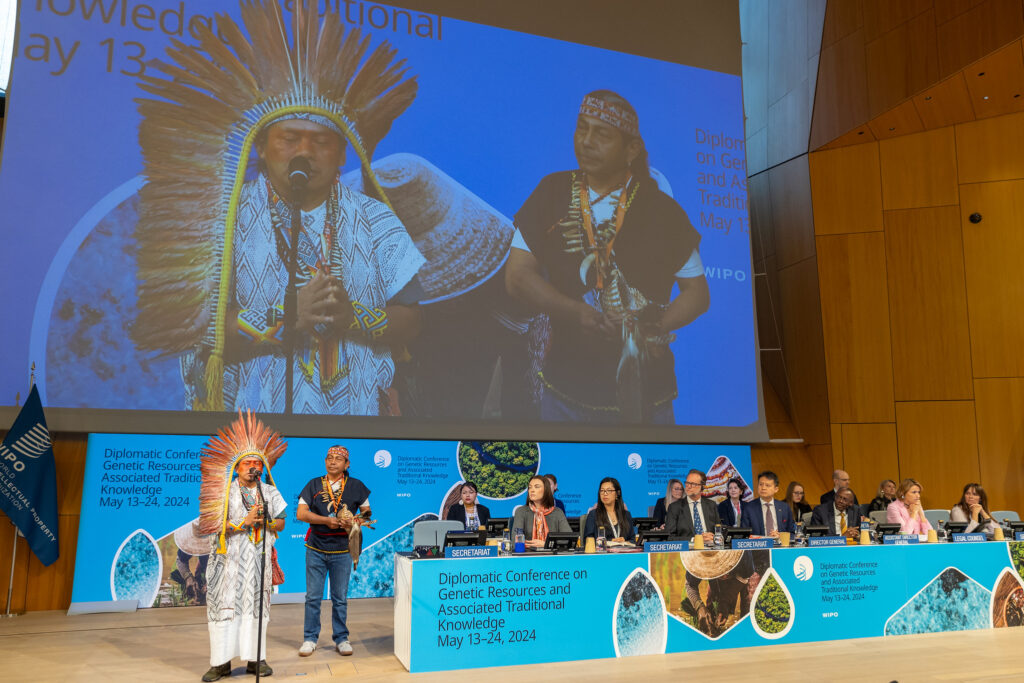
At the close of WIPO’s 39th Program and Budget Committee (PBC) session, a modest yet symbolically significant proposal—to allocate regular budget funds, on an exceptional basis, to support the participation of Indigenous Peoples in sessions of the Intergovernmental Committee (IGC)—was withdrawn. Despite wide cross-regional support and a week of intensive consultations, consensus remained elusive. The proposal, introduced initially by Colombia on behalf of GRULAC, aimed to address a persistent problem: the underfunding of the Voluntary Fund, which currently serves as the only dedicated mechanism to support Indigenous and Local Community (IPLC) participation in WIPO negotiations. The initiative would have allowed up to three IPLC representatives to be funded from unallocated regular budget resources—only when the Voluntary Fund lacked resources and under strict procedural safeguards. A cross-regional group including Australia, Indonesia, Canada, Brazil, Switzerland, and the African Group expressed support, citing the urgent need for more inclusive representation in negotiations that directly affect Indigenous rights. Mexico later introduced a refined version of the proposal, limiting its application to moments when the Voluntary Fund is depleted and capping participation at three Indigenous representatives per IGC session. The revised language included safeguards: no new assessments, clear reporting obligations, and strict adherence to WIPO’s Financial Regulations. “Guaranteeing the participation of Indigenous Peoples is not just a symbolic gesture,” said the delegate from Mexico. “It’s a basic precondition for our discussions to reflect the reality on which we are supposedly adopting rules.” In withdrawing the proposal, Mexico lamented the “lack of agreement from just a few states,” despite what it called a “balanced measure subject to strict conditions and aligned to the rules of the organization.” The Australian delegation expressed disappointment: “While this proposal could not reach consensus, the discussions this week confirmed a widely shared view on the importance of the meaningful participation of Indigenous Peoples and Local Communities.” Australia further emphasized the constructive tone of the negotiations: “The proposal demonstrated that we can work together and bridge differences across groups.” Canada called the initiative “a valuable proposal and one that provides a creative pathway to supporting the essential participation of Indigenous Peoples as unique voices within the IGC.” Despite broad interregional support, it regretted that the measure could not “generate consensus.” Canada described the proposal as “purpose-driven and limited in scope… financially responsible, transparent, and supported by Member States across regions.” Peru, speaking as a GRULAC member, underscored that “this is a question of principle.” It warned that the IGC’s legitimacy could be undermined “if we cannot hear the voices of the custodians of the knowledge we aim to protect.” The African Group, through Namibia, noted that “the continued lack of funding remains a serious concern and will hinder the effective participation and meaningful contribution of IPLCs.” The group of Like-Minded Countries, represented by Indonesia, echoed this regret, noting that the proposal aimed “to enhance inclusivity and ensure balanced participation… essential for the legitimacy and effectiveness of the process.” Despite such broad support, some delegations raised objections. The United States, United Kingdom, and Sweden opposed using core budget funds for observer participation. Their position, consistently restated throughout the week, was that such support should be confined to the Voluntary Fund or voluntary Member State contributions. The U.S. delegation, in particular, argued that the core budget should not be used to fund non-state actors, raising concerns about precedent and financial governance. Other delegations, such as Japan (on behalf of Group B), Italy, France, and Estonia (on behalf of CEBS), stopped short of opposing the proposal outright but requested additional time to analyze its legal and budgetary implications. “We seek clarity on how such a reallocation could be conducted under WIPO’s Financial Regulations,” noted France. Japan emphasized the need for “specific implementation mechanisms and procedural transparency,” while CEBS said more time was needed to form a group position. Still, many Member States signaled that the proposal had moved the conversation forward. “This is a moment of normative clarification,” said Peru. “The participation of Indigenous Peoples is not an accessory—it is central to the legitimacy of the IGC’s work.” As the Committee adopted its final report, the Chair acknowledged that the proposal had been formally withdrawn. Several delegations, including Australia, Canada, Indonesia, Peru, Namibia (for the African Group), and others, reiterated their continued commitment to Indigenous inclusion and called for renewed contributions to the Voluntary Fund. As WIPO heads into its 66th General Assemblies, the question lingers: Can the organization evolve its financial architecture to match its commitment to inclusive governance? The outcome underscores both the promise and the limitations of consensus-based governance at WIPO. While the proposal did not move forward, it reframed the terms of debate: from whether Indigenous Peoples should be included, to how WIPO can sustainably fund that inclusion within its institutional framework. 

Blog

Ensuring Indigenous Participation at WIPO: GRULAC Proposal at PBC/38

At the 38th session of WIPO’s Program and Budget Committee (PBC), the Delegation of Colombia, speaking on behalf of the Group of Latin American and Caribbean Countries (GRULAC), introduced a proposal to address the ongoing funding crisis that threatens the participation of Indigenous Peoples in WIPO’s norm-setting processes. The proposal calls for the internal reallocation of existing budgetary resources to ensure minimum, stable support for Indigenous and local community representatives at meetings of the Intergovernmental Committee on Intellectual Property and Genetic Resources, Traditional Knowledge and Folklore (IGC). Colombia emphasized that the proposal had the support of most GRULAC members and was developed in consultation with delegations from other regional groups. It was presented in response to the exhaustion of the WIPO Voluntary Fund, a mechanism created in 2005 (WO/GA/32/6) to support Indigenous participation but which has remained underfunded for years. The Delegation warned that the lack of resources—ongoing for more than a year—has already undermined inclusive participation in discussions directly impacting the rights and interests of Indigenous communities. Crucially, the GRULAC proposal does not introduce any new budgetary burdens. Instead, it draws on WIPO’s existing financial rules to allow internal reallocations, enabling at least two Indigenous representatives to attend each IGC session. This approach mirrors a precedent set in 2016 (IGC 31), when Member States—including Switzerland, Australia, New Zealand, Chile, and Peru—pushed for the inclusion of a contingent allocation from WIPO’s regular budget to temporarily support the Fund after its depletion (PBC/24). That 2016 compromise demonstrated that practical solutions can be implemented without amending the program budget or creating new financial obligations. Civil society organizations, including the South Centre, have long argued for the institutionalization of Indigenous participation through predictable, core budget allocations rather than reliance on inconsistent voluntary donations. GRULAC’s proposal responds to those calls and to the broader imperative of inclusive governance in global IP policymaking. No Member State objected to the proposal when it was introduced. However, the Chair deferred the final decision to an informal session to allow further review and discussion. GRULAC expressed its openness to constructive input from all delegations. As WIPO reflects on equity, access, and institutional coherence, this proposal offers a critical opportunity to reaffirm that the voices of Indigenous Peoples must not be sidelined in shaping international legal norms. The forthcoming informal session of the PBC 39th will be a key moment for Member States to move from recognition to action in ensuring meaningful, sustained Indigenous participation at WIPO.

Blog, Traditional Knowledge

WIPO-IGC 51st Sessions Breaks Jinx, Recommends Mandate Renewal

by Chidi Oguamanam* First Published by ABS Canada here. Republished on Infojustice with the permission of the author. Delegates to the World Intellectual Property Organization Special Committee on Intellectual Property and Genetic Resources, Traditional Knowledge and Traditional Cultural Expressions (WIPO-IGC) resumed and concluded their last deliberations for the 2024-2025 biennium on May 30-June 5. Most of the first day was used for the traditional opening statements through which major negotiating blocs and delegations signalled to one another their expectations for the 6-day meeting. No Appetite for Impasse The 51st session was unique in many ways. It was co-chaired by Anna Vuopala (Finland) and Erika Patriota (Brazil). Respectively, each of the two Chairs superintended over two failed IGCs – IGC 49 and IGC 50. Their co-chairing of the last and final sessions of the IGC for the biennium was expected to draw from their experiences from the two failed previous sessions in a row. The odds were in their favour. Neither of the hardliner demandeur nations or blocs nor their non-demandeur counterparts were disposed to filibuster negotiations. Any such outcome would potentially result in non-renewal of the IGC mandate for the next biennium (2026-2027).  It was clear to the delegates that mandate renewal was the biggest issue on the agenda listed under item 6 for the session (Taking Stock of Progress and Making a Recommendation to the General Assembly). Tension on Rights-based and Measures-based Approaches Remains Yet, despite the priority of mandate renewal, there was no let up to the tensions that partly led to the two failed IGCs. The United States, Japan and their Group B allies as well as CEBs, and Switzerland were bent on enumerating a litany of measures in the text in preference to rights. They construed a measures-based approach as having priority over a rights-based approach to the protection of TK and TCEs. At the 50th session, the US delegation, with the active support of Japan, Korea, Canada and Switzerland introduced the language of “safeguarding” to further entrench their measures-based approach and conceivably to water their expectation for a soft and non-binding instrument. This sentiment is also shared by the EU as a bloc. The attempt to center a measures-based approach stoked tension and resistance on the part of the broad coalition of the Indigenous Caucus, African Group, Group of Like-Minded Countries, China, the Group of Latin American and Carbbean Countries, some members of the Asian Pacific Group and New Zealand. It also nearly derailed the 51st sessions with demandeurs insisting on blocking those safeguarding aspects of measures-based languages regarding TK and TCEs. Nigeria deplored the deliberate attempt at regime duplication as a ploy to undermine the IGC mandate on TK and TCEs which is clear on effective protection of the subject matters. For Nigeria and the Africa Group, safeguarding of TK and TCEs is dealt with at the UNESCO. As a compromise, those textual drafts on safeguarding and measures-based were taken on board by the three facilitators of the 51st sessions (Ghana, US and Colombia) in an ambiguous procedural circumstance and kept in square brackets under “Alternative X”. This was to preserve the sanctity of the Facilitators’ Alternatives carried over from the IGC 49 texts (WIPO/GRTKF/IC/49/4; WIPO/GRTKF/IC/49/5 which was the default working document and same as from IGC 47) around which there remains a broad coalescing of understanding. Thus, the two texts (TK and TCEs) from the 51st session did little to close gaps. In sum, the delegations agreed on modest progress on the two texts of the TK and TCEs from the 51st sessions. The progress included modest striking out of a few texts that did not have the backing of any interested bloc as well as the bracketing of the US and allies-backed Alternative X.  The remaining two days were devoted to mandate negotiations. United States-led Charge to Weaken IGC Mandate The mandate was negotiated through a combination of deliberations at the informal sessions with ratifications at the plenary. The United States delegation left no doubt regarding their determination to limit the IGC meetings and to whittle down its mandate, a move that was strongly supported by Japan, Switzerland and some Group B allies. The United States went as far as proposing a maximum of two meetings, arguing for resetting the IGC for lack of progress. From the perspective of demandeurs, if there was lack of progress, the blame lies with non-demandeurs whose strategy for scuttling progress remained obvious. For the demandeurs, there was need to keep the momentum created by the two recent WIPO treaties of 2024 – the GR Treaty and the Riyadh Design Law Treaty. These developments called for more meetings and not less. Framing GRs in the TK/TCEs Mandate After GR Treaty In addition to different narratives of progress and dissonance over the number of meetings, another issue of contention for the mandate was how to frame GRs into the mandate given the conclusion of the GR treaty. For IPLCs through the Indigenous Caucus, the conceptual holism of TK, TCEs and GRs is not undermined by the fact that a GR treaty has been concluded within the framework of patents. For the Caucus, the Africa Group, GRULAC and LMCs and other demandeurs, discussions about GRs cannot be severed from TK and TCEs notwithstanding the conclusion of the GR treaty.  As a compromise position, delegates agreed that GRs will continue to be part of the IGC mandate, save that there will be no normative negotiations capable of reopening the GR text. Debate over an Evidence-based Method The next most prominent issue in the mandate negotiations was the palpable suspicion among demandeurs and non-demandeurs on the language regarding collection of evidence to inform negotiations.  Evidence-based methodology has been an integral part of the mandate and the work of the IGC. Demandeurs insisted that there is a deluge of real-world evidence and studies, now increasingly magnified by emergent national and regional regimes on the protection of GRs, TK and TCEs. They maintained that the tendency by non-demandeurs to fixate on an

Blog, Traditional Knowledge

Asking the TK Question as a Reality Check: Echoes from the Cradle Principles

Traditional Knowledge (TK) has become a key consideration in discussions on intellectual property. In May 2024 the WIPO Treaty on Intellectual Property, Genetic Resources and Associated Traditional Knowledge was adopted, requiring patent applicants to disclose the source or origin of the genetic resources and/or the associated traditional knowledge in patent applications. A provision allowing countries to request disclosure of TK in Designs was also included in the Design Law Treaty. But is the prevailing approach to TK sensitive to the real needs of people in Africa and the Global South? In this theoretical intervention Professor Oguamanam challenges the TK paradigm and urges that we ask a deeper question about the function TK plays in the hierachy of knowledge governance. Oguamanam urges that we build on the Cradle Principles to protect the fundamental human rights of knowledge producers and users through equitable dispersal of benefits and to “combat unidirectional informational resource extraction and misappropriation that aggravates inequities and injustice.” The following talk was first presented at the Conference on Copyright and the Public Interest: Africa and the Global South in Cape Town. The video of the presentation below can be watched here. Asking the TK Question as a Reality Check: Echoes from the Cradle Principles* by Chidi Oguamanam** TK is inherently and all round borderless. TK’s defiance of epistemic borders is its reality before the current melding of all kinds of boundaries – disciplinary, conceptual and a lot more. The idea of TK is itself a colonial conceit. The qualification of other peoples’ knowledge as cynically traditional presupposes the existence of an authentic or a default knowledge system. The renewed escalation of interest and consciousness around TK globally and on our continent has never been more exciting as it is equally troubling.  TK is Africa’s significant factor endowment, a strong even if less celebrated, less articulated, and less harnessed continent’s competitive edge.  Its subsistence and survival in the digital age is now a stuff for our collective challenge. I propose that while there has been a remarkable shift around TK on the teleological realm, we run the risk of undercutting TK’s optimal and enduring potential for our continent. We need to first invest in theorizing TK and in tackling the conceptual morass that saddles it. For the privilege of this intervention, I intend to sow some provocative seeds around TK. First, do we ignore the epistemic conceit and the erroneous assumptions over the taxonomy of “traditional knowledge?” May be yes, because of the inherent risk of chasing a red herring.  Second, do we engage the biggest elephant in the room, which is the scope of TK? The last question unravels a very important opportunity. It requires a full consciousness at all times of TK’s defiance of conventional borders. There has been consistent attempt to trifurcate TK into TK, properly so called, Traditional Cultural Expressions and Genetic Resources. This trifurcation project is a signifier of colonial influences on our epistemic autonomy. In Africa, and some non-Western civilizations our knowledge systems which, for emphasis, includes our languages, are the windows to our worldview. That worldview is fundamentally holistic, serving as a glue to our identity and much more.   The trifurcation approach is deeply problematic. It has the danger to condition our thinking and our approach to TK in ways that serve the pragmatic purpose of fitting TK within established disciplinary boundaries and knowledge governance frameworks. Trifurcation is not only an exercise that happens at WIPO or the CBD or other places where TK is on trial before Western establishments. TK has been subjugated to the characteristic inclination of western knowledge systems (the western science) to dissect ideas into their minimalist compartments and to erect artificial and often highly politicized disciplinary boundaries. And in the paradigm of pitting the west with the rest, TK is often profiled within these molecular epistemic models. The consequence of this tendency is the disembodiment of TK from its custodians and its ultimate disempowerment as a knowledge system on its own merit and integrity. Here are a few examples, when TK is framed around Genetic Resources, we are forced to pigeonhole and defend it in the court and laboratory of the life sciences. This explains why we focus on TK in agriculture, in seeds; in health, in medicines, in pharmacology; ecology, botany, forestry, horticulture and environmental sciences, etc.  To further perpetuate the conceit in each of these fields or disciplines, TK is further devalued with the “ethno-prefix”, as a knowledge system that has little prospects for scaling. We know the opposite is true. Similarly, when TK is framed in the expressive repertoire, we locate it within the established canons of the humanities, the liberal arts and aspects of the social sciences. In this compartment we focus on TK in entertainment, music, storytelling, poetry, (folk songs, folklore); arts and crafts, cuisine, gastronomy, and other miscellaneous renditions that fit within western canons and disciplinary borders. From the prism of the TWAIL, we see a highly dedicated international legal, political and institutional order (with its municipal minions) invested in deepening the balkanization project in contrast to TK’s holistic essence. These powerful institutions have carved out TK in bite sizes reflecting their politically positioned structures with nuanced jurisdictional contestation over aspects and parts of TK in the guise of latter-day TK protectionism. In these institutions, the interests of TK holders are often subjugated to the institutions’ primary loyalty in the defence of their political and economic mandates.   In trying to understand the fraught conceptual challenge around TK and its strategic weakening, the biggest evidence is the superimposition of alien knowledge governance framework over TK. The superstructure of knowledge governance is western intellectual property. It was designed without regard to TK and its producers. The international order has never given any serious attention to an alternative knowledge governance model outside the western intellectual property system. TK and its holders are summoned to the court of intellectual property to plead their validity. Objection to this approach is symbolized by the marginal appeals

Blog

Can One Country Block Everything in WIPO?

One of the questions swirling around Geneva these days is whether one country can block all progress alone. In WIPO last week, the U.S. laid down a couple gauntlets that may reappear at the Program and Budget Meetings next week. The US delegation asserted that, despite WIPO being a member of the United Nations, “[t]he United States does not support any proposal … intended to advance the implementation of the SDGs.” It also took aim at so-called “DEI” projects, asserting that “the policy of the United States to use clear and accurate language that recognizes women are biologically female and men are biologically male,” and that “[t]he United States does not and will not support the implementation of any program that promotes any form of diversity, equity or inclusion, precepts or initiatives.” So, if other countries do not bend to this will and extract such expenditures from WIPO’s budget, can the US alone block progress? The quick answer is no.   Most Geneva-based institutions strive to make decisions based on consensus, which can account for the glacial pace of some policy agendas. In the World Trade Organization, the U.S. alone has ground the organization to a halt by refusing to concede to the appointment of Appellate Board members. The WTO operates based on a very strict norm of consensus. In general, WIPO strives to operate based on consensus and one or a few members can often block progress. But the rules of operation for WIPO actually allow for votes  and majority rule. There is a very recent precedent of using voting to approve the diplomatic conferences on the two most recent treaties adopted by the organization – the Treaty on Intellectual Property, Genetic Resources and Associated Traditional Knowledge (the “GRATK Treaty”), concluded at the WIPO Headquarters in Geneva, Switzerland in May 2024, and the Design Law Treaty (DLT) adopted in Riyadh, Saudi Arabia on November 22, 2024. Chapter VI of WIPO’s Rules of Procedure provide for voting on “[p]roposals and amendments submitted by a delegation … if they are supported by at least one other delegation.” (Rule 25). In such voting, “one half of the States members shall constitute a quorum,” and [u]nless expressly provided otherwise in the applicable treaties or in the present General Rules of Procedure, all decisions shall be made by a simple majority.” These rules were used to sideline US opposition to moving toward diplomatic conferences on the GRATK Treaty and the DLT in the 55th Session of the WIPO General Assemblies (GAs) in July 2022. In that meeting, the US called for several votes to overcome Russia’s opposition to funding IP technical assistance in Ukraine. As Margo Bagley described in a recent article published by the Geneva Graduate Institute, these calls opened the door for voting strategies by others: But where some saw opposition, others saw an opportunity. If WIPO members were open to voting on one issue, how about another? What about a Diplomatic Conference (DipCon), or two? Diplomats from demandeur countries in the IGC conferred with diplomats from high-income countries who wanted adoption of the draft Design Law Treaty, which had been languishing for years in a different WIPO committee and proposed a horse trade: agreement to two DipCons to result in two new treaties. If each group agreed to support the combined proposal (and lobbied like-minded states to do so as well) and the matter came to a vote, there should be enough votes to pass the measure – strategic opportunism at its best. In the end, the minority of countries opposed to the diplomatic conferences, including the United States, abstained rather than vote against the proposals. But the threat of a vote and willingness to call for one enabled the majority of countries in favor of the treaties to move them forward over the protestations of a minorty. Majority rule prevailed. A similar linkage between two normative agenda items – the Broadcast Treaty and an instrument on Limitations and Exceptions – is being pursued in the SCCR. Cf https://infojustice.org/archives/44840 (WIPO IGC Director Wend Wendland noting: describing the “overt linkage between two seemingly unrelated normative agenda items, inspired by ‘package deals’ and ‘single undertakings’ agreed on in other organizations such as the WTO” as ”a novelty in WIPO”). The EU and allied countries are pushing for a diplomatic conference on the Broadcast Treaty. The African Group and allied countries took the position in the last SCCR that “an instrument on the protection of broadcasting organizations should advance to a Diplomatic Conference jointly with an instrument on limitations and exceptions that meets the 2012 General Assembly’s mandate.” https://infojustice.org/archives/46253 At the last SCCR, the US maintained its support for discussing an instrument on “objectives and principles” for limitations and exceptions, and thus it is not formally opposed to progress on an L&E instrument. But even if it changed its position to block consensus, there is a procedural avenue – through voting – to overcome the opposition. Voting is generally only called for in the General Assembly and the Broadcast Treaty and L&E instrument will not be moving at the next meeting. But if the US blocks the budget based on its opposition to sustainable development and DEI considerations, we may see more rounds of voting at the next GA this July.

Blog, Traditional Knowledge

Why the WIPO IGC Deadlocked

By: Chidi Oguamanam Chidi Oguamanam, representative of Nigeria and University of Ottowa Professor of Law, provides analysis of the failure to endorse a new consolidated text by the 50th session of the World Intellectual Property Organization’s Intergovernmental Committee on Intellectual Property and Genetic Resources, Traditional Knowledge and Traditional Cultural Expressions (WIPO-IGC). The article was originally published by ABS Canada, and is reprinted here with the author’s permission.   Link to article Discord over Rights and Measures-Based Approaches to the Protection of TK and TCEs Scuttles WIPO IGC 50 By: Chidi Oguamanam Backdrop to the 50th WIPO IGC Session At the 50th session of the World Intellectual Property Organization’s Intergovernmental Committee on Intellectual Property and Genetic Resources, Traditional Knowledge and Traditional Cultural Expressions (WIPO-IGC), delegates arrived with expectations for a better outcome. However, after one week of deliberations from March 3-7, 2025, experts and diplomats failed to achieve consensus over an improved working text of international legal instrument(s) for the protection of traditional knowledge and traditional cultural expressions (TK/TCEs). The last session of the WIPO-IGC (the 49th session) was stalemated because the majority of delegates agreed that they failed to narrow gaps in the working texts of TK and TCEs from the 47th WIPO-IGC session. At the 49th session, delegates resolved not to transmit any instruments to the 50th session, which meant that they would fall back to the text of the 47th session to the collective disappointment of the Committee and its Finnish Chair, Anna Vuopala, at the December 2024 meetings. The 50th WIPO-IGC session was chaired by Brazilian diplomat Ms. Erika Patriota, who was invested in breaking the jinx of the 49th session. Despite her best efforts through a methodology that relied heavily on informal sessions as well as drew from the facilitation skill of the Filipino Friend of the Chair, Anne Adlon, the session’s intended purpose to narrow gaps and deliver on an improved text of negotiating instruments was not met. A hopeful start on the first couple of days resulted in ridding the two working texts (TK and TCEs) of a few redundant and unsupported alternative articles. However, a methodological failure arising from not reining in delegates who were determined to contribute new textual language, and who were determined to even substitute in wholesale fashion some existing articles, pushed the Committee off-balance away from narrowing gaps. Rights and Measures-Based Approach is Now a Critical Schism There was a palpable ideological schism among delegates on the perennial high level conceptual question over the nature of the instrument in relation to intellectual property rights. On one side are demandeur delegations who favour negotiating the TK/TCEs instruments as sui generis, or what one delegate characterizes as “IP+.”  On the other side are those who prefer that the instruments be in sync with conventional IP rights – with term limits, elaborate exceptions and limitations, and accommodation of the so-called “vibrant public domain.” More prominently and equally worrisome at the 50th WIPO-IGC session was a palpable division among delegates along “rights-based” and “measures-based” approaches to the protection of TK and TCEs. In simple terms, the rights-based approach is premised on the recognition of inalienable and existing rights of Indigenous Peoples and Local Communities (IPLCs) to their TK and TCEs as a fundamental anchor for the protection of those rights and the premise upon which any consequential measures are based. On the other hand, proponents of the measures-based approach, who are mainly non-demandeurs led by the United States and its allies in Group B (Japan, Canada, South Korea, Switzerland, UK), the EU, the Central European and Baltic States (CEBS), etc., are inclined toward a measures-based approach. The latter group of proponents of the measures-based approach proactively emphasizes and promotes a list of policy, regulatory, persuasive, and non-binding measures to encourage the “safeguarding” of TK and TCEs. In the opinion of these proponents, a soft-law (i.e., non-binding) approach is the preferred nature of such measures. The argument is that, in accordance with its mandate, the Committee should not prejudge the nature of the instrument that will result from its work. For most non-demandeurs, a measures-based approach is a suitable pathway to a non-binding treaty. For the demandeurs, that is, IPLCs as well as mostly developing countries of the global south who coalesce around the mainly fluid category of like-minded countries (LMCs), the African Group, the Group of Latin American and Caribbean Countries (GRULAC), India, China, and some members of the Asia Pacific Group (APG), a rights-based approach is preferred. The demandeurs support a stronger and binding instrument in the nature of the already-concluded treaty from the work of the Committee – the 2024 WIPO Treaty on Intellectual Property, Genetic Resources and Associated Traditional Knowledge. For this group, the fact that the Committee is required not to prejudge the outcome of its deliberations does not preclude designing a binding instrument. For demandeurs, the narrow focus of non-demandeurs on a non-binding instrument misses the other consideration regarding the outcome of the Committee’s work, which relates to whether it would result in a single or multiple instruments. At the beginning, the Committee set out on a pathway to three instruments, namely, TK, TCEs and Genetic Resources (GRs).  It has agreed on only one instrument so far, which is the binding instrument on GRs. Cut-and-Paste Merger for Artificial Consolidation Despite a lack of consensus, the 50th IGC attempted to merge the two remaining negotiating instruments on TK and TCEs into one document, in contrast to their being negotiated in parallel, which has been the practice. It is not as if no attempt has been made in the past at consolidating the two remaining documents. In February 2023 and March 2023, the Jamaican Chair of the IGC, Lilly-Clair Bellamy, raised the Chair’s Consolidated Texts of TK and TCEs, which some delegations wanted to be used as a working instrument at the aborted 49th session of the IGC. The attempt at the equally aborted 50th session to merge both texts in a cut-and-paste merging approach reflects the potential inclination of delegations toward a consolidated instrument. The Committee appears open to consider a single TK/TCE instrument to complement the

Blog, Traditional Knowledge

WIPO Debate Stalls Over Including the Genetic Resources Treaty in the PCT Framework

By Andres Izquierdo, Yara Misto, & Haddija Jawara The latest session of the WIPO Patent Cooperation Treaty (PCT) Working Group was marked by intense debate over agenda item 16, which addressed the implications of the recently adopted WIPO Treaty on Intellectual Property, Genetic Resources, and Associated Traditional Knowledge (GRATK Treaty). Brazil formally appealed the Chair’s ruling on the matter, ultimately resulting in the indefinite suspension of the session due to a lack of quorum for a vote. During the 18th Session of the PCT Working Group, member states discussed document PCT/WG/18/16, which examines the potential integration of disclosure requirements for genetic resources (GR) and associated traditional knowledge (ATK) into the PCT framework. The discussions on PCT/WG/18/16 exposed a divide among WIPO members. Brazil, Colombia, and Egypt pushed for amendments to the PCT, stressing the importance of aligning its framework with the newly adopted GRATK Treaty. In contrast, Canada, France, and Norway maintained that such discussions were premature, arguing that any modifications should be postponed until the Treaty officially enters into force. With no consensus reached, the issue was deferred for future discussions. Brazil’s Procedural Appeal and the Deadlock Brazil objected to the closure of the agenda item, emphasizing its importance to multiple member states and interest groups. Invoking Rule 14 of WIPO’s procedural guidelines, Brazil asserted its right to appeal the Chair’s ruling, which—under WIPO rules—must be put to an immediate vote. The Chair’s decision would stand unless overturned by a majority of delegations. However, procedural complications arose when it became clear that the session lacked the necessary quorum to conduct a vote on Brazil’s appeal. Without the required quorum, the appeal remained unresolved. Acknowledging the deadlock, the Chair announced the indefinite suspension of the meeting, with the issue to be revisited in a future session. Statements from Member States & Brazil’s Appeal Below is the transcript of statements from member states and the full text of Brazil’s appeal: Colombia (GRULAC) “Madam Chair, Delegation of Colombia has the honor of presenting this statement on behalf of the majority of the country’s members of GRULAC.We would like to express our gratitude to the WIPO Secretariat, the Director General, for the initiative of having this agenda item and the preparation of the document PCT/WG/18/16.We appreciate their efforts to look into the challenges of the implementation of this Treaty on Genetic Resources and Related Traditional Knowledge within the PCT with regard to patents.The option in having the GRTK in 2024, it was a very great achievement for the majority of the GRULAC countries in order to guarantee that Intellectual Property Systems in our region reflect in a balanced way the interests of all stakeholders including states, indigenous peoples and local communities.In this context, we believe that it would be appropriate for the PCT Working Group to take the opportunity to see how the procedures of the PCT can be aligned with the established provisions of Article 7 of the GRTK Treaty.Obviously, we need to ensure that we facilitate harmonization and guarantee the applicability in effective terms.The Secretariat’s initiative is particularly relevant given that both the process leads to the amendment of any PCT process or provision can take a long time.It is, therefore, useful to have the technical discussions and an open debate so that we can have key information provided by Member States so that they are able to ratify the Treaty and also know what requirements may come up in terms of amendments to the PCT’s own regulations.So we would like to thank the IB and suggest that we do indeed come back at the next PCT meeting with a proposed amendment which would enable us to foresee challenges that may come up.We, therefore, call upon Member States to support the proposal made in 18/16 so that those modifications amendments that will facilitate the implementation, particularly with regard to diverging sources within the PCT system.” Namibia (African Group) “I thank you, Chair, for the floor.I’m taking the floor on behalf of the African Group.We join other Delegations in congratulating you on your appointment as the Chair and we are looking forward to a productive meeting.And on the onset African Group wishes to commend WIPO for their efforts and work done this far in ensuring implementation of international instruments for protection of patents.Patents are powerful tools in fostering innovation and providing economic value to businesses and investors.Patent protection helps to secure commercial benefits of new inventions and ultimately ensuring sustainable innovations.The WIPO Treaty on Intellectual Property, Genetic Resources and Associated Traditional Knowledge adopted in May 2024 marked a significant milestone in advancing legal instrument for protection or emerging issues of Intellectual Property law.The Treaty addresses the relationship between Intellectual Property and Genetic Resources as well as Traditional Knowledge as subject matter that has been at the center of multilateral discussion over the years.The Treaty emphasizes the need for a framework that respects the rights of Indigenous People and local communities over their Genetic Resources and Traditional Knowledge while promoting fair and equitable access and benefit-sharing conventions resulting from the use of those resources.Therefore, it is crucial for the Working Group to consider amendment to the PCT regulations to include the disclosure requirements prior informed consent and benefit-sharing mechanism in the PCT system.Those steps are vital to ensure that the use of Genetic Resources and Traditional Knowledge in patent applications acknowledges the rights of Indigenous People and local communities as well as the broader global objectives of sustainable development.To move forward, the Working Group must assess how those amendments can be integrated into the PCT framework to fulfill the objectives of the Treaty.” Japan “Thank you, Madam Chair.Japan would like to express our position on this agenda item.At this stage, the new GOA TK Treaty has not come into effect nor is there any clear prospect of when it will.Additionally, it remains uncertain how each potential contracting party will implement the Treaty in the national laws or rules.Therefore, Japan believes under these circumstances it is premature to consider amending the regulations.We are

Scroll to Top