IGC

Blog

WIPO Budget Committee Concludes Without Agreement on Indigenous Participation Funding

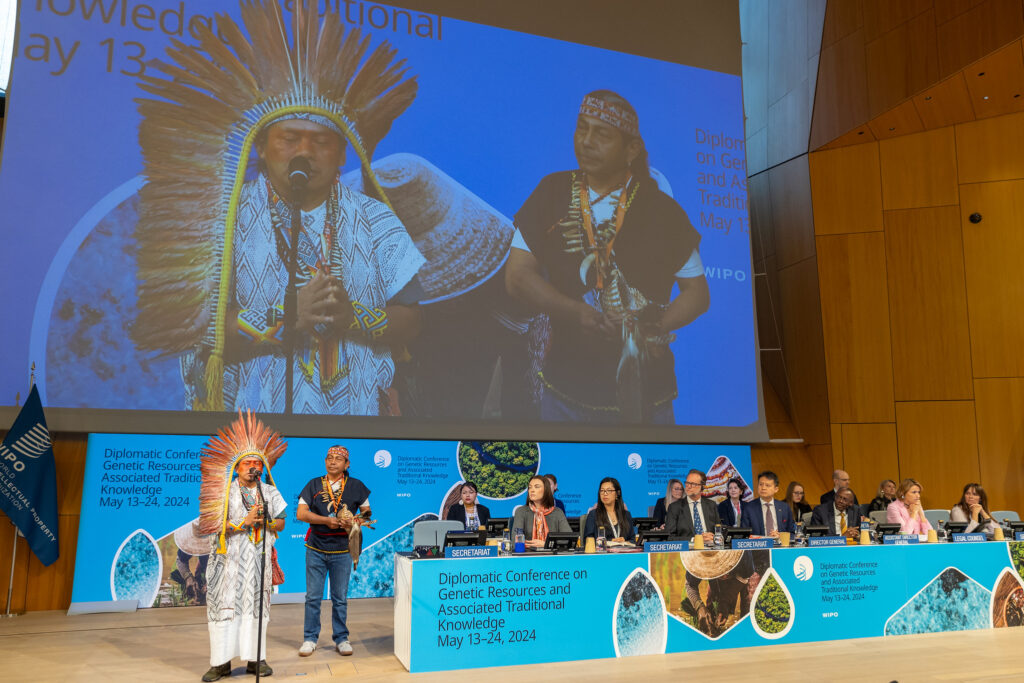
At the close of WIPO’s 39th Program and Budget Committee (PBC) session, a modest yet symbolically significant proposal—to allocate regular budget funds, on an exceptional basis, to support the participation of Indigenous Peoples in sessions of the Intergovernmental Committee (IGC)—was withdrawn. Despite wide cross-regional support and a week of intensive consultations, consensus remained elusive. The proposal, introduced initially by Colombia on behalf of GRULAC, aimed to address a persistent problem: the underfunding of the Voluntary Fund, which currently serves as the only dedicated mechanism to support Indigenous and Local Community (IPLC) participation in WIPO negotiations. The initiative would have allowed up to three IPLC representatives to be funded from unallocated regular budget resources—only when the Voluntary Fund lacked resources and under strict procedural safeguards. A cross-regional group including Australia, Indonesia, Canada, Brazil, Switzerland, and the African Group expressed support, citing the urgent need for more inclusive representation in negotiations that directly affect Indigenous rights. Mexico later introduced a refined version of the proposal, limiting its application to moments when the Voluntary Fund is depleted and capping participation at three Indigenous representatives per IGC session. The revised language included safeguards: no new assessments, clear reporting obligations, and strict adherence to WIPO’s Financial Regulations. “Guaranteeing the participation of Indigenous Peoples is not just a symbolic gesture,” said the delegate from Mexico. “It’s a basic precondition for our discussions to reflect the reality on which we are supposedly adopting rules.” In withdrawing the proposal, Mexico lamented the “lack of agreement from just a few states,” despite what it called a “balanced measure subject to strict conditions and aligned to the rules of the organization.” The Australian delegation expressed disappointment: “While this proposal could not reach consensus, the discussions this week confirmed a widely shared view on the importance of the meaningful participation of Indigenous Peoples and Local Communities.” Australia further emphasized the constructive tone of the negotiations: “The proposal demonstrated that we can work together and bridge differences across groups.” Canada called the initiative “a valuable proposal and one that provides a creative pathway to supporting the essential participation of Indigenous Peoples as unique voices within the IGC.” Despite broad interregional support, it regretted that the measure could not “generate consensus.” Canada described the proposal as “purpose-driven and limited in scope… financially responsible, transparent, and supported by Member States across regions.” Peru, speaking as a GRULAC member, underscored that “this is a question of principle.” It warned that the IGC’s legitimacy could be undermined “if we cannot hear the voices of the custodians of the knowledge we aim to protect.” The African Group, through Namibia, noted that “the continued lack of funding remains a serious concern and will hinder the effective participation and meaningful contribution of IPLCs.” The group of Like-Minded Countries, represented by Indonesia, echoed this regret, noting that the proposal aimed “to enhance inclusivity and ensure balanced participation… essential for the legitimacy and effectiveness of the process.” Despite such broad support, some delegations raised objections. The United States, United Kingdom, and Sweden opposed using core budget funds for observer participation. Their position, consistently restated throughout the week, was that such support should be confined to the Voluntary Fund or voluntary Member State contributions. The U.S. delegation, in particular, argued that the core budget should not be used to fund non-state actors, raising concerns about precedent and financial governance. Other delegations, such as Japan (on behalf of Group B), Italy, France, and Estonia (on behalf of CEBS), stopped short of opposing the proposal outright but requested additional time to analyze its legal and budgetary implications. “We seek clarity on how such a reallocation could be conducted under WIPO’s Financial Regulations,” noted France. Japan emphasized the need for “specific implementation mechanisms and procedural transparency,” while CEBS said more time was needed to form a group position. Still, many Member States signaled that the proposal had moved the conversation forward. “This is a moment of normative clarification,” said Peru. “The participation of Indigenous Peoples is not an accessory—it is central to the legitimacy of the IGC’s work.” As the Committee adopted its final report, the Chair acknowledged that the proposal had been formally withdrawn. Several delegations, including Australia, Canada, Indonesia, Peru, Namibia (for the African Group), and others, reiterated their continued commitment to Indigenous inclusion and called for renewed contributions to the Voluntary Fund. As WIPO heads into its 66th General Assemblies, the question lingers: Can the organization evolve its financial architecture to match its commitment to inclusive governance? The outcome underscores both the promise and the limitations of consensus-based governance at WIPO. While the proposal did not move forward, it reframed the terms of debate: from whether Indigenous Peoples should be included, to how WIPO can sustainably fund that inclusion within its institutional framework. 

Blog, WIPO

No Breakthroughs at WIPO: Budget Committee Defers Core Disputes

Despite a full agenda and spirited debate, WIPO’s 39th Program and Budget Committee ended with little to show in terms of any concrete modifications to the proposed 2026/2027 Program and Budget. Key issues—including budget transparency, integration of development goals, Indigenous participation, language access, and technical assistance—remained unresolved or were deferred for future negotiation. While Member States voiced the need for reform and greater equity, the session closed without any policy changes, underscoring a familiar pattern of careful dialogue but persistent deadlock at the heart of WIPO’s governance. One of the recurring topics at this year’s session was WIPO’s move from a detailed 31-program budget to a broader 8-sector model. China, Brazil, and Canada, among others, continued to call for more granular reporting—especially on how funds are transferred within and between sectors. The Secretariat defended the new approach as more efficient and coherent, and offered  an ongoing dialogue rather than any immediate changes. For now, the push for greater transparency in budget documents remains unresolved, with Member States requesting more detail in future cycles. The place of the Sustainable Development Goals (SDGs) in WIPO’s work also sparked debate. While most countries, including Brazil, Nigeria, and Mexico, insisted that explicit SDG language is appropriate for a UN agency, the United States argued for removing all such references to keep WIPO’s mandate narrowly focused on intellectual property. In the end, references to the SDGs were retained in the approved Program and Budget for 2026/27, reflecting the majority view but signaling an ongoing divide over the agency’s development role. A cross-regional proposal to allow WIPO’s regular budget to support Indigenous participation in the Intergovernmental Committee (IGC) if the Voluntary Fund runs dry was another unresolved issue. Colombia, Ecuador and Mexico led the effort in representation of most GRULAC countries, but ultimately the proposal was withdrawn after it became clear there was no consensus, with some Member States wary of setting a precedent. As a result, no change will be made for the 2026/27 biennium, though further consultation is expected. The question of multilingualism in the Brands and Designs Sector was equally contested. China, Russia, Brazil, and others pushed for strong commitments to expand language services and pre-allocate resources for future language additions, arguing that this would promote equity and better align with UN values. However, Group B, CEBS, and others favored a step-by-step approach, avoiding binding commitments. The final text recognizes the value of multilingualism but leaves further expansion and funding decisions to be considered in future working groups. Financial sustainability for the Lisbon System, which covers the international registration of geographical indications, was also on the agenda. The United States called for stricter self-sufficiency and more robust forecasting methods, aiming to prevent cross-subsidization from other, better-resourced Unions. Brazil, France, Egypt, and other developing countries defended the current approach as vital for development objectives. In the absence of consensus, the status quo prevails and the issue will remain under review. Discussions on technical assistance and performance indicators saw Member States, including China, Russia, and Nigeria, calling for improvements—whether through more balanced KPIs across global IP systems or a more proactive, needs-based model for technical assistance. While these points were acknowledged, no formal changes were adopted, and the Secretariat promised only to consider the feedback going forward. Efforts to expand WIPO’s external offices again resulted in a deadlock. Some countries, such as India, Colombia, and Iran, advocated for greater geographic equity and delinking evaluation from expansion. Others, led by Group B and CEBS, insisted that careful evaluation must come first. With no consensus, the issue was deferred to future sessions. There was at least modest progress in the area of oversight and governance. WIPO’s Internal Oversight Division closed 66 recommendations in 2024, drawing praise from Member States. Still, there were calls to accelerate recruitment for key evaluation and investigation roles and to address ongoing concerns around cybersecurity and internal controls. No new oversight mandates were issued, but the Secretariat was urged to maintain its focus on improvement. Given the absence of consensus, the PBC decided to refer several unresolved issues to the upcoming 66th series of WIPO Assemblies for further discussion and decision. These include proposals by the United States to remove all references to the 2030 Agenda for Sustainable Development and SDGs from the budget document, to adjust estimated applications and income for the Lisbon System and the budget for the Lisbon Union, and to remove the Development Acceleration Fund and associated references and budget lines. These matters now await further negotiation and possible resolution at the Assembly level. In the end, PBC/39’s proceedings reflect the ongoing complexity of multilateral governance at WIPO. While Member States continue to debate critical issues—transparency, development, inclusion, and accountability—the session closed with more questions than answers. The true test for WIPO will be whether continued dialogue eventually yields the substantive reforms that many are calling for.

Blog

Ensuring Indigenous Participation at WIPO: GRULAC Proposal at PBC/38

At the 38th session of WIPO’s Program and Budget Committee (PBC), the Delegation of Colombia, speaking on behalf of the Group of Latin American and Caribbean Countries (GRULAC), introduced a proposal to address the ongoing funding crisis that threatens the participation of Indigenous Peoples in WIPO’s norm-setting processes. The proposal calls for the internal reallocation of existing budgetary resources to ensure minimum, stable support for Indigenous and local community representatives at meetings of the Intergovernmental Committee on Intellectual Property and Genetic Resources, Traditional Knowledge and Folklore (IGC). Colombia emphasized that the proposal had the support of most GRULAC members and was developed in consultation with delegations from other regional groups. It was presented in response to the exhaustion of the WIPO Voluntary Fund, a mechanism created in 2005 (WO/GA/32/6) to support Indigenous participation but which has remained underfunded for years. The Delegation warned that the lack of resources—ongoing for more than a year—has already undermined inclusive participation in discussions directly impacting the rights and interests of Indigenous communities. Crucially, the GRULAC proposal does not introduce any new budgetary burdens. Instead, it draws on WIPO’s existing financial rules to allow internal reallocations, enabling at least two Indigenous representatives to attend each IGC session. This approach mirrors a precedent set in 2016 (IGC 31), when Member States—including Switzerland, Australia, New Zealand, Chile, and Peru—pushed for the inclusion of a contingent allocation from WIPO’s regular budget to temporarily support the Fund after its depletion (PBC/24). That 2016 compromise demonstrated that practical solutions can be implemented without amending the program budget or creating new financial obligations. Civil society organizations, including the South Centre, have long argued for the institutionalization of Indigenous participation through predictable, core budget allocations rather than reliance on inconsistent voluntary donations. GRULAC’s proposal responds to those calls and to the broader imperative of inclusive governance in global IP policymaking. No Member State objected to the proposal when it was introduced. However, the Chair deferred the final decision to an informal session to allow further review and discussion. GRULAC expressed its openness to constructive input from all delegations. As WIPO reflects on equity, access, and institutional coherence, this proposal offers a critical opportunity to reaffirm that the voices of Indigenous Peoples must not be sidelined in shaping international legal norms. The forthcoming informal session of the PBC 39th will be a key moment for Member States to move from recognition to action in ensuring meaningful, sustained Indigenous participation at WIPO.

Blog

US Proposes Limiting IGC Meetings and Mandate

The United States delegation, in its opening statement to the World Intellectual Property Organization’s Intergovernmental Committee on Intellectual Property and Genetic Resources, Traditional Knowledge and Folklore, expressed its desire to limit the activities and mandate of the Committee. The US statement, made at the 51st meeting of the Committee, recalled that the last two meetings failed to produce a common text of an agreement on traditional knowledge (TK) and traditional cultural expressions (TCEs) for the next meeting to work on. At the 49th meeting, the Like Minded Countries Group of developing countries supporting the IGC’s work blocked further use of a complex facilitator’s text produced at that meeting that contained a large number of newly competing provisions on most of the draft’s topics. At the 50th meeting, first the US and then Nigeria blocked further consideration of a consolidated text that combined draft documents on TCEs and on TK and contained several proposed changes that would threaten the desire by some for a binding and rights based approach. The US statement cited this lack of “tangible progress on textual negotiations” as evidence of “significant divergence among Member States on the purpose of the IGC and its desired outcomes” which “warrants taking a step back and reflecting on where we are going with these negotiations.”  The IGC is not a standing committee, which means that the General Assembly must reapprove a mandate for the Committee to continue work. That mandate, for the coming General Assembly meeting in July, will be negotiated at the 51st IGC. In this context, the US opined that “the next mandate should schedule fewer sessions,” and suggested that the Committee move from the current three meetings per year to just one.  The US statement is reprinted below in full. Other countries and groups supported renewing the mandate and holding three meetings per year. The US statement indicates that the negotiation over the mandate may be hard fought. UNITED STATES OF AMERICA: Thank you, Chair. As we discussed potential renewal of the mandate, we should keep in mind the last two IGC meetings, IGC 49 and 50, ended with no tangible progress on textual negotiations. As we mentioned this morning, this came at great expense of time and money for the WIPO Secretariat, Member States and accredited observers. This lack of progress reflects the significant divergence among Member States on the purpose of the IGC and its desired outcomes. For example, we have not even been able to agree on the basic issue of whether the TK and TCE text should reflect the views of all Member States. In our view, this lack of tangible progress warrants taking a step back and reflecting on where we are going with these negotiations. The lack of tangible progress also warrants moving the IGC in a more productive and less contentious direction. This mandate renewal discussion provides an opportunity to reset IGC dynamics which is needed if the IGC is to operate in an effective manner. To that end, the next mandate should schedule fewer sessions. It should also require the use of real world scenarios including case studies during Committee sessions to rejuvenate and refocus our discussions and to encourage participants to have a constructive exchange of views. And the next mandate should also reaffirm that all Member State proposals will be reflected in working text and along those lines should reference the reality that currently exists, namely that Member States have widely divergent positions. I will briefly elaborate on the number of meetings in the biennium. The United States calls on the IGC to recommend to the General Assembly that the mandate reduce the number of sessions in the next biennium. In our view, this will lead to better meeting preparation and attendance which will hopefully result in more productive engagement and forward progress for the Committee. Fewer meetings will also help to temper expectations given the wide divergence in views among Member States in terms of priorities, working methodologies and acceptable outcomes. Most WIPO bodies hold their meetings once a year. It’s time to bring the IGC in line with that standard. Consequently, the next biennial mandate should schedule no more than two IGC sessions for the biennium, one session per year. Next, the mandate should continue to reflect the preservation of separate texts and work streams for TK and TCEs. The mandate should also retain language on taking an evidence-based approach, having a Member State driven process, providing examples of national experiences and adopting a work program based on open and inclusive working methods. We would like Member States to agree that proposals related to IGC work streams, including those directed to biodiversity issues, should be raised in the IGC and not in WIPO’s technical bodies such as technical Committees and working groups. Over the last year, several technical bodies at WIPO have faced proposals that are duplicative of IGC discussions. This has created unnecessary confusion in those bodies and distracted them from their properly mandated work. In our view, these proposals belong only in the IGC. Participants would be confused and express opposition if patent proposals were raised in the SCCR or updates to the international patent classification were proposed in the Madrid Working Group. Proposing GR, TK and TCE-oriented changes in other bodies or WIPO contexts is no different and ignores the jurisdictional integrity of WIPO bodies. The United States believes ensuring discussions are not taking place in duplicative manners across WIPO bodies is a critical consideration in any mandate outcome moving forward. Neither the TK nor TCE subject matter is ready for a Diplomatic Conference. Instead, the current texts reflect widely divergent positions. The IGC needs to continue the discussion and negotiation process. With or without brackets, the wide range of alternatives in the working text is a compelling reminder of just how far apart Member States are on every critical aspect of these discussions. Consequently, at this time, the United States cannot support a recommendation to the WIPO General Assembly that it convene

Blog, Traditional Knowledge

Why the WIPO IGC Deadlocked

By: Chidi Oguamanam Chidi Oguamanam, representative of Nigeria and University of Ottowa Professor of Law, provides analysis of the failure to endorse a new consolidated text by the 50th session of the World Intellectual Property Organization’s Intergovernmental Committee on Intellectual Property and Genetic Resources, Traditional Knowledge and Traditional Cultural Expressions (WIPO-IGC). The article was originally published by ABS Canada, and is reprinted here with the author’s permission.   Link to article Discord over Rights and Measures-Based Approaches to the Protection of TK and TCEs Scuttles WIPO IGC 50 By: Chidi Oguamanam Backdrop to the 50th WIPO IGC Session At the 50th session of the World Intellectual Property Organization’s Intergovernmental Committee on Intellectual Property and Genetic Resources, Traditional Knowledge and Traditional Cultural Expressions (WIPO-IGC), delegates arrived with expectations for a better outcome. However, after one week of deliberations from March 3-7, 2025, experts and diplomats failed to achieve consensus over an improved working text of international legal instrument(s) for the protection of traditional knowledge and traditional cultural expressions (TK/TCEs). The last session of the WIPO-IGC (the 49th session) was stalemated because the majority of delegates agreed that they failed to narrow gaps in the working texts of TK and TCEs from the 47th WIPO-IGC session. At the 49th session, delegates resolved not to transmit any instruments to the 50th session, which meant that they would fall back to the text of the 47th session to the collective disappointment of the Committee and its Finnish Chair, Anna Vuopala, at the December 2024 meetings. The 50th WIPO-IGC session was chaired by Brazilian diplomat Ms. Erika Patriota, who was invested in breaking the jinx of the 49th session. Despite her best efforts through a methodology that relied heavily on informal sessions as well as drew from the facilitation skill of the Filipino Friend of the Chair, Anne Adlon, the session’s intended purpose to narrow gaps and deliver on an improved text of negotiating instruments was not met. A hopeful start on the first couple of days resulted in ridding the two working texts (TK and TCEs) of a few redundant and unsupported alternative articles. However, a methodological failure arising from not reining in delegates who were determined to contribute new textual language, and who were determined to even substitute in wholesale fashion some existing articles, pushed the Committee off-balance away from narrowing gaps. Rights and Measures-Based Approach is Now a Critical Schism There was a palpable ideological schism among delegates on the perennial high level conceptual question over the nature of the instrument in relation to intellectual property rights. On one side are demandeur delegations who favour negotiating the TK/TCEs instruments as sui generis, or what one delegate characterizes as “IP+.”  On the other side are those who prefer that the instruments be in sync with conventional IP rights – with term limits, elaborate exceptions and limitations, and accommodation of the so-called “vibrant public domain.” More prominently and equally worrisome at the 50th WIPO-IGC session was a palpable division among delegates along “rights-based” and “measures-based” approaches to the protection of TK and TCEs. In simple terms, the rights-based approach is premised on the recognition of inalienable and existing rights of Indigenous Peoples and Local Communities (IPLCs) to their TK and TCEs as a fundamental anchor for the protection of those rights and the premise upon which any consequential measures are based. On the other hand, proponents of the measures-based approach, who are mainly non-demandeurs led by the United States and its allies in Group B (Japan, Canada, South Korea, Switzerland, UK), the EU, the Central European and Baltic States (CEBS), etc., are inclined toward a measures-based approach. The latter group of proponents of the measures-based approach proactively emphasizes and promotes a list of policy, regulatory, persuasive, and non-binding measures to encourage the “safeguarding” of TK and TCEs. In the opinion of these proponents, a soft-law (i.e., non-binding) approach is the preferred nature of such measures. The argument is that, in accordance with its mandate, the Committee should not prejudge the nature of the instrument that will result from its work. For most non-demandeurs, a measures-based approach is a suitable pathway to a non-binding treaty. For the demandeurs, that is, IPLCs as well as mostly developing countries of the global south who coalesce around the mainly fluid category of like-minded countries (LMCs), the African Group, the Group of Latin American and Caribbean Countries (GRULAC), India, China, and some members of the Asia Pacific Group (APG), a rights-based approach is preferred. The demandeurs support a stronger and binding instrument in the nature of the already-concluded treaty from the work of the Committee – the 2024 WIPO Treaty on Intellectual Property, Genetic Resources and Associated Traditional Knowledge. For this group, the fact that the Committee is required not to prejudge the outcome of its deliberations does not preclude designing a binding instrument. For demandeurs, the narrow focus of non-demandeurs on a non-binding instrument misses the other consideration regarding the outcome of the Committee’s work, which relates to whether it would result in a single or multiple instruments. At the beginning, the Committee set out on a pathway to three instruments, namely, TK, TCEs and Genetic Resources (GRs).  It has agreed on only one instrument so far, which is the binding instrument on GRs. Cut-and-Paste Merger for Artificial Consolidation Despite a lack of consensus, the 50th IGC attempted to merge the two remaining negotiating instruments on TK and TCEs into one document, in contrast to their being negotiated in parallel, which has been the practice. It is not as if no attempt has been made in the past at consolidating the two remaining documents. In February 2023 and March 2023, the Jamaican Chair of the IGC, Lilly-Clair Bellamy, raised the Chair’s Consolidated Texts of TK and TCEs, which some delegations wanted to be used as a working instrument at the aborted 49th session of the IGC. The attempt at the equally aborted 50th session to merge both texts in a cut-and-paste merging approach reflects the potential inclination of delegations toward a consolidated instrument. The Committee appears open to consider a single TK/TCE instrument to complement the

Blog

Cradle Principles on Knowledge Governance Released at World Intellectual Property Organization

The Cradle Principles on Knowledge Governance were released today at the 50th meeting of the Intergovernmental Committee on Intellectual Property and Genetic Resources, Traditional Knowledge and Folklore at the World Intellectual Property Organization. The principles were drafted at a retreat with copyright academics, stakeholders and computational researchers who gathered in the Cradle of Humankind to address the goal of enabling African and other Global South uses of digital research tools without promoting “data colonialism” concerns. The Cradle Principles express that knowledge governance systems but must be seen as composed of various fields of information regulation including “international, constitutional, traditional knowledge, intellectual property, media and telecommunications, privacy, competition, biodiversity, and other laws, and are also composed of non-governmental cultural practices and norms, including traditional systems governing the use of community-held knowledge.” The Principles conclude that such systems, taken together, should further the following goals: -promote the goals of sustainable development, social justice, and human rights; -provide balanced frameworks that protect and promote access to, and use of information for research, scientific inquiry, analysis, translation, and preservation of cultures and languages; -promote the rights and interests of Indigenous peoples and local communities’ in the knowledge economy, including their right to self-determination, inclusion, cultural integrity, data sovereignty and sustainable development; -ensure sovereignty over knowledge resources to combat unidirectional information resource extraction and misappropriation that aggravates inequalities and injustice in the ability to access and use information and knowledge;. The Principles include a table of considerations to help determine when knowledge should be subject to more protection to safeguard the rights of traditional cultures and when knowledge should be more freely available for research, education and other public interest uses. The IGC is currently negotiating a treaty on the protection of traditional knowledge and traditional cultural expressions. Although the principles do not contain any specific language for the IGC’s work, they may nonetheless be useful in identifying options and considerations for balancing important public interests in the negotiation, including for the crafting of limitations and exceptions to any exclusive rights that may be included in a final treaty. See complete document here: https://knowledgegov.org/wp-content/uploads/2025/07/Cradle-Principles-V8.pdf

Scroll to Top