WIPO Program and Budget Committee

Blog, WIPO

No Breakthroughs at WIPO: Budget Committee Defers Core Disputes

Despite a full agenda and spirited debate, WIPO’s 39th Program and Budget Committee ended with little to show in terms of any concrete modifications to the proposed 2026/2027 Program and Budget. Key issues—including budget transparency, integration of development goals, Indigenous participation, language access, and technical assistance—remained unresolved or were deferred for future negotiation. While Member States voiced the need for reform and greater equity, the session closed without any policy changes, underscoring a familiar pattern of careful dialogue but persistent deadlock at the heart of WIPO’s governance. One of the recurring topics at this year’s session was WIPO’s move from a detailed 31-program budget to a broader 8-sector model. China, Brazil, and Canada, among others, continued to call for more granular reporting—especially on how funds are transferred within and between sectors. The Secretariat defended the new approach as more efficient and coherent, and offered  an ongoing dialogue rather than any immediate changes. For now, the push for greater transparency in budget documents remains unresolved, with Member States requesting more detail in future cycles. The place of the Sustainable Development Goals (SDGs) in WIPO’s work also sparked debate. While most countries, including Brazil, Nigeria, and Mexico, insisted that explicit SDG language is appropriate for a UN agency, the United States argued for removing all such references to keep WIPO’s mandate narrowly focused on intellectual property. In the end, references to the SDGs were retained in the approved Program and Budget for 2026/27, reflecting the majority view but signaling an ongoing divide over the agency’s development role. A cross-regional proposal to allow WIPO’s regular budget to support Indigenous participation in the Intergovernmental Committee (IGC) if the Voluntary Fund runs dry was another unresolved issue. Colombia, Ecuador and Mexico led the effort in representation of most GRULAC countries, but ultimately the proposal was withdrawn after it became clear there was no consensus, with some Member States wary of setting a precedent. As a result, no change will be made for the 2026/27 biennium, though further consultation is expected. The question of multilingualism in the Brands and Designs Sector was equally contested. China, Russia, Brazil, and others pushed for strong commitments to expand language services and pre-allocate resources for future language additions, arguing that this would promote equity and better align with UN values. However, Group B, CEBS, and others favored a step-by-step approach, avoiding binding commitments. The final text recognizes the value of multilingualism but leaves further expansion and funding decisions to be considered in future working groups. Financial sustainability for the Lisbon System, which covers the international registration of geographical indications, was also on the agenda. The United States called for stricter self-sufficiency and more robust forecasting methods, aiming to prevent cross-subsidization from other, better-resourced Unions. Brazil, France, Egypt, and other developing countries defended the current approach as vital for development objectives. In the absence of consensus, the status quo prevails and the issue will remain under review. Discussions on technical assistance and performance indicators saw Member States, including China, Russia, and Nigeria, calling for improvements—whether through more balanced KPIs across global IP systems or a more proactive, needs-based model for technical assistance. While these points were acknowledged, no formal changes were adopted, and the Secretariat promised only to consider the feedback going forward. Efforts to expand WIPO’s external offices again resulted in a deadlock. Some countries, such as India, Colombia, and Iran, advocated for greater geographic equity and delinking evaluation from expansion. Others, led by Group B and CEBS, insisted that careful evaluation must come first. With no consensus, the issue was deferred to future sessions. There was at least modest progress in the area of oversight and governance. WIPO’s Internal Oversight Division closed 66 recommendations in 2024, drawing praise from Member States. Still, there were calls to accelerate recruitment for key evaluation and investigation roles and to address ongoing concerns around cybersecurity and internal controls. No new oversight mandates were issued, but the Secretariat was urged to maintain its focus on improvement. Given the absence of consensus, the PBC decided to refer several unresolved issues to the upcoming 66th series of WIPO Assemblies for further discussion and decision. These include proposals by the United States to remove all references to the 2030 Agenda for Sustainable Development and SDGs from the budget document, to adjust estimated applications and income for the Lisbon System and the budget for the Lisbon Union, and to remove the Development Acceleration Fund and associated references and budget lines. These matters now await further negotiation and possible resolution at the Assembly level. In the end, PBC/39’s proceedings reflect the ongoing complexity of multilateral governance at WIPO. While Member States continue to debate critical issues—transparency, development, inclusion, and accountability—the session closed with more questions than answers. The true test for WIPO will be whether continued dialogue eventually yields the substantive reforms that many are calling for.

Blog

Highlights from the Global Expert Network on Copyright User Rights Symposium 2025: Principles for Digital Copyright

The Global Expert Network on Copyright User Rights Symposium public event took place from June 16-17, 2025, at the Geneva Graduate Institute. Organized by American University’s Program on Information Justice and Intellectual Property (PIJIP) and South Centre, in partnership with the International Federation of Library Associations and Institutions (IFLA) and COMMUNIA Association for the Public Domain, the symposium’s main objective was to share research and deliberate over principles that guide protection of the public interest in copyright reform for the digital age. The meeting occurred in the context of the World Intellectual Property Organization’s Standing Committee on Copyright and Related Rights (WIPO SCCR) having adopted a work plan to draft principles, objectives, and options for an instrument on limitations and exceptions (L&Es) in three priority areas: to enable preservation activities; to adapt exceptions and limitations to the online environment; and to ensure that people with disabilities other than vision impairments can benefit from new technologies. On the first day, participants presented and discussed ongoing research on user rights from different parts of the globe. A keynote panel gathering academics discussed the history and the justifications for an international instrument on copyright L&Es. In the end of the afternoon, former and current government representatives addressed the history of the L&Es agenda, as well as the work plan on L&Es currently discussed at the SCCR. The second day was structured around detailed discussions in four sessions: principles for the protection of libraries, archives, and museums; education and research; remuneration in digital contexts; and cross-cutting issues, like liability safeguards, contractual overriding, cross-border research, and access rights. The main output of the symposium was the “Working Document: Principles and Objectives for Limitations and Exceptions.” Participants developed this document through extensive deliberations and presentations carried out in the previous days, drawing from past documents and proposals of the SCCR on the topic of limitations and exceptions, international intellectual property instruments, and scholarship. Based on (i) already existing models and language in international copyright law or (ii) that have been proposed by countries in past SCCR deliberations or (iii) that are supported by a broad consensus in existing law and scholarship, the document contains proposed language for objectives, principles and options that may promote the objectives of the 2012 Mandate and the SCCR Work Program as described in the SCCR 46 Chair’s Summary.

Blog

WIPO Program and Budget Committee : US opposes all references to the SDGS from the Proposed Program and Budget for 2026/2027

This post was originally published on KEI Online by Thiru The World Intellectual Property Organization (WIPO) convened the 39th session of its Program and Budget Committee (PBC) from 16 June 2025 to 20 June 2025. With respect to WIPO’s proposed Program and Budget for 2026/2027, the PBC passed the following decision: The PBC further requested to refer the outstanding items discussed during PBC 39 to the 66th series of meetings of the WIPO Assemblies: i. Removal of all references to the 2030 Agenda for Sustainable Development and SDGs from the Proposed Program and Budget for 2026/2027 As flagged by KEI in early May, the United States “expressed its antipathy to WIPO’s engagement with the Sustainable Development Goals (SDGs)” at the 34th session of WIPO’s 34th session of the Committee on Development and Intellectual Property (CDIP) in May 2025. On Wednesday, 18 June 2025 (on the third day of the June PBC), the United States stated: First, as stated repeatedly at PBC 38, the United States objects to the framing of this document in terms of the Sustainable Development Goals.WIPO should not be prioritizing the implementation of the SDGs or directing its work in an attempt to implement the SDGs. At PBC 38, the Secretariat clarified that WIPO does not budget for the SDGs but rather budgets for WIPO’s expected results in the Strategy House. The inclusion of unnecessary aesthetic elements, graphics and language implying WIPO’s Program of Work and Budget is guided by the UN 2030 Agenda for Sustainable Development and the SDGs gives a false impression of the manner in which WIPO’s work is driven. As such, the United States requests these elements be removed from the proposed Program of Work and Budget. At PBC 38, the Secretariat also clarified that WIPO’s implementation strategies are driven not by the SDGs but by the expected results of the Medium Term Strategic Plan. The extent to which WIPO’s work can be labeled as a contribution to the SDGs is simply a product of WIPO working towards its expected results. The United States also requests removing from the proposed Program of Work and Budget any language calling for WIPO to conduct its work or devote resources towards implementing the SDGs, including, for example, the regional and national development sector’s fourth priority and the section of the narrative on global challenges and partnership sector entitled 2030 Agenda for Sustainable Development and the Sustainable Development Goals. In response to the US intervention on WIPO and its work toward the implementation of the UN SDGS, several Member States responded. Brazil Brazil would like to start by thanking the Distinguished Delegation of the United States of America for sharing additional proposals during this afternoon.We look forward to receiving specific language in writing on this matter. With regard to the first and third points raised, we would like to add our voice to what has just been said by the Distinguished Representative from the African Group. This Delegation would like to reiterate our view on the pertinence and accuracy of the explicit reference on the proposed work program of work and budget to both the WIPO Development Agenda and to the Sustainable Development Goals, the SDGs. As we have already expressed during the PBC38, it is our view that the current document adequately reflects WIPO’s strategic priorities and is fully aligned with the organization’s medium-term strategic plan for 2022-2026, which we were able to collectively agree upon all Member States. This Delegation, therefore, supports our shared and continued efforts to ensure that IP system is inclusive, representative and responsive to the needs and priorities of all, including our Developing Countries. Brazil is particularly pleased with the increased budget allocation to developmental activities, including through the creation of the Development Acceleration Fund, which we consider is a significant step to strengthening WIPO’s commitment to development of oriented initiatives and to the effective implementation of WIPO’s Development Agenda Recommendations. Finally, Mr. Chair, we still trust that the discussions during the sessions will be able to reflect a common understanding that WIPO financial sustainability needs to go hand-in-hand with its development oriented responsibility being WIPO, a UN system organization. We remain committed to working constructively with all Delegations and with the Secretariat to advance a proposed program of work and budget that is balanced, transparent and development oriented. I thank you very much. Egypt Thank you, Mr. Chair.Our Delegation aligns itself with the statement delivered by the Distinguished Delegate of Namibia on behalf of African Group and we thank the Distinguished Delegate of the United States for their proposal. [The] Egypt Delegation highly values WIPO’s continued commitment to its Development Agenda and UN 2030 Sustainable Development Goals and supports in this regard the current proposal of the Programme of Work and Budget with regard to the allocation of resources to the Development Agenda as will add the new Development Acceleration Fund which demonstrates the pivotal role WIPO is playing in fostering innovation and supporting Development Agenda in respective Member States and comes in alignment with WIPO Medium Terms Strategic Plan 2022/2026. I thank you, Mr. Chair. Thank you very much for your intervention Mexico Thank you, Chair.Mexico also aligns itself with Delegations which have expressed their support to referencing the Sustainable Development Goals in the draft budget and the Development Acceleration Fund as currently reflected.Work on references to SDGs does not imply an external mandate above and beyond WIPO’s mandate but rather underpinning WIPO’s mandate within IP as a development tool. WIPO’s agenda is supported by all Member States and already intends to support IP in development. Including information on the SDGs in the budget is complimentary. This helps us to map out how projects help foster national and international development, increaseaccountability and ensures the evaluation of projects. This also helps us articulate our work better with the international system and other agencies and it helps us mobilize funds.So this does not limit our sovereignty but rather opens up greater opportunities for collaboration. The majority of Member States recognize that SDGs are an

Blog

Ensuring Indigenous Participation at WIPO: GRULAC Proposal at PBC/38

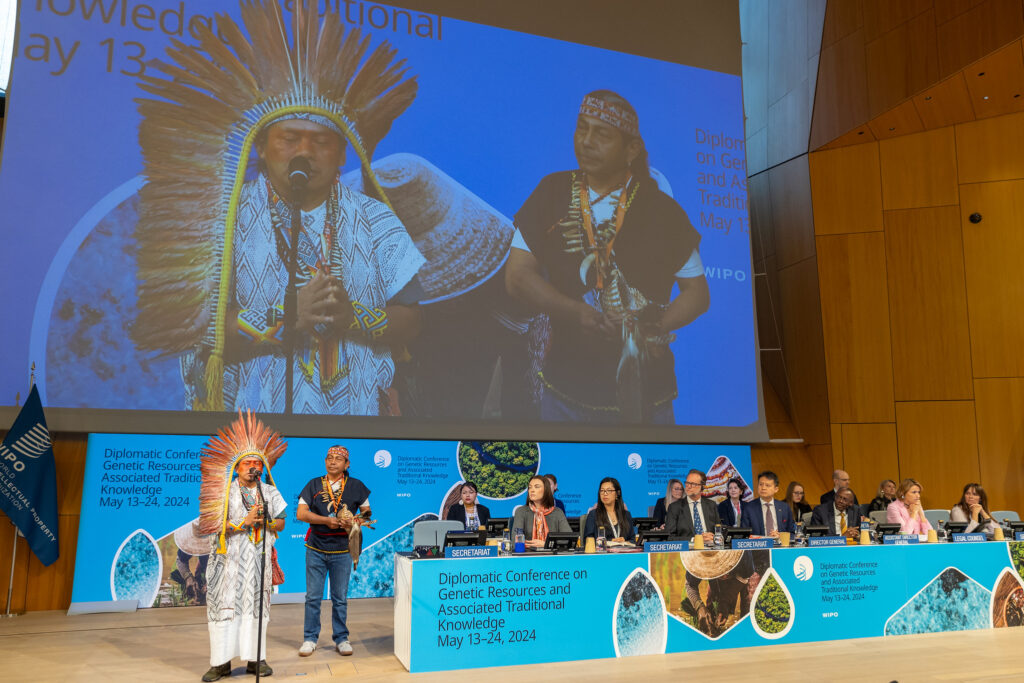
At the 38th session of WIPO’s Program and Budget Committee (PBC), the Delegation of Colombia, speaking on behalf of the Group of Latin American and Caribbean Countries (GRULAC), introduced a proposal to address the ongoing funding crisis that threatens the participation of Indigenous Peoples in WIPO’s norm-setting processes. The proposal calls for the internal reallocation of existing budgetary resources to ensure minimum, stable support for Indigenous and local community representatives at meetings of the Intergovernmental Committee on Intellectual Property and Genetic Resources, Traditional Knowledge and Folklore (IGC). Colombia emphasized that the proposal had the support of most GRULAC members and was developed in consultation with delegations from other regional groups. It was presented in response to the exhaustion of the WIPO Voluntary Fund, a mechanism created in 2005 (WO/GA/32/6) to support Indigenous participation but which has remained underfunded for years. The Delegation warned that the lack of resources—ongoing for more than a year—has already undermined inclusive participation in discussions directly impacting the rights and interests of Indigenous communities. Crucially, the GRULAC proposal does not introduce any new budgetary burdens. Instead, it draws on WIPO’s existing financial rules to allow internal reallocations, enabling at least two Indigenous representatives to attend each IGC session. This approach mirrors a precedent set in 2016 (IGC 31), when Member States—including Switzerland, Australia, New Zealand, Chile, and Peru—pushed for the inclusion of a contingent allocation from WIPO’s regular budget to temporarily support the Fund after its depletion (PBC/24). That 2016 compromise demonstrated that practical solutions can be implemented without amending the program budget or creating new financial obligations. Civil society organizations, including the South Centre, have long argued for the institutionalization of Indigenous participation through predictable, core budget allocations rather than reliance on inconsistent voluntary donations. GRULAC’s proposal responds to those calls and to the broader imperative of inclusive governance in global IP policymaking. No Member State objected to the proposal when it was introduced. However, the Chair deferred the final decision to an informal session to allow further review and discussion. GRULAC expressed its openness to constructive input from all delegations. As WIPO reflects on equity, access, and institutional coherence, this proposal offers a critical opportunity to reaffirm that the voices of Indigenous Peoples must not be sidelined in shaping international legal norms. The forthcoming informal session of the PBC 39th will be a key moment for Member States to move from recognition to action in ensuring meaningful, sustained Indigenous participation at WIPO.

Scroll to Top