May 8, 2025

Education

The Importance of Copyright Exceptions for Teachers and Learners

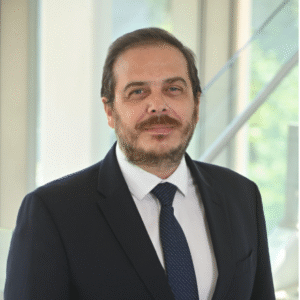
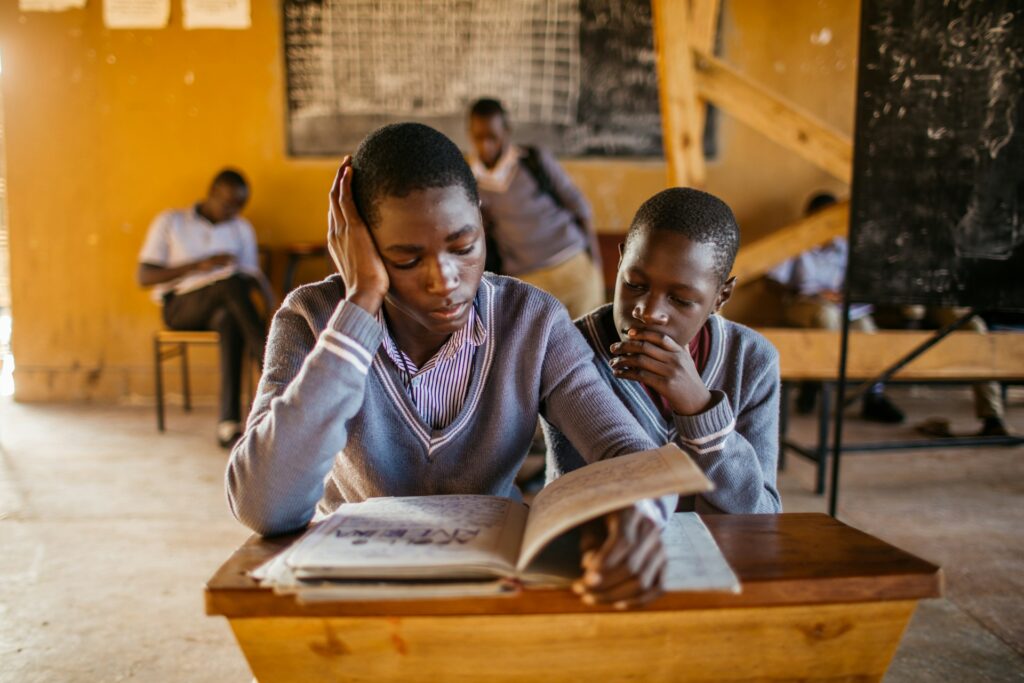
by Dr. Mugwena Maluleke, President of Education International (EI) and General Secretary of the South African Democratic Teachers’ Union (SADTU) On 21 May 2025, the Constitutional Court in South Africa will consider the constitutionality of the Copyright Amendment Bill passed by parliament in 2019 and again in 2024. The new Bill introduces exceptions and limitations to copyright to allow educators to copy, share and adapt excerpts of copyrighted learning materials in the classroom. In this contribution to the debate, Mugwena Maluleke highlights the education crisis facing millions of learners, especially in Africa and the Global South, and the importance of copyright reforms that increase access to learning materials. This article was first presented as a keynote input to the Conference on “Copyright and the Public Interest in Africa and the Global South on 6th Feb 2025 in Cape Town. You can watch the video recording of this presentation here. Dear colleagues, It is an honour to join you today in Cape Town as we reaffirm our shared mission of ensuring equitable access to knowledge and protection of traditional knowledge for Africa. Without reiterating much of what Dr. Schönwetter has eloquently stated in his welcoming address, I extend my gratitude to all those involved in hosting this conference and to all of you attending. Thank you for your commitment to copyright law reform. Reflecting on my childhood in rural Limpopo, we were compelled to learn in English and later in Afrikaans, which led us to stand against the apartheid government in 1976. We were never given the opportunity to learn in our own language. This experience underscores the profound impact that learning materials have on a child’s potential in school. In the quest for knowledge equity, every child deserves the right to learn in their own language. Today, I stand before you not only as the President of Education International but also as the General Secretary of the South African Democratic Teachers Union, representing more than 70% of educators and education workers in South Africa. Charles Darwin, the father of evolution, once said, “It is not the most intellectual of the species that survives; it is not the strongest that survives; but the species that survives is the one that is able best to adapt and adjust to the changing environment in which it finds itself.” The Global Status of Teachers Report, launched on the International Day of Education, January 24 this year, revealed a shocking shortage of 44 million teachers worldwide. A major catalyst for this shortage is the inability to attract and retain teachers due to inadequate conditions for providing quality teaching. Debrah Ruh, a global inclusivity strategist, noted that “accessibility allows us to tap into everyone’s potential.” UNESCO’s Framework for Action recognizes knowledge as part of the right to education for a reason: it is crucial for teachers to have access to teaching and learning materials specifically designed for educational purposes. Fair copyright legislation is essential to enable teachers to adapt and use materials, enrich them, make them context-specific, decolonize our knowledge production and consumption in education, and address an increasingly diverse student body.  DECOLONISATION OF KNOWLEDGE and DECRIMINALISATION OF TEACHERS Having mentioned decolonisation of knowledge production and consumption in education, I must add that this implores us to embark on a journey of decolonisation, peeling back the layers of oppression that have been ingrained in our consciousness. This is not merely an act of dismantling the physical symbols of colonialism, but a profound transformation of our mental landscapes. As we lift the veils of ignorance and prejudice, we must replace them with the light of wisdom and understanding. Decolonisation is a reawakening, a reclamation of our heritage and identity.  May I also add that education is the bridge that connects our past struggles to our future triumphs. The right to education is a fundamental human right. Our teachers should not be criminalised for striving to provide quality education to our children. Unfortunately, copyright laws for education are often overly restrictive, creating barriers for teachers and the right to education. Global EI research shows that teachers in many Latin American and African countries are particularly disadvantaged by copyright legislation, forcing them to work in legal grey zones or stop using important teaching materials. The use of digital materials and adaptations for children with disabilities poses a particular challenge for the teaching profession.  Among 37 countries studied in a recent report by wireless connectivity specialist Airgain, South Africa ranks as one of the worst countries for digital readiness. THE GLOBAL EDUCATION CRISIS Recent studies highlight the urgent need for improved access to education. The 2025 Global Estimates Update by Education Cannot Wait reveals that 234 million school-aged children in crises worldwide require urgent support to access quality education, an increase of 35 million over the past three years. Refugees, internally displaced children, girls, and children with disabilities are among the most affected. The report emphasizes that these growing needs are rapidly outpacing education aid funding and calls for urgent additional financing to address this global silent emergency. Access to appropriate learning materials is a key strategy for achieving the first means of implementation (4a) under SDG4. The supporting Framework for Action Education 2030 highlights access to learning materials as one of the core strategic approaches for implementing the goal: “Education institutions and programs should be adequately and equitably resourced, with safe, environment-friendly, and easily accessible facilities; sufficient numbers of quality teachers and educators using learner-centered, active, and collaborative pedagogical approaches; and books, other learning materials, open educational resources, and technology that are non-discriminatory, learning conducive, learner-friendly, context-specific, cost-effective, and available to all learners – children, youth, and adults.” At the heart of Education International’s Go Public, Fund Education campaign is the principle of putting people before profit. The message is clear: we want creators and authors of material to be compensated fairly, but we do not want intermediaries in the copyright business, such as publishers and streaming executives, to create profit margins that deter access to learning materials

Africa: Copyright & Public Interest, Blog

South African apex court recognises the “constitutional imperatives of equality and dignity for persons with disabilities” in landmark copyright judgment 

On 7 May 2025, the Constitutional Court of South Africa handed down judgment in Blind SA v President of the Republic of South Africa and Others [2025] ZACC 9 (‘Blind SA II’). The judgment read-in an immediately operational accessible format shifting provision for people with all disabilities across the spectrum as well as expressly providing for the cross-border exchange of accessible materials without the requirement of authorisation. In doing so, it gave effect to South Africa’s constitutional and international obligations to ensure that people with disabilities do not experience unfair discrimination (and other rights violations) – in this case, by the operation of copyright legislation. It also transformed South African law to align with the Marrakesh Treaty to Facilitate Access to Published Works for Persons Who Are Blind, Visually Impaired, or Otherwise Print Disabled (‘Marrakesh VIP Treaty’) and, by addressing this provision to people with all disabilities, it went beyond Marrakesh’s “floor”, to fulfil its obligations under the South African Constitution and the United Nations Convention on the Rights of Persons with Disabilities (UNCRPD).  Blind SA II is the latest major instalment in a long-standing – and ongoing – saga of South Africa’s copyright reform process that began over a decade ago. South Africa’s Copyright Act 98 of 1978 does not contain provisions that explicitly permit accessible format shifting. People with disabilities have thus had to expose themselves to criminal and civil sanction to access educational and cultural materials that are unavailable in accessible formats. On this basis, and due to the protracted reform process, Blind SA, represented by SECTION27, approached the High Court in 2021, arguing that the lack of such provisions in the Copyright Act constituted unfair discrimination against people with disabilities, and violated several rights in the Constitution’s Bill of Rights including the rights to equality, dignity, education, culture and freedom of expression. The High Court held that the Act was thus unconstitutional. The Constitutional Court confirmed the unconstitutionality of the Act to this extent in Blind SA v Minister of Trade and Industry and Others [2022] ZACC 33 (‘Blind SA I’). Writing elsewhere, I have conceptualised this as copyright discrimination. To remedy the constitutional defect, the Constitutional Court read-in a court-crafted provision (s 13A) that explicitly permitted accessible format shifting – but limited its scope of application to literary and artistic works and to people with visual and print disabilities only. Mindful of the ongoing legislative process, the Court suspended the declaration of invalidity and limited the reading-in remedy to a period of two years – after which it envisioned that the reform process would be concluded. However, on 21 September 2024, the remedy ordered by the Court in Blind SA I lapsed, creating – in the Court’s own words in Blind SA II – an “immediate rights vacuum affecting the constitutional rights of visually and print-impaired persons” [para 55]. Although Parliament had acted within the time frame set by the Court’s order by passing the Copyright Amendment Bill in February 2024, the President did not make a decision on whether to sign the Bill into law within the prescribed time frame. Following the lapsing of the remedy, Blind SA urgently approached the Constitutional Court seeking relief amongst other things on the basis that the scheme of copyright – and its criminal and civil consequences for infringement – required a clear statement of permitted acts that were exempted from infringement. Following the lapsing of the remedy, the legal position was unclear, creating uncertainty in the face of confirmed constitutional rights violations. Blind SA thus sought a re-reading in of the same remedy (s 13A) until the process concluded, or any other remedy that the Court considered just and equitable.  Days after Blind SA’s application was filed, on 10 October 2024, the President triggered a rare constitutional mechanism, declining to sign the Bill into law and instead referring it to the Constitutional Court citing that two of his constitutional reservations, previously raised in 2020, when he referred a previous version of the Bill to Parliament, had not been fully accommodated by Parliament. Notably, his reservations did not concern the accessible format shifting and cross border exchange provisions (proposed s 19D of the Bill) [para 53]. In the words of the Court, “the provision maintains its constitutional integrity and remains separate from the concerns raised in the President’s referral”[para 57]. However, due to the fact that these provisions were part of the Bill being impugned by the President, they also remain in abeyance. The Court is now due to hear the matter concerning the President’s referral on 21 and 22 May 2025 (‘the Referral proceedings’) that will determine the eventual fate of the Copyright Amendment Bill.  Meanwhile, the Constitutional Court held a hearing in November 2024 where it considered Blind SA’s application for urgent relief – in light of the President’s referral. As none of the parties disputed urgency, the hearing centred around what a just and equitable remedy would look like, given the circumstances. Subsequently, in an interim order dated 18 December 2024, to remain in force until the Court’s final judgment in the case, the Court read-in once again its remedy from Blind SA I (s 13A), effectively ensuring that people with visual and print disabilities could continue to engage in accessible format shifting without it being considered an infringement of copyright. The lacuna in the law was temporarily filled.  This brings us to 7 May 2025. The Court handed down its judgment in Blind SA II summarising that back in 2022, “the constitutional defect that necessitated this Court’s intervention did not lie in any specific provision of the Copyright Act that needed to be struck down, but rather in the absence of necessary provisions to protect the rights of persons with visual and print disabilities”[para 47], and given the change in circumstances in 2025, when considering an appropriate just and equitable remedy “[t]he potential violation of fundamental rights emerges as the decisive consideration, particularly given the absence of certainty regarding the Bill’s eventual assent”[para

Blog, Trade Agreements & IP

The Unclear Status of Copyright Exceptions and Limitations in the UK-India Free Trade Agreement 

On May 6, 2025, the United Kingdom (UK) and India announced that they had reached agreement on a bilateral free trade deal that includes a chapter on intellectual property.However, no agreement text was released. Rather, the UK Department for Business & Trade issued a summary of the agreement’s terms, and the summary acknowledged that “work is continuing to finalise the legal text and resolve the last issues.” In other words, at this point there is just an agreement to agree, rather than a real agreement. According to the summary, the IP chapter “will support our economies through effective and balanced protection and enforcement of IP rights.” The chapter will cover copyright and related rights, designs, trademarks, geographical indications, patents, and trade secrets, as well as the enforcement of IP rights. The summary provides little detail concerning copyright and related rights. It simply states that India will also commit to engaging on aspects of copyright and related rights, addressing the interests of UK creators, rights holders, and consumers. This includes around public performance rights and artist’s resale rights, which acknowledge the importance of royalty rights. India will also conduct an internal review of their copyright terms of protection.    Further, the summary notes that the chapter “will not commit the UK to domestic legislative change, nor will it undermine the UK’s own IP system or our international positions on IP.” Significantly, the summary is silent on copyright exceptions and limitations. In 2022, a draft of the UK’s proposed text for the IP chapter was leaked. The language concerning copyright exceptions and limitations was limited to the Berne Three Step Test and other treaties: Article H.7: Limitations and Exceptions   1. Each Party may introduce limitations or exceptions in its domestic law to the rights provided for in this Section [H]. but shall confine such limitations or exceptions to certain special cases that do not conflict with a normal exploitation of covered subject matter, and do not unreasonably prejudice the legitimate interests of the right holder.   2. This Article is without prejudice to the limitations and exceptions to any rights permitted by international agreements such as the TRIPS Agreement, the Berne Convention, the Rome Convention, the WCT. or the WPPT.   ​The summary asserts that the agreement would support the economies of the UK and India through “balanced protection” of IP rights, but nothing in the summary, or the UK’s 2022 draft text, reflects balanced protection with respect to copyright. The Three Step Test, by itself, is too ambiguous to provide meaningful balance. Hopefully India insisted upon language that clarified that both parties had the flexibility to adopt more open-ended fair dealing or fair use provisions, like those recently adopted by former British colonies such as Singapore, Malaysia, and Nigeria. For example, the agreement could include language similar to Article 11.18 of the Regional Cooperation for Economic Partnership (RCEP), signed in 2020. That language provides that  3. Each Party shall endeavour to provide an appropriate balance in its copyright and related rights system, among other things by means of limitations and exceptions consistent with paragraph 1, for legitimate purposes, which may include education, research, criticism, comment, news reporting, and facilitating access to published works for persons who are blind, visually impaired, or otherwise print disabled. 4. For greater certainty, a Party may adopt or maintain limitations or exceptions to the rights referred to in paragraph 1 for fair use, as long as any such limitation or exception is confined as stated in paragraph 1. India initially participated in the RCEP negotiations, but withdrew in 2019 over issues unrelated to intellectual property.

Scroll to Top