July 10, 2025

Blog, WIPO-SCCR

User Rights Network on SCCR Calls for Progress

The following statement was delivered by Professor Sean Flynn on behalf of the Global Expert Network on Copyright User Rights at the World Intellectual Property Organization General Assembly meeting on the Standing Committee on Copyright and Related Rights.  …. I speak on behalf of the User Rights Network of copyright academics around the World. I found Ms Forbin’s opening statement to be quite striking.  The Broadcast and the Limitations and Exceptions topics can indeed be traced back over a quarter of a century. Both date back to the 1996 Internet Treaties where the broadcast issue was removed and an agreed statement adopted calling for adaptation of exceptions for the digital environment. Both issues were on the initial agenda of the SCCR that was created by the GA in 1998.  Of course the increased participation in the Committee and the lack of speedy work is not really a paradox but a reflection of the importance and contested nature of some of the issues.  But as an outside observer, I would say that conclusions of both agenda items are fairly clear and achievable.  On L&E, the GA Decision of 2012 statement sets the goal. Which is not only thematic events and tool kits as some observers here called for. The 2012 General Assembly mandated “work towards an appropriate international legal instrument or instruments” on limitations and exceptions. (WO/GA/41/14). Instruments. Not just events and guides.  We commend the SCCR’s adoption of the Work Program in SCCR 43 to progress toward the mandate. That Work Program contains innovative modalities of the kind Ms Forbin may have been referring to, including intercessional work.  Importantly, the Work Program does not prejudge the nature of the instrument. Today, I heard the EU and the US agree to work on at least soft law instruments on L&Es. I have heard all education and research stakeholders state that such soft laws would be helpful. So that seems to be a landing point.   On Broadcast, there would be little opposition to the text if the fixation and post fixation rights were removed. But there will be continued resistance as long as those provisions are in the text.  The Broadcast Treaty should also ensure that broadcast rights cannot be more extensive than copyright protection on the same materials. This is not yet the case with the current draft. But this is a pretty easy technical fix.  I join the comment form KEI in thinking the possible landing zones on these issues are fairly clear. There may indeed be a need for innovative modalities to reach them. The SCCR agenda right now contains a whole host of issues. There must be 10 or 12 different agenda items that are talked about every time. So perhaps there should be some innovative modalities to concentrate the discussion, special sessions devoted to particular topics, for instance. We are of course happy to work with delegations on these and other important issues.

Blog, WIPO GA, WIPO-SCCR

WIPO DDG Expresses “Frustration” and “Bitterness” and Calls for Risk Taking for Progress

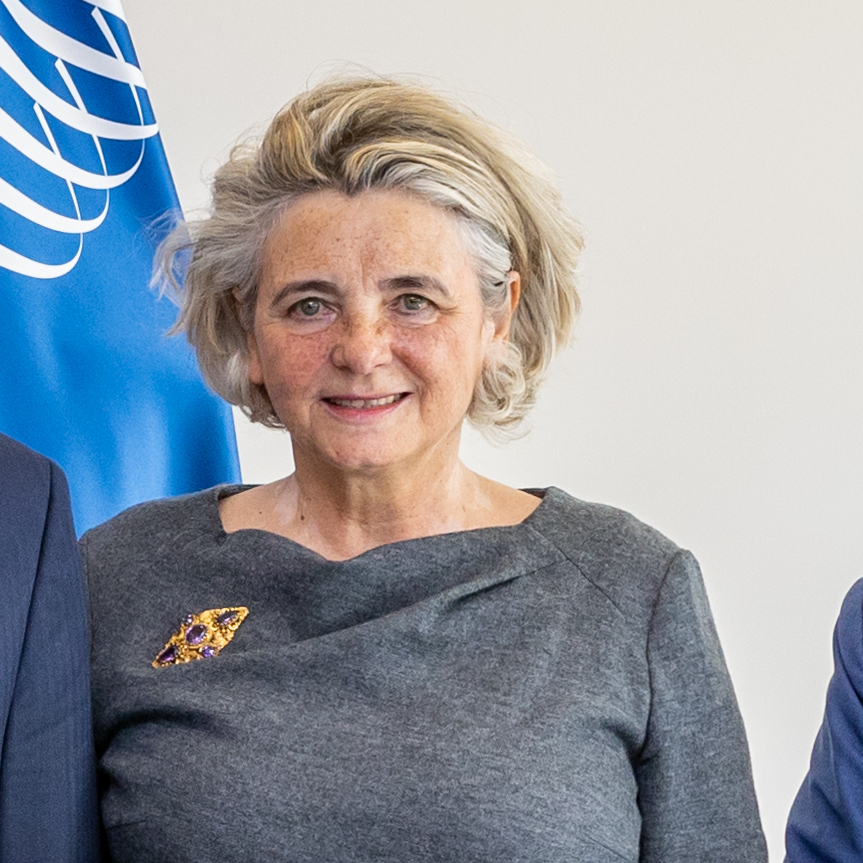
The World Intellectual Property Organization General Assembly’s consideration of the work of the Standing Committee on Copyright and Related Rights (SCCR) began with a report by Ms. Sylvie Forbin, Deputy Director General for the Copyright and Creative Industry Sector, expressing “frustration” and “bitterness” about the Committee’s slow pace of work, and ended with a call for risk taking.  Ms. Forbin’s opening statement focused on the Committee’s inability to reach conclusions on two long-standing agenda items — protection of broadcast organizations and promotion of limitations and exceptions — that have been on its agenda since the Committee’s formation in 1998. Her comments opened by describing “a strange paradox” between the significant and growing participation of member states and observers in the Committee’s meetings, which are indeed among the most attended WIPO meetings each year, and “that it is more difficult than it was in the past to take decisions that will help us to achieve progress in our work.”  Her comments focused first on the long-stalled treaty on the protection of broadcasting organizations. The issue of protecting broadcasting organizations was removed from the 1996 Diplomatic Conference and moved to the SCCR’s agenda when that committee was created by the GA in 1998. A draft Treaty was approved for a Diplomatic Conference by the GA in 2006, but the SCCR failed to approve a draft text “confined to the protection of broadcasting and cablecasting organizations in the traditional sense” and “based on a signal-based approach” (WO/GA/33/10, para 107, 2006). The SCCR now operates under the GA’s 2007 decision to call a diplomatic conference only after there is sufficient “agreement on objectives, specific scope and object of protection” in a draft instrument (WO/GA/34/16). As reflected in the Chair’s Summary of the 45th meetings of the Committee, there continue to be significant differences between countries on the basic terms of the treaty. In particular, there is significant disagreement with the inclusion of articles creating fixation and post-fixation rights, including an exclusive right to make available stored programs on the Internet. It appears likely that a draft treaty would be approved for a diplomatic conference if these clauses were taken out. But the draft treaty produced by the Chair’s facilitators continues to be far broader than the consensus of the Committee will allow.  Ms. Forbin expressed “frustration” at this state of affairs:  I think that you will understand that we are experiencing a certain level of frustration given that there is no concrete result after intense discussions on the draft Treaty for the protection of broadcasting organizations which our Committee has been working on for more than a quarter of a century. A quarter of a century, I repeat. That is a very long period of time.  She rhetorically asked in her statement whether the lack of progress is due to flawed modalities — “to the fact that perhaps only one or two meetings a year is not really the ideal framework for negotiations that are as technical as they are” — or “”the very raison d’être of this Treaty?” She added: “Is there not a real risk that this treaty in its current configuration is leading us down a path that has no end?” She next turned to the issue of limitations and exceptions. This topic has also been on the agenda of the Committee since it was created in 1998, with the GA approving an agenda item on Copyright, Related Rights, and Digital Technology “from the viewpoint both of owners and managers of rights, and of users and the général public.” The agenda produced the Marrakesh Treaty to Facilitate Access to Published Works for Persons Who Are Blind, Visually Impaired, or Otherwise Print Disabled in 2013. SInce 2012, it has been working under a GA mandate “to work towards an appropriate international legal instrument or instruments” on limitations and exceptions for libraries, archives, museums, education and research institutions and people with other disabilities (WO/GA/41/14). Work on the agenda has increased it pace in recent years, including through a Work Program adopted by the Committee to produce “objectives, principles and options” for an instrument on “priority” issues of preservation, digital exceptions, and people with disabilities.  Ms Forbin acknowledged the “fixed mandate as set out by the General Assembly in 2012,” although she did not identify its objective to produce binding or non-binding “international legal instrument(s).” She pointed to the Secretariat’s production of “thematic studies,” “typologies” and “regional meetings and an international conference” which “enabled us to hold a very rich exchange of views and to identify a roadmap for the future we are currently working on.” But she lamented that “for a number of sessions now that there is in fact a misunderstanding” over the goals of the agenda. She therefore appeared to call for a reevaluation of the purpose of the agenda item:   We need to clarify our expectations while taking into account, of course, that they are not necessarily the same for all members of our committee. Is it not a good idea to try and have a sensible understanding of what could be common ground for us?  After discussing the new calls for the Committee to address artificial intelligence and other digital copyright issues, Ms. Forbin returned to a darker tone, expressing “bitterness” at the lack of progress: Our analysis of the situation is that it’s proving to be difficult to gather all of the necessary dynamics to reach consensus. What we have seen in this Committee is that we are wasting our energy and resources to a certain degree. We are obliged to note with some bitterness that we are losing out on valuable opportunities despite the efforts of some of you to breathe new vitality and life into our work. Given the major issues that are being posed on the issue of copyright during this extremely rich and complex period which require cross -cutting analysis and feedback both from professionals as well as from institutional managers – is the SCCR still not a key forum for seeking solutions

Blog, WIPO GA

WIPO GA Opening Statements Signal Debates Ahead

The World Intellectual Property Organization’s General Assembly finished the opening statements of Member States and is now moving toward its substantive work. This note includes quotes of some of the opening statements on key issues facing the General Assembly and in WIPO’s work head.  Support SCCR work on Broadcast and L&E Instruments With the conclusion of two treaties this year  – on disclosure of genetic resources in patents and, on design law – the focus on WIPO’s norm setting is shifting to the Standing Committee on Copyright and Related Rights (SCCR). A key issue in the past several General Assemblies has involved whether to recommend that the current draft treaty be the subject of a diplomatic conference, and if so, whether it will be linked with progress toward an instrument in the lng-stalled limitations and exceptions agenda. The work on Broadcasting is guided by decisions of the GA in 2006 and 2007, calling for “agreement on objectives, specific scope and object of protection” (WO/GA/34/16) on a draft text “confined to the protection of broadcasting and cablecasting organizations in the traditional sense” and “based on a signal-based approach” (WO/GA/33/10, para 107, 2006). The work on limitations and exceptions is guided by the 2012 decision of the GA to work toward an “appropriate international legal instrument or instruments (whether model law, joint recommendation, treaty and/or other forms)” on uses by libraries, archives, museums, educational and research institutions, and persons with other disabilities (WO/GA/41/14).    Broadcast Denmark, on behalf of the EU  “WIPO can count on the continued and active engagement of the EU and its Member States in strengthening the normative agenda of WIPO’s work. We are committed and support moving towards the prompt conclusion of a broadcasting organizations treaty.” Estonia, on behalf of CEBS “We would express our strong support for the timely conclusion of the broadcasting organizations treaty.” India “India remains hopeful for meaningful progress on all pending issues including finalization of a balance[d] Treaty on the protection of broadcasting organizations.” Trinidad and Tobago  “We remain committed to working as well towards a broadcasting treaty.” Hungary “We stand ready to support work towards the adoption of the broadcasting treaty.” Australia “Australia continues to support working towards the Treaty on the Protection of broadcasting organizations”  France “We are attached to the key role of the organization in supporting creative economies and the work of the Standing Committees, particularly when it comes to developing a broadcasting treaty.” Philippines “The Philippines encourages discussions on the proposed Treaty on the Protection of Broadcasting Organizations and strongly supports SCCRs in its endeavors. To recall, the preparatory process was initiated in 1997 in a symposium in Manila. Meanwhile, advances in technologies have generated more piracy, illegal signals and irresponsible use of artificial intelligence. IP protection needs to outpace these advances.” Italy  “The WIPO normative agenda includes the negotiation for a treaty dedicated to broadcasting organizations. Italy supports the adoption of an effective anti-piracy instrument aimed at enhancing the international protection of broadcasting organizations IP content, and thereby contributing to strengthening the principle of territorial exclusivity, which plays a crucial role in securing financing for IP content’s development and distribution.” Finland “In the SCCR Committee, we consider that all necessary preparatory work has been done to finalize a broadcasting treaty.” L&E African Group  The African Group supports advancing discussions on limitations & exceptions for libraries and archives and imitation & exceptions for educational and research institutions for persons with disabilities. Limitations and exceptions are of crucial importance to the African Group. And we acknowledge the support of education and research and for fostering innovation, competition, and economic development, while also supporting the achievement of the Sustainable Development Goals, including the SDG4 and SDG10.” Arab Group (represented by Algeria)  “We are very much interested in the conclusion of a legally binding text as regards exceptions and limitations so that we can maintain a balance between copyright and society in general.” Cameroon “We call for text-based negotiation for the adoption of an international instrument on limitation and exceptions in copyright regarding research, education, museum, archives and people with other disabilities. disabilities as mandated. Delivering on this long overdue subject should be our immediate priority so as to give room for commencement of in-depth discussion on other contemporary topics on IP.” Nigeria “Nigeria supports swift progress in SCCR on balance, limitation and exceptions for education and research.”  Algeria “We support having a balanced approach when it comes to copyrights with priorities to exceptions and limitations mentioned in a legally binding instrument.” Cote d’Ivoire  “My country highlights the importance of guaranteeing equitable access to knowledge and to technologies for developing countries and we encourage WIPO to promote inclusive mechanisms that enable broadened access to works protected by copyright and to essential technologies.” Debate shapes over SDGs and voting on the WIPO Budget In the last meeting of the Program and Budget Committee, the United States opposed references to the SDGs in the Budget, stating  “The United States does not support any proposal unrelated to WIPO’s mandate and intended to advance the implementation of the SDGs. The 2030 Agenda for Sustainable Development and the Sustainable Development Goals advanced a program of soft global governance that is inconsistent with U.S. sovereignty and adverse to the rights and interests of Americans.”  In what might be seen as an explicit rejection of the US position, a number of countries specifically embraced WIPO’s inclusion of the UN Sustainable Development Goals as guiding posts of its work. Support for SDGs Namibia (for African Group) “We acknowledge WIPO’s efforts toward achieving the Sustainable Development Goals and encourage the reflection of these efforts across all the activities of the organization, including the program and budget for 2026.” Pakistan “We commend WIPO’s sustained focus on the Development Agenda and its alignment with the 2030 Agenda. Project-based demand-driven support are practical tools for enhancing IP awareness and strengthening ecosystems that drive innovation and economic growth.”  Jamaica “Intellectual Property both generates and drives economic opportunities that are intrinsically linked to Jamaica’s national
Scroll to Top