Counterfeit Concerns or Development Disconnect? A Look at the UK Proposal at CDIP/34
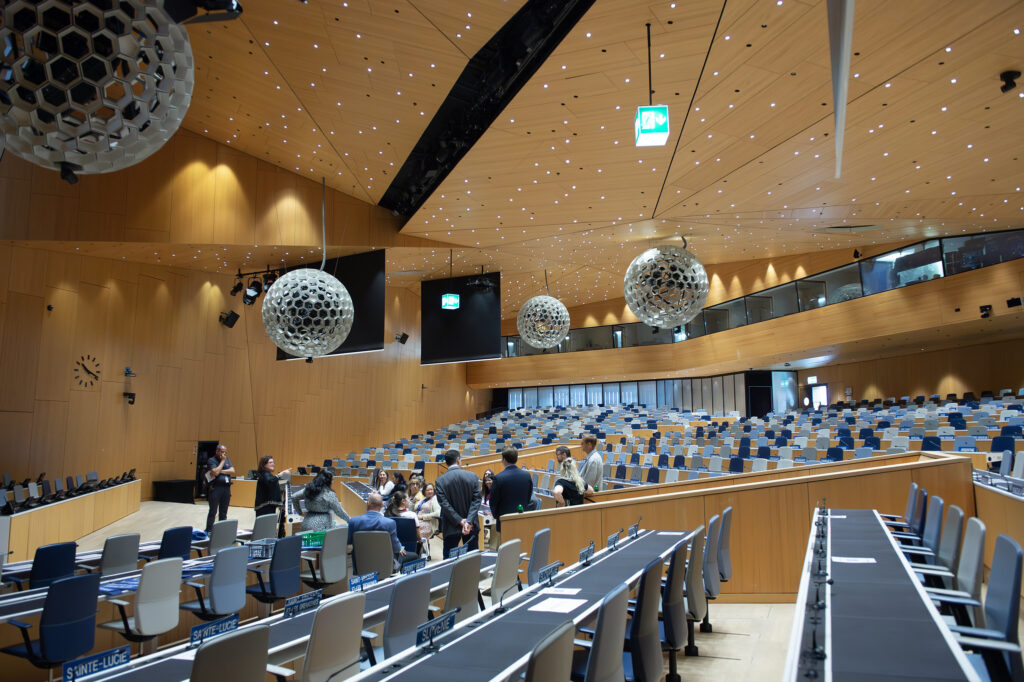
A debate broke out at the 34th session of WIPO’s Committee on Development and Intellectual Property (CDIP) about a proposal from the United Kingdom on “Development of Strategies and Tools to Address Cross-Border Trade in Counterfeit Trademark Goods in Developing Countries.” The project aims to support customs enforcement against counterfeit trademark goods. If adopted, this would appear to be the first CDIP project focused explicitly on such border enforcement mechanisms. The project was criticized by many developing countries for not aligning adequately with the spirit and objectives of WIPO’s Development Agenda and was postponed until the next meeting. The Development Agenda was adopted in 2007(WO/GA/34/16) to reorient WIPO’s IP activities to support sustainable development, emphasizing flexibilities, public domain preservation, and inclusive innovation. The Development Agenda was adopted at the same time multinational industries were pushing for new international norms on customs and border enforcement as part of the so-called “Enforcement Agenda.” See Susan K. Sell, The Global IP Upward Ratchet, Anti-Counterfeiting and Piracy Enforcement Efforts: The State of Play,, PIJIP Research Paper Series. No. 15, 2010), http://digitalcommons.wcl.american.edu/research/15/. Around this time, developing countries often blocked efforts of developed countries to reorient IP policy discussions toward work on enforcement. In this context, only one recommendation on IP Enforcement was included in the final 45 Development Agenda Recommendations, listed under “Other Issues,” and emphasizing “broader societal interests”. To approach intellectual property enforcement in the context of broader societal interests and especially development-oriented concerns, with a view that “the protection and enforcement of intellectual property rights should contribute to the promotion of technological innovation and to the transfer and dissemination of technology, to the mutual advantage of producers and users of technological knowledge and in a manner conducive to social and economic welfare, and to a balance of rights and obligations”, in accordance with Article 7 of the TRIPS Agreement. Although other WIPO Committees, primarily through the Advisory Committee on Enforcement (ACE), work on IP enforcement capacity building, the issue has not been adopted into the CDIP’s work. Thus, the UK’s proposal breaks some new ground for the Committee. The UK presented project CDIP/34/4 as a capacity-building initiative to help developing countries prevent the flow of counterfeit goods at their borders. It outlines a three-pillar structure: case studies on smuggling methods, operational guidelines for customs risk assessment, and training sessions tailored to national needs. According to the UK Statement at the CDIP: “The primary objective of the proposed project is to strengthen the technical capability of the beneficiary countries to counter the threat of counterfeit goods entering their national borders. Given the large scale of cross-border counterfeit goods trade, this project if adopted will not only help protect the domestic economy and public safety of beneficiary countries but also strengthen IP enforcement to the benefit of trademark owners globally. The project is built on three pillars. First pillar will focus on the examination of the ways in which counterfeit trade markets enter the borders of the beneficiary countries. (…)The second pillar will aim towards enhancing the counterfeit risk assessment framework of each beneficiary country through the production of bespoke operational guidelines. (…)The third and last pillar concerns the provision of the capacity building programme including virtual and on-site training. Strong concerns came from the African Group (led by Algeria), Nigeria, Brazil, Indonesia, Bangladesh, Lesotho, Pakistan, and others. The main arguments raised against the UK proposal focus on three core concerns. First, the project frames counterfeiting as a problem specific to developing countries, reinforcing stereotypes and ignoring the global, transnational nature of illicit trade. For example: Lesotho: “My Delegation views this formulation as inherently discriminatory and imbalanced. By singling out Developing Countries as the locals of counterfeit trade, the proposal reinforces harmful stereotypes and overlooks the global and complex nature of counterfeiting. This is not merely an issue confined to any one region or development status. It involves supply and demand chains that spend developed and developing nations alike, including transit routes, manufacturing hubs and consumer markets across all levels of economic development. We are concerned that this approach risks stigmatizing Developing Countries, diverting attention from the need for shared responsibility, equitable cooperation and inclusive capacity building mechanisms. Moreover, it does not sufficiently account for the historical and structural trade imbalances that limit Developing Countries’ abilities to enforce Intellectual Property rights effectively.” Nigeria: “The current text concentrates on border interdiction but pays insufficient attention to identifying, analyzing, and dismantling the production and manufacturing hubs where counterfeit goods originate. Without shining a light on those upstream nodes, enforcement at the border will remain a costly game of catch-up. While enforcement capacity is important, the proposal overemphasizes seizure and risk profiling at the expense of public facing awareness, trader training, consumer education and private sector partnerships, all of which are indispensable for reducing demand and using the culture of respect for Intellectual Property. By concentrating resources on investigative and interdiction tools, the proposal risks diverting limited WIPO budget away from development-oriented priorities including MSME support, market formalization and innovation promotion.” Second, the proposal was criticized for adopting an enforcement-heavy approach that prioritizes border interdiction over development-oriented measures such as capacity building for innovation, support for informal economies, and public awareness. Algeria (on behalf of the African Group): “The African Group is not in a position to accept this proposal in its current form. We call on more developmental goal of this project which is currently centered around enforcement aspects.” Third, it lacks alignment with the WIPO Development Agenda, particularly by failing to incorporate TRIPS flexibilities, safeguards against over-enforcement, and mechanisms to ensure proportionality and development impact. Indonesia: “First, we are concerned that this project advances a predominantly investment-oriented approach which may not fully align with the core principle and objective of the WIPO Development Agenda. In particular, we note the absence of sufficient safeguards for informal economy and the lack of adequate consideration for flexibilities provided under the Trade Agreement, both of which are crucial for developing countries, including Indonesia. Second, we are concerned that the