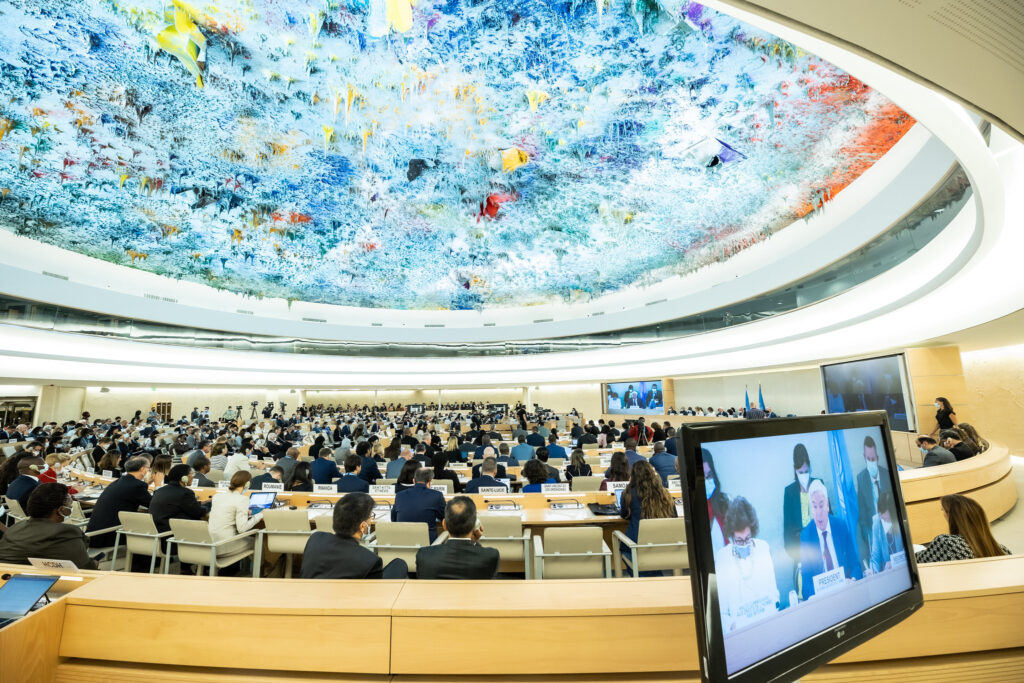
This post was originally published on KEI Online by Thiru Balasubramaniam On Tuesday afternoon, 24 June 2025, the Core Group (Bangladesh, Brazil, China, Egypt, India, Indonesia, Senegal, South Africa, Thailand) convened an informal consultation to consider the revised version draft resolution, “Access to medicines, vaccines and other health products in the context of the right of everyone to the enjoyment of the highest attainable standard of physical and mental health” in Room XXVII of the United Nations Palais des Nations. At the informal, Malaysia proposed textual amendments to the resolution and highlighted the limits of certain voluntary licensing arrangements, most notably Gilead and lenacapavir. Malaysia acknowledges that voluntary licensing arrangements have in some instances contributed to expanded access to medicines. However, we must express our reservation that these arrangements have too often failed to ensure adequate, affordable, and timely access to life-saving medical technologies for many developing countries. As noted in the report of the UN Secretary-General’s High-Level Panel on Access to Medicines, right holders frequently retain the unilateral authority to exclude countries from license agreements—effectively denying access to those most in need. This practice fails to meet the principles of equity and solidarity that global health governance aspires to uphold. A stark illustration of this issue is the case of Gilead Sciences and its antiretroviral drug, Lenacapavir. Despite being a promising long-acting injectable treatment for HIV, Gilead’s voluntary license explicitly excluded developing countries, including Malaysia and many others in Asia, Latin America, and Eastern Europe. These are regions with growing HIV burdens and constrained health budgets, yet they are excluded from generic supply due to the originator’s commercial strategy. Such exclusions highlight a systemic problem: when commercial interests are prioritized in voluntary licensing models, the public health needs of developing countries are marginalized. Therefore, we propose language that tackles the structural shortcomings of voluntary licensing, underscores the pressing concerns of many developing countries in accessing life-saving medicines, and advocates for a more equitable, transparent, and needs-driven framework for access to critical medical innovations. In moving forward, we reaffirm the need for legally certain, transparent, and inclusive mechanisms that prioritize public health over commercial discretion—ensuring that no country is left behind in accessing life-saving medicines, vaccines, and technologies. With respect to the draft resolution, Malaysia stated underscored the exigent need for “strengthened international cooperation and solidarity that prioritizes the primacy of public health and human rights over commercial interests”. Malaysia asserted that TRIPS-plus provisions in trade agreements effectively infringe on the right to health and called on developed countries to “refrain from exerting pressure—whether through trade negotiations, diplomatic influence, or investment agreements—on developing countries to adopt intellectual property protections that exceed TRIPS obligations”. We acknowledge the important guidance provided in the 2009 Report of the UN Special Rapporteur on the Right to Health (A/HRC/11/12), which calls upon developing and least developed countries to refrain from introducing TRIPS-plus provisions into national law, and urges developed countries to desist from promoting such provisions through bilateral or regional trade and investment agreements. We express deep concern that TRIPS-plus provisions—including extended patent terms, data exclusivity, patent linkage, and restrictions on compulsory licensing—go beyond the minimum standards required by the TRIPS Agreement, and risk undermining public health safeguards, delaying access to affordable generic medicines, and increasing healthcare costs, thereby infringing upon the right to health, particularly in developing countries already struggling to meet the health needs of their populations. We caution against increasing trends of developed countries to circumvent international based IP rule through bilateral trade agreements to impose their own IP agendas such as TRIPS plus provisions on developing nations, potentially undermining the multilateral system. We further emphasize that developed countries should refrain from exerting pressure—whether through trade negotiations, diplomatic influence, or investment agreements—on developing countries to adopt intellectual property protections that exceed TRIPS obligations. Such practices restrict national policy space, compromise the ability of States to protect public health, restricting access to affordable health products, and risk undermining the integrity of the multilateral rules-based system. Malaysia calls for strengthened international cooperation and solidarity that prioritizes the primacy of public health and human rights over commercial interests. We urge all Member States to ensure that their trade and intellectual property policies are aligned with their obligations under international human rights law, including the right to health, and to reaffirm their commitment to preserving policy space, resisting TRIPS-plus measures, and working toward an international system that places human dignity and health equity at its core. Malaysia proposed the insertion of the following language including a peace clause in Op 4 bis. New PP Acknowledging that voluntary licensing arrangements, while beneficial in some contexts, have often failed to provide adequate, affordable, and timely access to life saving medicines for some developing countries that are usually excluded from the scope of licenses, as right holders reserve the right to identify countries where they intend to sell the product directly or through other agreements; (part from the Report of the UN Secretary General’s High-Level Panel on Access to Medicines) New PP Acknowledging the 2009 Report of the Special Rapporteur on the right of everyone to the enjoyment of the highest attainable standard of physical and mental health that calls for developing and least developed countries to not to introduce TRIPS-plus provisions in their national laws and developed countries should not encourage developing countries and LDCs to enter into TRIPS-plus FTAs and should be mindful of actions which may infringe upon the right to health.; (Ref A/HRC/11/12 pg 29 para 109)New PP Recalling the 2021 Political Declaration on HIV and AIDS that calls for ensuring that intellectual property rights provisions in trade agreements do not undermine existing flexibilities, as confirmed in the Doha Declaration on the TRIPS Agreement and Public Health (A/RES/75/284 para 68(a)) New Op 4 bis: Call upon States to exercise restraint in undertaking international legal obligations which directly or indirectly undermines the freedom to make use of the TRIPS flexibilities and also urges States to monitor the implications of voluntary licenses in facilitating availability, accessibility and affordability