The Centre on Knowledge Governance is pleased to announce a new short course on AI and IP to take place in Geneva from September 29-30, 2026.
COURSE DESCRIPTION
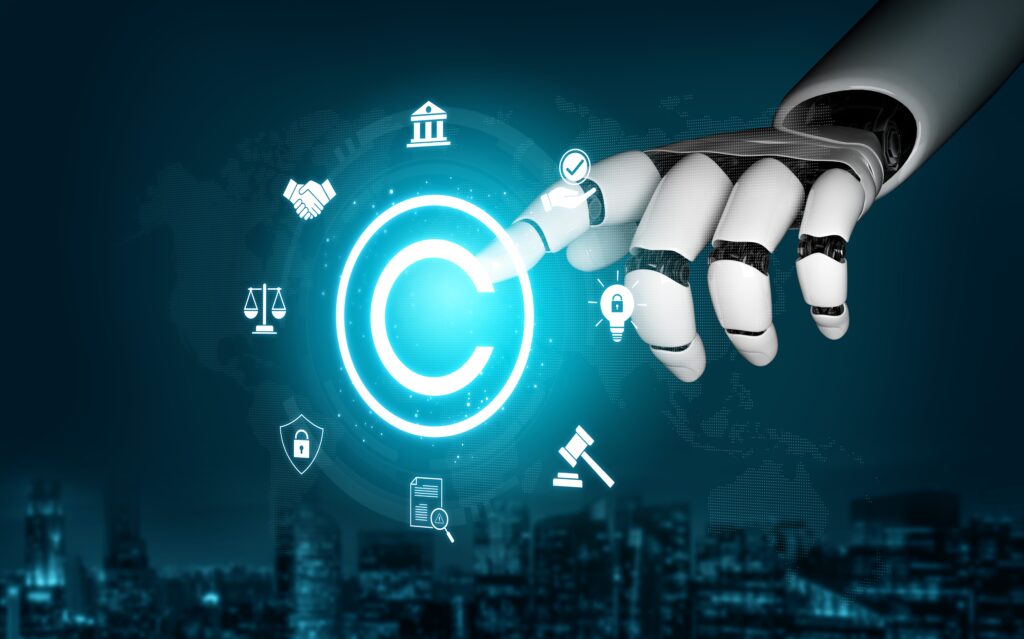
This intensive two-day course provides a comprehensive, comparative analysis of the evolving legal and policy landscape at the intersection of Intellectual Property (IP) and Artificial Intelligence (AI). Participants will explore pressing legal challenges, including the copyright protection for AI training data, the patentability and copyright of AI-generated outputs, and the balance between proprietary interests and the public interest in research (Text and Data Mining and computational research) and the development of “Public AI.”
The course will feature in-depth comparative analysis of legal frameworks and policy proposals across the European Union (EU), United States (USA), India, Brazil, Singapore, Japan, and in international forums, such as the World Intellectual Property Organization, World Trade Organization and other agencies.
The learning experience will culminate in a practical role-play exercise in which students will draft a model international legal instrument aimed at ensuring fair remuneration for creators while safeguarding the rights of researchers and public interest organizations developing AI infrastructure. This legal instrument will focus on a range of factors to be used in distinguishing research and public interest uses of AI from commercial competitive uses.
LEARNING OBJECTIVES
Upon completion of this course, participants will be able to:
- Critically analyze the legal implications of using copyrighted and patented works for AI model training under different international jurisdictions.
- Evaluate the criteria for granting copyright and patent protection to content and inventions created by or with the assistance of AI.
- Compare and contrast the legal exceptions for Text and Data Mining (TDM) in key jurisdictions and their impact on scientific and public interest research.
- Articulate and debate the policy arguments for and against different models of creator remuneration in the age of generative AI.
- Understand the geopolitical and philosophical differences driving comparative AI and IP regulatory approaches (e.g., risk-based vs. rights-based).
- Develop a list of factors which might be used to distinguish public interest AI from commercial AI with which may generate outputs that compete use or substitute for creative works.
- Collaboratively draft a policy instrument addressing complex international IP issues related to AI.
WHO IS THIS PROGRAMME FOR?
This programme is particularly relevant for mid- to senior level practitioners from various organisations working at the intersection of intellectual property and AI policy or scholarship, such as:
- Diplomats and representatives of stakeholder organizations covering institutions such as the World Intellectual Property Organization, World Trade Organization, World Health Organization, International Telecommunications Union and other agencies where AI policy is being debated and formulated;
- Policymakers and participants in domestic policy making forums;
- Professionals in the fields of governmental affairs, research, cultural heritage, law, science and technology, and related fields;
- Graduate and post-graduate students and researchers
LECTURERS
The Course will be directed by Sean Flynn and Ben Cashdan of the Centre on Knowledge Governance, Geneva Graduate Institute. Guest lecturers will participate in person or online to bring comparative expertise from jurisdictions such as India, Brazil and China and the African continent, in addition to the US and EU.
SCHOLARSHIPS
10 scholarships will be available for highly motivated government delegates from developing countries or representatives of public interest organizations who participate in multilateral policy processes on copyright, AI and the rights of researchers.
APPLICATION FOR COURSE
If you are interested in being considered as a student on the course, please click APPLY NOW on this page. A separate form for scholarship applications is also on the same page.