
WIPO

Blog

WIPO Report on UDRP lacks structural separation and data, and throws aside clear free speech protections in the global domain name system

Twenty-five years ago, the then-new Internet Corporation for Assigned Names and Numbers (ICANN) adopted a virtual dispute policy for domain names as its first “consensus policy” and that policy is now due to be reviewed. A comment filed last week by PIJIP professors and fellows Christine Farley, Kathryn Kleiman and Patricia Aufderheide, together with Rebecca Tushnet, Harvard Law School, Michael Karanicolas, Schulich School of Law at Dalhousie University, and Mitch Stoltz, the Electronic Frontier Foundation, laid bare a deep set of concerns about the troubling role of WIPO in writing this report and key recommendations that it made. In this report , WIPO casts itself as the leader of the review of ICANN’s Uniform Dispute Resolution Policy, or “UDRP,” yet as pointed out in the PIJIP comments, the role of WIPO raises key structural concerns as WIPO is the world’s leading provider of domain name dispute services.  Specifically, the comment calls for structural separation: “[In 1999] WIPO became the first ICANN-approved generic top level domain (gTLD) domain name dispute providers, and changed its role from rule-maker to dispute forum. This changes the place of WIPO in the process – as a forum convener, not a rule creator… which means that it is difficult—if not impossible—for WIPO to ask hard questions about core structures and to make comparisons to other existing (NIC Chile) and possible systems.” The comment also questions the lack of comprehensive data analysis in the WIPO-ICA Review – analysis of data that after 25 years is available in abundance:   “After 25 years and over 64,000 UDRP cases brought to WIPO for domain names in the generic top level domain (gTLDs), we expected data: substantive, clear, neutral and statistically valid data. After all, as the first ICANN-approved UDRP dispute provider, WIPO holds this data from the very first UDRP dispute in December 1999 to current ones in June 2025… Yet, this WIPO-ICA Report defaults to the old method of anecdotal evidence: Interviews with the ‘usual suspects’ of well-known people who spend a considerable part of their lives thinking about the UDRP.” Further, the comment raises deep free speech concerns about a recommendation by WIPO to reveal the names of speakers without their consent. It calls for all UDRP Providers in the future to follow the current practices of WIPO (privately adopted) and disclose the names of domain name registrants against whom a UDRP is filed with very limited exceptions (data now redacted due to GDPR and other comprehensive data protection laws).  Our comment strongly disagreed on free speech grounds: “For the cost of a UDRP filing, currently $1500 for a single-panelist at WIPO, the report recommends that rules and ethics protecting privacy, anonymity and free speech be thrown aside. The identity of a person or party speaking, critiquing, or criticizing can be revealed to the complainant, even if the registrant is fully protected under their national laws and rights of free expression and privacy, including the right to anonymity and pseudonymity.” This is only the first volley in UDRP review that is likely to take place over the next few years at ICANN. If you are interested in this material, and especially the fairness and balance of future UDRP rules, and would like to be involved in further discussion, please contact Kathryn Kleiman, Senior Policy Fellow of PIJIP, at Kleiman@american.edu. Links: [1] WIPO-ICA UDRP Review Report of April 2025 can be found here. [2] Our comments can be found here. [3] All comments to this report can be found here.

Blog, WIPO-SCCR

The GRULAC proposal on remuneration rights at WIPO SCCR: Understanding the interface with national debates and the issue of corporate power

Vitor Ido of the University of São Paulo (USP) explains the context of the renewed focus on remuneration of creatives in Latin America, especially in Brazil. He focuses on the desire by Brazil’s new government to regulate the power of large corporates, especially those based in the Global North, especially the tendency to exploit Brazil’s creative content at the expense of local authors and creators. This presentation was delivered at the User Rights meeting in Geneva on 17 June 2025. The full text is available below. The political context in Brazil: A renewed commitment to national creative industries It’s a pleasure to be here and thank you so much for the invitation. So I’ll try to feed into this discussion of remuneration rights, but with a different framing and a different entry point in particular: the reasons why GRULAC and Latin America wanted to bring this discussion to WIPO and how there’s kind of a big mismatch between what’s taking place at the national or regional level and what’s taking place more globally. My interpretation is that we need to understand that at least in Brazil, potentially slightly different from what we’re seeing in Europe, there’s two main things: On the one hand, renewed attention to creative industries as strategic to the Brazilian economy and Latin America more broadly. And on the other hand, regulation of huge platforms.  It’s the post-Bolsonaro context. So this is responding to an authoritarian context in which you had severe cutting in culture industries financing, but also deregulation in the platform sector, which also led to direct consequences for democracy, just like we saw in other countries as well. So if we look from that point of view, when we look at how this new government tried to pitch creative industries as one core focus, you see new fiscal policies, you see new legislation and direct and indirect support to not only authors, but movies and all different cultural sectors. That’s where we get to the remuneration issues: low to minimum to absolutely no remuneration at all for authors, in particular by foreign large platforms. And it’s said all the time in Brazil that our Minister of Culture, who’s also an artist, she pretty much gains nothing and she’s well-known, super well-known actually, and she gets basically nothing out of Spotify. On top of that, of course, there are general concerns about a workforce being displaced by artificial intelligence and thinking about the economic potentials of exporting some of our cultural assets to other countries, not just Lusophone countries, but then potentials for conventional streaming platforms like Netflix. So during the pandemic, for instance, when that was the setting, there was no direct support by the government, what we had was just that sort of investment. But also on the other hand, the issue of regulating platforms, what you see, and maybe that’s one of the things that’s being discussed outside of Brazil more, is how the Supreme Court has taken a very active role in regulating platforms, and even this week they’re about to finalise a reframing of a longstanding provision that was basically a safe harbour, not liability, for platforms that is about to be reshaped. And some people in the international literature are even calling it kind of a Brazil model in the making. Remuneration to support and protect journalism and other key sectors But where it fits into remuneration, is that very explicitly the government is saying to counter misinformation, it’s not just about digital literacy, but also about having enough instruments to support journalism, quality journalism, alternative journalism, black-owned journalism, indigenous peoples-owned journalism, women-owned journalism. And because of a fading business model, that also means that potentially new support in the form of remuneration can be part of this agenda.  This is just one example. Another is that, of course, dubbing [of movies and TV] in Brazil is a really huge cultural industry in an economic sense. You see this campaign that is talking not only about the loss of a whole profession, but also how this fits into notions of being Brazilian, what does it mean to speak Brazilian Portuguese, what does it mean to export it all, and the impact of being translated into an AI [voice], which Netflix actually did on a few occasions. It’s not, therefore, just a workforce displacement issue, but also that broader cultural repercussion that needs to be taken into account. The rights of indigenous people to protect traditional knowledge I just wanted to add, as well, a couple of other issues that I think are important for us to understand more broadly. I think the core in Brazil would be there’s more reasons to be concerned about misappropriation, particularly when we’re talking about minorities, than de facto issues with L&Es not existing.  I’m referring, of course, to Alan [Rocha]’s very well-known argument of how courts in Brazil have historically been trying to compensate for the bad legislation that does not really have L&Es, but that de facto end up authorising utilizations, for instance, for both research and educational purposes. In the policy realm, there’s also other reasons to be concerned about what’s going on, with the provisions related to big funders that are licencing some of our preservation and museums and archives policies that often just have that blunt open access provisions that are not really aligned with the way you need to negotiate and ponder things with indigenous peoples. I refer to the launch of the University of Sao Paulo’s new Centre of Documentation of Indigenous Languages and Cultures that took place a couple of weeks ago. It’s a very exciting, huge project, and one of the main issues there is precisely how do you do preservation and archival resources with direct participation of indigenous peoples. One of the main issues is you can’t start with an [open] access provision. It might end with that, but then you need to calibrate issues related to traditional knowledge, so when we bring

Blog, WIPO GA

WIPO General Assembly 66th: Navigating a Comprehensive Agenda with Constructive Dialogue

Despite the weight of a packed agenda and the significance of several recent treaty milestones, the Sixty-Sixth Series of Meetings of the WIPO General Assembly is expected to unfold key institutional decisions, including the initiation of the Director General appointment process, the adoption of procedural reforms under the Lisbon and Design systems, and the future and implementation of longstanding treaty negotiations.  Among the central governance items is the formal initiation of the process to nominate and appoint WIPO’s next Director General (A/66/4), whose term will begin in October 2026. The framework laid out in the document provides a clear timeline, beginning with a July 2025 call for nominations and concluding with an April 2026 decision. While the process is administrative at this stage, the importance of the role—and its potential to influence the agency’s direction—will shape the future of WIPO 2026-2032. In parallel, the Assembly will elect a new slate of Program and Budget Committee members for 2025–2027 (WO/GA/58/1) and appoint Chairs and Vice-Chairs for the various Assemblies and Unions (A/66/2 Prov.4). These steps ensure procedural stability, but also underscore broader Member State interest in the balance of representation across WIPO’s governance structures. One of the more consequential decisions awaiting the Assembly is whether to convene a Diplomatic Conference on the proposed Broadcasting Treaty (WO/GA/58/4). While the most recent SCCR session made strides in updating the draft text, Member States remain divided over key elements, including the scope of rights and the treatment of signal-based protections. A consensus on readiness has not yet emerged, and further consultations may be needed before formal negotiations can proceed. With regards the Work Plan on Exceptions and Limitations (SCCR/43/8 Rev.) the Chair Ms. Cohen is working to move forward the agenda by finding common grounds between the member states. The implementation of newly adopted treaties will also be on the Assembly’s radar. The WIPO Treaty on Genetic Resources and Traditional Knowledge (WO/GA/58/8), adopted in May 2024, and the Design Law Treaty (WO/GA/58/13), adopted in November 2024, both require follow-up in terms of ratification strategies, capacity-building support, and coordination among Member States. While their adoption was widely celebrated, the transition to effective implementation remains an important next step. Procedural and regulatory reforms under the Lisbon System will likewise be considered. Proposed amendments to the Common Regulations (LI/A/42/2) and the formalization of new Special Rules of Procedure for the Lisbon Working Group (LI/A/42/1) aim to streamline administration and ensure coherence with WIPO’s broader framework.  Standing committee discussions continue across multiple fronts. The Standing Committee on the Law of Patents (WO/GA/58/5) will report on ongoing work relating to patent exceptions, inventorship in research collaborations, and the broader implications of AI in innovation systems. The Standing Committee on the Law of Trademarks (WO/GA/58/6) will revisit longstanding debates over the protection of country names and geographic terms, though consensus remains elusive. In the technical sphere, the Committee on WIPO Standards (WO/GA/58/9) presents a set of new and revised standards for approval. Given the growing complexity and volume of its mandate, the committee also recommends prioritizing certain tasks and deferring others—a recognition that capacity, both technical and political, must be managed carefully. The Assembly will also review a number of oversight and budgetary matters carried forward from the 39th Program and Budget Committee. These include approval of recommendations from PBC Sessions 38 and 39 (A/66/7), review of oversight reports from WIPO’s Independent Advisory Oversight Committee and Internal Oversight Division (WO/GA/58/2, WO/GA/58/3), and follow-up on financial governance issues raised in the External Auditor’s report (A/66/6). Member States continue to emphasize the importance of accountability and transparency, particularly in budget execution and internal controls. Several programmatic matters also require attention. The Committee on Development and Intellectual Property (WO/GA/58/7) has approved a new wave of projects and evaluations, many focusing on creative industries, tourism, and small and medium enterprises. Meanwhile, the Advisory Committee on Enforcement (WO/GA/58/10) seeks approval for its future work plan, and the Secretariat will report on PLT-related technical assistance provided by developed countries to developing and least-developed countries (WO/GA/58/12). On the administrative front, the Hague Union will consider its participation in WIPO’s Digital Access Service (H/A/45/1), a move intended to facilitate the digital exchange of priority documents and reduce the burden on applicants. Similarly, the Madrid Union will examine targeted amendments to its Regulations, including the mandatory provision of email addresses and more responsive recalculations of fees based on currency fluctuations (MM/A/59/1). Beyond regulatory updates, the Assembly will also take note of WIPO’s ongoing support to Ukraine (A/66/8), which includes tailored technical assistance and reaffirmed commitments to territorial integrity in WIPO communications and services. The report reflects both resilience in Ukraine’s IP ecosystem and the role of international cooperation in post-crisis recovery. Finally, WIPO’s arbitration and mediation services (WO/GA/58/11) continue to gain relevance, with increased uptake among SMEs and IP offices reinforcing the value of accessible dispute resolution in a diversifying innovation landscape. As the WIPO General Assembly addresses a broad agenda spanning governance, treaty implementation, and procedural reforms, it sets the stage for the organization’s work in the coming years. While many items remain at a preparatory or consultative stage, the decisions taken—particularly on the Director General appointment process, committee leadership, and follow-up to recent treaties—will shape the institution’s capacity to respond to Member State priorities. Continued dialogue, transparency, and balanced representation will be essential to ensure progress across the Organization’s diverse and evolving mandate.

Blog

WIPO Budget Committee Concludes Without Agreement on Indigenous Participation Funding

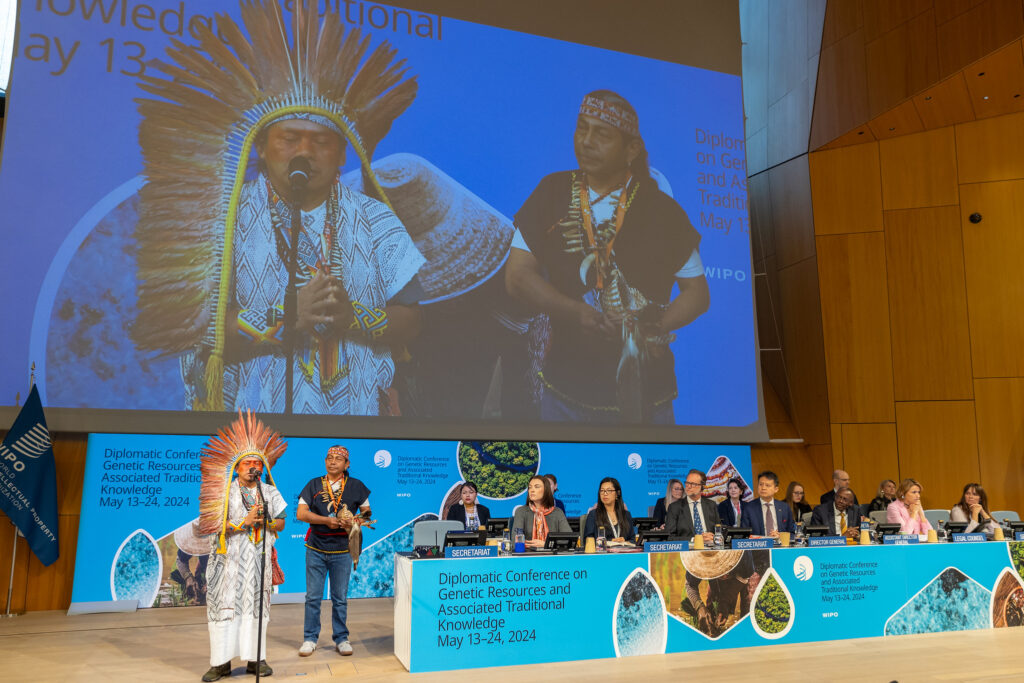
At the close of WIPO’s 39th Program and Budget Committee (PBC) session, a modest yet symbolically significant proposal—to allocate regular budget funds, on an exceptional basis, to support the participation of Indigenous Peoples in sessions of the Intergovernmental Committee (IGC)—was withdrawn. Despite wide cross-regional support and a week of intensive consultations, consensus remained elusive. The proposal, introduced initially by Colombia on behalf of GRULAC, aimed to address a persistent problem: the underfunding of the Voluntary Fund, which currently serves as the only dedicated mechanism to support Indigenous and Local Community (IPLC) participation in WIPO negotiations. The initiative would have allowed up to three IPLC representatives to be funded from unallocated regular budget resources—only when the Voluntary Fund lacked resources and under strict procedural safeguards. A cross-regional group including Australia, Indonesia, Canada, Brazil, Switzerland, and the African Group expressed support, citing the urgent need for more inclusive representation in negotiations that directly affect Indigenous rights. Mexico later introduced a refined version of the proposal, limiting its application to moments when the Voluntary Fund is depleted and capping participation at three Indigenous representatives per IGC session. The revised language included safeguards: no new assessments, clear reporting obligations, and strict adherence to WIPO’s Financial Regulations. “Guaranteeing the participation of Indigenous Peoples is not just a symbolic gesture,” said the delegate from Mexico. “It’s a basic precondition for our discussions to reflect the reality on which we are supposedly adopting rules.” In withdrawing the proposal, Mexico lamented the “lack of agreement from just a few states,” despite what it called a “balanced measure subject to strict conditions and aligned to the rules of the organization.” The Australian delegation expressed disappointment: “While this proposal could not reach consensus, the discussions this week confirmed a widely shared view on the importance of the meaningful participation of Indigenous Peoples and Local Communities.” Australia further emphasized the constructive tone of the negotiations: “The proposal demonstrated that we can work together and bridge differences across groups.” Canada called the initiative “a valuable proposal and one that provides a creative pathway to supporting the essential participation of Indigenous Peoples as unique voices within the IGC.” Despite broad interregional support, it regretted that the measure could not “generate consensus.” Canada described the proposal as “purpose-driven and limited in scope… financially responsible, transparent, and supported by Member States across regions.” Peru, speaking as a GRULAC member, underscored that “this is a question of principle.” It warned that the IGC’s legitimacy could be undermined “if we cannot hear the voices of the custodians of the knowledge we aim to protect.” The African Group, through Namibia, noted that “the continued lack of funding remains a serious concern and will hinder the effective participation and meaningful contribution of IPLCs.” The group of Like-Minded Countries, represented by Indonesia, echoed this regret, noting that the proposal aimed “to enhance inclusivity and ensure balanced participation… essential for the legitimacy and effectiveness of the process.” Despite such broad support, some delegations raised objections. The United States, United Kingdom, and Sweden opposed using core budget funds for observer participation. Their position, consistently restated throughout the week, was that such support should be confined to the Voluntary Fund or voluntary Member State contributions. The U.S. delegation, in particular, argued that the core budget should not be used to fund non-state actors, raising concerns about precedent and financial governance. Other delegations, such as Japan (on behalf of Group B), Italy, France, and Estonia (on behalf of CEBS), stopped short of opposing the proposal outright but requested additional time to analyze its legal and budgetary implications. “We seek clarity on how such a reallocation could be conducted under WIPO’s Financial Regulations,” noted France. Japan emphasized the need for “specific implementation mechanisms and procedural transparency,” while CEBS said more time was needed to form a group position. Still, many Member States signaled that the proposal had moved the conversation forward. “This is a moment of normative clarification,” said Peru. “The participation of Indigenous Peoples is not an accessory—it is central to the legitimacy of the IGC’s work.” As the Committee adopted its final report, the Chair acknowledged that the proposal had been formally withdrawn. Several delegations, including Australia, Canada, Indonesia, Peru, Namibia (for the African Group), and others, reiterated their continued commitment to Indigenous inclusion and called for renewed contributions to the Voluntary Fund. As WIPO heads into its 66th General Assemblies, the question lingers: Can the organization evolve its financial architecture to match its commitment to inclusive governance? The outcome underscores both the promise and the limitations of consensus-based governance at WIPO. While the proposal did not move forward, it reframed the terms of debate: from whether Indigenous Peoples should be included, to how WIPO can sustainably fund that inclusion within its institutional framework. 

Blog, WIPO

No Breakthroughs at WIPO: Budget Committee Defers Core Disputes

Despite a full agenda and spirited debate, WIPO’s 39th Program and Budget Committee ended with little to show in terms of any concrete modifications to the proposed 2026/2027 Program and Budget. Key issues—including budget transparency, integration of development goals, Indigenous participation, language access, and technical assistance—remained unresolved or were deferred for future negotiation. While Member States voiced the need for reform and greater equity, the session closed without any policy changes, underscoring a familiar pattern of careful dialogue but persistent deadlock at the heart of WIPO’s governance. One of the recurring topics at this year’s session was WIPO’s move from a detailed 31-program budget to a broader 8-sector model. China, Brazil, and Canada, among others, continued to call for more granular reporting—especially on how funds are transferred within and between sectors. The Secretariat defended the new approach as more efficient and coherent, and offered  an ongoing dialogue rather than any immediate changes. For now, the push for greater transparency in budget documents remains unresolved, with Member States requesting more detail in future cycles. The place of the Sustainable Development Goals (SDGs) in WIPO’s work also sparked debate. While most countries, including Brazil, Nigeria, and Mexico, insisted that explicit SDG language is appropriate for a UN agency, the United States argued for removing all such references to keep WIPO’s mandate narrowly focused on intellectual property. In the end, references to the SDGs were retained in the approved Program and Budget for 2026/27, reflecting the majority view but signaling an ongoing divide over the agency’s development role. A cross-regional proposal to allow WIPO’s regular budget to support Indigenous participation in the Intergovernmental Committee (IGC) if the Voluntary Fund runs dry was another unresolved issue. Colombia, Ecuador and Mexico led the effort in representation of most GRULAC countries, but ultimately the proposal was withdrawn after it became clear there was no consensus, with some Member States wary of setting a precedent. As a result, no change will be made for the 2026/27 biennium, though further consultation is expected. The question of multilingualism in the Brands and Designs Sector was equally contested. China, Russia, Brazil, and others pushed for strong commitments to expand language services and pre-allocate resources for future language additions, arguing that this would promote equity and better align with UN values. However, Group B, CEBS, and others favored a step-by-step approach, avoiding binding commitments. The final text recognizes the value of multilingualism but leaves further expansion and funding decisions to be considered in future working groups. Financial sustainability for the Lisbon System, which covers the international registration of geographical indications, was also on the agenda. The United States called for stricter self-sufficiency and more robust forecasting methods, aiming to prevent cross-subsidization from other, better-resourced Unions. Brazil, France, Egypt, and other developing countries defended the current approach as vital for development objectives. In the absence of consensus, the status quo prevails and the issue will remain under review. Discussions on technical assistance and performance indicators saw Member States, including China, Russia, and Nigeria, calling for improvements—whether through more balanced KPIs across global IP systems or a more proactive, needs-based model for technical assistance. While these points were acknowledged, no formal changes were adopted, and the Secretariat promised only to consider the feedback going forward. Efforts to expand WIPO’s external offices again resulted in a deadlock. Some countries, such as India, Colombia, and Iran, advocated for greater geographic equity and delinking evaluation from expansion. Others, led by Group B and CEBS, insisted that careful evaluation must come first. With no consensus, the issue was deferred to future sessions. There was at least modest progress in the area of oversight and governance. WIPO’s Internal Oversight Division closed 66 recommendations in 2024, drawing praise from Member States. Still, there were calls to accelerate recruitment for key evaluation and investigation roles and to address ongoing concerns around cybersecurity and internal controls. No new oversight mandates were issued, but the Secretariat was urged to maintain its focus on improvement. Given the absence of consensus, the PBC decided to refer several unresolved issues to the upcoming 66th series of WIPO Assemblies for further discussion and decision. These include proposals by the United States to remove all references to the 2030 Agenda for Sustainable Development and SDGs from the budget document, to adjust estimated applications and income for the Lisbon System and the budget for the Lisbon Union, and to remove the Development Acceleration Fund and associated references and budget lines. These matters now await further negotiation and possible resolution at the Assembly level. In the end, PBC/39’s proceedings reflect the ongoing complexity of multilateral governance at WIPO. While Member States continue to debate critical issues—transparency, development, inclusion, and accountability—the session closed with more questions than answers. The true test for WIPO will be whether continued dialogue eventually yields the substantive reforms that many are calling for.

Blog

Highlights from the Global Expert Network on Copyright User Rights Symposium 2025: Principles for Digital Copyright

The Global Expert Network on Copyright User Rights Symposium public event took place from June 16-17, 2025, at the Geneva Graduate Institute. Organized by American University’s Program on Information Justice and Intellectual Property (PIJIP) and South Centre, in partnership with the International Federation of Library Associations and Institutions (IFLA) and COMMUNIA Association for the Public Domain, the symposium’s main objective was to share research and deliberate over principles that guide protection of the public interest in copyright reform for the digital age. The meeting occurred in the context of the World Intellectual Property Organization’s Standing Committee on Copyright and Related Rights (WIPO SCCR) having adopted a work plan to draft principles, objectives, and options for an instrument on limitations and exceptions (L&Es) in three priority areas: to enable preservation activities; to adapt exceptions and limitations to the online environment; and to ensure that people with disabilities other than vision impairments can benefit from new technologies. On the first day, participants presented and discussed ongoing research on user rights from different parts of the globe. A keynote panel gathering academics discussed the history and the justifications for an international instrument on copyright L&Es. In the end of the afternoon, former and current government representatives addressed the history of the L&Es agenda, as well as the work plan on L&Es currently discussed at the SCCR. The second day was structured around detailed discussions in four sessions: principles for the protection of libraries, archives, and museums; education and research; remuneration in digital contexts; and cross-cutting issues, like liability safeguards, contractual overriding, cross-border research, and access rights. The main output of the symposium was the “Working Document: Principles and Objectives for Limitations and Exceptions.” Participants developed this document through extensive deliberations and presentations carried out in the previous days, drawing from past documents and proposals of the SCCR on the topic of limitations and exceptions, international intellectual property instruments, and scholarship. Based on (i) already existing models and language in international copyright law or (ii) that have been proposed by countries in past SCCR deliberations or (iii) that are supported by a broad consensus in existing law and scholarship, the document contains proposed language for objectives, principles and options that may promote the objectives of the 2012 Mandate and the SCCR Work Program as described in the SCCR 46 Chair’s Summary.

Blog

WIPO Program and Budget Committee : US opposes all references to the SDGS from the Proposed Program and Budget for 2026/2027

This post was originally published on KEI Online by Thiru The World Intellectual Property Organization (WIPO) convened the 39th session of its Program and Budget Committee (PBC) from 16 June 2025 to 20 June 2025. With respect to WIPO’s proposed Program and Budget for 2026/2027, the PBC passed the following decision: The PBC further requested to refer the outstanding items discussed during PBC 39 to the 66th series of meetings of the WIPO Assemblies: i. Removal of all references to the 2030 Agenda for Sustainable Development and SDGs from the Proposed Program and Budget for 2026/2027 As flagged by KEI in early May, the United States “expressed its antipathy to WIPO’s engagement with the Sustainable Development Goals (SDGs)” at the 34th session of WIPO’s 34th session of the Committee on Development and Intellectual Property (CDIP) in May 2025. On Wednesday, 18 June 2025 (on the third day of the June PBC), the United States stated: First, as stated repeatedly at PBC 38, the United States objects to the framing of this document in terms of the Sustainable Development Goals.WIPO should not be prioritizing the implementation of the SDGs or directing its work in an attempt to implement the SDGs. At PBC 38, the Secretariat clarified that WIPO does not budget for the SDGs but rather budgets for WIPO’s expected results in the Strategy House. The inclusion of unnecessary aesthetic elements, graphics and language implying WIPO’s Program of Work and Budget is guided by the UN 2030 Agenda for Sustainable Development and the SDGs gives a false impression of the manner in which WIPO’s work is driven. As such, the United States requests these elements be removed from the proposed Program of Work and Budget. At PBC 38, the Secretariat also clarified that WIPO’s implementation strategies are driven not by the SDGs but by the expected results of the Medium Term Strategic Plan. The extent to which WIPO’s work can be labeled as a contribution to the SDGs is simply a product of WIPO working towards its expected results. The United States also requests removing from the proposed Program of Work and Budget any language calling for WIPO to conduct its work or devote resources towards implementing the SDGs, including, for example, the regional and national development sector’s fourth priority and the section of the narrative on global challenges and partnership sector entitled 2030 Agenda for Sustainable Development and the Sustainable Development Goals. In response to the US intervention on WIPO and its work toward the implementation of the UN SDGS, several Member States responded. Brazil Brazil would like to start by thanking the Distinguished Delegation of the United States of America for sharing additional proposals during this afternoon.We look forward to receiving specific language in writing on this matter. With regard to the first and third points raised, we would like to add our voice to what has just been said by the Distinguished Representative from the African Group. This Delegation would like to reiterate our view on the pertinence and accuracy of the explicit reference on the proposed work program of work and budget to both the WIPO Development Agenda and to the Sustainable Development Goals, the SDGs. As we have already expressed during the PBC38, it is our view that the current document adequately reflects WIPO’s strategic priorities and is fully aligned with the organization’s medium-term strategic plan for 2022-2026, which we were able to collectively agree upon all Member States. This Delegation, therefore, supports our shared and continued efforts to ensure that IP system is inclusive, representative and responsive to the needs and priorities of all, including our Developing Countries. Brazil is particularly pleased with the increased budget allocation to developmental activities, including through the creation of the Development Acceleration Fund, which we consider is a significant step to strengthening WIPO’s commitment to development of oriented initiatives and to the effective implementation of WIPO’s Development Agenda Recommendations. Finally, Mr. Chair, we still trust that the discussions during the sessions will be able to reflect a common understanding that WIPO financial sustainability needs to go hand-in-hand with its development oriented responsibility being WIPO, a UN system organization. We remain committed to working constructively with all Delegations and with the Secretariat to advance a proposed program of work and budget that is balanced, transparent and development oriented. I thank you very much. Egypt Thank you, Mr. Chair.Our Delegation aligns itself with the statement delivered by the Distinguished Delegate of Namibia on behalf of African Group and we thank the Distinguished Delegate of the United States for their proposal. [The] Egypt Delegation highly values WIPO’s continued commitment to its Development Agenda and UN 2030 Sustainable Development Goals and supports in this regard the current proposal of the Programme of Work and Budget with regard to the allocation of resources to the Development Agenda as will add the new Development Acceleration Fund which demonstrates the pivotal role WIPO is playing in fostering innovation and supporting Development Agenda in respective Member States and comes in alignment with WIPO Medium Terms Strategic Plan 2022/2026. I thank you, Mr. Chair. Thank you very much for your intervention Mexico Thank you, Chair.Mexico also aligns itself with Delegations which have expressed their support to referencing the Sustainable Development Goals in the draft budget and the Development Acceleration Fund as currently reflected.Work on references to SDGs does not imply an external mandate above and beyond WIPO’s mandate but rather underpinning WIPO’s mandate within IP as a development tool. WIPO’s agenda is supported by all Member States and already intends to support IP in development. Including information on the SDGs in the budget is complimentary. This helps us to map out how projects help foster national and international development, increaseaccountability and ensures the evaluation of projects. This also helps us articulate our work better with the international system and other agencies and it helps us mobilize funds.So this does not limit our sovereignty but rather opens up greater opportunities for collaboration. The majority of Member States recognize that SDGs are an

Blog

Ensuring Indigenous Participation at WIPO: GRULAC Proposal at PBC/38

At the 38th session of WIPO’s Program and Budget Committee (PBC), the Delegation of Colombia, speaking on behalf of the Group of Latin American and Caribbean Countries (GRULAC), introduced a proposal to address the ongoing funding crisis that threatens the participation of Indigenous Peoples in WIPO’s norm-setting processes. The proposal calls for the internal reallocation of existing budgetary resources to ensure minimum, stable support for Indigenous and local community representatives at meetings of the Intergovernmental Committee on Intellectual Property and Genetic Resources, Traditional Knowledge and Folklore (IGC). Colombia emphasized that the proposal had the support of most GRULAC members and was developed in consultation with delegations from other regional groups. It was presented in response to the exhaustion of the WIPO Voluntary Fund, a mechanism created in 2005 (WO/GA/32/6) to support Indigenous participation but which has remained underfunded for years. The Delegation warned that the lack of resources—ongoing for more than a year—has already undermined inclusive participation in discussions directly impacting the rights and interests of Indigenous communities. Crucially, the GRULAC proposal does not introduce any new budgetary burdens. Instead, it draws on WIPO’s existing financial rules to allow internal reallocations, enabling at least two Indigenous representatives to attend each IGC session. This approach mirrors a precedent set in 2016 (IGC 31), when Member States—including Switzerland, Australia, New Zealand, Chile, and Peru—pushed for the inclusion of a contingent allocation from WIPO’s regular budget to temporarily support the Fund after its depletion (PBC/24). That 2016 compromise demonstrated that practical solutions can be implemented without amending the program budget or creating new financial obligations. Civil society organizations, including the South Centre, have long argued for the institutionalization of Indigenous participation through predictable, core budget allocations rather than reliance on inconsistent voluntary donations. GRULAC’s proposal responds to those calls and to the broader imperative of inclusive governance in global IP policymaking. No Member State objected to the proposal when it was introduced. However, the Chair deferred the final decision to an informal session to allow further review and discussion. GRULAC expressed its openness to constructive input from all delegations. As WIPO reflects on equity, access, and institutional coherence, this proposal offers a critical opportunity to reaffirm that the voices of Indigenous Peoples must not be sidelined in shaping international legal norms. The forthcoming informal session of the PBC 39th will be a key moment for Member States to move from recognition to action in ensuring meaningful, sustained Indigenous participation at WIPO.

Blog, Traditional Knowledge

WIPO-IGC 51st Sessions Breaks Jinx, Recommends Mandate Renewal

by Chidi Oguamanam* First Published by ABS Canada here. Republished on Infojustice with the permission of the author. Delegates to the World Intellectual Property Organization Special Committee on Intellectual Property and Genetic Resources, Traditional Knowledge and Traditional Cultural Expressions (WIPO-IGC) resumed and concluded their last deliberations for the 2024-2025 biennium on May 30-June 5. Most of the first day was used for the traditional opening statements through which major negotiating blocs and delegations signalled to one another their expectations for the 6-day meeting. No Appetite for Impasse The 51st session was unique in many ways. It was co-chaired by Anna Vuopala (Finland) and Erika Patriota (Brazil). Respectively, each of the two Chairs superintended over two failed IGCs – IGC 49 and IGC 50. Their co-chairing of the last and final sessions of the IGC for the biennium was expected to draw from their experiences from the two failed previous sessions in a row. The odds were in their favour. Neither of the hardliner demandeur nations or blocs nor their non-demandeur counterparts were disposed to filibuster negotiations. Any such outcome would potentially result in non-renewal of the IGC mandate for the next biennium (2026-2027).  It was clear to the delegates that mandate renewal was the biggest issue on the agenda listed under item 6 for the session (Taking Stock of Progress and Making a Recommendation to the General Assembly). Tension on Rights-based and Measures-based Approaches Remains Yet, despite the priority of mandate renewal, there was no let up to the tensions that partly led to the two failed IGCs. The United States, Japan and their Group B allies as well as CEBs, and Switzerland were bent on enumerating a litany of measures in the text in preference to rights. They construed a measures-based approach as having priority over a rights-based approach to the protection of TK and TCEs. At the 50th session, the US delegation, with the active support of Japan, Korea, Canada and Switzerland introduced the language of “safeguarding” to further entrench their measures-based approach and conceivably to water their expectation for a soft and non-binding instrument. This sentiment is also shared by the EU as a bloc. The attempt to center a measures-based approach stoked tension and resistance on the part of the broad coalition of the Indigenous Caucus, African Group, Group of Like-Minded Countries, China, the Group of Latin American and Carbbean Countries, some members of the Asian Pacific Group and New Zealand. It also nearly derailed the 51st sessions with demandeurs insisting on blocking those safeguarding aspects of measures-based languages regarding TK and TCEs. Nigeria deplored the deliberate attempt at regime duplication as a ploy to undermine the IGC mandate on TK and TCEs which is clear on effective protection of the subject matters. For Nigeria and the Africa Group, safeguarding of TK and TCEs is dealt with at the UNESCO. As a compromise, those textual drafts on safeguarding and measures-based were taken on board by the three facilitators of the 51st sessions (Ghana, US and Colombia) in an ambiguous procedural circumstance and kept in square brackets under “Alternative X”. This was to preserve the sanctity of the Facilitators’ Alternatives carried over from the IGC 49 texts (WIPO/GRTKF/IC/49/4; WIPO/GRTKF/IC/49/5 which was the default working document and same as from IGC 47) around which there remains a broad coalescing of understanding. Thus, the two texts (TK and TCEs) from the 51st session did little to close gaps. In sum, the delegations agreed on modest progress on the two texts of the TK and TCEs from the 51st sessions. The progress included modest striking out of a few texts that did not have the backing of any interested bloc as well as the bracketing of the US and allies-backed Alternative X.  The remaining two days were devoted to mandate negotiations. United States-led Charge to Weaken IGC Mandate The mandate was negotiated through a combination of deliberations at the informal sessions with ratifications at the plenary. The United States delegation left no doubt regarding their determination to limit the IGC meetings and to whittle down its mandate, a move that was strongly supported by Japan, Switzerland and some Group B allies. The United States went as far as proposing a maximum of two meetings, arguing for resetting the IGC for lack of progress. From the perspective of demandeurs, if there was lack of progress, the blame lies with non-demandeurs whose strategy for scuttling progress remained obvious. For the demandeurs, there was need to keep the momentum created by the two recent WIPO treaties of 2024 – the GR Treaty and the Riyadh Design Law Treaty. These developments called for more meetings and not less. Framing GRs in the TK/TCEs Mandate After GR Treaty In addition to different narratives of progress and dissonance over the number of meetings, another issue of contention for the mandate was how to frame GRs into the mandate given the conclusion of the GR treaty. For IPLCs through the Indigenous Caucus, the conceptual holism of TK, TCEs and GRs is not undermined by the fact that a GR treaty has been concluded within the framework of patents. For the Caucus, the Africa Group, GRULAC and LMCs and other demandeurs, discussions about GRs cannot be severed from TK and TCEs notwithstanding the conclusion of the GR treaty.  As a compromise position, delegates agreed that GRs will continue to be part of the IGC mandate, save that there will be no normative negotiations capable of reopening the GR text. Debate over an Evidence-based Method The next most prominent issue in the mandate negotiations was the palpable suspicion among demandeurs and non-demandeurs on the language regarding collection of evidence to inform negotiations.  Evidence-based methodology has been an integral part of the mandate and the work of the IGC. Demandeurs insisted that there is a deluge of real-world evidence and studies, now increasingly magnified by emergent national and regional regimes on the protection of GRs, TK and TCEs. They maintained that the tendency by non-demandeurs to fixate on an

Blog

US Proposes Limiting IGC Meetings and Mandate

The United States delegation, in its opening statement to the World Intellectual Property Organization’s Intergovernmental Committee on Intellectual Property and Genetic Resources, Traditional Knowledge and Folklore, expressed its desire to limit the activities and mandate of the Committee. The US statement, made at the 51st meeting of the Committee, recalled that the last two meetings failed to produce a common text of an agreement on traditional knowledge (TK) and traditional cultural expressions (TCEs) for the next meeting to work on. At the 49th meeting, the Like Minded Countries Group of developing countries supporting the IGC’s work blocked further use of a complex facilitator’s text produced at that meeting that contained a large number of newly competing provisions on most of the draft’s topics. At the 50th meeting, first the US and then Nigeria blocked further consideration of a consolidated text that combined draft documents on TCEs and on TK and contained several proposed changes that would threaten the desire by some for a binding and rights based approach. The US statement cited this lack of “tangible progress on textual negotiations” as evidence of “significant divergence among Member States on the purpose of the IGC and its desired outcomes” which “warrants taking a step back and reflecting on where we are going with these negotiations.”  The IGC is not a standing committee, which means that the General Assembly must reapprove a mandate for the Committee to continue work. That mandate, for the coming General Assembly meeting in July, will be negotiated at the 51st IGC. In this context, the US opined that “the next mandate should schedule fewer sessions,” and suggested that the Committee move from the current three meetings per year to just one.  The US statement is reprinted below in full. Other countries and groups supported renewing the mandate and holding three meetings per year. The US statement indicates that the negotiation over the mandate may be hard fought. UNITED STATES OF AMERICA: Thank you, Chair. As we discussed potential renewal of the mandate, we should keep in mind the last two IGC meetings, IGC 49 and 50, ended with no tangible progress on textual negotiations. As we mentioned this morning, this came at great expense of time and money for the WIPO Secretariat, Member States and accredited observers. This lack of progress reflects the significant divergence among Member States on the purpose of the IGC and its desired outcomes. For example, we have not even been able to agree on the basic issue of whether the TK and TCE text should reflect the views of all Member States. In our view, this lack of tangible progress warrants taking a step back and reflecting on where we are going with these negotiations. The lack of tangible progress also warrants moving the IGC in a more productive and less contentious direction. This mandate renewal discussion provides an opportunity to reset IGC dynamics which is needed if the IGC is to operate in an effective manner. To that end, the next mandate should schedule fewer sessions. It should also require the use of real world scenarios including case studies during Committee sessions to rejuvenate and refocus our discussions and to encourage participants to have a constructive exchange of views. And the next mandate should also reaffirm that all Member State proposals will be reflected in working text and along those lines should reference the reality that currently exists, namely that Member States have widely divergent positions. I will briefly elaborate on the number of meetings in the biennium. The United States calls on the IGC to recommend to the General Assembly that the mandate reduce the number of sessions in the next biennium. In our view, this will lead to better meeting preparation and attendance which will hopefully result in more productive engagement and forward progress for the Committee. Fewer meetings will also help to temper expectations given the wide divergence in views among Member States in terms of priorities, working methodologies and acceptable outcomes. Most WIPO bodies hold their meetings once a year. It’s time to bring the IGC in line with that standard. Consequently, the next biennial mandate should schedule no more than two IGC sessions for the biennium, one session per year. Next, the mandate should continue to reflect the preservation of separate texts and work streams for TK and TCEs. The mandate should also retain language on taking an evidence-based approach, having a Member State driven process, providing examples of national experiences and adopting a work program based on open and inclusive working methods. We would like Member States to agree that proposals related to IGC work streams, including those directed to biodiversity issues, should be raised in the IGC and not in WIPO’s technical bodies such as technical Committees and working groups. Over the last year, several technical bodies at WIPO have faced proposals that are duplicative of IGC discussions. This has created unnecessary confusion in those bodies and distracted them from their properly mandated work. In our view, these proposals belong only in the IGC. Participants would be confused and express opposition if patent proposals were raised in the SCCR or updates to the international patent classification were proposed in the Madrid Working Group. Proposing GR, TK and TCE-oriented changes in other bodies or WIPO contexts is no different and ignores the jurisdictional integrity of WIPO bodies. The United States believes ensuring discussions are not taking place in duplicative manners across WIPO bodies is a critical consideration in any mandate outcome moving forward. Neither the TK nor TCE subject matter is ready for a Diplomatic Conference. Instead, the current texts reflect widely divergent positions. The IGC needs to continue the discussion and negotiation process. With or without brackets, the wide range of alternatives in the working text is a compelling reminder of just how far apart Member States are on every critical aspect of these discussions. Consequently, at this time, the United States cannot support a recommendation to the WIPO General Assembly that it convene

Scroll to Top