
WIPO Member States establish a cross-regional coalition to accelerate ratification of the Treaty on Intellectual Property, Genetic Resources and Associated Traditional Knowledge, with support from the Centre on Knowledge Governance (CKG).
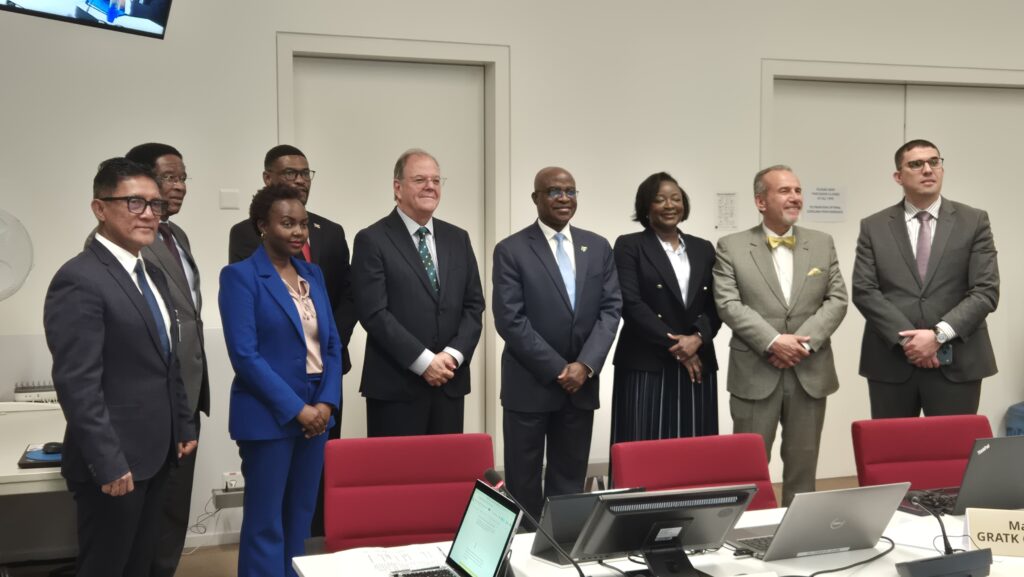
A cross-regional group of WIPO Member States has taken a new step towards bringing the WIPO Treaty on Intellectual Property, Genetic Resources and Associated Traditional Knowledge (GRATK Treaty) into force. On 21 September 2026 in Geneva, they launched the GRATK Champions Core Group, committing to ratify or accede to the Treaty and to encourage other countries to do the same.
The Group was launched at a side event of the fifty-third session of the WIPO Intergovernmental Committee on Intellectual Property and Genetic Resources, Traditional Knowledge and Folklore (IGC). The launch event was convened by the Permanent Mission of Nigeria. Algeria, Brazil, Côte d’Ivoire, Eswatini, Ghana, Indonesia, Lesotho, Malawi, Namibia, Nigeria and Peru are its founding members. Eleven other States attended as observers.
The initiative reflects the commitment of participating Member States to work collectively towards the Treaty’s entry into force, while respecting each country’s constitutional procedures and national decision-making processes.
The road to the Treaty’s entry into force
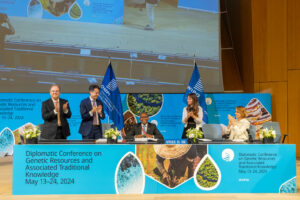
Adopted by consensus at the WIPO Diplomatic Conference in Geneva on 24 May 2024, the GRATK Treaty is the first international instrument to embed a mandatory disclosure requirement concerning genetic resources and associated traditional knowledge in the intellectual property system. The founding members’ Joint Communiqué calls it “a historic achievement for Indigenous Peoples and local communities, as well as for the transparency and integrity of the international intellectual property system”.
Under Article 17, the Treaty enters into force three months after 15 eligible parties have deposited their instruments of ratification or accession. This threshold gives the Group its name and its goal: reaching 15.
At the time of the meeting, the Treaty had 44 signatories, and four countries (Albania, Malawi, Peru and Uganda) had ratified or acceded to it. At least 11 more are needed. The Group aims to get there through peer-to-peer advocacy, the sharing of technical and legislative experience, and coordinated action.
A Member State-led initiative
At the meeting, H.E. Ambassador Innocent Iwejuo, Chargé d’affaires of Nigeria’s Permanent Mission in Geneva, explained the purpose of the Group. In the Joint Communiqué adopted at the launch, the founding members committed “to advance, each through its own constitutional processes and at its own pace, the ratification of or accession to the Treaty, and to support one another through peer-to-peer advocacy, the sharing of technical and legislative experiences and expertise, and coordinated action.” They also welcomed the support of WIPO, as the Treaty’s depositary and a provider of technical assistance, and of technical partners.
Among the observers, Australia and Switzerland said they could not yet join the Group but supported its objectives, and outlined their own steps towards ratification or accession.
The discussions showed interest in further ratifications and accessions, including from countries that have not yet formally joined the Group.
CKG supports the initiative through technical cooperation
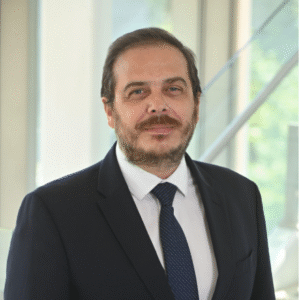
The Centre on Knowledge Governance (CKG) at the Geneva Graduate Institute supported Nigeria in organising the meeting that led to the establishment of the Group. At the launch, CKG’s Director Sean Flynn presented the support available to members, and CKG Director of Communications Ben Cashdan moderated the event.
Recognising that progress towards ratification and accession may require technical and legislative expertise, CKG has offered to provide technical assistance to the Group in support of its objectives.
CKG’s assistance will be led by Wend Wendland, former Director of WIPO’s Traditional Knowledge Division and now a Senior Fellow at CKG, whose experience in the development and negotiation of international instruments on intellectual property and traditional knowledge can support Member States as they advance their national processes.
The initiative remains Member State-led. CKG’s role is to support the participating countries, at their request, through technical cooperation and the sharing of relevant expertise.
From commitment to entry into force
The establishment of the GRATK Champions Core Group is a step towards organising efforts to bring the GRATK Treaty into force. Its effectiveness will depend on sustained engagement, progress through national ratification and accession procedures, and continued cooperation among participating and supporting countries.
The founding members agreed to maintain close coordination and to encourage other States that share the objectives of the Treaty to join the initiative and help bring it into force “at the earliest opportunity”.
For CKG, supporting this Member State-led initiative is an opportunity to contribute technical expertise to the implementation of an international instrument at the intersection of intellectual property, genetic resources and traditional knowledge.
Watch the meeting: Access the recording of the GRATK Champions Core Group launch
The Joint Communiqué is reproduced below.