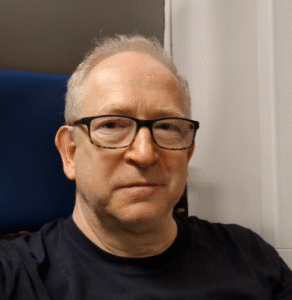

Aman Gebru argues that open platforms which close up once they mature are breaking a promise, and that contract law can hold them to it.
Lawyers say don’t bury the lead, so let me give you the major takeaway first. Open platforms invite free community involvement in the early stages of their development, and then introduce a restrictive layer of control using law and technology: initially less visible, then more visible.
A diversity of people and communities contribute to what used to be open access. We gave the machine what we had, and later on we are asked to pay for the thing that is the result of our collective contribution. That is exactly what is happening with AI. We have collectively given our creativity, and now we are asked to pay a subscription, maybe even to give up our livelihoods.
Open, then closed
Take four cases. OpenAI was founded in 2015 as a non-profit research lab. Elon Musk, an early investor, later sued OpenAI, his fellow co-founders and Microsoft for breach of charitable trust and unjust enrichment. In May 2026 a jury found the claims time-barred, so there was no ruling on the merits. But the case shows a widespread switch. There is a promise of openness, so we all contribute; then at some point, without telling us, it becomes a closed system.
In 2016 Elsevier bought SSRN (the Social Science Research Network). Many of us upload our papers there partly because it is open, and that is reliance. As a commercial publisher, Elsevier has a legal obligation to maximise profits, and one way to do that is to shift to a closed model. SSRN has value because we donated our scholarly works, and with network effects like these, shifting to another platform is not feasible.
WordPress is a significant success story for the open access movement. But its co-founder Matt Mullenweg’s for-profit company, Automattic, used trademark law against WP Engine and cut off its platform access, a competitor in the for-profit space that, in his view, had not donated enough time and energy to the WordPress community. WP Engine’s clients lost connection to their websites, and the community divided.
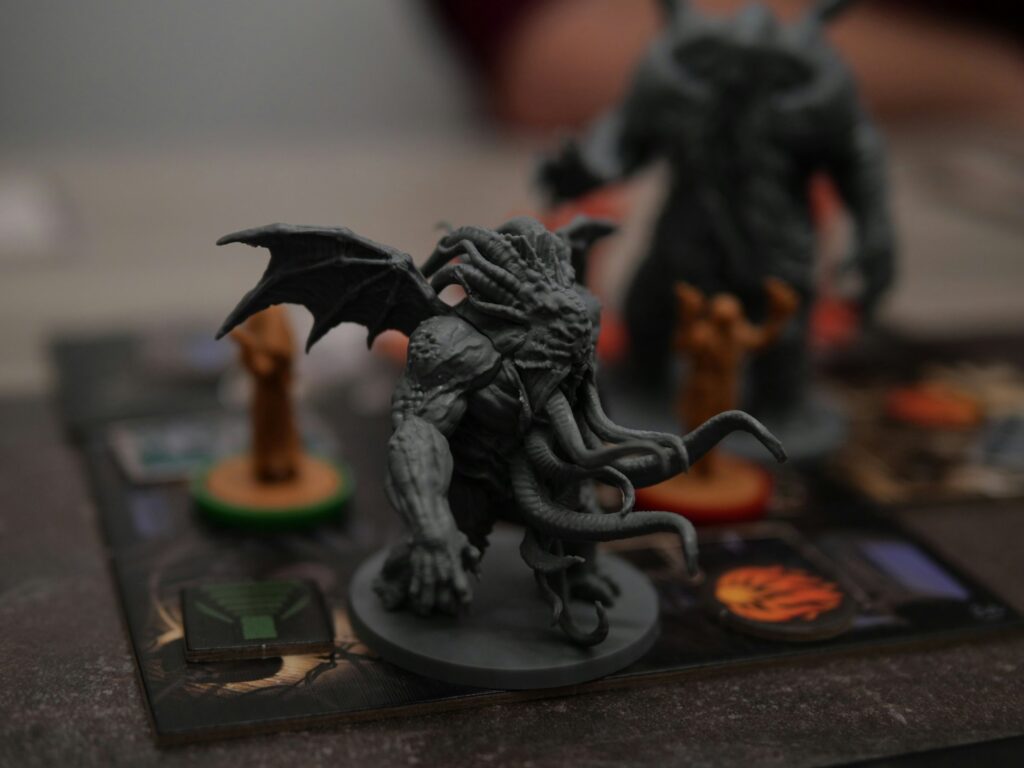
Then there is Dungeons & Dragons, which I play. Wizards of the Coast introduced the Open Game License in 2000, and by 2023 it had become a very permissive system. Then a leaked document showed Wizards taking back some of that value. People pushed back, and Wizards backed down. But it is another sign of the fragility of openness: we can’t necessarily rely on the promises that platforms make to us.
Contracts plus
As someone who teaches contracts, I think this sounds like breach of contract, or at least promissory estoppel.1 Participants in open access platforms are not unreasonable when they expect ongoing free access. Context matters. There is a long, widespread and persistent norm of openness, and contract law cares about usage of trade (the practices regularly observed in a field), not just a textual reading. The platforms themselves cultivate the expectation of openness because of the high value it generates. So it is contracts plus: not just the contracts we sign.
I propose a higher notice standard, a reservation standard. If, like OpenAI, you want to be a for-profit company, you must say so clearly, ex ante (in advance). If you have not, we should take away some of the value you are getting, through a breach of contract claim.
We love four-factor tests in IP, so here are four factors for a breach of promise. Cultivation: did the platform cultivate an expectation of openness beyond its terms and conditions? Interpretation: would a context-specific, reasonable participant understand broad, ongoing participation as a right? Notice: did the platform fail to fairly, reasonably and conspicuously disclose a material reservation? Reliance: did those participants reasonably rely on the platform’s cultivated openness? If the answer is yes to all four, the platform should not be allowed to continue as a closed model. For OpenAI, the remedy would be to remain a non-profit.
Should these claims rest on contract or copyright? Why not both? Contracts are a kind of law too: much of the ordering of these platforms is private, done by contract, and contract law gives us an established framework and effective remedies to rely on. And if a contract claim does not work, promissory estoppel would.
A higher disclosure standard would give us informed participation: the chance to choose the platforms we donate our creative works to.
This is an abridged version of the presentation by Aman Gebru (George Butler Research Professor, University of Houston Law Center) at USERrights 2026, the Centre on Knowledge Governance conference held in Geneva from 30 September to 2 October 2026, in the session “Defending the Commons & Open Access”.
To watch the User Rights 2026 presentations online visit: https://knowledgegov.org/userrights2026/report/
Notes
- Promissory estoppel is the rule that a promise people reasonably relied on can be enforced even without a formal contract [eds.]. ↩︎