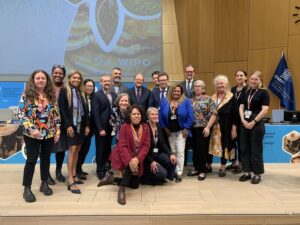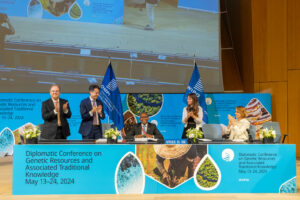

The 53rd session of the World Intellectual Property Organization’s Intergovernmental Committee on Intellectual Property and Genetic Resources, Traditional Knowledge and Folklore (IGC 53) concluded in Geneva on 25 September 2026 with incremental progress on the negotiating texts. But differences persist over the substance, scope and methodology of the negotiations, including whether traditional knowledge (TK) and traditional cultural expressions (TCEs) should be brought together in a single negotiating text.
The session was the second meeting under the Committee’s 2026–2027 mandate, which calls for continued negotiations towards an international legal instrument or instruments for the balanced and effective protection of TK and TCEs, without prejudging the nature of the outcome. Discussions on intellectual property (IP) issues concerning genetic resources and their inter-linkages with TK and TCEs also continued.
The Committee worked primarily on the draft articles contained in documents WIPO/GRTKF/IC/52/4 on TK and WIPO/GRTKF/IC/52/5 on TCEs. The modified texts agreed at the end of the session will provide the basis for negotiations at IGC 54.
Opening positions
Opening the session, WIPO Assistant Director General Edward Kwakwa acknowledged the progress achieved while urging Member States to engage constructively, demonstrate flexibility and compromise, and involve Indigenous Peoples and local communities.
Chair Lane Fisher of New Zealand emphasised transparency, a Member State-driven process, efficiency and pragmatism. He encouraged solutions-focused engagement through formal negotiations, informal consultations and group coordinators.
For the African Group, represented by South Africa, the priority was to accelerate substantive, text-based negotiations. The Group argued that negotiating two substantially similar texts on TK and TCEs created duplication and consumed valuable time. It therefore proposed moving towards a consolidated negotiating text while preserving the distinct substantive dimensions of TK and TCEs. The Group of Latin American and Caribbean Countries (GRULAC) likewise advocated working on a single text for TK and TCEs.
The Group also called for a substantial reduction in brackets and urged delegations to concentrate on four fundamental questions: who should be protected, what should be protected, why protection is needed, and how it should be provided and implemented.
The African Group stressed that information-sharing and inter-sessional activities should support, rather than displace or delay, negotiations. GRULAC and the Like-Minded Countries, a cross-regional group of developing countries, expressed similar concerns about the need to consolidate areas of agreement and advance work on the core questions of protection.
These positions contrasted with those of Group B (WIPO’s group of mainly developed countries), the European Union and other developed-country delegations, which called for greater conceptual clarity, evidence-based exchanges and consideration of national experiences before advancing further text-based negotiations. The EU favoured a non-binding, flexible and measures-based approach compatible with existing IP systems.
The disagreement over the time allocated to information-sharing sessions remained unresolved. For the African Group, such exchanges could be useful, but they should not come at the expense of the substantive negotiations required to fulfil the Committee’s mandate.
Substantive questions remain unresolved
Negotiations focused on the architecture of the proposed instruments, particularly the objectives, eligibility criteria, beneficiaries and scope of protection under Articles 2 to 5.
Article 2, concerning the objectives of the instruments, received particular attention as delegations debated the rationale for international protection and its relationship with existing national and international IP systems. The Chair reported modifications to Article 2 in both negotiating texts, including the replacement of one of the alternative formulations with a new Alternative 3. Article 3 of the TCE text was also modified in relation to eligibility criteria.
Although these changes represented progress, they did not resolve the underlying political differences.
The question of beneficiaries remained contentious. The Indigenous Caucus emphasised that Indigenous Peoples and local communities must be central to the future protection system. It opposed language that could conflate the distinct rights of Indigenous Peoples with those of local communities and highlighted self-determination, customary laws and protocols, and the need for a sui generis approach.
India called for strong and enforceable protection, including against the misappropriation of TK and TCEs, and opposed blanket exclusions based on public-domain status.
The broader disagreement concerned the relationship between existing IP mechanisms, customary systems and the need for new international protection.
The nature and strength of protection
The African Group reiterated its call for balanced, effective and meaningful protection of TK and TCEs, emphasising their contribution to creativity, innovation, sustainable development and cultural heritage.
The Asia-Pacific Group indicated that most of its members favoured an effective, legally binding international instrument capable of preventing misuse, misappropriation and exploitation while respecting customary laws and practices. India also supported legally binding instruments.
By contrast, the EU and the Group of Central European and Baltic States favoured a non-binding, flexible and measures-based framework.
The differences therefore extended beyond drafting preferences to fundamental questions about the level of protection required and whether existing IP systems are sufficient to address the needs of TK and TCE holders.
US proposal to continue at IGC 54
An updated United States proposal, contained in document WIPO/GRTKF/IC/53/4, introduced further procedural and substantive discussion. The proposal concerns a questionnaire on the use of sui generis protections for TK and TCEs, a summary of responses and a presentation of results.
Several delegations questioned whether there had been sufficient time to examine the document and consult capitals and stakeholders. GRULAC called for consideration to be postponed to IGC 54, while the Like-Minded Countries also raised concerns about the timing of its circulation.
The Committee nevertheless continued discussing the proposal and agreed that consideration would resume at IGC 54.
Genetic resources and implementation of the 2024 GRATK Treaty
Discussions on genetic resources continued within the Committee’s mandate, but IGC 53 did not undertake normative negotiations on the subject. The Committee agreed to continue examining IP issues concerning genetic resources and their inter-linkages with TK and TCEs at IGC 54, without normative work on genetic resources.
The African Group welcomed the WIPO Treaty on Intellectual Property, Genetic Resources and Associated Traditional Knowledge (GRATK Treaty), adopted in 20241, and stressed the importance of its effective and timely implementation.
It also welcomed Nigeria’s initiative to establish a cross-regional core group of champions to promote ratification of and accession to the GRATK Treaty. The Like-Minded Countries similarly welcomed the initiative.
Indigenous participation and the Voluntary Fund
The effective participation of Indigenous Peoples and local communities remained a critical concern. The Indigenous Caucus stressed that their involvement was essential to the legitimacy of any future international instrument.
However, the WIPO Voluntary Fund (which pays for representatives of accredited Indigenous and local community organisations to attend IGC sessions) faced a serious financial shortfall. The Secretariat reported that only CHF 2,315 remained, insufficient to finance the participation of a representative at IGC 54. The Fund had enabled the participation of one Indigenous representative at IGC 53.
The Indigenous Caucus called for core funding from the WIPO budget, arguing that the voluntary funding model no longer adequately served its original purpose. The Committee encouraged Member States and interested public and private entities to contribute and elected eight members to the Fund’s Advisory Board, with Vice-Chair Alhanoof AlDebasi appointed as its chair.
The Fund’s financial situation raises concerns about whether Indigenous Peoples and local communities will be able to participate meaningfully in the next stage of negotiations.
African Group: progress, but the pace must accelerate
In its closing statement, the African Group, represented by South Africa, acknowledged that “there has been some progress” and commended constructive engagement with the Like-Minded Countries, Indigenous Caucus, China, Canada, New Zealand, Australia and GRULAC.
Nevertheless, the Group expressed concern about the pace of negotiations and called for accelerated progress towards fulfilling the General Assembly’s mandate to finalise an international legal instrument or instruments providing balanced and effective protection for TK and TCEs.
The Group also cautioned that elements of the mandate appeared to have been conflated or misconstrued by some members, complicating substantive negotiations.
The statement captured the central tension of IGC 53: although the Committee achieved movement in the texts, it remains far from agreement on the fundamental questions that will determine the effectiveness of international protection.
Looking ahead to IGC 54
IGC 53 concluded with agreement to continue negotiations on the modified TK and TCE texts, resume consideration of the US proposal, and continue discussions on genetic resources without normative negotiations. The Committee also renewed calls for contributions to the WIPO Voluntary Fund and elected members to the Fund’s Advisory Board.
At IGC 54, delegations will need to address outstanding differences concerning objectives, eligibility, beneficiaries, scope and the nature and level of protection, as well as whether TK and TCEs should continue to be negotiated in two separate texts or brought together in a single consolidated text. They will also face the continuing challenge of balancing conceptual discussions and information-sharing with intensive text-based negotiations.
For the African Group, the message is clear: negotiations must accelerate if the Committee is to fulfil its mandate. That acceleration must, however, be accompanied by meaningful participation by Indigenous Peoples and local communities.
IGC 53 demonstrated that progress is possible through intensive engagement, informal consultations and contact groups. Yet the fundamental differences remain. The next session will be critical in determining whether the incremental advances achieved in Geneva can translate into convergence towards effective international protection for TK and TCEs.
Notes
- WIPO Treaty on Intellectual Property, Genetic Resources and Associated Traditional Knowledge, adopted in Geneva on 24 May 2024: requires patent applicants to disclose the country of origin or source of genetic resources, and the Indigenous Peoples or community providing associated traditional knowledge, on which a claimed invention is based. ↩︎