
Updated February 13, 2026
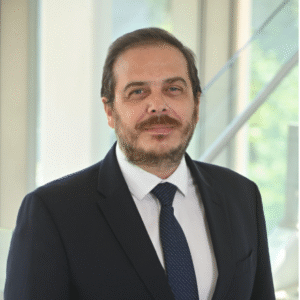
On February 12, an election took place for the position of Director General of the World Intellectual Property Organization (WIPO). As expected, the incumbent – Daren Tang from Singapore – was re-elected and in April he will be formally appointed for a second term of six years, starting October 1, 2026. WIPO’s Director General appoints his Deputy Directors General (DDGs) and Assistant Directors General (ADGs). While Tang’s re-election was almost certain, the fate of his current DDGs and ADGs is less so. The choice of the organization’s chief executive and his most senior direct reports has tangible implications for WIPO’s governance, priorities, internal processes, program delivery, finances, accountability, oversight, staff morale and office culture.
The nomination and appointment of the Director General: process and timeline
The relevant constitutional provisions and procedural steps derive, respectively, from the Convention Establishing the World Intellectual Property Organization, 1967 (the WIPO Convention) and procedures last amended in 2019.1 In short, it is WIPO’s Coordination Committee (known as the CoCo) that nominates a candidate who is subsequently appointed by an extraordinary session of the WIPO General Assembly, the Paris Union Assembly and the Berne Union Assembly (collectively the ‘Assemblies’). The CoCo comprises 83 of WIPO’s 194 Member States.2
It was the CoCo that met on February 12.3 It was originally scheduled to meet for two days but for the reasons I will explain below, the meeting was concluded on February 12.
The Assemblies of the Member States to appoint the Director General will meet on April 21, 2026.
How did the process begin?
As a first step, in July 2025, the Chair of the CoCo, Australia’s Ambassador James Baxter, invited each Member State to propose a national as candidate by October 24, 2025.4 Only two nominations were received.5 As expected, one was Tang, nominated by the Government of Singapore. His nomination referred prominently to the adoption of two treaties in 2024 (the WIPO Treaty on Intellectual Property, Genetic Resources and Associated Traditional Knowledge and the Riyadh Design Law Treaty), describing their adoption under Tang’s leadership as an ‘unprecedented achievement’.
As the deadline neared there was a second nomination – Haiti nominated Mr. Johanny Stanley Joseph. Quoting from the nomination, ‘Mr. Joseph is a Haitian lawyer who holds a doctorate in private law with a specialization in intellectual property (IP). His career is distinguished by strong technical expertise, developed over many years of experience, particularly in the public administration of Haiti.’
On January 27 this year, the CoCo met informally to hear presentations by the two candidates. They answered questions for which they had been given prior notice as well as some spontaneous questions from the floor. Meetings of the CoCo are held behind closed doors and there is no written report of this meeting.
How did the CoCo go about nominating a Director General?
The 2019 procedures guide how the nomination by the CoCo should take place. These recognize that voting will probably be necessary as a means of building consensus for the nomination of a candidate. In addition, the CoCo’s Chair, Baxter, had tabled detailed additional proposals for how voting in the February 2026 session should take place.6 The 83 members of the CoCo had one vote each.7 Voting was by secret ballot. The successful nominee was the candidate who received a simple majority of votes cast.8
The written reports of past CoCo meetings at which Directors General have been elected9 give a good idea of how the meeting proceeded, although in this case only one round of voting was needed because there were only two candidates. Tang won easily (81 votes to 2) and the meeting was over in a few hours.
The DDGs and ADGs: How are they appointed?
There are currently four DDGs and four ADGs.10 Within the organization, they are referred to as ‘Sector Leads’ because each oversees a Sector which vary in size (number of programs, number of staff and budgets). The DDGs and ADGs are political appointees of the Director General and their terms are linked to that of the Director General. There is a subtle difference in how DDGs and ADGs are appointed. In the case of DDGs, the Director General must first seek the approval of his nominations by the CoCo.11 In the case of ADGs, he must simply take into account the CoCo’s advice.12 It is probably only once the Director General has been appointed on April 21, 2026, that an invitation will be issued for nominations of candidates for DDG and ADG positions. Hopefully, it will not only be countries who can nominate one of their own nationals.
The Director General is expected to propose his nominations at the CoCo’s meeting during the July 2026 Assemblies. The DDGs and ADGs will then be able to take up their functions as from October 1, 2026, the same day as the Director General.
The Director General could in principle retain all the current DDGs and ADGs. However, this is unlikely. Some might wish to step down of their own accord. Some might not be retained because they no longer have the support of their governments. Others might be let go for any number of reasons, including that they have lost the trust and confidence of the Director General. The Director General might decide to replace the entire group. He may or may not stick with the current number of DDGs and ADGs, and he may configure the Sectors differently.
Quite a high number of the current DDGs and ADGs are nationals of industrialized countries. The Director General would also be aware of the need to have at least the same number of women across the DDG and ADG positions as he now has, if not more (there are currently three women among the eight DDGs and ADGs).
Rumours are rife, but at this point this is all they are.
Implications
The Director General directs the work of the WIPO Secretariat and is the Secretariat’s executive head and representative.13 While his core responsibility is to report to and conform to the instructions of the WIPO General Assembly,14 in practice, the Director General can be highly influential. The Director General and the Secretariat are themselves actors within WIPO’s governance system and often shape the priorities and directions the Organization takes. As the Organization’s chief executive, his priorities, preferences and practices pervade the Secretariat. He also sets the tone for the office culture.
The next Director General will confront new, profound challenges to the intellectual property (IP) system and to WIPO as an institution brought about by the converging forces of rapid and unpredictable transformations in technology, economics, business, culture and society. A fundamental re-framing of the IP system and knowledge governance regimes more broadly may be underway. WIPO, with its ample resources and many excellent staff, should be well-placed to lead these developments. This is only one example of the challenges facing the Director General. The role – as in any intergovernmental organization – is immensely complex and demanding.
The selection of the DDGs and ADGs will be important too. The Director General will understandably be guided by a need for geographical representation and gender balance, and he will no doubt come under political pressure from countries. In addition, chief executives tend to pick their immediate reports based on personal chemistry and a perceived alignment of core values. Beyond his DDGs and ADGs needing to have efficiency, competence and integrity as the WIPO Convention requires,15 the Director General may also look for persons with at least some genuine interest in and knowledge of IP, and persons who would be sincere colleagues and effective people leaders. There are persons like this in all regions.
Conclusions
At a moment marked by turmoil, geopolitical drift and norm-shattering shocks to multilateralism, the head of WIPO for the next six years will be a weighty responsibility and compelling opportunity. His nominations of DDGs and ADGs will be telling. WIPO’s Member States, observers and staff will no doubt be following closely.
Wend Wendland is Adjunct Professor, Faculty of Law, University of Cape Town and Independent Expert. Former Director, WIPO. Contactable at wend@wendwendland.com This article was first published on February 11, 2026 and has been updated to reflect the results of the CoCo meeting on February 12, 2026.
- Set out in A/66/4, dated May 7, 2025. See also WO/CC/85/3, dated January 19, 2026. ↩︎
- WO/CC/85/INF/1, dated December 12, 2025. It’s mandate, functions and governance are spelled out in Article 8, WIPO Convention. 1967, last amended in 1979. A discussion has been ongoing for several years on the composition of this important Committee, but there has been no agreement yet. ↩︎
- https://www.wipo.int/meetings/en/details.jsp?meeting_id=90228 (accessed February 3, 2026). ↩︎
- Circular Note 4222. ↩︎
- WO/CC/85/2, dated October 27, 2025. ↩︎
- WO/CC/85/3, dated January 19, 2026. ↩︎
- Even countries that are in arrears in respect of their financial contributions to WIPO may vote: Carolyn Deere, The World Intellectual Property Organization (Edward Elgar, 2016), p. 89. ↩︎
- Article 8 (6)(a), WIPO Convention. ↩︎
- See for example the most recent: WO/CC/77/4, dated April 6, 2020. ↩︎
- See https://www.wipo.int/en/web/about-wipo/activities-by-unit/index (accessed February 2, 2026). ↩︎
- Article 9 (7), WIPO Convention, 1967, as last amended in 1979. ↩︎
- Regulation 4.8, WIPO Staff Regulations and Rules. ↩︎
- Article 9, WIPO Convention, 1967, as last amended in 1979. ↩︎
- Article 9 (4)(c), WIPO Convention, 1967, as last amended in 1979. ↩︎
- Article 9 (7), WIPO Convention, 1967, as last amended in 1979. ↩︎