
June 30, 2025

Blog, Health & IP

Malaysia exhorts Human Rights Council to prioritize the primacy of public health and human rights over commercial interests

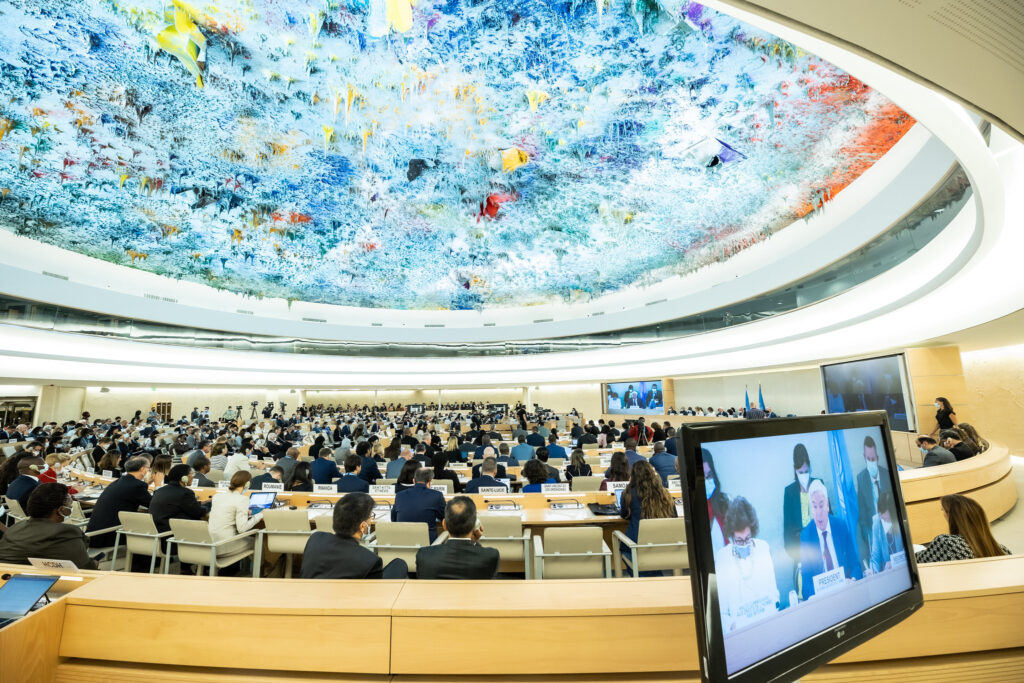
This post was originally published on KEI Online by Thiru Balasubramaniam On Tuesday afternoon, 24 June 2025, the Core Group (Bangladesh, Brazil, China, Egypt, India, Indonesia, Senegal, South Africa, Thailand) convened an informal consultation to consider the revised version draft resolution, “Access to medicines, vaccines and other health products in the context of the right of everyone to the enjoyment of the highest attainable standard of physical and mental health” in Room XXVII of the United Nations Palais des Nations. At the informal, Malaysia proposed textual amendments to the resolution and highlighted the limits of certain voluntary licensing arrangements, most notably Gilead and lenacapavir. Malaysia acknowledges that voluntary licensing arrangements have in some instances contributed to expanded access to medicines. However, we must express our reservation that these arrangements have too often failed to ensure adequate, affordable, and timely access to life-saving medical technologies for many developing countries. As noted in the report of the UN Secretary-General’s High-Level Panel on Access to Medicines, right holders frequently retain the unilateral authority to exclude countries from license agreements—effectively denying access to those most in need. This practice fails to meet the principles of equity and solidarity that global health governance aspires to uphold. A stark illustration of this issue is the case of Gilead Sciences and its antiretroviral drug, Lenacapavir. Despite being a promising long-acting injectable treatment for HIV, Gilead’s voluntary license explicitly excluded developing countries, including Malaysia and many others in Asia, Latin America, and Eastern Europe. These are regions with growing HIV burdens and constrained health budgets, yet they are excluded from generic supply due to the originator’s commercial strategy. Such exclusions highlight a systemic problem: when commercial interests are prioritized in voluntary licensing models, the public health needs of developing countries are marginalized. Therefore, we propose language that tackles the structural shortcomings of voluntary licensing, underscores the pressing concerns of many developing countries in accessing life-saving medicines, and advocates for a more equitable, transparent, and needs-driven framework for access to critical medical innovations. In moving forward, we reaffirm the need for legally certain, transparent, and inclusive mechanisms that prioritize public health over commercial discretion—ensuring that no country is left behind in accessing life-saving medicines, vaccines, and technologies. With respect to the draft resolution, Malaysia stated underscored the exigent need for “strengthened international cooperation and solidarity that prioritizes the primacy of public health and human rights over commercial interests”. Malaysia asserted that TRIPS-plus provisions in trade agreements effectively infringe on the right to health and called on developed countries to “refrain from exerting pressure—whether through trade negotiations, diplomatic influence, or investment agreements—on developing countries to adopt intellectual property protections that exceed TRIPS obligations”. We acknowledge the important guidance provided in the 2009 Report of the UN Special Rapporteur on the Right to Health (A/HRC/11/12), which calls upon developing and least developed countries to refrain from introducing TRIPS-plus provisions into national law, and urges developed countries to desist from promoting such provisions through bilateral or regional trade and investment agreements. We express deep concern that TRIPS-plus provisions—including extended patent terms, data exclusivity, patent linkage, and restrictions on compulsory licensing—go beyond the minimum standards required by the TRIPS Agreement, and risk undermining public health safeguards, delaying access to affordable generic medicines, and increasing healthcare costs, thereby infringing upon the right to health, particularly in developing countries already struggling to meet the health needs of their populations. We caution against increasing trends of developed countries to circumvent international based IP rule through bilateral trade agreements to impose their own IP agendas such as TRIPS plus provisions on developing nations, potentially undermining the multilateral system. We further emphasize that developed countries should refrain from exerting pressure—whether through trade negotiations, diplomatic influence, or investment agreements—on developing countries to adopt intellectual property protections that exceed TRIPS obligations. Such practices restrict national policy space, compromise the ability of States to protect public health, restricting access to affordable health products, and risk undermining the integrity of the multilateral rules-based system. Malaysia calls for strengthened international cooperation and solidarity that prioritizes the primacy of public health and human rights over commercial interests. We urge all Member States to ensure that their trade and intellectual property policies are aligned with their obligations under international human rights law, including the right to health, and to reaffirm their commitment to preserving policy space, resisting TRIPS-plus measures, and working toward an international system that places human dignity and health equity at its core. Malaysia proposed the insertion of the following language including a peace clause in Op 4 bis. New PP Acknowledging that voluntary licensing arrangements, while beneficial in some contexts, have often failed to provide adequate, affordable, and timely access to life saving medicines for some developing countries that are usually excluded from the scope of licenses, as right holders reserve the right to identify countries where they intend to sell the product directly or through other agreements; (part from the Report of the UN Secretary General’s High-Level Panel on Access to Medicines) New PP Acknowledging the 2009 Report of the Special Rapporteur on the right of everyone to the enjoyment of the highest attainable standard of physical and mental health that calls for developing and least developed countries to not to introduce TRIPS-plus provisions in their national laws and developed countries should not encourage developing countries and LDCs to enter into TRIPS-plus FTAs and should be mindful of actions which may infringe upon the right to health.; (Ref A/HRC/11/12 pg 29 para 109)New PP Recalling the 2021 Political Declaration on HIV and AIDS that calls for ensuring that intellectual property rights provisions in trade agreements do not undermine existing flexibilities, as confirmed in the Doha Declaration on the TRIPS Agreement and Public Health (A/RES/75/284 para 68(a)) New Op 4 bis: Call upon States to exercise restraint in undertaking international legal obligations which directly or indirectly undermines the freedom to make use of the TRIPS flexibilities and also urges States to monitor the implications of voluntary licenses in facilitating availability, accessibility and affordability

Artificial Intelligence, Blog

Latest Developments on Training GenAI with Copyrighted Works and Some 'What Ifs?'

‘Boring’ is not a word that can be used to describe the past few days for those interested in litigation involving copyright issues in the development and use of Generative AI systems. Two major cases saw significant updates, issuing orders that addressed one of the main questions raised in these lawsuits: is the use of copyrighted materials to train Generative AI systems fair use? This blog post aims to briefly describe each case’s key points related to fair use and to highlight what was left unresolved, including all the ‘what if’ scenarios that were hinted at but not decided upon Bartz, Graeber & Johnson v. Anthropic Judge William Alsup’s order on fair use addressed not only the different copies of copyrighted material made for training generative AI systems but also uses related to Anthropic’s practice of keeping copies as a “permanent, general-purpose resource”. It also distinguished between legally purchased copies and millions of pirated copies retained by Anthropic, applying a different fair use analysis to each category. Regarding the overall analysis of fair use for copyrighted works used to train Anthropic’s Generative AI system, Judge Alsup found that the use “was exceedingly transformative and was a fair use.” Among the four factors, only the second factor weighed against using copyrighted works to train the GenAI system. Concerning the digitization of legally purchased books, it was also considered fair use not because of the purpose of training AI systems, but for a much simpler reason:  “because all Anthropic did was replace the print copies it had purchased for its central library with more convenient space-saving and searchable digital copies for its central library — without adding new copies, creating new works, or redistributing existing copies”. For this specific use, of the four factors, only factor two weighed against fair use, while factor four remained neutral. On the other hand, Judge Alsup clearly stated that using pirated copies to create the “general-purpose library” was not fair use, even if some copies might be used to train LLMs. All factors weighed against it. Specifically, Judge Alsup noted: “it denies summary judgment for Anthropic that the pirated library copies must be treated as training copies. We will have a trial on the pirated copies used to create Anthropic’s central library and the resulting damages, actual or statutory (including for willfulness).” Kadrey v. Meta At the very beginning of the order, Judge Vince Chhabria clarified that the case questions whether using copyrighted material to train generative AI models without permission or remuneration is illegal and affirmed that: “although the devil is in the details, in most cases the answer will likely be yes. What copyright law cares about, above all else, is preserving the incentive for human beings to create artistic and scientific works. Therefore, it is generally illegal to copy protected works without permission. And the doctrine of “fair use,” which provides a defense to certain claims of copyright infringement, typically doesn’t apply to copying that will significantly diminish the ability of copyright holders to make money from their works (thus significantly diminishing the incentive to create in the future).” Judge Chhabria explained further that  “by training generative AI models with copyrighted works, companies are creating something that often will dramatically undermine the market for those works, and thus dramatically undermine the incentive for human beings to create things the old-fashioned way.” According to him, this would primarily affect not classic works or renowned authors but rather the market for the “typical human-created romance or spy novel,” which could be substantially diminished by similar AI-created works.  However, all these points were framed as “this Court’s general understanding of generative AI models and their capabilities”, with Judge Chhabria emphasizing that “Courts can’t decide cases based on general understandings. They must decide cases based on the evidence presented by the parties.”  Despite this general understanding that “copying the protected works, however transformative, involves the creation of a product with the ability to severely harm the market for the works being copied, and thus severely undermine the incentive for human beings to create“, Judge Chhabria found two of the plaintiffs’ three market harm theories “clear losers,” and the third, a “potentially winning” argument, underdeveloped: “First, the plaintiff might claim that the model will regurgitate their works (or outputs that are substantially similar), thereby allowing users to access those works or substitutes for them for free via the model. Second, the plaintiff might point to the market for licensing their works for AI training and contend that unauthorized copying for training harms that market (or precludes the development of that market). Third, the plaintiff might argue that, even if the model can’t regurgitate their own works or generate substantially similar ones, it can generate works that are similar enough (in subject matter or genre) that they will compete with the originals and thereby indirectly substitute for them. In this case, the first two arguments fail. The third argument is far more promising, but the plaintiffs’ presentation is so weak that it does not move the needle, or even raise a dispute of fact sufficient to defeat summary judgment.“ In the overall analysis of the four factors, only the second factor weighed against Meta. Summary judgment was granted to Meta regarding the claim of copyright infringement from using plaintiffs’ books for AI training. Nevertheless, Judge Chhabria clarified that “this ruling does not stand for the proposition that Meta’s use of copyrighted materials to train its language models is lawful. It stands only for the proposition that these plaintiffs made the wrong arguments and failed to develop a record in support of the right one.” The use of pirated copies was also addressed in Kadrey v. Meta. In this case, “there is no dispute that Meta torrented LibGen and Anna’s Archive […].” According to Judge Chhabria, while downloading from shadow libraries wouldn’t automatically win the plaintiffs’ case, it was relevant for the fair use analysis, especially regarding “bad faith” and whether the downloads benefited or perpetuated unlawful activities. Lessons

Blog, WIPO GA

WIPO General Assembly 66th: Navigating a Comprehensive Agenda with Constructive Dialogue

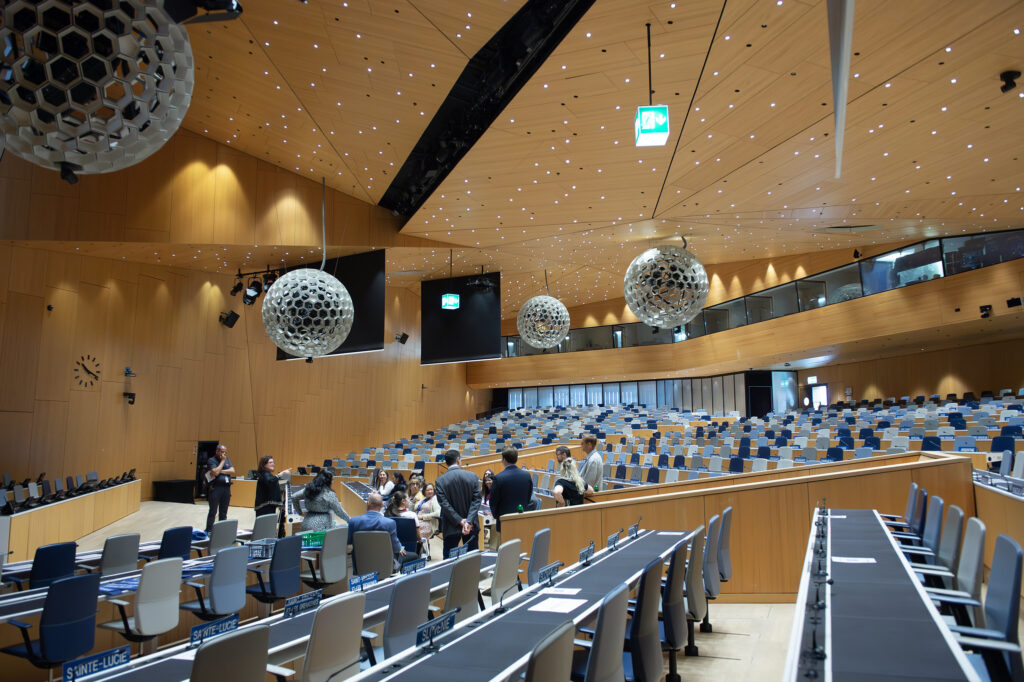
Despite the weight of a packed agenda and the significance of several recent treaty milestones, the Sixty-Sixth Series of Meetings of the WIPO General Assembly is expected to unfold key institutional decisions, including the initiation of the Director General appointment process, the adoption of procedural reforms under the Lisbon and Design systems, and the future and implementation of longstanding treaty negotiations.  Among the central governance items is the formal initiation of the process to nominate and appoint WIPO’s next Director General (A/66/4), whose term will begin in October 2026. The framework laid out in the document provides a clear timeline, beginning with a July 2025 call for nominations and concluding with an April 2026 decision. While the process is administrative at this stage, the importance of the role—and its potential to influence the agency’s direction—will shape the future of WIPO 2026-2032. In parallel, the Assembly will elect a new slate of Program and Budget Committee members for 2025–2027 (WO/GA/58/1) and appoint Chairs and Vice-Chairs for the various Assemblies and Unions (A/66/2 Prov.4). These steps ensure procedural stability, but also underscore broader Member State interest in the balance of representation across WIPO’s governance structures. One of the more consequential decisions awaiting the Assembly is whether to convene a Diplomatic Conference on the proposed Broadcasting Treaty (WO/GA/58/4). While the most recent SCCR session made strides in updating the draft text, Member States remain divided over key elements, including the scope of rights and the treatment of signal-based protections. A consensus on readiness has not yet emerged, and further consultations may be needed before formal negotiations can proceed. With regards the Work Plan on Exceptions and Limitations (SCCR/43/8 Rev.) the Chair Ms. Cohen is working to move forward the agenda by finding common grounds between the member states. The implementation of newly adopted treaties will also be on the Assembly’s radar. The WIPO Treaty on Genetic Resources and Traditional Knowledge (WO/GA/58/8), adopted in May 2024, and the Design Law Treaty (WO/GA/58/13), adopted in November 2024, both require follow-up in terms of ratification strategies, capacity-building support, and coordination among Member States. While their adoption was widely celebrated, the transition to effective implementation remains an important next step. Procedural and regulatory reforms under the Lisbon System will likewise be considered. Proposed amendments to the Common Regulations (LI/A/42/2) and the formalization of new Special Rules of Procedure for the Lisbon Working Group (LI/A/42/1) aim to streamline administration and ensure coherence with WIPO’s broader framework.  Standing committee discussions continue across multiple fronts. The Standing Committee on the Law of Patents (WO/GA/58/5) will report on ongoing work relating to patent exceptions, inventorship in research collaborations, and the broader implications of AI in innovation systems. The Standing Committee on the Law of Trademarks (WO/GA/58/6) will revisit longstanding debates over the protection of country names and geographic terms, though consensus remains elusive. In the technical sphere, the Committee on WIPO Standards (WO/GA/58/9) presents a set of new and revised standards for approval. Given the growing complexity and volume of its mandate, the committee also recommends prioritizing certain tasks and deferring others—a recognition that capacity, both technical and political, must be managed carefully. The Assembly will also review a number of oversight and budgetary matters carried forward from the 39th Program and Budget Committee. These include approval of recommendations from PBC Sessions 38 and 39 (A/66/7), review of oversight reports from WIPO’s Independent Advisory Oversight Committee and Internal Oversight Division (WO/GA/58/2, WO/GA/58/3), and follow-up on financial governance issues raised in the External Auditor’s report (A/66/6). Member States continue to emphasize the importance of accountability and transparency, particularly in budget execution and internal controls. Several programmatic matters also require attention. The Committee on Development and Intellectual Property (WO/GA/58/7) has approved a new wave of projects and evaluations, many focusing on creative industries, tourism, and small and medium enterprises. Meanwhile, the Advisory Committee on Enforcement (WO/GA/58/10) seeks approval for its future work plan, and the Secretariat will report on PLT-related technical assistance provided by developed countries to developing and least-developed countries (WO/GA/58/12). On the administrative front, the Hague Union will consider its participation in WIPO’s Digital Access Service (H/A/45/1), a move intended to facilitate the digital exchange of priority documents and reduce the burden on applicants. Similarly, the Madrid Union will examine targeted amendments to its Regulations, including the mandatory provision of email addresses and more responsive recalculations of fees based on currency fluctuations (MM/A/59/1). Beyond regulatory updates, the Assembly will also take note of WIPO’s ongoing support to Ukraine (A/66/8), which includes tailored technical assistance and reaffirmed commitments to territorial integrity in WIPO communications and services. The report reflects both resilience in Ukraine’s IP ecosystem and the role of international cooperation in post-crisis recovery. Finally, WIPO’s arbitration and mediation services (WO/GA/58/11) continue to gain relevance, with increased uptake among SMEs and IP offices reinforcing the value of accessible dispute resolution in a diversifying innovation landscape. As the WIPO General Assembly addresses a broad agenda spanning governance, treaty implementation, and procedural reforms, it sets the stage for the organization’s work in the coming years. While many items remain at a preparatory or consultative stage, the decisions taken—particularly on the Director General appointment process, committee leadership, and follow-up to recent treaties—will shape the institution’s capacity to respond to Member State priorities. Continued dialogue, transparency, and balanced representation will be essential to ensure progress across the Organization’s diverse and evolving mandate.

Scroll to Top