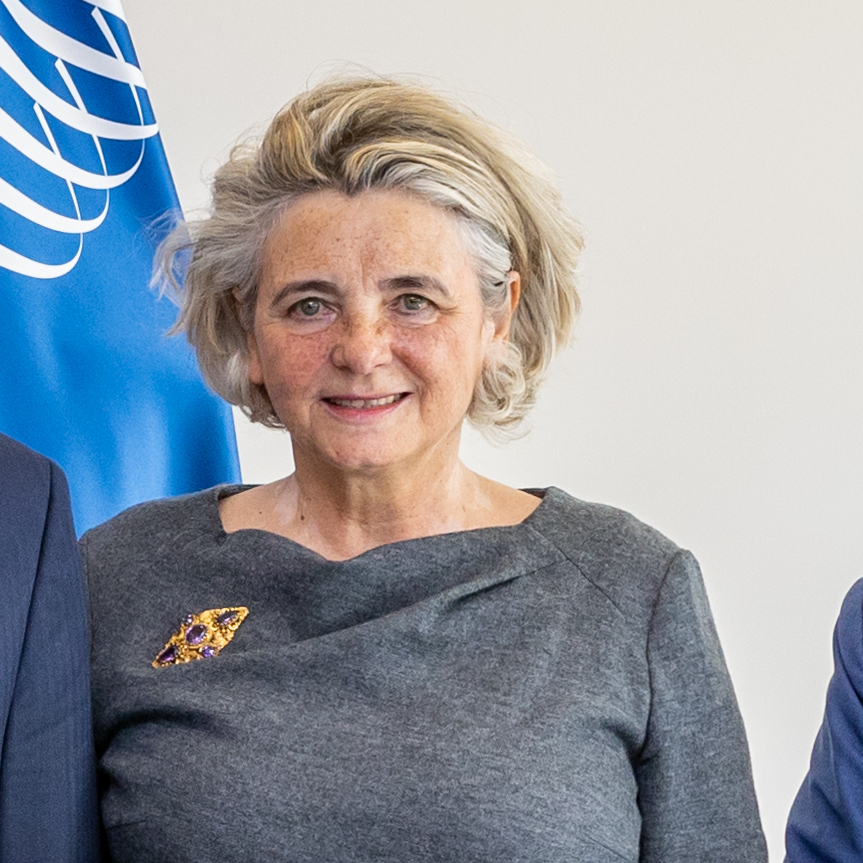
Vitor Ido of the University of São Paulo (USP) explains the context of the renewed focus on remuneration of creatives in Latin America, especially in Brazil. He focuses on the desire by Brazil’s new government to regulate the power of large corporates, especially those based in the Global North, especially the tendency to exploit Brazil’s creative content at the expense of local authors and creators. This presentation was delivered at the User Rights meeting in Geneva on 17 June 2025. The full text is available below. The political context in Brazil: A renewed commitment to national creative industries It’s a pleasure to be here and thank you so much for the invitation. So I’ll try to feed into this discussion of remuneration rights, but with a different framing and a different entry point in particular: the reasons why GRULAC and Latin America wanted to bring this discussion to WIPO and how there’s kind of a big mismatch between what’s taking place at the national or regional level and what’s taking place more globally. My interpretation is that we need to understand that at least in Brazil, potentially slightly different from what we’re seeing in Europe, there’s two main things: On the one hand, renewed attention to creative industries as strategic to the Brazilian economy and Latin America more broadly. And on the other hand, regulation of huge platforms. It’s the post-Bolsonaro context. So this is responding to an authoritarian context in which you had severe cutting in culture industries financing, but also deregulation in the platform sector, which also led to direct consequences for democracy, just like we saw in other countries as well. So if we look from that point of view, when we look at how this new government tried to pitch creative industries as one core focus, you see new fiscal policies, you see new legislation and direct and indirect support to not only authors, but movies and all different cultural sectors. That’s where we get to the remuneration issues: low to minimum to absolutely no remuneration at all for authors, in particular by foreign large platforms. And it’s said all the time in Brazil that our Minister of Culture, who’s also an artist, she pretty much gains nothing and she’s well-known, super well-known actually, and she gets basically nothing out of Spotify. On top of that, of course, there are general concerns about a workforce being displaced by artificial intelligence and thinking about the economic potentials of exporting some of our cultural assets to other countries, not just Lusophone countries, but then potentials for conventional streaming platforms like Netflix. So during the pandemic, for instance, when that was the setting, there was no direct support by the government, what we had was just that sort of investment. But also on the other hand, the issue of regulating platforms, what you see, and maybe that’s one of the things that’s being discussed outside of Brazil more, is how the Supreme Court has taken a very active role in regulating platforms, and even this week they’re about to finalise a reframing of a longstanding provision that was basically a safe harbour, not liability, for platforms that is about to be reshaped. And some people in the international literature are even calling it kind of a Brazil model in the making. Remuneration to support and protect journalism and other key sectors But where it fits into remuneration, is that very explicitly the government is saying to counter misinformation, it’s not just about digital literacy, but also about having enough instruments to support journalism, quality journalism, alternative journalism, black-owned journalism, indigenous peoples-owned journalism, women-owned journalism. And because of a fading business model, that also means that potentially new support in the form of remuneration can be part of this agenda. This is just one example. Another is that, of course, dubbing [of movies and TV] in Brazil is a really huge cultural industry in an economic sense. You see this campaign that is talking not only about the loss of a whole profession, but also how this fits into notions of being Brazilian, what does it mean to speak Brazilian Portuguese, what does it mean to export it all, and the impact of being translated into an AI [voice], which Netflix actually did on a few occasions. It’s not, therefore, just a workforce displacement issue, but also that broader cultural repercussion that needs to be taken into account. The rights of indigenous people to protect traditional knowledge I just wanted to add, as well, a couple of other issues that I think are important for us to understand more broadly. I think the core in Brazil would be there’s more reasons to be concerned about misappropriation, particularly when we’re talking about minorities, than de facto issues with L&Es not existing. I’m referring, of course, to Alan [Rocha]’s very well-known argument of how courts in Brazil have historically been trying to compensate for the bad legislation that does not really have L&Es, but that de facto end up authorising utilizations, for instance, for both research and educational purposes. In the policy realm, there’s also other reasons to be concerned about what’s going on, with the provisions related to big funders that are licencing some of our preservation and museums and archives policies that often just have that blunt open access provisions that are not really aligned with the way you need to negotiate and ponder things with indigenous peoples. I refer to the launch of the University of Sao Paulo’s new Centre of Documentation of Indigenous Languages and Cultures that took place a couple of weeks ago. It’s a very exciting, huge project, and one of the main issues there is precisely how do you do preservation and archival resources with direct participation of indigenous peoples. One of the main issues is you can’t start with an [open] access provision. It might end with that, but then you need to calibrate issues related to traditional knowledge, so when we bring