Blog

Your blog category

Blog, Health & IP

Malaysia exhorts Human Rights Council to prioritize the primacy of public health and human rights over commercial interests

This post was originally published on KEI Online by Thiru Balasubramaniam On Tuesday afternoon, 24 June 2025, the Core Group (Bangladesh, Brazil, China, Egypt, India, Indonesia, Senegal, South Africa, Thailand) convened an informal consultation to consider the revised version draft resolution, “Access to medicines, vaccines and other health products in the context of the right of everyone to the enjoyment of the highest attainable standard of physical and mental health” in Room XXVII of the United Nations Palais des Nations. At the informal, Malaysia proposed textual amendments to the resolution and highlighted the limits of certain voluntary licensing arrangements, most notably Gilead and lenacapavir. Malaysia acknowledges that voluntary licensing arrangements have in some instances contributed to expanded access to medicines. However, we must express our reservation that these arrangements have too often failed to ensure adequate, affordable, and timely access to life-saving medical technologies for many developing countries. As noted in the report of the UN Secretary-General’s High-Level Panel on Access to Medicines, right holders frequently retain the unilateral authority to exclude countries from license agreements—effectively denying access to those most in need. This practice fails to meet the principles of equity and solidarity that global health governance aspires to uphold. A stark illustration of this issue is the case of Gilead Sciences and its antiretroviral drug, Lenacapavir. Despite being a promising long-acting injectable treatment for HIV, Gilead’s voluntary license explicitly excluded developing countries, including Malaysia and many others in Asia, Latin America, and Eastern Europe. These are regions with growing HIV burdens and constrained health budgets, yet they are excluded from generic supply due to the originator’s commercial strategy. Such exclusions highlight a systemic problem: when commercial interests are prioritized in voluntary licensing models, the public health needs of developing countries are marginalized. Therefore, we propose language that tackles the structural shortcomings of voluntary licensing, underscores the pressing concerns of many developing countries in accessing life-saving medicines, and advocates for a more equitable, transparent, and needs-driven framework for access to critical medical innovations. In moving forward, we reaffirm the need for legally certain, transparent, and inclusive mechanisms that prioritize public health over commercial discretion—ensuring that no country is left behind in accessing life-saving medicines, vaccines, and technologies. With respect to the draft resolution, Malaysia stated underscored the exigent need for “strengthened international cooperation and solidarity that prioritizes the primacy of public health and human rights over commercial interests”. Malaysia asserted that TRIPS-plus provisions in trade agreements effectively infringe on the right to health and called on developed countries to “refrain from exerting pressure—whether through trade negotiations, diplomatic influence, or investment agreements—on developing countries to adopt intellectual property protections that exceed TRIPS obligations”. We acknowledge the important guidance provided in the 2009 Report of the UN Special Rapporteur on the Right to Health (A/HRC/11/12), which calls upon developing and least developed countries to refrain from introducing TRIPS-plus provisions into national law, and urges developed countries to desist from promoting such provisions through bilateral or regional trade and investment agreements. We express deep concern that TRIPS-plus provisions—including extended patent terms, data exclusivity, patent linkage, and restrictions on compulsory licensing—go beyond the minimum standards required by the TRIPS Agreement, and risk undermining public health safeguards, delaying access to affordable generic medicines, and increasing healthcare costs, thereby infringing upon the right to health, particularly in developing countries already struggling to meet the health needs of their populations. We caution against increasing trends of developed countries to circumvent international based IP rule through bilateral trade agreements to impose their own IP agendas such as TRIPS plus provisions on developing nations, potentially undermining the multilateral system. We further emphasize that developed countries should refrain from exerting pressure—whether through trade negotiations, diplomatic influence, or investment agreements—on developing countries to adopt intellectual property protections that exceed TRIPS obligations. Such practices restrict national policy space, compromise the ability of States to protect public health, restricting access to affordable health products, and risk undermining the integrity of the multilateral rules-based system. Malaysia calls for strengthened international cooperation and solidarity that prioritizes the primacy of public health and human rights over commercial interests. We urge all Member States to ensure that their trade and intellectual property policies are aligned with their obligations under international human rights law, including the right to health, and to reaffirm their commitment to preserving policy space, resisting TRIPS-plus measures, and working toward an international system that places human dignity and health equity at its core. Malaysia proposed the insertion of the following language including a peace clause in Op 4 bis. New PP Acknowledging that voluntary licensing arrangements, while beneficial in some contexts, have often failed to provide adequate, affordable, and timely access to life saving medicines for some developing countries that are usually excluded from the scope of licenses, as right holders reserve the right to identify countries where they intend to sell the product directly or through other agreements; (part from the Report of the UN Secretary General’s High-Level Panel on Access to Medicines) New PP Acknowledging the 2009 Report of the Special Rapporteur on the right of everyone to the enjoyment of the highest attainable standard of physical and mental health that calls for developing and least developed countries to not to introduce TRIPS-plus provisions in their national laws and developed countries should not encourage developing countries and LDCs to enter into TRIPS-plus FTAs and should be mindful of actions which may infringe upon the right to health.; (Ref A/HRC/11/12 pg 29 para 109)New PP Recalling the 2021 Political Declaration on HIV and AIDS that calls for ensuring that intellectual property rights provisions in trade agreements do not undermine existing flexibilities, as confirmed in the Doha Declaration on the TRIPS Agreement and Public Health (A/RES/75/284 para 68(a)) New Op 4 bis: Call upon States to exercise restraint in undertaking international legal obligations which directly or indirectly undermines the freedom to make use of the TRIPS flexibilities and also urges States to monitor the implications of voluntary licenses in facilitating availability, accessibility and affordability

Artificial Intelligence, Blog

Latest Developments on Training GenAI with Copyrighted Works and Some 'What Ifs?'

‘Boring’ is not a word that can be used to describe the past few days for those interested in litigation involving copyright issues in the development and use of Generative AI systems. Two major cases saw significant updates, issuing orders that addressed one of the main questions raised in these lawsuits: is the use of copyrighted materials to train Generative AI systems fair use? This blog post aims to briefly describe each case’s key points related to fair use and to highlight what was left unresolved, including all the ‘what if’ scenarios that were hinted at but not decided upon Bartz, Graeber & Johnson v. Anthropic Judge William Alsup’s order on fair use addressed not only the different copies of copyrighted material made for training generative AI systems but also uses related to Anthropic’s practice of keeping copies as a “permanent, general-purpose resource”. It also distinguished between legally purchased copies and millions of pirated copies retained by Anthropic, applying a different fair use analysis to each category. Regarding the overall analysis of fair use for copyrighted works used to train Anthropic’s Generative AI system, Judge Alsup found that the use “was exceedingly transformative and was a fair use.” Among the four factors, only the second factor weighed against using copyrighted works to train the GenAI system. Concerning the digitization of legally purchased books, it was also considered fair use not because of the purpose of training AI systems, but for a much simpler reason:  “because all Anthropic did was replace the print copies it had purchased for its central library with more convenient space-saving and searchable digital copies for its central library — without adding new copies, creating new works, or redistributing existing copies”. For this specific use, of the four factors, only factor two weighed against fair use, while factor four remained neutral. On the other hand, Judge Alsup clearly stated that using pirated copies to create the “general-purpose library” was not fair use, even if some copies might be used to train LLMs. All factors weighed against it. Specifically, Judge Alsup noted: “it denies summary judgment for Anthropic that the pirated library copies must be treated as training copies. We will have a trial on the pirated copies used to create Anthropic’s central library and the resulting damages, actual or statutory (including for willfulness).” Kadrey v. Meta At the very beginning of the order, Judge Vince Chhabria clarified that the case questions whether using copyrighted material to train generative AI models without permission or remuneration is illegal and affirmed that: “although the devil is in the details, in most cases the answer will likely be yes. What copyright law cares about, above all else, is preserving the incentive for human beings to create artistic and scientific works. Therefore, it is generally illegal to copy protected works without permission. And the doctrine of “fair use,” which provides a defense to certain claims of copyright infringement, typically doesn’t apply to copying that will significantly diminish the ability of copyright holders to make money from their works (thus significantly diminishing the incentive to create in the future).” Judge Chhabria explained further that  “by training generative AI models with copyrighted works, companies are creating something that often will dramatically undermine the market for those works, and thus dramatically undermine the incentive for human beings to create things the old-fashioned way.” According to him, this would primarily affect not classic works or renowned authors but rather the market for the “typical human-created romance or spy novel,” which could be substantially diminished by similar AI-created works.  However, all these points were framed as “this Court’s general understanding of generative AI models and their capabilities”, with Judge Chhabria emphasizing that “Courts can’t decide cases based on general understandings. They must decide cases based on the evidence presented by the parties.”  Despite this general understanding that “copying the protected works, however transformative, involves the creation of a product with the ability to severely harm the market for the works being copied, and thus severely undermine the incentive for human beings to create“, Judge Chhabria found two of the plaintiffs’ three market harm theories “clear losers,” and the third, a “potentially winning” argument, underdeveloped: “First, the plaintiff might claim that the model will regurgitate their works (or outputs that are substantially similar), thereby allowing users to access those works or substitutes for them for free via the model. Second, the plaintiff might point to the market for licensing their works for AI training and contend that unauthorized copying for training harms that market (or precludes the development of that market). Third, the plaintiff might argue that, even if the model can’t regurgitate their own works or generate substantially similar ones, it can generate works that are similar enough (in subject matter or genre) that they will compete with the originals and thereby indirectly substitute for them. In this case, the first two arguments fail. The third argument is far more promising, but the plaintiffs’ presentation is so weak that it does not move the needle, or even raise a dispute of fact sufficient to defeat summary judgment.“ In the overall analysis of the four factors, only the second factor weighed against Meta. Summary judgment was granted to Meta regarding the claim of copyright infringement from using plaintiffs’ books for AI training. Nevertheless, Judge Chhabria clarified that “this ruling does not stand for the proposition that Meta’s use of copyrighted materials to train its language models is lawful. It stands only for the proposition that these plaintiffs made the wrong arguments and failed to develop a record in support of the right one.” The use of pirated copies was also addressed in Kadrey v. Meta. In this case, “there is no dispute that Meta torrented LibGen and Anna’s Archive […].” According to Judge Chhabria, while downloading from shadow libraries wouldn’t automatically win the plaintiffs’ case, it was relevant for the fair use analysis, especially regarding “bad faith” and whether the downloads benefited or perpetuated unlawful activities. Lessons

Blog, WIPO GA

WIPO General Assembly 66th: Navigating a Comprehensive Agenda with Constructive Dialogue

Despite the weight of a packed agenda and the significance of several recent treaty milestones, the Sixty-Sixth Series of Meetings of the WIPO General Assembly is expected to unfold key institutional decisions, including the initiation of the Director General appointment process, the adoption of procedural reforms under the Lisbon and Design systems, and the future and implementation of longstanding treaty negotiations.  Among the central governance items is the formal initiation of the process to nominate and appoint WIPO’s next Director General (A/66/4), whose term will begin in October 2026. The framework laid out in the document provides a clear timeline, beginning with a July 2025 call for nominations and concluding with an April 2026 decision. While the process is administrative at this stage, the importance of the role—and its potential to influence the agency’s direction—will shape the future of WIPO 2026-2032. In parallel, the Assembly will elect a new slate of Program and Budget Committee members for 2025–2027 (WO/GA/58/1) and appoint Chairs and Vice-Chairs for the various Assemblies and Unions (A/66/2 Prov.4). These steps ensure procedural stability, but also underscore broader Member State interest in the balance of representation across WIPO’s governance structures. One of the more consequential decisions awaiting the Assembly is whether to convene a Diplomatic Conference on the proposed Broadcasting Treaty (WO/GA/58/4). While the most recent SCCR session made strides in updating the draft text, Member States remain divided over key elements, including the scope of rights and the treatment of signal-based protections. A consensus on readiness has not yet emerged, and further consultations may be needed before formal negotiations can proceed. With regards the Work Plan on Exceptions and Limitations (SCCR/43/8 Rev.) the Chair Ms. Cohen is working to move forward the agenda by finding common grounds between the member states. The implementation of newly adopted treaties will also be on the Assembly’s radar. The WIPO Treaty on Genetic Resources and Traditional Knowledge (WO/GA/58/8), adopted in May 2024, and the Design Law Treaty (WO/GA/58/13), adopted in November 2024, both require follow-up in terms of ratification strategies, capacity-building support, and coordination among Member States. While their adoption was widely celebrated, the transition to effective implementation remains an important next step. Procedural and regulatory reforms under the Lisbon System will likewise be considered. Proposed amendments to the Common Regulations (LI/A/42/2) and the formalization of new Special Rules of Procedure for the Lisbon Working Group (LI/A/42/1) aim to streamline administration and ensure coherence with WIPO’s broader framework.  Standing committee discussions continue across multiple fronts. The Standing Committee on the Law of Patents (WO/GA/58/5) will report on ongoing work relating to patent exceptions, inventorship in research collaborations, and the broader implications of AI in innovation systems. The Standing Committee on the Law of Trademarks (WO/GA/58/6) will revisit longstanding debates over the protection of country names and geographic terms, though consensus remains elusive. In the technical sphere, the Committee on WIPO Standards (WO/GA/58/9) presents a set of new and revised standards for approval. Given the growing complexity and volume of its mandate, the committee also recommends prioritizing certain tasks and deferring others—a recognition that capacity, both technical and political, must be managed carefully. The Assembly will also review a number of oversight and budgetary matters carried forward from the 39th Program and Budget Committee. These include approval of recommendations from PBC Sessions 38 and 39 (A/66/7), review of oversight reports from WIPO’s Independent Advisory Oversight Committee and Internal Oversight Division (WO/GA/58/2, WO/GA/58/3), and follow-up on financial governance issues raised in the External Auditor’s report (A/66/6). Member States continue to emphasize the importance of accountability and transparency, particularly in budget execution and internal controls. Several programmatic matters also require attention. The Committee on Development and Intellectual Property (WO/GA/58/7) has approved a new wave of projects and evaluations, many focusing on creative industries, tourism, and small and medium enterprises. Meanwhile, the Advisory Committee on Enforcement (WO/GA/58/10) seeks approval for its future work plan, and the Secretariat will report on PLT-related technical assistance provided by developed countries to developing and least-developed countries (WO/GA/58/12). On the administrative front, the Hague Union will consider its participation in WIPO’s Digital Access Service (H/A/45/1), a move intended to facilitate the digital exchange of priority documents and reduce the burden on applicants. Similarly, the Madrid Union will examine targeted amendments to its Regulations, including the mandatory provision of email addresses and more responsive recalculations of fees based on currency fluctuations (MM/A/59/1). Beyond regulatory updates, the Assembly will also take note of WIPO’s ongoing support to Ukraine (A/66/8), which includes tailored technical assistance and reaffirmed commitments to territorial integrity in WIPO communications and services. The report reflects both resilience in Ukraine’s IP ecosystem and the role of international cooperation in post-crisis recovery. Finally, WIPO’s arbitration and mediation services (WO/GA/58/11) continue to gain relevance, with increased uptake among SMEs and IP offices reinforcing the value of accessible dispute resolution in a diversifying innovation landscape. As the WIPO General Assembly addresses a broad agenda spanning governance, treaty implementation, and procedural reforms, it sets the stage for the organization’s work in the coming years. While many items remain at a preparatory or consultative stage, the decisions taken—particularly on the Director General appointment process, committee leadership, and follow-up to recent treaties—will shape the institution’s capacity to respond to Member State priorities. Continued dialogue, transparency, and balanced representation will be essential to ensure progress across the Organization’s diverse and evolving mandate.

Blog

WIPO Budget Committee Concludes Without Agreement on Indigenous Participation Funding

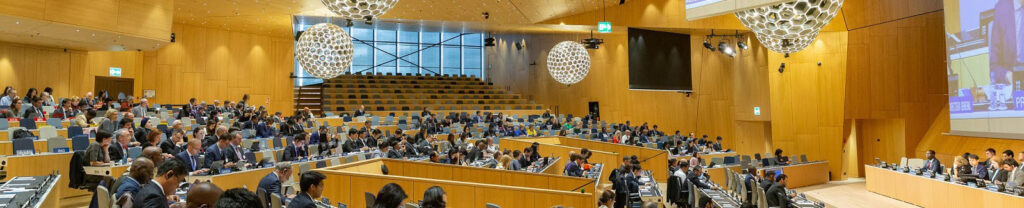
At the close of WIPO’s 39th Program and Budget Committee (PBC) session, a modest yet symbolically significant proposal—to allocate regular budget funds, on an exceptional basis, to support the participation of Indigenous Peoples in sessions of the Intergovernmental Committee (IGC)—was withdrawn. Despite wide cross-regional support and a week of intensive consultations, consensus remained elusive. The proposal, introduced initially by Colombia on behalf of GRULAC, aimed to address a persistent problem: the underfunding of the Voluntary Fund, which currently serves as the only dedicated mechanism to support Indigenous and Local Community (IPLC) participation in WIPO negotiations. The initiative would have allowed up to three IPLC representatives to be funded from unallocated regular budget resources—only when the Voluntary Fund lacked resources and under strict procedural safeguards. A cross-regional group including Australia, Indonesia, Canada, Brazil, Switzerland, and the African Group expressed support, citing the urgent need for more inclusive representation in negotiations that directly affect Indigenous rights. Mexico later introduced a refined version of the proposal, limiting its application to moments when the Voluntary Fund is depleted and capping participation at three Indigenous representatives per IGC session. The revised language included safeguards: no new assessments, clear reporting obligations, and strict adherence to WIPO’s Financial Regulations. “Guaranteeing the participation of Indigenous Peoples is not just a symbolic gesture,” said the delegate from Mexico. “It’s a basic precondition for our discussions to reflect the reality on which we are supposedly adopting rules.” In withdrawing the proposal, Mexico lamented the “lack of agreement from just a few states,” despite what it called a “balanced measure subject to strict conditions and aligned to the rules of the organization.” The Australian delegation expressed disappointment: “While this proposal could not reach consensus, the discussions this week confirmed a widely shared view on the importance of the meaningful participation of Indigenous Peoples and Local Communities.” Australia further emphasized the constructive tone of the negotiations: “The proposal demonstrated that we can work together and bridge differences across groups.” Canada called the initiative “a valuable proposal and one that provides a creative pathway to supporting the essential participation of Indigenous Peoples as unique voices within the IGC.” Despite broad interregional support, it regretted that the measure could not “generate consensus.” Canada described the proposal as “purpose-driven and limited in scope… financially responsible, transparent, and supported by Member States across regions.” Peru, speaking as a GRULAC member, underscored that “this is a question of principle.” It warned that the IGC’s legitimacy could be undermined “if we cannot hear the voices of the custodians of the knowledge we aim to protect.” The African Group, through Namibia, noted that “the continued lack of funding remains a serious concern and will hinder the effective participation and meaningful contribution of IPLCs.” The group of Like-Minded Countries, represented by Indonesia, echoed this regret, noting that the proposal aimed “to enhance inclusivity and ensure balanced participation… essential for the legitimacy and effectiveness of the process.” Despite such broad support, some delegations raised objections. The United States, United Kingdom, and Sweden opposed using core budget funds for observer participation. Their position, consistently restated throughout the week, was that such support should be confined to the Voluntary Fund or voluntary Member State contributions. The U.S. delegation, in particular, argued that the core budget should not be used to fund non-state actors, raising concerns about precedent and financial governance. Other delegations, such as Japan (on behalf of Group B), Italy, France, and Estonia (on behalf of CEBS), stopped short of opposing the proposal outright but requested additional time to analyze its legal and budgetary implications. “We seek clarity on how such a reallocation could be conducted under WIPO’s Financial Regulations,” noted France. Japan emphasized the need for “specific implementation mechanisms and procedural transparency,” while CEBS said more time was needed to form a group position. Still, many Member States signaled that the proposal had moved the conversation forward. “This is a moment of normative clarification,” said Peru. “The participation of Indigenous Peoples is not an accessory—it is central to the legitimacy of the IGC’s work.” As the Committee adopted its final report, the Chair acknowledged that the proposal had been formally withdrawn. Several delegations, including Australia, Canada, Indonesia, Peru, Namibia (for the African Group), and others, reiterated their continued commitment to Indigenous inclusion and called for renewed contributions to the Voluntary Fund. As WIPO heads into its 66th General Assemblies, the question lingers: Can the organization evolve its financial architecture to match its commitment to inclusive governance? The outcome underscores both the promise and the limitations of consensus-based governance at WIPO. While the proposal did not move forward, it reframed the terms of debate: from whether Indigenous Peoples should be included, to how WIPO can sustainably fund that inclusion within its institutional framework. 

Blog, WIPO

No Breakthroughs at WIPO: Budget Committee Defers Core Disputes

Despite a full agenda and spirited debate, WIPO’s 39th Program and Budget Committee ended with little to show in terms of any concrete modifications to the proposed 2026/2027 Program and Budget. Key issues—including budget transparency, integration of development goals, Indigenous participation, language access, and technical assistance—remained unresolved or were deferred for future negotiation. While Member States voiced the need for reform and greater equity, the session closed without any policy changes, underscoring a familiar pattern of careful dialogue but persistent deadlock at the heart of WIPO’s governance. One of the recurring topics at this year’s session was WIPO’s move from a detailed 31-program budget to a broader 8-sector model. China, Brazil, and Canada, among others, continued to call for more granular reporting—especially on how funds are transferred within and between sectors. The Secretariat defended the new approach as more efficient and coherent, and offered  an ongoing dialogue rather than any immediate changes. For now, the push for greater transparency in budget documents remains unresolved, with Member States requesting more detail in future cycles. The place of the Sustainable Development Goals (SDGs) in WIPO’s work also sparked debate. While most countries, including Brazil, Nigeria, and Mexico, insisted that explicit SDG language is appropriate for a UN agency, the United States argued for removing all such references to keep WIPO’s mandate narrowly focused on intellectual property. In the end, references to the SDGs were retained in the approved Program and Budget for 2026/27, reflecting the majority view but signaling an ongoing divide over the agency’s development role. A cross-regional proposal to allow WIPO’s regular budget to support Indigenous participation in the Intergovernmental Committee (IGC) if the Voluntary Fund runs dry was another unresolved issue. Colombia, Ecuador and Mexico led the effort in representation of most GRULAC countries, but ultimately the proposal was withdrawn after it became clear there was no consensus, with some Member States wary of setting a precedent. As a result, no change will be made for the 2026/27 biennium, though further consultation is expected. The question of multilingualism in the Brands and Designs Sector was equally contested. China, Russia, Brazil, and others pushed for strong commitments to expand language services and pre-allocate resources for future language additions, arguing that this would promote equity and better align with UN values. However, Group B, CEBS, and others favored a step-by-step approach, avoiding binding commitments. The final text recognizes the value of multilingualism but leaves further expansion and funding decisions to be considered in future working groups. Financial sustainability for the Lisbon System, which covers the international registration of geographical indications, was also on the agenda. The United States called for stricter self-sufficiency and more robust forecasting methods, aiming to prevent cross-subsidization from other, better-resourced Unions. Brazil, France, Egypt, and other developing countries defended the current approach as vital for development objectives. In the absence of consensus, the status quo prevails and the issue will remain under review. Discussions on technical assistance and performance indicators saw Member States, including China, Russia, and Nigeria, calling for improvements—whether through more balanced KPIs across global IP systems or a more proactive, needs-based model for technical assistance. While these points were acknowledged, no formal changes were adopted, and the Secretariat promised only to consider the feedback going forward. Efforts to expand WIPO’s external offices again resulted in a deadlock. Some countries, such as India, Colombia, and Iran, advocated for greater geographic equity and delinking evaluation from expansion. Others, led by Group B and CEBS, insisted that careful evaluation must come first. With no consensus, the issue was deferred to future sessions. There was at least modest progress in the area of oversight and governance. WIPO’s Internal Oversight Division closed 66 recommendations in 2024, drawing praise from Member States. Still, there were calls to accelerate recruitment for key evaluation and investigation roles and to address ongoing concerns around cybersecurity and internal controls. No new oversight mandates were issued, but the Secretariat was urged to maintain its focus on improvement. Given the absence of consensus, the PBC decided to refer several unresolved issues to the upcoming 66th series of WIPO Assemblies for further discussion and decision. These include proposals by the United States to remove all references to the 2030 Agenda for Sustainable Development and SDGs from the budget document, to adjust estimated applications and income for the Lisbon System and the budget for the Lisbon Union, and to remove the Development Acceleration Fund and associated references and budget lines. These matters now await further negotiation and possible resolution at the Assembly level. In the end, PBC/39’s proceedings reflect the ongoing complexity of multilateral governance at WIPO. While Member States continue to debate critical issues—transparency, development, inclusion, and accountability—the session closed with more questions than answers. The true test for WIPO will be whether continued dialogue eventually yields the substantive reforms that many are calling for.

Blog

Highlights from the Global Expert Network on Copyright User Rights Symposium 2025: Principles for Digital Copyright

The Global Expert Network on Copyright User Rights Symposium public event took place from June 16-17, 2025, at the Geneva Graduate Institute. Organized by American University’s Program on Information Justice and Intellectual Property (PIJIP) and South Centre, in partnership with the International Federation of Library Associations and Institutions (IFLA) and COMMUNIA Association for the Public Domain, the symposium’s main objective was to share research and deliberate over principles that guide protection of the public interest in copyright reform for the digital age. The meeting occurred in the context of the World Intellectual Property Organization’s Standing Committee on Copyright and Related Rights (WIPO SCCR) having adopted a work plan to draft principles, objectives, and options for an instrument on limitations and exceptions (L&Es) in three priority areas: to enable preservation activities; to adapt exceptions and limitations to the online environment; and to ensure that people with disabilities other than vision impairments can benefit from new technologies. On the first day, participants presented and discussed ongoing research on user rights from different parts of the globe. A keynote panel gathering academics discussed the history and the justifications for an international instrument on copyright L&Es. In the end of the afternoon, former and current government representatives addressed the history of the L&Es agenda, as well as the work plan on L&Es currently discussed at the SCCR. The second day was structured around detailed discussions in four sessions: principles for the protection of libraries, archives, and museums; education and research; remuneration in digital contexts; and cross-cutting issues, like liability safeguards, contractual overriding, cross-border research, and access rights. The main output of the symposium was the “Working Document: Principles and Objectives for Limitations and Exceptions.” Participants developed this document through extensive deliberations and presentations carried out in the previous days, drawing from past documents and proposals of the SCCR on the topic of limitations and exceptions, international intellectual property instruments, and scholarship. Based on (i) already existing models and language in international copyright law or (ii) that have been proposed by countries in past SCCR deliberations or (iii) that are supported by a broad consensus in existing law and scholarship, the document contains proposed language for objectives, principles and options that may promote the objectives of the 2012 Mandate and the SCCR Work Program as described in the SCCR 46 Chair’s Summary.

Artificial Intelligence, Blog, Case Studies, TDM Cases

Promoting AI for Good in the Global South – Highlights

Across Africa and Latin America, researchers are using Artificial Intelligence to solve pressing problems: from addressing health challenges and increasing access to information for underserved communities, to preserving languages and culture. This wave of “AI for Good” in the Global South faces a major difficulty: how to access good quality training data, which is scarce in the region and often subject to copyright restrictions. The most prominent AI companies are in the Global North and increasingly in China. These companies generally operate in jurisdictions with more permissive copyright exceptions, which enable Text and Data Mining (TDM), often the first step in training AI language models. The scale of data extraction and exploitation by a handful of AI mega-corporations has raised two pressing concerns: What about researchers and developers in the Global South and what about the creators and communities whose data is being used to train the AI models? Ethical AI: An Opportunity for the Global South? At a side event in April at WIPO, we showcased some models of ‘ethical AI’ aimed at: The event took place in Geneva in April 2025. This week we released a 15 minute highlights video. Training data and copyright issues At the start of the event, we cited two Text and Data Mining projects in Africa which have had difficulty in accessing training data due to copyright. The first was the Masakhane Project in Kenya, which used translations of the bible to develop Natural Language Processing tools in African languages. The second was the Data Sciences for Social Impact group at the University of Pretoria in South Africa who want to develop a health chatbot using broadcast TV shows as the training data. Data Farming, The NOODL license, Copyright Reform The following speakers then presented cutting edge work on how to solve copyright and other legal and ethical challenges facing public interest AI in Africa: The AI Act in Brazil: Remunerating Creators Carolina Miranda of the Ministry of Culture in Brazil indicated that her government is focused on passing a new law to ensure that those creators in Brazil whose work is used to train AI models are properly remunerated. Ms Miranda described how Big Tech in the Global North fails to properly pay creators in Brazil and elsewhere for the exploitation of their work. She confirmed that discussions of the AI Act are still ongoing and that non profit scientific research will be exempt from the remuneration provision. Jamie Love of Knowledge Ecology International suggested that to avoid the tendency of data providers to build a moat around their datasets, a useful model is the Common European Data Spaces being established by the European Commission. Four factors to Evaluate AI for Good At the end of the event we put forward the following four discriminating factors which might be used to evaluate to what extent copyright exceptions and limitations should allow developers and researchers to use training data in their applications: The panel was convened by the Via Libre Foundation in Argentina and ReCreate South Africa with support from the Program on Information Justice and Intellectual Property (PIJIP) at American University, and support from the Arcadia Fund. We are currently researching case studies on Text and Data Mining (TDM) and AI for Good in Africa and the Global South. Ben Cashdan is an economist and TV producer in Johannesburg and the Executive Director of Black Stripe Foundation. He also co-founded ReCreate South Africa.

Blog

WIPO Program and Budget Committee : US opposes all references to the SDGS from the Proposed Program and Budget for 2026/2027

This post was originally published on KEI Online by Thiru The World Intellectual Property Organization (WIPO) convened the 39th session of its Program and Budget Committee (PBC) from 16 June 2025 to 20 June 2025. With respect to WIPO’s proposed Program and Budget for 2026/2027, the PBC passed the following decision: The PBC further requested to refer the outstanding items discussed during PBC 39 to the 66th series of meetings of the WIPO Assemblies: i. Removal of all references to the 2030 Agenda for Sustainable Development and SDGs from the Proposed Program and Budget for 2026/2027 As flagged by KEI in early May, the United States “expressed its antipathy to WIPO’s engagement with the Sustainable Development Goals (SDGs)” at the 34th session of WIPO’s 34th session of the Committee on Development and Intellectual Property (CDIP) in May 2025. On Wednesday, 18 June 2025 (on the third day of the June PBC), the United States stated: First, as stated repeatedly at PBC 38, the United States objects to the framing of this document in terms of the Sustainable Development Goals.WIPO should not be prioritizing the implementation of the SDGs or directing its work in an attempt to implement the SDGs. At PBC 38, the Secretariat clarified that WIPO does not budget for the SDGs but rather budgets for WIPO’s expected results in the Strategy House. The inclusion of unnecessary aesthetic elements, graphics and language implying WIPO’s Program of Work and Budget is guided by the UN 2030 Agenda for Sustainable Development and the SDGs gives a false impression of the manner in which WIPO’s work is driven. As such, the United States requests these elements be removed from the proposed Program of Work and Budget. At PBC 38, the Secretariat also clarified that WIPO’s implementation strategies are driven not by the SDGs but by the expected results of the Medium Term Strategic Plan. The extent to which WIPO’s work can be labeled as a contribution to the SDGs is simply a product of WIPO working towards its expected results. The United States also requests removing from the proposed Program of Work and Budget any language calling for WIPO to conduct its work or devote resources towards implementing the SDGs, including, for example, the regional and national development sector’s fourth priority and the section of the narrative on global challenges and partnership sector entitled 2030 Agenda for Sustainable Development and the Sustainable Development Goals. In response to the US intervention on WIPO and its work toward the implementation of the UN SDGS, several Member States responded. Brazil Brazil would like to start by thanking the Distinguished Delegation of the United States of America for sharing additional proposals during this afternoon.We look forward to receiving specific language in writing on this matter. With regard to the first and third points raised, we would like to add our voice to what has just been said by the Distinguished Representative from the African Group. This Delegation would like to reiterate our view on the pertinence and accuracy of the explicit reference on the proposed work program of work and budget to both the WIPO Development Agenda and to the Sustainable Development Goals, the SDGs. As we have already expressed during the PBC38, it is our view that the current document adequately reflects WIPO’s strategic priorities and is fully aligned with the organization’s medium-term strategic plan for 2022-2026, which we were able to collectively agree upon all Member States. This Delegation, therefore, supports our shared and continued efforts to ensure that IP system is inclusive, representative and responsive to the needs and priorities of all, including our Developing Countries. Brazil is particularly pleased with the increased budget allocation to developmental activities, including through the creation of the Development Acceleration Fund, which we consider is a significant step to strengthening WIPO’s commitment to development of oriented initiatives and to the effective implementation of WIPO’s Development Agenda Recommendations. Finally, Mr. Chair, we still trust that the discussions during the sessions will be able to reflect a common understanding that WIPO financial sustainability needs to go hand-in-hand with its development oriented responsibility being WIPO, a UN system organization. We remain committed to working constructively with all Delegations and with the Secretariat to advance a proposed program of work and budget that is balanced, transparent and development oriented. I thank you very much. Egypt Thank you, Mr. Chair.Our Delegation aligns itself with the statement delivered by the Distinguished Delegate of Namibia on behalf of African Group and we thank the Distinguished Delegate of the United States for their proposal. [The] Egypt Delegation highly values WIPO’s continued commitment to its Development Agenda and UN 2030 Sustainable Development Goals and supports in this regard the current proposal of the Programme of Work and Budget with regard to the allocation of resources to the Development Agenda as will add the new Development Acceleration Fund which demonstrates the pivotal role WIPO is playing in fostering innovation and supporting Development Agenda in respective Member States and comes in alignment with WIPO Medium Terms Strategic Plan 2022/2026. I thank you, Mr. Chair. Thank you very much for your intervention Mexico Thank you, Chair.Mexico also aligns itself with Delegations which have expressed their support to referencing the Sustainable Development Goals in the draft budget and the Development Acceleration Fund as currently reflected.Work on references to SDGs does not imply an external mandate above and beyond WIPO’s mandate but rather underpinning WIPO’s mandate within IP as a development tool. WIPO’s agenda is supported by all Member States and already intends to support IP in development. Including information on the SDGs in the budget is complimentary. This helps us to map out how projects help foster national and international development, increaseaccountability and ensures the evaluation of projects. This also helps us articulate our work better with the international system and other agencies and it helps us mobilize funds.So this does not limit our sovereignty but rather opens up greater opportunities for collaboration. The majority of Member States recognize that SDGs are an

Blog, Traditional Knowledge

WTO: Brazil, India and Peru call for the inclusion of a mandatory disclosure requirement in the WTO TRIPS Agreement

This post was originally published on KEI Online by Thiru On 18 March 2025, the World Trade Organization (WTO) published a communication (IP/C/W/719) by Brazil, India, and Peru entitled, “Revising discussions on the relationship between the TRIPS Agreement and Convention on Biological Diversity“. Brazil, India, and Peru have called for the inclusion of a mandatory disclosure requirement in the TRIPS Agreement based on a 2011 proposal (TN/C/W/59) by Brazil, China, Colombia, Ecuador, India, Indonesia, Peru, Thailand, the ACP Group and the African Group in 2011 to amend Article 29 of the TRIPS Agreement. The paper makes no explicit reference to digital sequence information (DSI). While this topic was broached at the March 2025 TRIPS Council meeting, this topic will be addressed at the next TRIPS Council meeting (26-27 June 2025). In the chapeau of the March 2025 paper, the demandeurs (Brazil, India, and Peru) articulated the interplay between traditional medical knowledge, modern medicine, traditional and complementary medicine use, the misappropriation of genetic resources, intellectual property, and biopiracy: 2. A WTO-WIPO-WHO joint study of 2020 titled ‘Promoting Access to Medical Technologies and Innovation’ notes the profound influence of traditional medical knowledge on modern medicine. With 88% of WHO members acknowledging traditional and complementary medicine use, international trade in these products is growing rapidly. However, the study notes that this has come on the back of the rampant misappropriation of genetic resources (GR) and associated traditional knowledge (TK). Some prominent examples of biopiracy include neem (India), turmeric (India), kava (Pacific Islands-Fiji and Vanuatu), ayahuasca (Brazil), quinoa (Peru), and hoodia (South Africa). Assessing the economic loss to developing countries due to biopiracy is a complex task involving multiple factors, such as the loss of intellectual property (IP) rights, restricted access to genetic resources, negative impact on traditional industries, and discouragement of research and development in the country of origin. In relation to biodiversity, the co-sponsors of IP/C/W/719 quoted a WHO Global Report on Traditional and Complementary Medicine from 2019, “developing countries, especially those with rich biodiversity in Asia, Africa, and South America, supply approximately two-thirds of the plants used in western and global medical systems”. Furthermore, the demandeurs noted: While recent data is publicly unavailable, a 1999 report by the United Nations Development Program estimates that if a 2% royalty were charged on genetic resources developed by local innovators in the South, the North would owe over USD 300 million in unpaid royalties for farmers’ crop seeds and more than USD 5 billion in unpaid royalties for medicinal plants. In the 719 paper, Brazil, India, and Peru described the Convention on Biological Diversity (CBD) and the Nagoya Protocol as having a “significant shortcoming” noting that the CBD and Nagoya Protocol do not “link these requirements with the patent system, resulting in the grant of erroneous patents to biopiracy-based inventions and lack of enforcement of the PIC and ABS commitments, particularly in a transboundary context.” 4. The CBD (1992) marked the first step towards recognising the sovereign rights of states over their biological resources. It conditioned access to biological resources and associated traditional knowledge with prior informed consent (PIC) and access and benefit sharing (ABS) with local communities, who are the rightful holders of such knowledge. The Nagoya Protocol, which came into force in 2014, further developed the legal framework established under the CBD to operationalise the requirements of PIC and ABS. A significant shortcoming of the CBD and Nagoya Protocol is that it does not link these requirements with the patent system, resulting in the grant of erroneous patents to biopiracy-based inventions and lack of enforcement of the PIC and ABS commitments, particularly in a transboundary context. The 719 paper points to the WIPO Treaty on Intellectual Property, Genetic Resources and Associated Traditional Knowledge, adopted in May 2024, as the culmination of over two decades of work to address some of the shortcomings in the CBD and Nagoya Protocol. 6. The WIPO treaty requires patent applicants to disclose the source of the genetic resources and traditional knowledge on which their claimed invention is based. The disclosure requirement, if complied with by the applicant, would aid the patent office in conducting a prior art search. It would help prevent the patenting of inventions based on genetic resources and associated traditional knowledge that do not fulfil the requirements of novelty and inventiveness. Genetic resources and associated traditional knowledge obtained from one country are often used as a basis for seeking a patent in another. In such situations, the disclosure requirement would make the patent office the checkpoint to identify instances of transboundary utilisation of genetic resources and traditional knowledge. While hailing the WIPO Treaty on IP, Genetic Resources and Associated Traditional Knowledge, the 719 demandeurs are cognizant that the WIPO treaty “does not offer recourse to international dispute settlement if states fail to establish the disclosure requirement under their domestic patent systems”. The demandeurs call for the amending of the TRIPS Agreement to integrate the mandatory disclosure requirement into the WTO’s institutional architecture, including its binding dispute settlement system. 7. While a progressive instrument, the WIPO treaty could be further strengthened by integrating these commitments under the TRIPS Agreement. First, the WIPO treaty does not offer recourse to international dispute settlement if states fail to establish the disclosure requirement under their domestic patent systems. Second, the WIPO treaty does not address the requirements to obtain PIC under mutually agreed terms (MAT). Hence, even though the treaty introduces the disclosure requirement, it does not provide for compliance with the ABS requirements. The WIPO treaty shifts the burden to ensure compliance on the government agencies and local communities of the provider country, who must monitor published patent applications worldwide to ensure compliance and enforce ABS through PIC under MAT. Thus, amending the TRIPS Agreement to integrate the mandatory disclosure requirement could subject this commitment to the WTO’s legal framework. Further, the TRIPS Agreement could build on the WIPO treaty to require evidence of PIC and benefit-sharing arrangements as a prerequisite for patent grant or commercialization, thereby reinforcing the

Blog

Ensuring Indigenous Participation at WIPO: GRULAC Proposal at PBC/38

At the 38th session of WIPO’s Program and Budget Committee (PBC), the Delegation of Colombia, speaking on behalf of the Group of Latin American and Caribbean Countries (GRULAC), introduced a proposal to address the ongoing funding crisis that threatens the participation of Indigenous Peoples in WIPO’s norm-setting processes. The proposal calls for the internal reallocation of existing budgetary resources to ensure minimum, stable support for Indigenous and local community representatives at meetings of the Intergovernmental Committee on Intellectual Property and Genetic Resources, Traditional Knowledge and Folklore (IGC). Colombia emphasized that the proposal had the support of most GRULAC members and was developed in consultation with delegations from other regional groups. It was presented in response to the exhaustion of the WIPO Voluntary Fund, a mechanism created in 2005 (WO/GA/32/6) to support Indigenous participation but which has remained underfunded for years. The Delegation warned that the lack of resources—ongoing for more than a year—has already undermined inclusive participation in discussions directly impacting the rights and interests of Indigenous communities. Crucially, the GRULAC proposal does not introduce any new budgetary burdens. Instead, it draws on WIPO’s existing financial rules to allow internal reallocations, enabling at least two Indigenous representatives to attend each IGC session. This approach mirrors a precedent set in 2016 (IGC 31), when Member States—including Switzerland, Australia, New Zealand, Chile, and Peru—pushed for the inclusion of a contingent allocation from WIPO’s regular budget to temporarily support the Fund after its depletion (PBC/24). That 2016 compromise demonstrated that practical solutions can be implemented without amending the program budget or creating new financial obligations. Civil society organizations, including the South Centre, have long argued for the institutionalization of Indigenous participation through predictable, core budget allocations rather than reliance on inconsistent voluntary donations. GRULAC’s proposal responds to those calls and to the broader imperative of inclusive governance in global IP policymaking. No Member State objected to the proposal when it was introduced. However, the Chair deferred the final decision to an informal session to allow further review and discussion. GRULAC expressed its openness to constructive input from all delegations. As WIPO reflects on equity, access, and institutional coherence, this proposal offers a critical opportunity to reaffirm that the voices of Indigenous Peoples must not be sidelined in shaping international legal norms. The forthcoming informal session of the PBC 39th will be a key moment for Member States to move from recognition to action in ensuring meaningful, sustained Indigenous participation at WIPO.

Scroll to Top