
WIPO

Blog, WIPO

Time for an IP Reset to Protect Health, Education, Creativity and Traditional Knowledge?

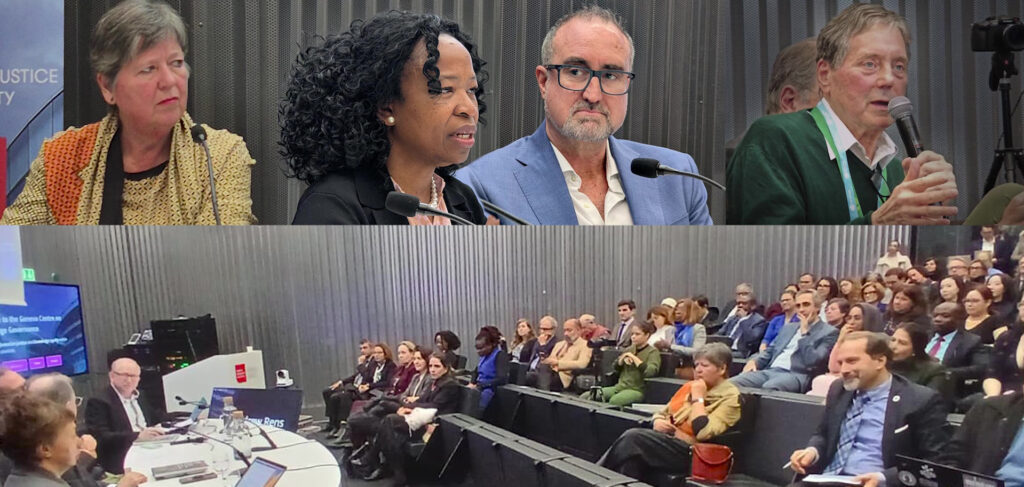
It’s time to put people back into the Intellectual Property system. Currently IP tends to reproduce inequality. IP should support public goods such as health and education. We need to address substitution of creators and markets by AI and we should promote solutions like Public AI to protect research and cultural diversity. The profits earned through the monopoly power of IP should be ‘de-linked’ from the incentive to invest in R&D or creativity, especially in health. Most of all, we need accountability back in the system. These were a few of the recommendations offered by a high-level panel of international professors, top government representatives and practitioners at the recent launch of the Centre on Knowledge Governance at the Geneva Graduate Institute on 3 Dec 2025. The discussion covered many of the topical issues currently being negotiated at the World Intellectual Property Organization (WIPO) and the World Health Organisation (WHO). Disclosure of Traditional Knowledge Former WIPO senior director Wend Wendland talked about his new book which details the long journey to adopt a Treaty on Genetic Resources and Associated Traditional Knowledge (TK), finally passed in 2024 and which requires the disclosure of TK in patent applications, a rare win for marginalised people in the formal IP system. Valmaine Toki, a Maori rights advocate, praised the treaty but said it will remain an imperfect victory until indigenous people have a full seat at the table in fora like WIPO to ensure full benefit sharing in the exploitation of their knowledge.  Remuneration Guilherme Patriota, Brazil’s Ambassador to the WTO said that creativity and innovation, especially in the age of AI, should not be a ‘winner takes all’ scenario skewed towards the interests of large corporations.  The creator of Brazil has a huge music industry, very popular, also very valuable in many ways like many other countries of the South. Actually, it’s kind of a wealth of the South. Nigeria has a huge film and music industry as you do in South Africa. What’s going to happen to that? Is that all going to be fed for free into systems for large language models and AI and they will start to replicate similar types of music? I think individuals should have the rights of remuneration for their individual work and contribution. So that’s what we’re looking for. Make it more human, make the system more human. Harvard Law Professor Ruth Okediji argued that the failure to reward creators is a problem throughout the IP system: The innovators behind the COVID-19 vaccine are not the ones getting the royalties. The employees in the big intermediaries are not the ones getting the remuneration. It’s not just indigenous communities. It’s not just women. It’s not just small and medium enterprises. The entire ecosystem is structured around private arrangements that make equitable dissemination [of benefits] difficult… AI is bringing us to this moment of confrontation in more explicit ways. Let’s remember that it’s not just the scraping of music or the scraping of data. There are labourers in developing countries who are painstakingly, for very little money, involved in this [production of AI models]. There are environmental costs of these large language models and those costs will be borne disproportionately.  So I think to echo something Ambassador Patriota said, this [inequality] is in the DNA of the system. Access to Medicines Participants also talked about the impact of IP monopolies on access, especially to public goods. Leading health advocate Ellen ‘t Hoen expressed disappointment that the IP lessons learnt by the Access to Medicines movement which fought successfully for affordable AIDS medicines in the 1990s were not applied during the Covid19 pandemic.  The vaccines, the COVID-19 vaccines were largely developed with fast, vast amounts of public financing. …That’s exactly what you want. If a crisis hits like that, you want governments to act and spend money in order to solve it. But what they failed to do was attach conditions to that financing. Those conditions could have, for example, been licensing  know-how through the Coronavirus Treatment Acceleration Program (CTAP) or the Medicines Patent Pool. That did not happen. So the IP was quite strong, and the companies at the end of the day became the ones who decided where the vaccines would go, and the vaccines went to the highest bidders. There is the famous case of Canada buying three times the size of its population, while about five people were vaccinated in sub-Saharan Africa.  James Love of Knowledge Ecology International added the problem of global scale: I think we have to really think hard about how you produce works, produce inventions, produce products as public goods in a world where markets are global. They’re not just national. Governments can sort of do public goods at the national level. They have really been bad at doing it at the global level. And I think that proposals like the idea of de-linking the incentive for drug development from the price of the drug, or the idea of a WTO agreement on the supply of public goods, those things are really, really important today. Limitations and Exceptions Ruth Okediji described Limitations and Exceptions to Copyright in a similar vein: There are public goods for which limitations and exceptions are critical. Education would be an example. Every country needs limitations and exceptions that address what happens in the classroom. So I’d say limitations and exceptions for education are super important. We have limitations, for example, for innovation purposes, reverse engineering, decompilations, when it comes to software. This is important in order to both promote interoperability but also to understand what’s behind the hood when you’re looking at a particular technical invention. So I think identifying the category of limitations and exceptions is important and then discerning whether that is a category that at the multilateral level can facilitate consensus because it is the kind of knowledge good for which all countries have a common concern. Archivists are another example. The role of libraries, another example.  Okediji went on to characterise

Blog, WIPO, WIPO-SCCR

WIPO SCCR 47 Ends with Some Progress After Another Late Night

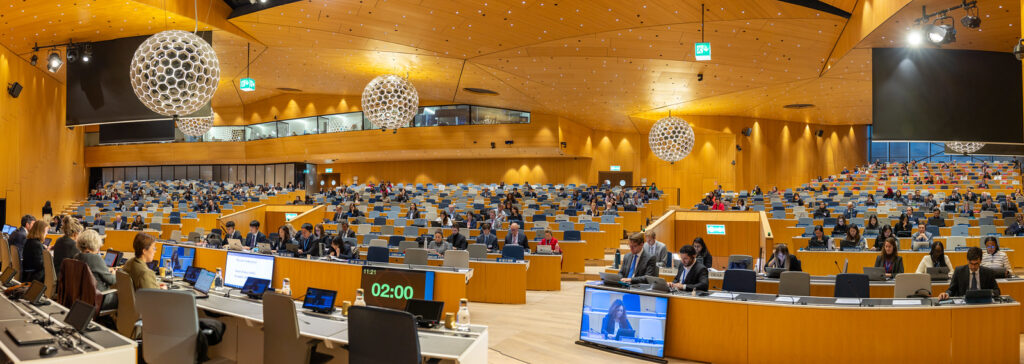
The World Intellectual Property Organization’s Standing Committee on Copyright and Related Rights negotiated its conclusions into the early morning hours of December 6 over the conclusions on a packed agenda. The meeting agreed to identify a series of specific articles of the Treaty on the Protection of Broadcast Organizations that lack consensus, to delay until next meeting the decision on how to begin text based negotiations on three proposals for work on an instrument on limitations and exceptions, and to begin work on studies of remuneration of audiovisual authors and on copyright and training of artificial intelligence tools. This note describes the major conclusions and positions of member states at the meeting. Below we also publish an edited transcript of the SCCR 47 public sessions.  Treaty for the Protection of Broadcast Organizations The Chair released a new draft Treaty for the Protection of Broadcasting Organizations with minor changes from the previous draft. After many sessions of the SCCR when it appeared that a conclusion of the broadcast Treaty might be near, this round ended with conclusion that many of the draft treaty’s provisions are far from reaching consensus. The Chair’s summary, in a break with those of the recent past, contained a detailed discussion of divergences that remain: 8. Regarding the first set of articles (articles 1, 9, 12, 13, 14, 16, 17), no concerns were raised about their current wording.  The second set of articles (articles 3, 4, 6, 10) received support in principle, although a few technical adjustments are still required either in the provisions or the explanatory notes.  With respect to the third set of articles, further in-depth discussions are needed in order to overcome the remaining differences, particularly on the topics of (i) rights contained in articles 7, 8 and the respective definitions (article 2), (ii) exceptions and limitations (article 11) and (iii) the functioning of the national treatment and reciprocity principles (article 5 and the interlink between articles 6, 7, 8, 9 and articles 10 and 15).  In plenary statements, the United States and the members of the African Group explicitly opposed moving the current Chair’s draft of the treaty to a diplomatic conference.  The African Group has long supported a narrow broadcast treaty and has repeatedly expressed concerns about potential unintended effects of a broader treaty on public interest uses and on competitive markets. At this SCCR, the Group made its most specific objections to particular provisions of the draft.  The African group stated its support for the conclusions of the Chair’s summary of SCCR 45, “notably that the treaty should be narrowly focused on signal piracy, should not extend to post-fixation activities, should provide Member States with flexibility to implement obligations through adequate and effective legal means and that the object of protection relates to program carrying signals linked to linear transmissions.” It criticized the current draft of the Treaty as veering outside of this zone of consensus. It specifically objected to: The Group identified several questions it requested the facilitators and proponents of the treaty to address, including: The African Group concluded that, “given the lack of consensus on numerous provisions, the African Group is of the view that the present text is not ready for a referral to a Diplomatic Conference.” It further restated its position “that the broadcasting treaty and the instrument on limitation and exceptions should progress together with a view to finalizing both instruments concurrently.” The United States largely repeated concerns about the scope of the draft treaty that it has made in previous SCCR and General Assembly meetings. It expressed disappointment that Articles 7 and 8, on fixation and post-fixation rights over stored programs, were retained in this draft despite its objections to these provisions in earlier meetings.  The EU, the primary demander of the Treaty, expressed some flexibility in confining the draft to conform to concerns raised by other members and recognized that “further technical clarifications are needed” on the present draft. The EU restated its support for a “future proof” treaty in which “retransmission by computer networks of broadcasting organization should be granted meaningful protection.” But it asserted some flexibility on this matter, stating that, “in order to achieve a compromise,” it is “ready to consider” the current option in the text for countries to opt out of covering broadcasting organizations that transmit exclusively via computer networks through a reservation. The EU did not, however, signal support for the narrowing of rights to exclude coverage of stored programs opposed by the United States and the Africa Group. Some other countries, including Russia, Japan, and Canada, noted the minimal changes in the current draft and urged that it progress toward the available consensus that could support a narrower treaty. India specifically called for consideration of “the option of incorporating mandatory limitations and exceptions.”  Brazil asserted that it was ready follow a consensus for the convening of a Diplomatic Conference based on the present draft, but asserted that “in case consensus is not possible by the end of this session, we propose to temporarily remove the topic from the agenda to enable consultations among interested parties, bringing it back to the Committee after sufficient convergence is identified.” Following plenary comments, the discussions of the Treaty moved into informal sessions in which, for the first time in recent memory, observers were not permitted to listen to the deliberations.  Limitations and Exceptions The limitations and exceptions agenda saw the introduction of three new texts. Responding to SCCR 46’s conclusion that the Chair “will prepare a document with concrete suggestions … for the implementation of the Work Program” on limitations and exceptions, the Chair published a Framework of Work Towards an Appropriate International Legal Instrument or Instruments on Limitations and Exceptions. The African Group published a Draft Instrument on Limitations and Exceptions for Libraries, Archives, Museums, Education and Research Institutions and People with Disabilities. The United States, during the SCCR meeting, published Updated Version of the Document “Objectives and Principles for Exceptions and Limitations for Libraries And Archives” and

Blog, Broadcast Treaty, WIPO, WIPO-SCCR

Analysis of Agenda Items for WIPO SCCR 47

This note, which will be presented at the November 25, CKG Workshop on SCCR 47, provides background information, links to recently published research and analysis, and descriptions of the issues that may be addressed in the 47th meeting of the World Intellectual Property Organization’s Standing Committee on Copyright and Related Rights, December 1-5, 2025. It is published as part of the mission of the Centre on Knowledge Governance to produce information and analysis to promote the public interest in multilateral knowledge governance negotiations. The analysis is presented in the order that the items occur on the SCCR 47 Agenda. 

Blog, WIPO

No Breakthroughs at WIPO: Budget Committee Defers Core Disputes

Despite a full agenda and spirited debate, WIPO’s 39th Program and Budget Committee ended with little to show in terms of any concrete modifications to the proposed 2026/2027 Program and Budget. Key issues—including budget transparency, integration of development goals, Indigenous participation, language access, and technical assistance—remained unresolved or were deferred for future negotiation. While Member States voiced the need for reform and greater equity, the session closed without any policy changes, underscoring a familiar pattern of careful dialogue but persistent deadlock at the heart of WIPO’s governance. One of the recurring topics at this year’s session was WIPO’s move from a detailed 31-program budget to a broader 8-sector model. China, Brazil, and Canada, among others, continued to call for more granular reporting—especially on how funds are transferred within and between sectors. The Secretariat defended the new approach as more efficient and coherent, and offered  an ongoing dialogue rather than any immediate changes. For now, the push for greater transparency in budget documents remains unresolved, with Member States requesting more detail in future cycles. The place of the Sustainable Development Goals (SDGs) in WIPO’s work also sparked debate. While most countries, including Brazil, Nigeria, and Mexico, insisted that explicit SDG language is appropriate for a UN agency, the United States argued for removing all such references to keep WIPO’s mandate narrowly focused on intellectual property. In the end, references to the SDGs were retained in the approved Program and Budget for 2026/27, reflecting the majority view but signaling an ongoing divide over the agency’s development role. A cross-regional proposal to allow WIPO’s regular budget to support Indigenous participation in the Intergovernmental Committee (IGC) if the Voluntary Fund runs dry was another unresolved issue. Colombia, Ecuador and Mexico led the effort in representation of most GRULAC countries, but ultimately the proposal was withdrawn after it became clear there was no consensus, with some Member States wary of setting a precedent. As a result, no change will be made for the 2026/27 biennium, though further consultation is expected. The question of multilingualism in the Brands and Designs Sector was equally contested. China, Russia, Brazil, and others pushed for strong commitments to expand language services and pre-allocate resources for future language additions, arguing that this would promote equity and better align with UN values. However, Group B, CEBS, and others favored a step-by-step approach, avoiding binding commitments. The final text recognizes the value of multilingualism but leaves further expansion and funding decisions to be considered in future working groups. Financial sustainability for the Lisbon System, which covers the international registration of geographical indications, was also on the agenda. The United States called for stricter self-sufficiency and more robust forecasting methods, aiming to prevent cross-subsidization from other, better-resourced Unions. Brazil, France, Egypt, and other developing countries defended the current approach as vital for development objectives. In the absence of consensus, the status quo prevails and the issue will remain under review. Discussions on technical assistance and performance indicators saw Member States, including China, Russia, and Nigeria, calling for improvements—whether through more balanced KPIs across global IP systems or a more proactive, needs-based model for technical assistance. While these points were acknowledged, no formal changes were adopted, and the Secretariat promised only to consider the feedback going forward. Efforts to expand WIPO’s external offices again resulted in a deadlock. Some countries, such as India, Colombia, and Iran, advocated for greater geographic equity and delinking evaluation from expansion. Others, led by Group B and CEBS, insisted that careful evaluation must come first. With no consensus, the issue was deferred to future sessions. There was at least modest progress in the area of oversight and governance. WIPO’s Internal Oversight Division closed 66 recommendations in 2024, drawing praise from Member States. Still, there were calls to accelerate recruitment for key evaluation and investigation roles and to address ongoing concerns around cybersecurity and internal controls. No new oversight mandates were issued, but the Secretariat was urged to maintain its focus on improvement. Given the absence of consensus, the PBC decided to refer several unresolved issues to the upcoming 66th series of WIPO Assemblies for further discussion and decision. These include proposals by the United States to remove all references to the 2030 Agenda for Sustainable Development and SDGs from the budget document, to adjust estimated applications and income for the Lisbon System and the budget for the Lisbon Union, and to remove the Development Acceleration Fund and associated references and budget lines. These matters now await further negotiation and possible resolution at the Assembly level. In the end, PBC/39’s proceedings reflect the ongoing complexity of multilateral governance at WIPO. While Member States continue to debate critical issues—transparency, development, inclusion, and accountability—the session closed with more questions than answers. The true test for WIPO will be whether continued dialogue eventually yields the substantive reforms that many are calling for.

Scroll to Top