AI

Blog

Unfair Licensing Practices in the Library Sector

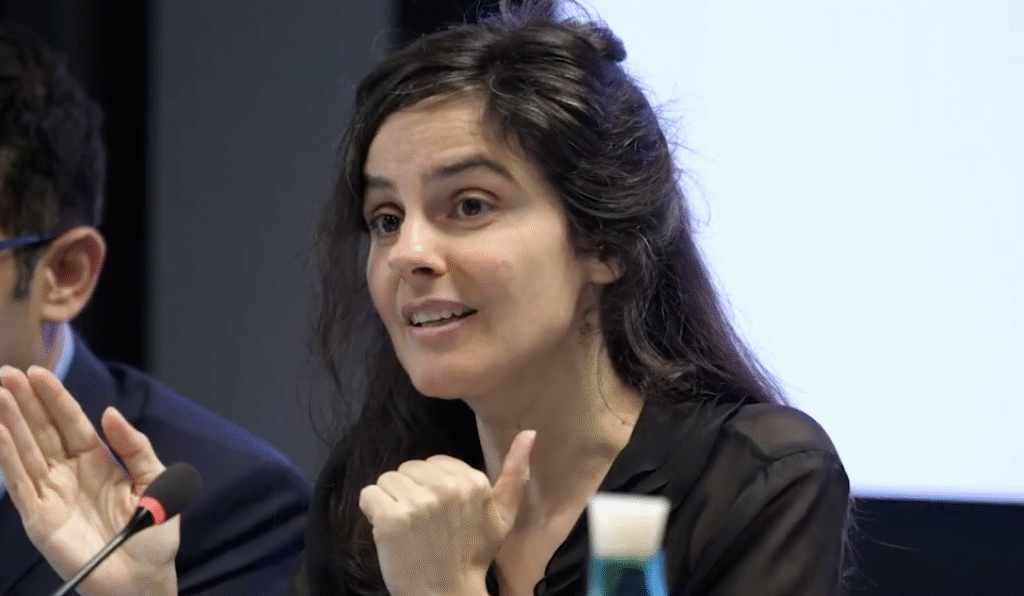
Teresa Nobre outlines a chilling range of practices by publishers to try to restrict the ability of researchers to conduct computational research. From ‘choice of law’ clauses which seek to circumvent EU law, to increased liability and penalties on libraries which fail to police their users. Nobre suggests a series of urgent measures to tip the balance back in favour of libraries and their users, and ultimately in favour of the right to research. This presentation was delivered at the User Rights meeting in Geneva on 17 June 2025. The full text is available below. The transition to licensing We have transitioned from a sales-based model in printed publications to a licence-based model in digital publications. What happens is that even if you have a fit-for-purpose framework that allows libraries to make certain uses of copyrighted works, they still need to rely on licences to have a first access to the material, and that gives publishers a lot of power in determining what libraries can and cannot do with the licensed materials, even if you have exceptions that allow them to make certain uses. Communia’s research We know that these licences tend to be subject to confidentiality agreements, which means that we don’t know what are the terms of these licences.  Communia is a non-profit based in Brussels, we have been involved in copyright reform for many years, we have been coming to the SCCR for many years, and we decided in February this year, we invited licensing managers, so people that are from the library sector, public library and academic library sector in Europe, we invited them to come to Brussels and we held a Chatham House rules meeting. We also invited the European Commission to attend this meeting and observe this meeting. And this environment where people could not attribute each other was the right environment for licensing managers to come and talk about the issues that they are facing with the licences, so the unfair licensing practices, the unfair terms that they are being subject to. So I will be mentioning some of those practices, and I will start with a very hot topic right now, which is the topic of AI, but also text and data mining for scientific research. Maybe I should also tell you that in addition to inviting librarians to come and talk to us in private, in front of the Commission, we also invited them to share with us in confidence clauses that they considered unfair, clauses that are part of those licensing agreements or licensing offers. Efforts to Circumvent the European TDM Directive Maybe here for those that are not European, I should give you a bit of a legal context of Europe. In Europe, six years ago we passed a new directive that guarantees that researchers in Europe can make text and data mining uses of copyrighted materials for scientific research. So we have a mandatory exception for these research uses. And this mandatory exception is protected against contractual overrides. And what does that mean? It means that if a licence says that you cannot make those uses, you don’t need to follow the licence because the law, the European law, protects you.  And what we realised, and we were very surprised, that publishers were actually concerned about prohibiting these uses in Europe when we have a law that allows these uses and prohibits contractual overrides. But that was indeed the case. So we noticed, and they told us, that since 2023, so place it at the same time where generative AI is raising, suddenly all the contracts are saying library users cannot conduct text and data mining on e-books and e-journals that are available in the libraries.  They cannot conduct any related AI uses with those materials.  ‘Choice of Law’ clauses And surprisingly, what was interesting to see was that, well, they were actually concerned about putting those prohibitions in those contracts, although the law would not allow for those prohibitions, because they could circumvent the EU policy, the EU law, and our contractual overrides prohibition by selecting a law that’s outside of Europe. So we know that ‘choice of law’ is typically a clause that the parties need to negotiate and takes time to negotiate. Everyone wants to choose their own law. But in this case, by choosing a law that’s not the national law where the library is located, meaning that’s not the EU law which would protect these uses against contractual overrides, they are able to circumvent basically the EU law and the prohibition of contractual overrides. And that’s enough. So imagine all of the work that we have done throughout the years to have exceptions in place, exceptions that are protected against contractual overrides, is simply circumvented by a choice of law clause. I’m going to give you an example of what prohibition of AI uses in these licences means. And, you know, there’s different ones. And you can see in our report, we gave some examples of it. Prohibition of AI-enabled browsers But publishers go as far as prohibiting the use of browsers with connected AI functionality. People, nowadays, there’s no browsers that do not use AI.  And publishers are prohibiting the library users from using browsers with AI functionality. This is how far it goes. We saw different variations of this. For instance, you see one that’s very simple, straightforward. You cannot conduct text and data mining, which is exactly what the EU law allows you to do. And when it comes to the choice of law, I think typically what we are seeing is that they are choosing U.S. law, maybe because the U.S. law right now, it’s not very clear if it allows these sort of uses or not. If it’s a UK publisher, they will select the U.K. law, which also doesn’t permit as many text and data mining uses as the EU law. So this is the first, let me say, the first category of obstacles and really
Artificial Intelligence, Blog

The Great Flip: Can Opt-Outs be a Permitted Exception? Part II

By Lokesh Vyas and Yogesh Badwal. This post was originally published on Spicy IP. In the previous part, we examined whether the opt-out mechanism, as claimed in Gen-AI litigations, constitutes a prohibited formality for the “enjoyment and exercise” of authors’ rights under Article 5(2) of the Berne Convention. And we argued no. In this post, we address the second question: Can opting out be permitted as an exception under the three-step test outlined in Article 9(2)? If you haven’t seen the previous post, some context is helpful. (Or, you can skip this part) As we mentioned in the last post, “Many generative AI models are trained on vast datasets (which can also be copyrighted works) scraped from the internet, often without the explicit consent of content creators, raising legal, ethical, and normative questions. To address this, some AI developers have created and claimed “opt-out mechanisms,” allowing copyright holders or creators to ask that their works not be used in training (e.g., OpenAI’s Policy FAQs).  Opt out under the Copyright Exception A  question arises here: What are the other ways opt-out mechanisms can be justified if the states want to make a mechanism like that? One may say that opt-outs can be valid under the Berne Convention if an exception (e.g., an AI training exception with an inbuilt opt-out possibility) passes the three-step test. And this way, opt-outs can be regarded as a legitimate limit on holders’ exclusive rights. For reference, the three-step test was created in the 1967 revision conference, later followed in Article 13 of TRIPS and Article 10 of WCT. The test creates a room for the nations to make certain exceptions and limitations. Article 9(2) authorises the member countries “to permit the reproduction” of copyright works in 1.) “certain special cases, provided that such reproduction 2.) does not conflict with a normal exploitation of the work and 3.) does not unreasonably prejudice the legitimate interests of the author”.  Although we don’t delve into the test, how opting out can be a part of an exception can be understood from an example. For instance, as Ginsburg exemplifies, if a country states that authors lose their translation rights unless they explicitly reserve or opt out of them, it would violate Article 5(2) because such rights under Berne must apply automatically, without formalities. This actually happened with Turkey in 1931, whose application for membership was rejected due to the condition of deposit for translation rights in its domestic law. (See Ricketson and Ginsburg’s commentary, paragraph 17.18.)  But if an exception (like allowing radio retransmissions in bars) already complies with Berne’s provisions and applies equally to all authors, then letting authors opt out of that exception would give them more rights than Berne requires. And this should be permissible.  Notably, introducing an exception, such as for AI training, must first pass the three-step test. Opt out can be built therein. However, remember that every exception presupposes a prima facie infringement. Within that frame, the opt-out offers the author a chance not to lose. Thus, it creates an inadvertent expansion of her rights beyond the convention.  Additionally, opt-out can fare well with the three-step test due to the factor of “equitable remuneration to authors.” As Gompel notes in his piece, “…‘opt out’ eases compliance with the three-step test because it mitigates some of the adverse effects of the proposed copyright exception. That is, it enables authors to retain exclusivity by opting out of the compensation scheme.”  Another question also exists: Did Berne contain particular provisions that directly allowed an opt-out arrangement? Well, the answer is Yes. Does opting out equal the right to reserve under Article 10bis? Not really. Setting aside the debate over formality and the three-step test, the Berne Convention contains an opt-out-style provision, albeit limited, where authors must explicitly reserve their rights to avoid specific uses of their work. Relevant here is Article 10bis of the Convention, which allows member countries to create exceptions for the reproduction of works published in newspapers on, among other topics, current economic, political, or religious issues. However, it also allows the authors to ‘expressly reserve’ their work from reproduction. Indian Copyright Act, 1957 also contains a similar provision in Section 52(1)(m). Interestingly, the right to reserve exploitation has been part of the Berne Convention since its earliest draft. It first appeared in Article 7 alongside the provision on formalities, which was numbered Article 2 in the draft. Article 7 became Article 9(2) in 1908, when formalities were prohibited and the no-formality rule entered the Berne Convention.  This historical pairing raises a strong presumption: opting out of a specific mode of exploitation cannot automatically be deemed a prohibited formality. Ginsburg confirms this, citing the 1908 Berlin Conference, which clarified that the reservation/opt-out clause (then Article 9(2)) was not considered a formality. But can this special setting (created in Article 10bis(1)) be used to open the door for general opt-out AI exception measures by countries? We doubt it. As the negotiation history of the 1967 revision conference suggests, Article 10bis(1) is a lex specialis, i.e., a narrow and specific exception (See page 1134 of Negotiations, Vol. II). This means that it may derogate from the general no-formalities rule, but it cannot serve as a model for broader declaratory measures.  Conclusion The upshot is that opt-outs may be de facto formalities. However, not all formalities are prohibited under the Berne Convention. The convention enables countries to make some formalities on “the extent of protection.” Three key points emerge from this discussion: One, opting out may not be a formality that prevents the enjoyment and exercise of rights, as Gompel and Sentfeln confirm, and Ginsburg argues otherwise. Two, it can be a part of an AI training exception if such an exception can pass the three-step test. When applying this test, opting out would support the factor of equitable remuneration. Three, Article 10(bis) on the right to reserve cannot be read expansively. While it can be used to justify the three-step test as Sentfleben does, it might not be extended generally. Okay. That’s it from our end. À bientôt’ Primary Sources:-

Artificial Intelligence, Blog

The Great Flip: Is Opt Out a Prohibited Formality under the Berne Convention? Part I

By Lokesh Vyas and Yogesh Badwal. This post was originally published on Spicy IP. Bonjour, Lately, we’ve been cogitating on this curious concept called the “opt-out”, which has been cropping up with increasing frequency in generative AI litigation, including in India. The EU and the UK are taking the idea seriously and considering giving it statutory teeth. On the surface, it is sold as a middle path, a small price to pay for “balance” in the system. However, at least prima facie, it seems like a legal absurdity that fractures its modern foundational logic, where authors receive default copyright without any conditions. The opt-out model, the argument goes, reintroduces formality through the back door, a de facto formality of sorts. This shifts the burden onto authors and rights holders to actively monitor or manage their works to avoid unintended inclusion in the AI training. There have been questions about whether such an opt-out scheme is compatible with the Berne Convention, which prohibits the same under Article 5(2), e.g., here, here, and here.  Given the complex nature of this issue and the fact that many such discussions happen behind paywalls, making them inaccessible to the public, we thought it would be beneficial to share our ideas on this topic and invite further reflection. This two-part post mainly focuses on the legality of opting out without addressing its implementability and applicability, which raises several questions (e.g., as discussed recently in Martin Sentfleben’s post). In short, we probe whether opt-outs violate the Berne Convention—the first international copyright law treaty binding on all members of the TRIPS and WCT.  We answer it through two questions and discuss each one separately. First, is opt-out a prohibited formality for the “enjoyment and exercise” of authors’ rights under Article 5(2) of the Berne Convention? Two, can it be permitted as an exception under the three-step test under Article 9(2)? We answer the first question in the negative and the second in the positive. Additionally, we also examine whether Berne already has a provision that can allow this without looking at the details.  This post addresses the first question. What Makes Opts Outs So Amusing – The Flip? Many generative AI models are trained on vast datasets, which can also include copyrighted works scraped from the internet without the explicit consent of content creators, raising legal, ethical, and normative concerns. To address this, some AI developers have created and claimed “opt-out mechanisms,” allowing copyright holders or creators to ask that their works not be used in training (e.g., OpenAI’s Policy FAQs).  Herein lies the catch: it requires authors and copyright holders to explicitly say “No” to training by adding a robots.txt tag to their website with specific directives that disallow web crawlers from accessing their content. (E.g., see this OpenFuture’s guide here) Thus, instead of creators being protected by default, they are supposed to opt out to prevent exploitation. One could say that this flips the logic of copyright on its head–from a presumption of protection to a presumption of permission. But that’s not so simple.  Notably, opting out is not a novel argument. In fact, it can be dated back at least to the 1960s in the Nordic countries’ model of “Extended Collective Licensing” (ECL), which mandates collective licensing while preserving the author’s right to opt out. Other notable academic literature on opt-out can be found here, here, here, and here, dating back over two decades. Swaraj also covered this issue a decade ago. In particular, we must acknowledge the scholarship of Jane Ginsburg, Martin Sentfleben, and Stef van Gompel, who have significantly influenced our thinking on the topic. Two Key Questions: Opt out as a Formality and opt out under a permitted Exception Formality Argument first.  Here, the argument goes that the opt-out is a prohibited formality under Article 5(2) and should not be allowed. However, we doubt it. Let’s parse the provision first. Which states: “(2) The enjoyment and the exercise of these rights shall not be subject to any formality; such enjoyment and such exercise shall be independent of the existence of protection in the country of origin of the work. Consequently, apart from the provisions of this Convention, the extent of protection, as well as the means of redress afforded to the author to protect his rights, shall be governed exclusively by the laws of the country where protection is claimed.” (Authors’ emphasis) For context, the provision pertains to “Rights Guaranteed outside the Country of Origin” for both national and foreign authors. And the question of no-formality pertains particularly to foreign authors. In other words, by removing formality requirements in the country where protection is claimed, the provision enabled authors to automatically receive protection without needing to satisfy foreign formalities. This matters because while countries can impose conditions on their own nationals, it’s generally assumed that they will not treat their own authors worse than foreign ones. The post follows this presumption: if a country cannot burden foreign authors, it’s unlikely to impose stricter terms on its own people. Although the removal of formalities had been discussed in the international copyright law context as early as the 1858 Brussels Conference, an important event in the development of international copyright law, it was not implemented until 1908. This change addressed practical difficulties, including identifying the “country of origin” when a work was published in multiple countries, and the challenges courts faced in enforcing rights without formalities. (See International Bureau’s Monthly Magazine, January 1910) Tellingly, while a country can make formalities for its people, it cannot do so for foreign authors. It’s generally assumed that a country would not obligate its authors more than it does to foreign authors. Textual Tensions of Article 5(2) While the phrase “any formality” in the first line of the provision might suggest that all kinds of formalities—including de facto ones like opt-out mechanisms—are prohibited, that is arguably not the case. We say this because the provision is divided into two parts, and the prohibition on formalities applies only to the first part, which is germane to enjoying and exercising rights. The second part of the provision, beginning with “Consequently”, gives leeway to the states wherein they can make formalities regarding the ‘extent of protection’

Artificial Intelligence, Blog

Fair Use and Generative AI: Reading Between the Lines of the USCO Report

At the beginning of May, the report “Copyright and Artificial Intelligence. Part 3: Generative AI Training” was released, sparking a wide range of debates due to its content and the political issues surrounding its release. In this short contribution, we aim to briefly introduce the report and touch on some of the key content and political issues currently being discussed. SCOPE AND STRUCTURE OF THE REPORT The first thing that stands out about the report appears right on its first page: “pre-publication version”: a label reported as unusual and potentially unprecedented. The 113-page document addresses one of the most controversial issues at the intersection of copyright and Generative AI: the use of protected content to train Generative AI systems.  While most sources focus on fair use, the report also includes sections on “technical background,” “infringement,” and “licensing for AI training”, all of which are a “must read,” especially for those just joining the discussion and feeling overwhelmed by the hundreds of thousands of articles, blogs, books, and other resources available on the topic. The report attempts to summarize some of the main issues in both the legal and technical fields. The approach taken by the USCO is sometimes described as “favorable to copyright owners” or as “a mixed bag”, receiving both praise and criticism on multiple fronts, as we will illustrate below. POLITICAL CONTEXT AND CONTROVERSIES The timing of the report While it may be early to determine the precise reasons behind the (unusual) release of a pre-publication version, several explanations have been speculated, though none have been confirmed. The report states that its early release was made “in response to congressional inquiries and expressions of interest from stakeholders.” However, questions have been raised that may relate to concerns about potential restrictions under Trump Administration, which is arguably aligned with positions favorable to big technology companies, as well as fear that the report could be buried in the event of the dismissal of the Register of Copyright, or the potential influence on ongoing legal cases. Regarding the latter, there have been concerns about the timing of the report and how it could interfere with the outcomes, especially the fair use analysis, of ongoing lawsuits. As noted, “it could put a thumb on the scale for how the courts will resolve these cases,” without giving the parties an opportunity to address any potential gaps in the report, which could have a significant impact on other GenAI cases. Leadership changes and copyright policy While the timing of the notice of dismissal of Shira Perlmutter (Register of Copyrights at the time the report was drafted) and the release of the report could give rise to the inference that the report was the sole reason for her dismissal, other events may have influenced the decision as well. The day before the release of the (pre-publication version of the) report, the Librarian of Congress, Carla Hayden, who had appointed Shira Perlmutter, was dismissed. Therefore, concerns about additional leadership changes may also have played a role in the decision to release the pre-publication version. An extra layer of complexity arises when one considers that Perlmutter’s position was one appointed and overseen by the legislative branch. The argument that the report may have contributed to the dismissal has often been linked to an alleged alignment between the Trump Administration’s position and that of big tech companies. This connection can be inferred from Rep. Joe Morelle’s statement, reported by POLITICO, claiming it is “no coincidence [Trump] acted less than a day after [Perlmutter] refused to rubber-stamp Elon Musk’s efforts to mine troves of copyrighted works to train AI models.” Finally, as reported by Authors Alliance, on April 30, “American Accountability Foundation urges President Trump to fire ‘deep state’ librarians, targeting Carla Hayden and Shira Perlmutter,” based on the claim that Hayden was supporting Biden policies, particularly in the areas of intellectual property and transgender rights. FAIR USE AT THE HEART OF THE DEBATE While the report addresses multiple issues, both legal and technical, the most debated (and anticipated) topics are those related to whether the use of protected content to train Generative AI systems qualifies as fair use. The fair use chapter is the longest in the report, comprising nearly half of its content. It includes a factor-by-factor analysis applied to different scenarios, with the USCO identifying the first and fourth factors as taking on particular prominence in the analysis. In the section titled “weighing the factors,” the Office states the following: “As generative AI involves a spectrum of uses and impacts, it is not possible to prejudge litigation outcomes. The Office expects that some uses of copyrighted works for generative AI training will qualify as fair use, and some will not. On one end of the spectrum, uses for purposes of noncommercial research or analysis that do not enable portions of the works to be reproduced in the outputs are likely to be fair. On the other end, the copying of expressive works from pirate sources in order to generate unrestricted content that competes in the marketplace, when licensing is reasonably available, is unlikely to qualify as fair use. Many uses, however, will fall somewhere in between.” (p.74) While there has been some agreement with certain parts of the report, such as the acknowledgment that litigation outcomes cannot be prejudged, and the view that “research and academic uses should be favored under the fair use analysis”, one of the most criticized aspects is the interpretation of the fourth factor in the fair use analysis, in which the Report concludes that original works created by AI that are not substantially similar to works used in the training may nonetheless result in “market dilution” that should weigh against a fair use analysis. According to USCO’s report: “While we acknowledge this is uncharted territory, in the Office’s view, the fourth factor should not be read so narrowly. The statute on its face encompasses any “effect” upon the potential market.373 The speed and scale at which AI systems generate content

Artificial Intelligence, Blog

Highlights from the USCO Report on the Economic Implications of Artificial Intelligence for Copyright Policy (Part 1: Output Phase)

About the Report In February 2025, the U.S. Copyright Office released the report “Identifying the Economic Implications of Artificial Intelligence for Copyright Policy: Context and Direction for Economic Research”, edited by USCO’s chief economist, Brent Lutes. The report was produced after months of research, interactions among scholars and technical experts, and the outcomes of a roundtable event. By identifying the most pressing economic issues related to copyright and artificial intelligence (AI), the roundtable “aimed to provide a structured and rigorous framework for considering economic evidence so that the broader economic research community can effectively answer specific questions and identify optimal policy choices.” Considering the length of the report and the variety and complexity of the issues it addresses, we will split our analysis into two separate blog posts: one focusing on the output phase and the other on the input phase. Following the structure of the report, we will begin with the output-related topics: “Copyrightability of AI-Generated Works and Demand Displacement” and “Copyright Infringement by AI Output”, as these are most directly connected to copyright. For this reason, we will not summarize the section on “Commercial Exploitation of Name, Image, and Likeness”, and instead recommend that readers refer directly to the report for details on that topic.  Copyrightability of AI-Generated Works and Demand Displacement This chapter, whose principal contributors are Imke Reimers and Joel Waldfogel, proposes the following question: “how the emergence of generative AI technology affects the optimal provision of copyright protection?” When discussing whether AI-generated works should be copyrighted, it connects to whether they cause a net positive value, and that there would also be the need “to be weighed against the value of human-generated works displaced by the technology”. (p.10) The substitution effect is also considered, not only in cases where AI-generated works substitute human-generated ones, but also when AI-generated works are verbatim or near-verbatim reproductions of pre-existing human-generated content. Similarly, some of these near-verbatim reproductions may decrease the value of the related human work when, for example, they provide misinformation. Such a decrease in value may also reduce interest in human-generated works. On the other hand, and from an economic perspective, the report also suggests that “all of its uses would supplant revenue for human creators. Some uses will reduce deadweight loss, replacing it with consumer surplus by allowing for additional consumption that otherwise would not occur”. (p.10) One of the effects that may be seen in the long run relates to the fact that human experimentation leads to more radical stylistic innovation and experimentation, while it is not clear “whether AI-generated output can ever engage in the same sort of experimentation and innovation as humans”. (p.11) While the report acknowledges that there is a possibility that AI may reduce production costs and be a tool to promote creativity, increase productivity, and enhance quality, it warns about the risk of less experimentation, crowding out “more risky and costly experimental creations that sometimes lead to valuable innovation”. (p.11) Displacing human creators may even be harmful to the development of Gen AI, as these models are trained with human-generated works, according to the report. A first conclusion that may be drawn from this section is that further research, including empirical research, needs to be carried out to better understand issues like the value created and displacement caused by GenAI, the decrease in the value of human-generated works, the “degree to which the fixed cost recovery problem exists for AI-generated works” (p.12), and “the demand curve and cost function for creative works”. (p.14)  When it comes to offering copyright protection to these AI-generated outputs, the report suggests that it would incentivize their production and affect human output in both positive and negative ways. However, it also recalls that this may not be optimal, as “copyright inherently limits public access to existing works and thus produces a social cost”. (p.12) The report also notes that production costs may differ between human-generated and AI-generated works, and that “copyright protection only serves its economic objective if the social value of the former outweighs that of the latter. If the fixed production costs of AI-generated works are sufficiently low, the additional incentives of copyright are not necessary for reaching optimal production levels, thus, offering copyright protection would be suboptimal”. (p.12) Copyright Infringement by AI Output As previously mentioned, the report does not delve into legal issues, focusing instead on economic analysis. In the chapter primarily contributed by Joshua Gans, the author offers considerations from an economic perspective on defining the “optimal scope of what output is infringing,” noting that “copyright protection from infringement should balance the incentives to produce and the ability to consume creative works.” The author begins by explaining one of the structural dynamics of copyright, where “the mechanism used for incentivizing the production of new works (exclusive rights pertaining to the usage of a work) also limits consumers’ access to existing works”, and that the “broadest possible scope of protection could also effectively hinder new creative output for fear of liability”. (p.16) It argues that an important step in the analysis is to identify the “optimal level of market power that we wish to confer to rightsholders in the context of competing AI-generated works”, assuming this level to be the same as that used in infringement disputes involving human-generated works. The chapter proposes considering multiple, but not all, factors that may impact the balance mentioned above, and reflects on how this would be different in cases involving AI (pp.16-17) Several factors may affect the market power of the rightsholders, including but not limited to the threshold for infringement (the higher the threshold, the lower the power) and the requirements to demonstrate that the copy was infringing. On the latter, it is also argued that in the cases concerning AI-generated work, “access [to the allegedly infringed work] may be harder to dispute”. (p.17)  According to the study, these factors may be helpful to understand if a rightsholder may or may not exercise its market power, but the potential value related

Blog, Latin America / GRULAC

Legislative Initiatives on Copyright in Brazil in 2024

Allan Rocha de Souza; Luca Schirru; Leon Queiroz Ramos  In Brazil, 2024 has been quite eventful regarding copyright, with the debate seemingly returning to center stage. The Senate’s approval of Bill 2338/23 (AI Bill) and Bill 2331/22 (audiovisual quotas on video-on-demand services), along with the enactment of Law 14.852/24 (Videogames Act), are the three major developments. However, no progress was made on Bill 2630/20 in the Senate (the so-called “Fake News Bill”) or Bill 2730/19 (copyright reform Bill) in the House of Representatives. Unsurprisingly, the most attention-grabbing development, which sparked numerous discussions and seminars, was the approval of the AI Bill by the Senate on December 10, 2024. This was mainly due to the uncertainties and tensions surrounding Artificial Intelligence (AI) systems and the sensitive nature of the bill’s provisions on copyright. The Senate also approved Bill 2331/22, which introduces a fee for the commercial exploitation of audiovisual works in the digital environment—an initiative that is likely to impact user-generated content. Additionally, the Videogame Act (Law 14.852/24) was enacted, establishing a regulatory framework for video games in Brazil, including their normative classification as “interactive audiovisual works developed as computer programs.” AI and copyright The AI Bill (PL 2338/23), which establishes the regulatory framework for AI systems in Brazil, was approved by the Senate on December 10, 2024, and will now be reviewed by the House of Representatives. It is worth noting that the initial regulatory proposal was approved in the form of Bill 21-A/20 by the House of Representatives on September 29, 2021, but was later superseded by the Senate Bill.  In its structure, logic, and overall approach, it mirrors the European AI Act, representing a clear example of the “Brussels Effect.” However, such mirroring may be excessive and should not overlook national particularities and specific challenges. The relationship between copyright and AI is complex and only gained national prominence in April 2024, when a dedicated chapter was incorporated into the Bill. As with any subject of this level of complexity and uncertainty (and all matters related to AI regulation fall into this category), there are always aspects that could and should be improved. These aspects were highlighted in the study “Artificial Intelligence and Copyright: Contributions to the Regulatory Debate in Brazil“ . Research in general—and text and data mining (TDM) in particular—received insufficient attention that is not able to ensure that research can continue without serious risks and costs, which could hinder this critical activity for the country. These regulatory oversteps include: (i) limiting research to institutional settings, (ii) prohibiting public-private research collaborations, and, most importantly, (iii) requiring that training data be “lawfully accessed,” a condition with significant implications. Without cutting-edge research, the country risks stagnation. Moreover, these provisions will impact all data-intensive research activities, across all sectors, regardless of whether they involve AI system development. The remuneration and licensing obligations established for training AI systems with copyrighted works, while reasonable in cases of commercial uses with substitutive effects, impose high entry costs on domestic companies. As a result, the primary beneficiaries will be large technology players and database holders (mainly major foreign corporations) that own sufficiently large collections of copyrighted works to serve as training datasets for AI systems. Consequently, this framework will undoubtedly hinder national innovation and the development of AI systems that would reflect Brazilian characteristics — all of that without effectively ensuring compensation for authors and artists, which was supposed to be its main justification! As approved by the Senate, these constraints on research and national innovation will impact virtually all economic, industrial, and public interest activities that rely on or require large volumes of information and data—whether for fundamental research or the development of AI systems tailored to national demands. This will also affect corporate customization and internal systems development, as copyright protection extends to text, sounds, and images. Consequently, any AI system that processes these types of content will be affected. Videogames Act Published on May 3, 2024, Law 14.582/2024 (officially ‘Legal Framework for the Video Game Industry’) establishes the Videogame Act, which regulates the “manufacturing, importation, commercialization, development, and commercial use of video games” in Brazil (Article 2). It does so by establishing guidelines and principles for their use (Article 6), as well as proposing measures for fostering investment and development in the sector (Article 4). Additionally, the law explicitly excludes games involving betting with prizes, random outcomes, commercial promotions, or lottery-based modalities (Article 5, sole paragraph). The legislation introduces concrete incentives for national video game production by recognizing the sector as part of the cultural industry (Article 12), making it eligible for tax benefits and public funding, similar to other cultural goods. Furthermore, classifying investments in video game development as “investments in research, development, innovation, and culture” (Article 11, sole paragraph) will likely increase the availability of resources and foster growth in the sector. An interesting aspect of the law is the facilitation of video games for educational and training purposes (Article 10), particularly through the development of public policies within the framework of the National Digital Education Policy and the creation of a repository for games developed with public funds. Equally relevant for research and development is the possibility of state support for research, development, and improvement of educational video games, including the creation of a dedicated platform for educational games (Article 13, §1, IV). However, all of these policies are optional rather than mandatory, as they arguably should be. One of the law’s key contributions is its definition of “video game,” which directly references copyright legislation. It classifies video games as “an interactive audiovisual work developed as a computer program” (Article 5.1) and links their protection to the Software Law (Law 9.609/98), which has distinct provisions compared to the general Copyright Law (Law 9.610/98). Although it does not directly address copyright, the law provides definitions for multiple roles that different professionals can assume in the creation and production of video games. These include potential authors, such as visual artists (Article 7, §3, I), audio designers for games (Article

Blog, Latin America / GRULAC

Copyright, Cultural Rights and Research in the “Salvador da Bahia Declaration of the G20 Ministers of Culture”

Allan Rocha de Souza [1] and Luca Schirru [2] On November 18 and 19, the G20 highest representatives met in Rio de Janeiro, Brazil, when they issued the 2024 conclusive document of the Brazilian Presidency, the Leaders of the G20 Declaration. It was preceded by different sector declarations, of which the Salvador da Bahia Declaration of the G20 Ministers of Culture is especially relevant and has been commented upon here.  There was a call for action on three main priorities: “(i) social inclusion and the fight against hunger and poverty; (ii) sustainable development, energy transitions and climate action; and (iii) the reform of global governance institutions.” (p. 03 – item 13). There are plenty of references to the Sustainable Development Goals (SGDs) of the 2030 Agenda, and the recognition that the actions to reach them are lagging behind. (p.01 – item 03) “Development” in general was linked to a variety of settings: Agendas, Goals, Frameworks, Cooperation, Trade, Banks, Funds, Policies, Programs and so on. Nonetheless, sustainability and climate are the main focus. And a broad concept of development and high goals guide the concluding remark, when the Leaders affirmed that “(We) remain resolute in our commitment to fighting hunger, poverty, and inequality, promoting sustainable development in its economic, social, and environmental dimensions, and reforming global governance.” (p. 22 – item 85)  There were serious concerns around the uses and social, economic and political effects of artificial intelligence (AI) systems. So much so it earned a chapter of its own. The impacts on labor and workers, gender gap, people in vulnerable situations and the digital divide were central preoccupations, but their worries were also extended to intellectual property, data protection, and privacy:   “As AI and other technologies continue to evolve, it is also necessary to bridge digital divides, including halving the gender digital divide by 2030, prioritize the inclusion of people in vulnerable situations in the labor market, as well as ensure fairness, respect for intellectual property, data protection, privacy, and security.” (p. 20 – item 78)  While the Salvador da Bahia Declaration of the G20 Ministers of Culture was intense on copyright and AI, the Leaders’ Declaration has been less assertive in its goals, broadly calling for “a strengthened and effective global engagement on the discussion of copyright and related rights in the digital environment and the impacts of AI on copyright right holders.” (p. 08, item 28)   Cultural workers were also acknowledged as the G20 Leaders, as they reaffirmed the “commitment to support policies that promote the contribution of those working in the culture, arts and heritage sectors and call on countries to strengthen cooperation and dialogue addressing social and economic rights and artistic freedom, both online and offline.” (p. 08, item 28)   Interestingly, IP and labor rights were conjugated to highlight concerns of fair pay and working conditions of cultural workers, as policies that promote their status should be deployed “in accordance with intellectual property rights frameworks and international labor standards, for the enhancement of fair pay and decent working conditions.” (p. 08, item 28).  While the G20 Leaders’ Declaration approach to IP and cultural rights was less assertive than the Salvador da Bahia Declaration, it underscores the importance of fair policies for cultural workers. With a stronger focus on sustainability and inclusion, it approaches development from multiple angles, tries to foster international cooperation, while reaffirming the commitment to achieving the SDGs. Looking ahead, South Africa holds the G20 Presidency in 2025. [1] Copyright Professor at the Graduation Program on Public Policy, Strategies and Development (PPED/UFRJ) and the Civil Law and Humanities Department of the Federal University of Rio de Janeiro (DDHL/ITR/UFRRJ), Brazil. He also teaches Copyright of the IP Specialization Course at Pontifícia Universidade Católica (PUC-RJ). Scientific Director of the Brazilian Copyright Institute (IBDautoral), a copyright consultant at Fundação Oswaldo Cruz (FIOCRUZ), and a lawyer. Contact: allan@rochadesouza.com – ORCID: 0000-0002-6549-0085. [2] Executive Director and Researcher at the Brazilian Copyright Institute. Postdoctoral researcher at INCC. Copyright Professor at the Specialization Program on Intellectual Property Law at PUC-RJ. Lawyer. Contact: luca.schirru@ibdautoral.org.br – ORCID: 0000-0002-4706-3776. 

Scroll to Top