Broadcast

Blog, Broadcast Treaty, Centre News, WIPO GA, WIPO-SCCR

Centre publishes new analysis on broadcast, limitations and exceptions

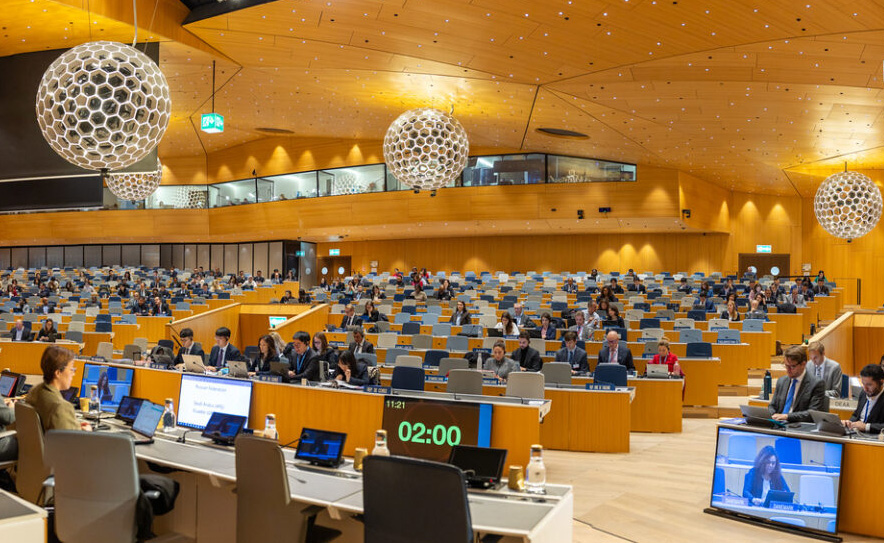
This week our research team published a series of new reports. These relate to the work streams in the upcoming Standing Committee on Copyright and Related Rights (SCCR) at the World Intellectual Property Organization (WIPO). Analysis of Agenda Items for WIPO SCCR 47by Sean Flynn This note, which will be presented at the November 25, CKG Workshop on SCCR 47, provides background information, links to recently published research and analysis, and descriptions of the issues that may be addressed in the 47th meeting of the World Intellectual Property Organization’s Standing Committee on Copyright and Related Rights, December 1-5, 2025. It is published as part of the mission of the Centre on Knowledge Governance to produce information and analysis to promote the public interest in multilateral knowledge governance negotiations. The analysis is presented in the order that the items occur on the SCCR 47 Agenda.  Tracing a Century of Broadcasting Rights Debates: 1928–2025Luca Schirru and Sean Flynn This report provides a detailed view of developments concerning broadcasting rights within international copyright law, beginning with the 1928 Rome Revision of the Berne Convention and continuing through the latest SCCR discussions. These SCCR sessions illustrate the ongoing effort to create a new international treaty to update protection for traditional broadcasting and cablecasting against signal piracy, while grappling with complex issues like protection over computer networks and the definition of object and scope. Copyright Limitations and Exceptions in the SCCR: A TimelineLuca Schirru, Ben Cashdan and Sean Flynn The timeline details the progression of discussions within the WIPO SCCR regarding Limitations and Exceptions (L&Es) to copyright. This detailed chronology, spanning from 1996 to 2025, highlights the main proposals, studies, and key milestones concerning L&Es for various sectors, including visually impaired persons, libraries, archives, and educational institutions. It documents the formal inclusion of L&Es on the SCCR agenda, the development of numerous draft treaties and working documents, and the ongoing efforts to reach consensus and implement work programs. Comparison of Proposed Texts on Limitations and Exceptions in SCCR 47Jonathan Band Two new documents have been introduced for the Limitations and Exceptions agenda item: the African Group’s “Proposal on Limitations and Exceptions” (SCCR/47/5) and the Chair’s “Text Proposed” (SCCR/47/8), alongside the earlier U.S. proposal “Limitations for Libraries and Archives” (SCCR/44/5). The tables identify common elements among the three documents and additional areas shared by the Chair and African Group texts, suggesting significant areas of commonality and that further text-based work towards an international legal instrument can start with these documents. Justifications for an Instrument on Copyright Limitations and ExceptionsAditya Gupta and Sean Flynn The authors summarise justifications for an international instrument on limitations and exceptions (L&Es) to copyright, and for expanded limitations and exceptions more generally. The justifications are taken from a review of academic literature. Researchers have posited that such an instrument is necessary to counteract the existing “minimum protection approach” of international treaties, which often prioritizes copyright holders over the public interest, access to knowledge, and competition and development concerns. Is the draft Broadcast Treaty consistent with the General Assembly mandate?Sean Flynn WIPO published a new draft of the proposed Broadcasting Organizations Treaty as SCCR/47/3, which does not differ in its main provisions from previous drafts and raises questions about whether it fulfils the mandate of earlier WIPO General Assemblies. The analysis focuses on substantive changes and controversial provisions, addressing whether there is sufficient “agreement on objectives, specific scope and object of protection”. Four new proposals for SCCR 47Ben Cashdan WIPO has published four new proposals on ways forward for key work streams in the SCCR, scheduled for 1–5 December 2025. The proposals concern exclusive rights for broadcasting organisations, disparities in the remuneration of performers, limitations and exceptions to promote education, research and access to knowledge, and ensuring fair copyright royalties for creators in the digital environment.

Blog, Broadcast Treaty, WIPO GA, WIPO-SCCR

Tracing a Century of Broadcasting Rights Debates: 1928–2025

This timeline provides a detailed view of the developments concerning broadcasting rights within international copyright law. It begins with the 1928 Rome Revision of the Berne Convention, which initially introduced these rights, and tracks major milestones such as the 1961 Rome Convention and the rise of satellite broadcasting in the mid-1960s. The majority of the timeline focuses on the intensive, multi-year negotiations held under the WIPO Standing Committee on Copyright and Related Rights (SCCR), which formally began addressing the protection of broadcasting organisations in 1998. These SCCR sessions illustrate the ongoing effort to create a new international treaty to update protection for traditional broadcasting and cablecasting against signal piracy, while grappling with complex issues like protection over computer networks and the definition of object and scope. The information concerning the pre-SCCR period (1928–1998) was extracted from Vyas, Lokesh; Schirru, Luca; and Flynn, Sean, The (Long) Road to the Broadcast Treaty: A Brief History (Infojustice, 2025). The remaining sections were prepared based on the documents available on WIPO’s SCCR Meetings webpage (e.g. “Report”, “Conclusions” and “Summary by Chair”) and on Schirru, Luca; Vyas, Lokesh; Jawara, Haddija; Ruthes Gonçalves, Lukas; McGee, Katie; Misto, Yara; and Flynn, Sean Michael Fiil, Documentary History of the Broadcast Treaty in the SCCR (Global Version) (2025), Joint PIJIP/TLS Research Paper Series, 145. See PDF version below. Date Main Developments Short Description 1928 Rome Revision of the Berne Convention Article 11bis introduced broadcasting rights into international copyright law, marking the entry of broadcasting into the global copyright framework. 1948 Brussels Revision of the Berne Convention Added changes and clarifications to Article 11bis. 1961 Rome Convention Adoption of the International Convention for the Protection of Performers, Producers of Phonograms and Broadcasting Organizations (Rome, 1961). The Convention covered only “wireless” transmissions, whether the treaty applied to broadcasts transmitted via satellites 1965 Rise of Satellite Broadcasting With the emergence of orbiting and geostationary satellites, broadcasting organizations began demanding protection against signal piracy (noted by Delia Lipszyc). 1967 Stockholm Revision of the Berne Convention. Introduced further modifications to broadcasting rights but limited protection to live wireless broadcasts. 1968–1969 Intercontinental satellite television broadcasts Global discussions began on the legal challenges of intercontinental satellite television broadcasts. 1971–1974 UNESCO and BIRPI Expert Committees Committee of Governmental Experts (UNESCO & BIRPI) met in: Lausanne (1971); Paris (1972);Nairobi (1973). These meetings laid the foundation for the 1974 Brussels Diplomatic Conference. 1973–1974 Parallel Negotiations Alongside the Brussels Convention, an Intergovernmental Committee under Article 32 of the Rome Convention developed a model law on the protection of performers, producers of phonograms, and broadcasting organizations. 1996 WIPO Internet Treaties During negotiations of the WIPO Copyright Treaty (WCT) and WIPO Performances and Phonograms Treaty (WPPT), there was renewed momentum for a separate treaty on broadcasting, leading to the establishment of the Standing Committee on Copyright and Related Rights (SCCR). 1998 SCCR Agenda The protection of broadcasting organizations was formally added to the agenda of the SCCR, created by the 32nd WIPO Assemblies (March 25–27, 1998). SCCR/1: 1998 Existing legislation on broadcast  Memorandum about the “Existing International, Regional and National Legislation Concerning the Protection of the Rights of Broadcasting Organizations” (SCCR/1/3). SCCR/2: 1999 Multiple submissions on the topic of the rights of broadcasting organizations  Documents on the “Protection of the Rights of Broadcasting Organizations Submissions Received from Member States of WIPO and the European Community” (SCCR/2/5) and “from Non-Governmental Organizations” (SCCR/2/6; SCCR/2/6/REV) and “Addendum Concerning the Submission by the National Association of Commercial Broadcasters in Japan (NAB-Japan)” (SCCR/2/6 ADD.). Submissions by Mexico (SCCR/2/7) and by the United Nations Educational, Scientific and Cultural Organization (UNESCO) (SCCR/2/8) on the “Protection of the Rights of Broadcasting Organizations”. “Report on the Regional Roundtable for Central European and Baltic States on the Protection of the Rights of Broadcasting Organizations and on the Protection of Databases, Held in Vilnius, from April 20 to 22, 1999”,  submitted on behalf of Bosnia and Herzegovina, Bulgaria, Croatia, the Czech Republic,  Hungary, Lithuania, Romania and the Slovak Republic (SCCR/2/10 REV.); “Submission by Cameroon” (SCCR/2/12, presenting the “state of Cameroonian legislation on the protection of broadcasting organizations” and “proposals for the strengthening of the international protection of broadcasting organizations”, pp.2-3).  SCCR/3: 1999 Multiple submissions on the topic of the rights of broadcasting organizations  “Report of the Regional Roundtable for African Countries on the Protection of Databases and on the Protection of the Rights of Broadcasting Organizations, Held in Cotonou, from June 22 to 24, 1999”, submitted on behalf of Benin, Burkina Faso, Cameroon, Ghana, Guinea, Kenya, Malawi,  Mali, Mauritius, Niger, Nigeria, South Africa, Togo and United Republic of Tanzania (SCCR/3/2); Proposal on the “Protection of the Rights of Broadcasting Organization” submitted by Argentina (SCCR/3/4); Proposal on the “Protection of Audiovisual Performances; Protection of the Rights of Broadcasting Organizations”, submitted by  United Republic of Tanzania (SCCR/3/5); “Statement Adopted at the Regional Roundtable for Countries of Asia and the Pacific on the Protection of Databases and on the Protection of the Rights of Broadcasting Organizations, Held in Manila, from June 29 to July 1, 1999”, submitted by Bangladesh, China, Fiji, India, Indonesia, Mongolia, Pakistan, Philippines, Singapore, Sri Lanka, Thailand and Viet Nam (SCCR/3/6). SCCR/4: 2000 Invitation to submit proposals “59. The Standing Committee decided to invite governments to submit […] proposals in treaty language […].” (SCCR/4/6 Report, p.12) SCCR/5: 2001 Different proposals and a comparative table Proposals on the “Protection of Broadcasting Organizations” submitted by Kyrgyzstan (SCCR/5/2), Sudan (SCCR/5/3), and Japan (SCCR/5/4). “Protection of the Rights of Broadcasting Organizations: Comparative Table of Proposals Received by April 30, 2001”, prepared by the Secretariat (SCCR/5/5). “The Standing Committee made the following decision: […]  B. Rights of Broadcasters: (i) the issue would be the main point on the Agenda of the next meeting of the Standing Committee; (ii) the Secretariat would invite the Governments and the European Community to submit additional proposals on this issue, preferably in treaty language[…]” (SCCR/5/6).  SCCR/6: 2001 Multiple submissions on the topic of the rights of broadcasting organizations Proposals on the “Protection of the Rights of Broadcasting Organizations”, submitted by the European Community and its Member States (SCCR/6/2)

Blog, WIPO GA, WIPO-SCCR

WIPO General Assembly Meeting on SCCR Expresses Consensus for Progress on Broadcast and L&E Instruments

Sean Flynn, Luca Schirru, Talia Deady The World Intellectual Property Organization (WIPO) held its General Assembly (GA) this week, including a review of the progress and recommendations of the Standing Committee on Copyright and Related Rights (SCCR). The GA affirmed its mandates to the Committee to continue working on instruments on the protection of broadcasting organizations and limitations and exceptions (L&Es) for libraries, archives, museums, education and research institutions, and for people with disabilities other than visual impairments. Analysis of the statements of regional groups and delegations shows that there is a growing consensus for conclusion of the Broadcasting Treaty under a narrowed form and for pairing it with progress toward at least an instrument on L&Es. This article summarises and analyses the statements of delegations on the SCCR’s work. A companion article provides fuller excerpts of the statements quoted here.  Context   The GA is the apex decision-making body of WIPO. Among other work, at each meeting, the Assembly reviews and affirms or alters its mandates to Standing Committees on the ongoing work. The SCCR is operating under two sets of mandates from the General Assembly.  Decisions from 2006 and 2007 instruct the Committee to seek “agreement on objectives, specific scope and object of protection” on a basic text of a treaty for the protection of broadcast organizations (WO/GA/34/16, 2007) “confined to the protection of broadcasting and cablecasting organizations in the traditional sense” and “based on a signal-based approach” (WO/GA/33/10, 2006).  A decision from 2012 instructs the Committee to work toward an “appropriate international legal instrument or instruments (whether model law, joint recommendation, treaty and/or other forms)” on uses by libraries, archives, museums, educational and research institutions, and persons with other disabilities (WO/GA/41/14). In SCCR 43, the Committee adopted a Work Program on Limitations and Exceptions (SCCR/43/8), including a process to draft “objectives, principles, and options” for instruments. SCCR agendas regularly include work on a number of other agenda items, most of which have been approved in some form by GAs for SCCR discussions, but only Broadcasting and L&Es are subject to GA mandates for the drafting of international instruments.  Broadcasting Organizations Consensus for Concluding a Treaty There continues to be a consensus within the SCCR in favor of concluding the Broadcast Treaty, with many calling for more speed in reaching a conclusion. The groups and countries that spoke in favor of concluding a Broadcasting Treaty included the Asia Pacific Group (APG), Group B, Central European and Baltic States (CEBS), Group of Latin American and Caribbean Countries (GRULAC), African Group (AG), China, European Union (EU), Colombia, Iran, Russian Federation, Mexico, United States, Japan, India, Malawi, Kenya, Saudi Arabia, Algeria, Cameroon, Botswana, France, Kazakhstan, South Africa, Algeria, and Samoa.  Several statements called for speeding progress toward the Treaty’s conclusion. France called for “the Committee to speed up in a constructive manner the work on the draft Treaty.” The Russian Federation called for the Committee “to step up work on the draft WIPO Treaty.” The African Group, Cameroon, Botswana, Kenya, and South Africa expressed concern on the slow progress of work of the SCCR on both broadcasting and L&Es.  Several speakers explicitly endorsed a Diplomatic Conference in the near term. These included both CEBS and the EU, which each mentioned their long-term support for convening of a Diplomatic Conference. China expressed a desire to reach “an agreement on substantive issues … to lay a foundation for the convening of a Diplomatic Conference.” Saudi Arabia specifically supported “holding two sessions in 2025 regarding protecting broadcasting organizations because this will bridge gaps among Member States and will pave the way in order to hold a Diplomatic Conference on this matter.” The Asia Pacific Group, however, urged “continued constructive engagement … without prejudging whether the Committee is in a position to recommend the convening of a Diplomatic Conference.”  Debate Over the Internet Provisions  The main sticking point on the Treaty has long involved the provisions that extend to Internet streaming.  The countries of the EU and CEBS, which support the Internet provisions, have supported convening a diplomatic conference on the current draft text. The EU expressed its support for a “worthwhile” Treaty “which responds to the technological realities of the 21st century.” Similarly, the CEBS group expressed support for a Treaty that “reflects the technological realities of the 21st century,” is “future-oriented,” “accommodates the challenges posed by the digital environment,” and “provides equal protection for transmissions over computer networks.” Many of the groups and countries signaled their opposition to the Internet provisions by calling for closer adherence to the 2006 and 2007 GA decisions.  The US was most explicit in its objections. It stated that the current draft text “exceeds the General Assembly mandate with its inclusion of articles that provide a new right of fixation and that protect signals used in making available to the public stored programs.” It called instead for the Treaty to be “limited to providing traditional broadcasting organizations with a single exclusive right to authorize simultaneous retransmissions to the public of their linear broadcast signals.” Referring to the terms of the 2007 GA’s prerequisites for the recommendation of a diplomatic conference, the US argued that there continue to be “significant questions and concerns … regarding the proposed instrument’s objectives, rights to be granted, and scope of protection.” Accordingly, it called for “much more work” on “these fundamental issues” to make the draft text “acceptable to all Member States.” Japan echoed the statement of the US in observing “different views among Member States on the fundamental issues” and opined that “a flexible approach is needed allowing each Member State to join the treaty while taking into account international and regional circumstances.”  The Asia Pacific Group, represented by Pakistan, recognized “the need to narrow gaps and build consensus in line with the mandate of the Committee.” Iran called for “moving the Committee closer to fulfilling the 2007 General Assembly mandate … limited to the traditional broadcasting organizations and based on a signal-based approach.” Mexico similarly called for an approach “focusing on

Blog, WIPO GA

WIPO GA Opening Statements Signal Debates Ahead

The World Intellectual Property Organization’s General Assembly finished the opening statements of Member States and is now moving toward its substantive work. This note includes quotes of some of the opening statements on key issues facing the General Assembly and in WIPO’s work head.  Support SCCR work on Broadcast and L&E Instruments With the conclusion of two treaties this year  – on disclosure of genetic resources in patents and, on design law – the focus on WIPO’s norm setting is shifting to the Standing Committee on Copyright and Related Rights (SCCR). A key issue in the past several General Assemblies has involved whether to recommend that the current draft treaty be the subject of a diplomatic conference, and if so, whether it will be linked with progress toward an instrument in the lng-stalled limitations and exceptions agenda. The work on Broadcasting is guided by decisions of the GA in 2006 and 2007, calling for “agreement on objectives, specific scope and object of protection” (WO/GA/34/16) on a draft text “confined to the protection of broadcasting and cablecasting organizations in the traditional sense” and “based on a signal-based approach” (WO/GA/33/10, para 107, 2006). The work on limitations and exceptions is guided by the 2012 decision of the GA to work toward an “appropriate international legal instrument or instruments (whether model law, joint recommendation, treaty and/or other forms)” on uses by libraries, archives, museums, educational and research institutions, and persons with other disabilities (WO/GA/41/14).    Broadcast Denmark, on behalf of the EU  “WIPO can count on the continued and active engagement of the EU and its Member States in strengthening the normative agenda of WIPO’s work. We are committed and support moving towards the prompt conclusion of a broadcasting organizations treaty.” Estonia, on behalf of CEBS “We would express our strong support for the timely conclusion of the broadcasting organizations treaty.” India “India remains hopeful for meaningful progress on all pending issues including finalization of a balance[d] Treaty on the protection of broadcasting organizations.” Trinidad and Tobago  “We remain committed to working as well towards a broadcasting treaty.” Hungary “We stand ready to support work towards the adoption of the broadcasting treaty.” Australia “Australia continues to support working towards the Treaty on the Protection of broadcasting organizations”  France “We are attached to the key role of the organization in supporting creative economies and the work of the Standing Committees, particularly when it comes to developing a broadcasting treaty.” Philippines “The Philippines encourages discussions on the proposed Treaty on the Protection of Broadcasting Organizations and strongly supports SCCRs in its endeavors. To recall, the preparatory process was initiated in 1997 in a symposium in Manila. Meanwhile, advances in technologies have generated more piracy, illegal signals and irresponsible use of artificial intelligence. IP protection needs to outpace these advances.” Italy  “The WIPO normative agenda includes the negotiation for a treaty dedicated to broadcasting organizations. Italy supports the adoption of an effective anti-piracy instrument aimed at enhancing the international protection of broadcasting organizations IP content, and thereby contributing to strengthening the principle of territorial exclusivity, which plays a crucial role in securing financing for IP content’s development and distribution.” Finland “In the SCCR Committee, we consider that all necessary preparatory work has been done to finalize a broadcasting treaty.” L&E African Group  The African Group supports advancing discussions on limitations & exceptions for libraries and archives and imitation & exceptions for educational and research institutions for persons with disabilities. Limitations and exceptions are of crucial importance to the African Group. And we acknowledge the support of education and research and for fostering innovation, competition, and economic development, while also supporting the achievement of the Sustainable Development Goals, including the SDG4 and SDG10.” Arab Group (represented by Algeria)  “We are very much interested in the conclusion of a legally binding text as regards exceptions and limitations so that we can maintain a balance between copyright and society in general.” Cameroon “We call for text-based negotiation for the adoption of an international instrument on limitation and exceptions in copyright regarding research, education, museum, archives and people with other disabilities. disabilities as mandated. Delivering on this long overdue subject should be our immediate priority so as to give room for commencement of in-depth discussion on other contemporary topics on IP.” Nigeria “Nigeria supports swift progress in SCCR on balance, limitation and exceptions for education and research.”  Algeria “We support having a balanced approach when it comes to copyrights with priorities to exceptions and limitations mentioned in a legally binding instrument.” Cote d’Ivoire  “My country highlights the importance of guaranteeing equitable access to knowledge and to technologies for developing countries and we encourage WIPO to promote inclusive mechanisms that enable broadened access to works protected by copyright and to essential technologies.” Debate shapes over SDGs and voting on the WIPO Budget In the last meeting of the Program and Budget Committee, the United States opposed references to the SDGs in the Budget, stating  “The United States does not support any proposal unrelated to WIPO’s mandate and intended to advance the implementation of the SDGs. The 2030 Agenda for Sustainable Development and the Sustainable Development Goals advanced a program of soft global governance that is inconsistent with U.S. sovereignty and adverse to the rights and interests of Americans.”  In what might be seen as an explicit rejection of the US position, a number of countries specifically embraced WIPO’s inclusion of the UN Sustainable Development Goals as guiding posts of its work. Support for SDGs Namibia (for African Group) “We acknowledge WIPO’s efforts toward achieving the Sustainable Development Goals and encourage the reflection of these efforts across all the activities of the organization, including the program and budget for 2026.” Pakistan “We commend WIPO’s sustained focus on the Development Agenda and its alignment with the 2030 Agenda. Project-based demand-driven support are practical tools for enhancing IP awareness and strengthening ecosystems that drive innovation and economic growth.”  Jamaica “Intellectual Property both generates and drives economic opportunities that are intrinsically linked to Jamaica’s national

Blog

A Step Forward: World Intellectual Property Organization’s Copyright Committee Inches Forward on Broadcast and Limitations

The Forty-Sixth Session of the World Intellectual Property Organization’s Standing Committee on Copyright and Related Rights (SCCR) concluded with modest but meaningful progress on key agenda items, including on the Broadcasting Treaty, the limitations and exceptions (L&Es) agenda and the agenda item on copyright remuneration in the digital environment. The SCCR was Chaired by Vanessa Cohen, Copyright Director of Costa Rica. Broadcasting Treaty: Refined Focus, Continued Dialogue The Committee continued its examination of the Draft WIPO Broadcasting Organizations Treaty, which has been on the SCCR’s agenda since its first meeting in 1998. After the first failure to create a basic text for the negotiation in 2006, the 2007 General Assembly mandated that the SCCR achieve “agreement on objectives, specific scope and object of protection” before a recommendation to complete the treaty in a diplomatic conference. (WO/GA/34/16). The GA has further instructed that the Broadcasting Treaty be “confined to the protection of broadcasting and cablecasting organizations in the traditional sense” and “based on a signal-based approach” (WO/GA/33/10, para 107, 2006).  The Chair’s statements for SCCR 44 and 45 aptly summarized the current consensus on the committee on the bounds of a text that could be advanced to the Diplomatic Conference: “With respect to objectives, there is common understanding … that the treaty should be narrowly focused on signal piracy, should not extend to any post-fixation activities and that it should provide member states with flexibility to implement obligations through adequate and effective legal means” and “that the object of protection (subject-matter) of the treaty is related to programme-carrying signals linked to linear transmission”. But the bounds of these concepts have been pressed by Chair’s Drafts of a treaty that continue to use exclusive rights as a baseline, including rights to fixation and to make available stored programs on the Internet. This SCCR featured more vigorous debate over the draft than at the last few SCCR meetings, with a larger number of countries offering specific comments on provisions including on national treatment and reciprocity, exceptions and limitations, the protection of signals used in making available stored programs, and the functioning of the mechanism for alternatives to exclusive rights.  Some member states, including the European Union, the Central European and Baltic States Group (CEBS) and the Group of Latin American and Caribbean Countries (GRULAC) supported moving the current text to a diplomatic conference. But the two days of deliberations showed significant concern about many of the draft text’s provisions. After the deliberations showed a lack of consensus on the document, Brazil proposed that the Broadcast Treaty be removed from the formal agenda of the SCCR and be worked on by groups of countries outside of the SCCR. Ultimately the Chair’s Summary concluded that the facilitators would create a new draft text and the item would remain on the agenda without any endorsement of a timeline toward a diplomatic conference. Opposition to the current Chair’s Text appeared to be growing. The Africa Group noted that “some members are concerned about the potential overreach of those protections, fearing that they could restrict access to broadcast or create unintended barriers to the flow of information.” The Asia Pacific Group similarly reported the views of some of its members “determination as to whether and how Intellectual Property rights should apply with respect to broadcasting is also a development to the issue that requires a delicate balance.” The Africa Group stated an additional position that “an instrument on the protection of broadcasting organizations should advance to a Diplomatic Conference jointly with an instrument on limitations and exceptions that meets the 2012 General Assembly’s mandate.”  Among the “Group B” coalition of wealthy countries, the United States continued to raise serious substantive objections, stating the view that “significant work remains to be done” on the Chair’s Draft, which “continues to exceed the GA mandate for a signal based approach to protect broadcasters in the traditional sense.” The US stated that it supports “a narrow text that is focused solely on the live signal,” including through deletion of the Chair’s Draft’s rights to fixation (Art 7) and making available stored programs (art 8).  Ultimately, while the level of engagement on the Broadcast Treaty was elevated, it does not appear the current text, especially its extensions to Internet-based transmissions and post-fixation rights to stored content, have sufficient consensus to move to a diplomatic conference. Limitations and Exceptions: A Foundation for Bridging Divergence The key issue for the limitations and exceptions agenda is reaching an agreement to begin text-based work on the 2012 GA mandate to work toward an “appropriate international legal instrument or instruments (whether model law, joint recommendation, treaty and/or other forms)” on uses by libraries, archives, museums, educational and research institutions, and persons with other disabilities (WO/GA/41/14). In SCCR 43, the Committee adopted a Work Program SCCR/43/8 REV to draft “objectives, principles, and options” for potential instruments. As noted above, the African Group will not support moving the Broadcast Treaty to a Diplomatic Conference without an instrument on L&E prepared to also be endorsed for finalization.  The Chair announced at the start of the L&E agenda that she had a meeting of “volunteer” member states the week before the SCCR to consult on ways forward. She further proposed that she could use the Chair’s position to “help put together a list of objectives and principles that could be seen as ground, a common basis” and that “could be seen as the cornerstone for a soft law instrument” that “could be an important tool used by WIPO and adopted by the General Assembly, it could provide Member States with significant guidelines and guiding principles.” She further proposed “the possibility of appointing facilitators to try and identify that common base.” All countries implicitly endorsed moving to text based work on principles and objectives for limitations and exceptions. The debate in the Committee was about where to start. Group B and CEBS endorsed starting to discuss the US proposed document – SCCR/44/5. The African Group and many developing countries opposed beginning with

Blog, Broadcast Treaty

Knowledge Ecology International will host roundtable on negotiating text for a WIPO Broadcast Treaty, April 3, 2025

In a Knowledge Ecology International (KEI) post made earlier today by James Love, KEI announced that it will host an informal roundtable on the WIPO broadcast treaty text that will be discussed at the WIPO SCCR 46 meeting from April 7 to April 11, 2025.  The meeting documents are available from WIPO here: https://www.wipo.int/meetings/en/details.jsp?meeting_id=86568, including the current negotiating text, here: https://www.wipo.int/meetings/en/doc_details.jsp?doc_id=641471 KEI’s announcement on the roundtable is linked here and can be read below: The format of the roundtable will be an information discussion of specific articles in the text, dealing with such issues as the definitions of beneficiaries and protected broadcasts, the rights granted, the provisions on national treatment and formalities, the treatment of fixation and post fixation rights (if any), the duration of protection, limitations and exceptions to rights, and other topics. Sean Flynn, The Director of the Program on Information Justice and Intellectual Property at American University Washington College of Law, Luis Villarroel Villalon, the Director of Innovarte ONG in Chile, and James Love, Executive Director of KEI, will present some proposals for the text, but any of the particpants in the Zoom call will be encouraged in participate and share views as well. The discussion will be recorded. To register for the call, use this link: https://us02web.zoom.us/meeting/register/eeboYsSbSXSkDL6Xx3bsnA KEI will be posting links to some additional links to background documents shortly. 2023. Love, James P., “Comments on the September 6, 2023 Draft of a WIPO Broadcasting Treaty, the Definitions, Scope of Application, National Treatment and Formalities” (2023). Joint PIJIP/TLS Research Paper Series. 110.https://digitalcommons.wcl.american.edu/research/110 2023. James Love. The Trouble With the WIPO Broadcasting Treaty. Joint PIJIP/TLS Research Paper, Series. 85. March 2023. https://digitalcommons.wcl.american.edu/research/88 2023. Bernt Hugenholtz, Simplifying the WIPO Broadcasting Treaty: Proposed Amendments to the Third Revised Draft,https://digitalcommons.wcl.american.edu/research/111 2023. Bernt Hugenholtz, The WIPO Broadcasting Treaty: Comments on the Second Revised Draft,https://digitalcommons.wcl.american.edu/research/84 2025. SCCR 46, PIJIP Technical Comments 2025. Schirru, Luca; Vyas, Lokesh; Jawara, Haddija; Ruthes Gonçalves, Lukas; McGee, Katie; Misto, Yara; and Flynn, Sean Michael Fiil, “Documentary History of the Broadcast Treaty in the SCCR (Global Version)” (2025). Joint PIJIP/TLS Research Paper Series. 145.https://digitalcommons.wcl.american.edu/research/145

Scroll to Top