
copyright

Blog, Trade Agreements & IP

Balanced Copyright Protection in the UK-India CETA

            The full text of the Intellectual Property Chapter of the United Kingdom-India Comprehensive Economic and Trade Agreement, signed on July 24, 2025, is now available for review. Overall, it is much more favorable to balanced copyright protection and user rights than previously released drafts and summaries.             The provision for copyright exceptions is the same limited language that first appeared in the UK’s proposed text for the IP chapter leaked in 2022. Article 13.68 Limitations and Exceptions 1. A Party may provide limitations or exceptions in its law to the rights provided for in this Section, but shall confine those limitations or exceptions to certain special cases that do not conflict with a normal exploitation of covered subject matter, and do not unreasonably prejudice the legitimate interests of the right holder. 2. This Article is without prejudice to the scope of applicability of the limitations and exceptions to any rights permitted by the TRIPS Agreement and WIPO administered treaties to which a Party is party.             However, the Chapter contains other important language that promotes balance. Thus, Article 13.2(a), setting forth the Objectives of the Chapter, states: the objectives of this Chapter are … that the protection and enforcement of intellectual property rights should contribute to the promotion of technological innovation and to the transfer and dissemination of technology, to the mutual advantage of producers and users of technological knowledge and in a manner conducive to social and economic welfare, and to a balance of rights and obligations….  (Emphasis supplied.)             The Chapter then sets forth Principles the Parties may follow in formulating amending their laws. First, the Article 13.3(1) provides that a Party may adopt measures necessary “to promote the public interest in sectors of vital importance to its socio-economic and technological development….” Presumably these sectors would include cultural heritage, research, and education.             Second, Article 13.3(2) incorporates language similar to TRIPs Article 40 that appropriate measures may be needed to prevent the abuse of intellectual property rights by right holders or the resort to practices which unreasonably restrain trade or adversely affect the international transfer of technology.             Next, Article 13.4 recites a list of Understandings in respect of the Chapter: [T]he Parties recognise the need to: (a) promote innovation and creativity; (b) facilitate the diffusion of information, knowledge, technology, content, culture and the arts; (c) foster competition and open and efficient markets; (d) maintain an appropriate balance between the rights of intellectual property right holders and the legitimate interests of users and the public interest; (e) establish and maintain transparent intellectual property systems; and (f) promote and maintain adequate and effective protection and enforcement of intellectual property rights to provide confidence to right holders and users, through their respective intellectual property systems, while respecting the principles of transparency and due process, and taking into account the interests of relevant stakeholders, including right holders, service providers, users, and the general public. (Emphasis supplied.) The parties reached these Understandings “having regard to the underlying public policy objectives of their national systems, while recognizing the different levels of economic development and capacity and differences in national legal systems….”             As noted above, the Agreement does not contain detailed obligations concerning copyright exceptions. Nonetheless, Article 13.71 requiring each Party to provide adequate legal protection against unauthorized circumvention of effective technological measures does permit the Parties to take appropriate measures to ensure that beneficiaries may enjoy exceptions and limitations provided for them. Similarly, Article 13.103 requires each Party to maintain a system to limit the liability of Online Service Providers for infringements of copyright committed by users of their services.             Moreover, the language concerning Objectives, Principles, and Understandings provide both the UK and India with sufficient flexibility to adopt robust exceptions that effectively balance the interests of all stakeholders.

Blog, WIPO-SCCR

Excerpts from Delegation Statements on the SCCR at the 2025 General Assembly

In a previous blog post, we analyzed the statements of regional groups and delegations during the 2025 WIPO General Assembly review of the Standing Committee on Copyright and Related Rights (SCCR). Here we share fuller excerpts of those statements, which may be useful to researchers and others closely following the Committee’s work.  Pakistan – APG “We reaffirm our support for the conclusion of a fair and inclusive broadcasting treaty. The group recognizes the need to narrow gaps and build consensus in line with the mandate of the Committee. We urge continued constructive engagement by all Delegations during upcoming SCCR sessions without prejudging whether the Committee is in a position to recommend the convening of a Diplomatic Conference.  The group reiterates its longstanding support for meaningful work on limitations and exceptions, particularly for libraries, archives, museums, educational and research institutions and persons with other disabilities. Ensuring the preservation of an access to knowledge remains a key priority for this group. The APG is of the view that the limitations and exceptions agenda is essential to enabling inclusive access to knowledge, education and culture, especially in developing countries. We welcome the consensus within the Committee to continue discussions on this important item and support endeavors to advance the implementation of the work program.  We reiterate the increasing relevance of discussions on copyright in the digital environment, especially the evolving implications of generative artificial intelligence on copyright. The group supports the continuation of information sessions and discussions in this regard. The APG also notes the interest expressed to discuss other topics at SCCR. While we remain open to dialogue, there is a need to ensure that the Committee’s workload is balanced and aligned with the needs of all Member States.” Japan – Group B “Group B would like to emphasize the importance of working towards progress in the discussions on the draft Treaty on the protection of broadcasting organizations with a view to addressing the legal use of program carrying signals. In order to achieve a meaningful agreement within this Committee, sufficient time should continue to be allocated to this standing agenda item.  For the Agenda Item limitations and exceptions, it would be reiterated that the work under this Committee should follow the scope and parameters as identified in the work program adopted at SCCR 43. We are committed to engaging in further constructive discussions on this issue. Finally, Group B welcomes the informative exchanges held during the information session on generative AI as it relates to copyright. Given the rapidly evolving AI technology landscape, we consider balanced discussions among Member States and stakeholders covering both opportunities and challenges to be highly valuable. Accordingly, we look forward to the follow-up session at SCCR 47.” China  “This Delegation supports the SCCR in continuing discussing protection of broadcasting organizations, limitations and exceptions, and as well as other agenda items. [We support] reaching an agreement on substantive issues in terms of protection of broadcasting organizations to lay a foundation for the convening of a Diplomatic Conference. Relevant study should be carried out in depth to promote discussions on exceptions and limitations. On other agenda items, in particular Copyright in the digital environment including generative AI in relation to copyright, this Delegation will enhance communication with WIPO and other related parties.” Estonia – CEBS  “We would like to reiterate our firm commitment to advancing towards the conclusion of a meaningful Treaty for the Protection of Broadcasting organizations. We support a Treaty that adequately reflects the technological realities of the 21st century and ensures appropriate and effective protection against signal piracy. The CEBS group has long supported the convening of a Diplomatic Conference and considers that we are now approaching a point of readiness for final negotiations. We remain committed to a future-oriented Treaty that meets the current needs of broadcasting organizations and accommodates the challenges posed by the digital environment and rapid technological developments. The CEBS group looks forward to considering the Chair’s revised text at the upcoming SCCR session. We hope this will pave the way for a robust and balanced legal instrument that also provides equal protection for transmissions over computer networks and supports the global fight against signal piracy. With regard to the Committee’s work on limitations and exceptions, the CEBS group continues to recognize the vital role played by libraries, archives and museums in the dissemination of knowledge, information and culture as well as in the preservation of our shared history. We also attach high importance to the work of educational and research institutions and to ensuring access to copyright protected works for persons with disabilities. As we have consistently stated, our group does not support pursuing an internationally legally binding instrument in this area. Instead we are open to exploring possible nonbinding instruments and best practice tools that can help Member States implement effective and context sensitive exceptions and limitations at the national level. We look forward to reviewing the document to be prepared by the Chair and Vice Chair and to continuing our constructive engagement in the discussions at the upcoming SCCR session. The CEBS group welcomes the continued exchange of information on the intersection of copyright and artificial intelligence. We appreciated the information session on generative AI held at the last session which provided valuable insights into the challenges and opportunities that AI poses to the copyright system. We are pleased that the follow-up information session will take place at SCCR 47.  With regard to other matters on the Committee’s agenda, the CEBS group would like to reiterate its view that should the SCCR agenda be expanded to include additional items in the future, the authors’ resale right would be a valuable and relevant topic to be considered as a standing item. We are also carefully analyzing the proposals put forward under the agenda item copyright in the digital environment and remain committed to engaging constructively in these discussions.”  Ecuador – GRULAC  “GRULAC reiterates the importance of the work of this Committee regarding work in trying to reach a

Blog, WIPO GA, WIPO-SCCR

WIPO General Assembly Meeting on SCCR Expresses Consensus for Progress on Broadcast and L&E Instruments

Sean Flynn, Luca Schirru, Talia Deady The World Intellectual Property Organization (WIPO) held its General Assembly (GA) this week, including a review of the progress and recommendations of the Standing Committee on Copyright and Related Rights (SCCR). The GA affirmed its mandates to the Committee to continue working on instruments on the protection of broadcasting organizations and limitations and exceptions (L&Es) for libraries, archives, museums, education and research institutions, and for people with disabilities other than visual impairments. Analysis of the statements of regional groups and delegations shows that there is a growing consensus for conclusion of the Broadcasting Treaty under a narrowed form and for pairing it with progress toward at least an instrument on L&Es. This article summarises and analyses the statements of delegations on the SCCR’s work. A companion article provides fuller excerpts of the statements quoted here.  Context   The GA is the apex decision-making body of WIPO. Among other work, at each meeting, the Assembly reviews and affirms or alters its mandates to Standing Committees on the ongoing work. The SCCR is operating under two sets of mandates from the General Assembly.  Decisions from 2006 and 2007 instruct the Committee to seek “agreement on objectives, specific scope and object of protection” on a basic text of a treaty for the protection of broadcast organizations (WO/GA/34/16, 2007) “confined to the protection of broadcasting and cablecasting organizations in the traditional sense” and “based on a signal-based approach” (WO/GA/33/10, 2006).  A decision from 2012 instructs the Committee to work toward an “appropriate international legal instrument or instruments (whether model law, joint recommendation, treaty and/or other forms)” on uses by libraries, archives, museums, educational and research institutions, and persons with other disabilities (WO/GA/41/14). In SCCR 43, the Committee adopted a Work Program on Limitations and Exceptions (SCCR/43/8), including a process to draft “objectives, principles, and options” for instruments. SCCR agendas regularly include work on a number of other agenda items, most of which have been approved in some form by GAs for SCCR discussions, but only Broadcasting and L&Es are subject to GA mandates for the drafting of international instruments.  Broadcasting Organizations Consensus for Concluding a Treaty There continues to be a consensus within the SCCR in favor of concluding the Broadcast Treaty, with many calling for more speed in reaching a conclusion. The groups and countries that spoke in favor of concluding a Broadcasting Treaty included the Asia Pacific Group (APG), Group B, Central European and Baltic States (CEBS), Group of Latin American and Caribbean Countries (GRULAC), African Group (AG), China, European Union (EU), Colombia, Iran, Russian Federation, Mexico, United States, Japan, India, Malawi, Kenya, Saudi Arabia, Algeria, Cameroon, Botswana, France, Kazakhstan, South Africa, Algeria, and Samoa.  Several statements called for speeding progress toward the Treaty’s conclusion. France called for “the Committee to speed up in a constructive manner the work on the draft Treaty.” The Russian Federation called for the Committee “to step up work on the draft WIPO Treaty.” The African Group, Cameroon, Botswana, Kenya, and South Africa expressed concern on the slow progress of work of the SCCR on both broadcasting and L&Es.  Several speakers explicitly endorsed a Diplomatic Conference in the near term. These included both CEBS and the EU, which each mentioned their long-term support for convening of a Diplomatic Conference. China expressed a desire to reach “an agreement on substantive issues … to lay a foundation for the convening of a Diplomatic Conference.” Saudi Arabia specifically supported “holding two sessions in 2025 regarding protecting broadcasting organizations because this will bridge gaps among Member States and will pave the way in order to hold a Diplomatic Conference on this matter.” The Asia Pacific Group, however, urged “continued constructive engagement … without prejudging whether the Committee is in a position to recommend the convening of a Diplomatic Conference.”  Debate Over the Internet Provisions  The main sticking point on the Treaty has long involved the provisions that extend to Internet streaming.  The countries of the EU and CEBS, which support the Internet provisions, have supported convening a diplomatic conference on the current draft text. The EU expressed its support for a “worthwhile” Treaty “which responds to the technological realities of the 21st century.” Similarly, the CEBS group expressed support for a Treaty that “reflects the technological realities of the 21st century,” is “future-oriented,” “accommodates the challenges posed by the digital environment,” and “provides equal protection for transmissions over computer networks.” Many of the groups and countries signaled their opposition to the Internet provisions by calling for closer adherence to the 2006 and 2007 GA decisions.  The US was most explicit in its objections. It stated that the current draft text “exceeds the General Assembly mandate with its inclusion of articles that provide a new right of fixation and that protect signals used in making available to the public stored programs.” It called instead for the Treaty to be “limited to providing traditional broadcasting organizations with a single exclusive right to authorize simultaneous retransmissions to the public of their linear broadcast signals.” Referring to the terms of the 2007 GA’s prerequisites for the recommendation of a diplomatic conference, the US argued that there continue to be “significant questions and concerns … regarding the proposed instrument’s objectives, rights to be granted, and scope of protection.” Accordingly, it called for “much more work” on “these fundamental issues” to make the draft text “acceptable to all Member States.” Japan echoed the statement of the US in observing “different views among Member States on the fundamental issues” and opined that “a flexible approach is needed allowing each Member State to join the treaty while taking into account international and regional circumstances.”  The Asia Pacific Group, represented by Pakistan, recognized “the need to narrow gaps and build consensus in line with the mandate of the Committee.” Iran called for “moving the Committee closer to fulfilling the 2007 General Assembly mandate … limited to the traditional broadcasting organizations and based on a signal-based approach.” Mexico similarly called for an approach “focusing on

Artificial Intelligence, Blog

A first look into the JURI draft report on copyright and AI

This post was originally published on COMMUNIA by Teresa Nobre and Leander Nielbock Last week we saw the first draft of the long-anticipated own-initiative report on copyright and generative artificial intelligence authored by Axel Voss for the JURI Committee (download as a PDF file). The report, which marks the third entry of the Committee’s recent push on the topic after a workshop and the release of a study in June, fits in with the ongoing discussions around Copyright and AI at the EU-level. In his draft, MEP Voss targets the legal uncertainty and perceived unfairness around the use of protected works and other subject matter for the training of generative AI systems, strongly encouraging the Commission to address the issue as soon as possible, instead of waiting for the looming review of the Copyright Directive in 2026. A good starting point for creators The draft report starts by calling the Commission to assess whether the existing EU copyright framework addresses the competitive effects associated with the use of protected works for AI training, particularly the effects of AI-generated outputs that mimic human creativity. The rapporteur recommends that such assessment shall consider fair remuneration mechanisms (paragraph 2) and that, in the meantime, the Commission shall “immediately impose a remuneration obligation on providers of general-purpose AI models and systems in respect of the novel use of content protected by copyright” (paragraph 4). Such an obligation shall be in effect “until the reforms envisaged in this report are enacted.” However, we fail to understand how such a transitory measure could be introduced without a reform of its own. Voss’s thoughts on fair remuneration also require further elaboration, but clearly the rapporteur is solely concerned about remunerating individual creators and other rightholders (paragraph 2). Considering, however, the vast amounts of public resources that are being appropriated by AI companies for the development of AI systems, remuneration mechanisms need to channel value back to the entire information ecosystem. Expanding this recommendation beyond the narrow category of rightholders seems therefore crucial. Paragraph 10 deals with the much debated issue of transparency, calling for “full, actionable transparency and source documentation by providers and deployers of general-purpose AI models and systems”, while paragraph 11 asks for an “irrebuttable presumption of use” where the full transparency obligations have not been fully complied with. Recitals O to Q clarify that full transparency shall consist “in an itemised list identifying each copyright-protected content used for training”—an approach that does not seem proportionate, realistic or practical. At this stage, a more useful approach to copyright transparency would be to go beyond the disclosure of training data, which is already dealt with in the AI Act, and recommend the introduction of public disclosure commitments on opt-out compliance. A presumption of use—which is a reasonable demand—could still kick in based on a different set of indicators. Another set of recommendations that aims at addressing the grievances of creators are found on paragraphs 6 and 9 and include the standardization of opt-outs and the creation of a centralized register for opt-outs. These measures are very much in line with COMMUNIA’s efforts to uphold the current legal framework for AI training, which relies on creators being able to exercise and enforce their opt-out rights. Two points of concern for users At the same time that it tries to uphold the current legal framework, the draft report also calls for either the introduction of a new “dedicated exception to the exclusive rights to reproduction and extraction” or for expanding the scope of Article 4 of the DSM Directive “to explicitly encompass the training of GenAI” (paragraph 7). At first glance, this recommendation may appear innocuous—redundant even, given that the AI Act already assumes that such legal provision extends to AI model providers. However, the draft report does not simply intend to clarify the current EU legal framework. On the contrary, the report claims that the training of generative AI systems is “currently not covered” by the existing TDM exceptions. This challenges the interpretation provided for in the AI Act and by multiple statements by the Commission and opens the door for discussions around the legality of current training practices, with all the consequences this entails, including for scientific research. The second point of concern for users is paragraph 13, which calls for measures to counter copyright infringement “through the production of GenAI outputs.” Throughout the stakeholder consultations on the EU AI Code of Practice, COMMUNIA was very vocal about the risks this category of measures could entail for private uses, protected speech and other fundamental freedoms. We strongly opposed the introduction of system-level measures to block output similarity, since those would effectively require the use of output filters without safeguarding users rights. We also highlighted that model-level measures targeting copyright-related overfitting could have the effect of preventing the lawful development of models supporting substantial legitimate uses of protected works. As this report evolves, it is crucial to keep this in mind and to ensure that any copyright compliance measures targeting AI outputs are accompanied by relevant safeguards that protect the rights of users of AI systems. A win for the Public Domain One of the last recommendations in the draft report concerns the legal status of AI-generated outputs. Paragraph 12 suggests that “AI-generated content should remain ineligible for copyright protection, and that the public domain status of such works be clearly determined.” While some AI-assisted expressions can qualify as copyright-protected works under EU law —most importantly when there’s sufficient human control over the output—many will not meet the standards for copyright protection. However, these outputs can still potentially be protected by related rights, since most have no threshold for protection. This calls into question whether the related rights system is fit for purpose in the age of AI: protecting non-original AI outputs with exclusive rights regardless of any underlying creative activity and in the absence of meaningful investment is certainly inadequate. We therefore support the recommendation that their public domain status be asserted in those cases. Next steps Once the draft report is officially published and presented in JURI on

Artificial Intelligence, Blog

Danish Bill Proposes Using Copyright Law to Combat Deepfakes

Recently, a Danish Bill has been making headlines by addressing issues related to deepfake through a rather uncommon approach: copyright. As stated to The Guardian, the Danish Minister of Culture, Jakob Engel-Schmidt, explained that they “are sending an unequivocal message that everybody has the right to their own body, their own voice and their own facial features, which is apparently not how the current law is protecting people against generative AI.” According to CNN, the minister believes that the “proposed law would help protect artists, public figures, and ordinary people from digital identity theft.” Items 8, 10, and 19 of the proposal include some of the most substantive changes to the law. Among other measures, Item 8 proposes adding a new § 65(a), requiring the prior consent of performers and performing artists to digitally generate imitations of them and make these available to the public, establishing protection for a term of 50 years after their death. Item 10 introduces a new § 73(a), focusing on “realistic digitally generated imitations of a natural person’s personal, physical characteristics,” requiring prior consent from the person being imitated before such imitations can be made available to the public. This exclusive right would also last for 50 years after the death of the imitated person and would not apply to uses such as caricature, satire, parody, pastiche, criticism, or similar purposes. It could be argued that this approach is uncommon because several countries, including those in the European Union, already have laws regulating personality rights and, more specifically, personal data. Copyright is known for regulating the use of creative expressions of the human mind, not the image, voice, or likeness of a person when considered individually, i.e., outside the context of an artistic performance. According to CNN “Engel-Schmidt says he has secured cross-party support for the bill, and he believes it will be passed this fall.”  A machine-translated version of the Proposal is below:  Notes:

Blog, WIPO GA, WIPO-SCCR

WIPO DDG Expresses “Frustration” and “Bitterness” and Calls for Risk Taking for Progress

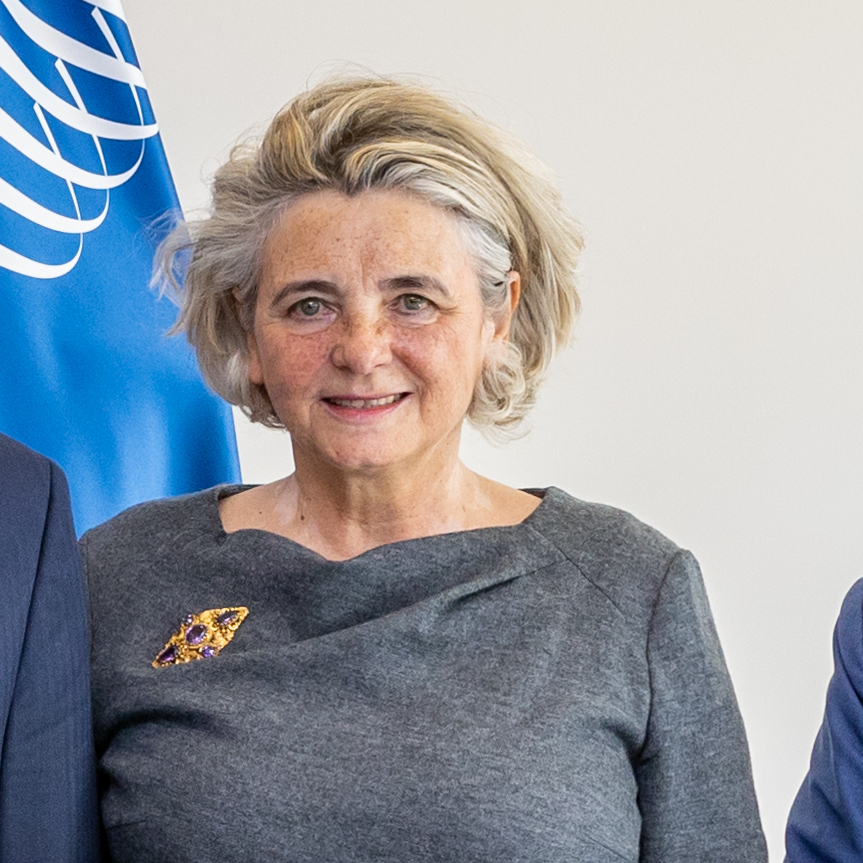
The World Intellectual Property Organization General Assembly’s consideration of the work of the Standing Committee on Copyright and Related Rights (SCCR) began with a report by Ms. Sylvie Forbin, Deputy Director General for the Copyright and Creative Industry Sector, expressing “frustration” and “bitterness” about the Committee’s slow pace of work, and ended with a call for risk taking.  Ms. Forbin’s opening statement focused on the Committee’s inability to reach conclusions on two long-standing agenda items — protection of broadcast organizations and promotion of limitations and exceptions — that have been on its agenda since the Committee’s formation in 1998. Her comments opened by describing “a strange paradox” between the significant and growing participation of member states and observers in the Committee’s meetings, which are indeed among the most attended WIPO meetings each year, and “that it is more difficult than it was in the past to take decisions that will help us to achieve progress in our work.”  Her comments focused first on the long-stalled treaty on the protection of broadcasting organizations. The issue of protecting broadcasting organizations was removed from the 1996 Diplomatic Conference and moved to the SCCR’s agenda when that committee was created by the GA in 1998. A draft Treaty was approved for a Diplomatic Conference by the GA in 2006, but the SCCR failed to approve a draft text “confined to the protection of broadcasting and cablecasting organizations in the traditional sense” and “based on a signal-based approach” (WO/GA/33/10, para 107, 2006). The SCCR now operates under the GA’s 2007 decision to call a diplomatic conference only after there is sufficient “agreement on objectives, specific scope and object of protection” in a draft instrument (WO/GA/34/16). As reflected in the Chair’s Summary of the 45th meetings of the Committee, there continue to be significant differences between countries on the basic terms of the treaty. In particular, there is significant disagreement with the inclusion of articles creating fixation and post-fixation rights, including an exclusive right to make available stored programs on the Internet. It appears likely that a draft treaty would be approved for a diplomatic conference if these clauses were taken out. But the draft treaty produced by the Chair’s facilitators continues to be far broader than the consensus of the Committee will allow.  Ms. Forbin expressed “frustration” at this state of affairs:  I think that you will understand that we are experiencing a certain level of frustration given that there is no concrete result after intense discussions on the draft Treaty for the protection of broadcasting organizations which our Committee has been working on for more than a quarter of a century. A quarter of a century, I repeat. That is a very long period of time.  She rhetorically asked in her statement whether the lack of progress is due to flawed modalities — “to the fact that perhaps only one or two meetings a year is not really the ideal framework for negotiations that are as technical as they are” — or “”the very raison d’être of this Treaty?” She added: “Is there not a real risk that this treaty in its current configuration is leading us down a path that has no end?” She next turned to the issue of limitations and exceptions. This topic has also been on the agenda of the Committee since it was created in 1998, with the GA approving an agenda item on Copyright, Related Rights, and Digital Technology “from the viewpoint both of owners and managers of rights, and of users and the général public.” The agenda produced the Marrakesh Treaty to Facilitate Access to Published Works for Persons Who Are Blind, Visually Impaired, or Otherwise Print Disabled in 2013. SInce 2012, it has been working under a GA mandate “to work towards an appropriate international legal instrument or instruments” on limitations and exceptions for libraries, archives, museums, education and research institutions and people with other disabilities (WO/GA/41/14). Work on the agenda has increased it pace in recent years, including through a Work Program adopted by the Committee to produce “objectives, principles and options” for an instrument on “priority” issues of preservation, digital exceptions, and people with disabilities.  Ms Forbin acknowledged the “fixed mandate as set out by the General Assembly in 2012,” although she did not identify its objective to produce binding or non-binding “international legal instrument(s).” She pointed to the Secretariat’s production of “thematic studies,” “typologies” and “regional meetings and an international conference” which “enabled us to hold a very rich exchange of views and to identify a roadmap for the future we are currently working on.” But she lamented that “for a number of sessions now that there is in fact a misunderstanding” over the goals of the agenda. She therefore appeared to call for a reevaluation of the purpose of the agenda item:   We need to clarify our expectations while taking into account, of course, that they are not necessarily the same for all members of our committee. Is it not a good idea to try and have a sensible understanding of what could be common ground for us?  After discussing the new calls for the Committee to address artificial intelligence and other digital copyright issues, Ms. Forbin returned to a darker tone, expressing “bitterness” at the lack of progress: Our analysis of the situation is that it’s proving to be difficult to gather all of the necessary dynamics to reach consensus. What we have seen in this Committee is that we are wasting our energy and resources to a certain degree. We are obliged to note with some bitterness that we are losing out on valuable opportunities despite the efforts of some of you to breathe new vitality and life into our work. Given the major issues that are being posed on the issue of copyright during this extremely rich and complex period which require cross -cutting analysis and feedback both from professionals as well as from institutional managers – is the SCCR still not a key forum for seeking solutions

Blog, WIPO-SCCR

The GRULAC proposal on remuneration rights at WIPO SCCR: Understanding the interface with national debates and the issue of corporate power

Vitor Ido of the University of São Paulo (USP) explains the context of the renewed focus on remuneration of creatives in Latin America, especially in Brazil. He focuses on the desire by Brazil’s new government to regulate the power of large corporates, especially those based in the Global North, especially the tendency to exploit Brazil’s creative content at the expense of local authors and creators. This presentation was delivered at the User Rights meeting in Geneva on 17 June 2025. The full text is available below. The political context in Brazil: A renewed commitment to national creative industries It’s a pleasure to be here and thank you so much for the invitation. So I’ll try to feed into this discussion of remuneration rights, but with a different framing and a different entry point in particular: the reasons why GRULAC and Latin America wanted to bring this discussion to WIPO and how there’s kind of a big mismatch between what’s taking place at the national or regional level and what’s taking place more globally. My interpretation is that we need to understand that at least in Brazil, potentially slightly different from what we’re seeing in Europe, there’s two main things: On the one hand, renewed attention to creative industries as strategic to the Brazilian economy and Latin America more broadly. And on the other hand, regulation of huge platforms.  It’s the post-Bolsonaro context. So this is responding to an authoritarian context in which you had severe cutting in culture industries financing, but also deregulation in the platform sector, which also led to direct consequences for democracy, just like we saw in other countries as well. So if we look from that point of view, when we look at how this new government tried to pitch creative industries as one core focus, you see new fiscal policies, you see new legislation and direct and indirect support to not only authors, but movies and all different cultural sectors. That’s where we get to the remuneration issues: low to minimum to absolutely no remuneration at all for authors, in particular by foreign large platforms. And it’s said all the time in Brazil that our Minister of Culture, who’s also an artist, she pretty much gains nothing and she’s well-known, super well-known actually, and she gets basically nothing out of Spotify. On top of that, of course, there are general concerns about a workforce being displaced by artificial intelligence and thinking about the economic potentials of exporting some of our cultural assets to other countries, not just Lusophone countries, but then potentials for conventional streaming platforms like Netflix. So during the pandemic, for instance, when that was the setting, there was no direct support by the government, what we had was just that sort of investment. But also on the other hand, the issue of regulating platforms, what you see, and maybe that’s one of the things that’s being discussed outside of Brazil more, is how the Supreme Court has taken a very active role in regulating platforms, and even this week they’re about to finalise a reframing of a longstanding provision that was basically a safe harbour, not liability, for platforms that is about to be reshaped. And some people in the international literature are even calling it kind of a Brazil model in the making. Remuneration to support and protect journalism and other key sectors But where it fits into remuneration, is that very explicitly the government is saying to counter misinformation, it’s not just about digital literacy, but also about having enough instruments to support journalism, quality journalism, alternative journalism, black-owned journalism, indigenous peoples-owned journalism, women-owned journalism. And because of a fading business model, that also means that potentially new support in the form of remuneration can be part of this agenda.  This is just one example. Another is that, of course, dubbing [of movies and TV] in Brazil is a really huge cultural industry in an economic sense. You see this campaign that is talking not only about the loss of a whole profession, but also how this fits into notions of being Brazilian, what does it mean to speak Brazilian Portuguese, what does it mean to export it all, and the impact of being translated into an AI [voice], which Netflix actually did on a few occasions. It’s not, therefore, just a workforce displacement issue, but also that broader cultural repercussion that needs to be taken into account. The rights of indigenous people to protect traditional knowledge I just wanted to add, as well, a couple of other issues that I think are important for us to understand more broadly. I think the core in Brazil would be there’s more reasons to be concerned about misappropriation, particularly when we’re talking about minorities, than de facto issues with L&Es not existing.  I’m referring, of course, to Alan [Rocha]’s very well-known argument of how courts in Brazil have historically been trying to compensate for the bad legislation that does not really have L&Es, but that de facto end up authorising utilizations, for instance, for both research and educational purposes. In the policy realm, there’s also other reasons to be concerned about what’s going on, with the provisions related to big funders that are licencing some of our preservation and museums and archives policies that often just have that blunt open access provisions that are not really aligned with the way you need to negotiate and ponder things with indigenous peoples. I refer to the launch of the University of Sao Paulo’s new Centre of Documentation of Indigenous Languages and Cultures that took place a couple of weeks ago. It’s a very exciting, huge project, and one of the main issues there is precisely how do you do preservation and archival resources with direct participation of indigenous peoples. One of the main issues is you can’t start with an [open] access provision. It might end with that, but then you need to calibrate issues related to traditional knowledge, so when we bring

Artificial Intelligence, Blog

Latest Developments on Training GenAI with Copyrighted Works and Some 'What Ifs?'

‘Boring’ is not a word that can be used to describe the past few days for those interested in litigation involving copyright issues in the development and use of Generative AI systems. Two major cases saw significant updates, issuing orders that addressed one of the main questions raised in these lawsuits: is the use of copyrighted materials to train Generative AI systems fair use? This blog post aims to briefly describe each case’s key points related to fair use and to highlight what was left unresolved, including all the ‘what if’ scenarios that were hinted at but not decided upon Bartz, Graeber & Johnson v. Anthropic Judge William Alsup’s order on fair use addressed not only the different copies of copyrighted material made for training generative AI systems but also uses related to Anthropic’s practice of keeping copies as a “permanent, general-purpose resource”. It also distinguished between legally purchased copies and millions of pirated copies retained by Anthropic, applying a different fair use analysis to each category. Regarding the overall analysis of fair use for copyrighted works used to train Anthropic’s Generative AI system, Judge Alsup found that the use “was exceedingly transformative and was a fair use.” Among the four factors, only the second factor weighed against using copyrighted works to train the GenAI system. Concerning the digitization of legally purchased books, it was also considered fair use not because of the purpose of training AI systems, but for a much simpler reason:  “because all Anthropic did was replace the print copies it had purchased for its central library with more convenient space-saving and searchable digital copies for its central library — without adding new copies, creating new works, or redistributing existing copies”. For this specific use, of the four factors, only factor two weighed against fair use, while factor four remained neutral. On the other hand, Judge Alsup clearly stated that using pirated copies to create the “general-purpose library” was not fair use, even if some copies might be used to train LLMs. All factors weighed against it. Specifically, Judge Alsup noted: “it denies summary judgment for Anthropic that the pirated library copies must be treated as training copies. We will have a trial on the pirated copies used to create Anthropic’s central library and the resulting damages, actual or statutory (including for willfulness).” Kadrey v. Meta At the very beginning of the order, Judge Vince Chhabria clarified that the case questions whether using copyrighted material to train generative AI models without permission or remuneration is illegal and affirmed that: “although the devil is in the details, in most cases the answer will likely be yes. What copyright law cares about, above all else, is preserving the incentive for human beings to create artistic and scientific works. Therefore, it is generally illegal to copy protected works without permission. And the doctrine of “fair use,” which provides a defense to certain claims of copyright infringement, typically doesn’t apply to copying that will significantly diminish the ability of copyright holders to make money from their works (thus significantly diminishing the incentive to create in the future).” Judge Chhabria explained further that  “by training generative AI models with copyrighted works, companies are creating something that often will dramatically undermine the market for those works, and thus dramatically undermine the incentive for human beings to create things the old-fashioned way.” According to him, this would primarily affect not classic works or renowned authors but rather the market for the “typical human-created romance or spy novel,” which could be substantially diminished by similar AI-created works.  However, all these points were framed as “this Court’s general understanding of generative AI models and their capabilities”, with Judge Chhabria emphasizing that “Courts can’t decide cases based on general understandings. They must decide cases based on the evidence presented by the parties.”  Despite this general understanding that “copying the protected works, however transformative, involves the creation of a product with the ability to severely harm the market for the works being copied, and thus severely undermine the incentive for human beings to create“, Judge Chhabria found two of the plaintiffs’ three market harm theories “clear losers,” and the third, a “potentially winning” argument, underdeveloped: “First, the plaintiff might claim that the model will regurgitate their works (or outputs that are substantially similar), thereby allowing users to access those works or substitutes for them for free via the model. Second, the plaintiff might point to the market for licensing their works for AI training and contend that unauthorized copying for training harms that market (or precludes the development of that market). Third, the plaintiff might argue that, even if the model can’t regurgitate their own works or generate substantially similar ones, it can generate works that are similar enough (in subject matter or genre) that they will compete with the originals and thereby indirectly substitute for them. In this case, the first two arguments fail. The third argument is far more promising, but the plaintiffs’ presentation is so weak that it does not move the needle, or even raise a dispute of fact sufficient to defeat summary judgment.“ In the overall analysis of the four factors, only the second factor weighed against Meta. Summary judgment was granted to Meta regarding the claim of copyright infringement from using plaintiffs’ books for AI training. Nevertheless, Judge Chhabria clarified that “this ruling does not stand for the proposition that Meta’s use of copyrighted materials to train its language models is lawful. It stands only for the proposition that these plaintiffs made the wrong arguments and failed to develop a record in support of the right one.” The use of pirated copies was also addressed in Kadrey v. Meta. In this case, “there is no dispute that Meta torrented LibGen and Anna’s Archive […].” According to Judge Chhabria, while downloading from shadow libraries wouldn’t automatically win the plaintiffs’ case, it was relevant for the fair use analysis, especially regarding “bad faith” and whether the downloads benefited or perpetuated unlawful activities. Lessons

Blog

Fair Use Isn’t Optional: Judges Can Help Reclaim It for Creators

By Yuanxiao Xu. This post was originally published on Authors Alliance. “One need not be a copyright scholar to evaluate fair use. One need only understand the purpose of copyright. — Leval wins my heart forever” Brandon Butler’s drawing of Judge Leval. CC BY 4.0. If you have spent much time exploring U.S. copyright law, you’d likely have encountered the writings—or at least the influence—of Judge Pierre Leval. Among many other contributions, his “Toward a Fair Use Standard” article built a solid foundation for modern fair use jurisprudence. On the bench, Judge Leval’s opinions are famed for their clarity and balance, always mindful of “copyright’s overall objective of contributing to public knowledge,” as can be seen in his landmark decision in Authors Guild v. Google.  On May 23rd, another very important opinion was authored by Judge Leval for the Second Circuit Court in Romanova v. Amilus Inc. Although we won’t delve into it further in this blog post, his opinion provides much-needed clarification on “justification” post-Warhol—guidance that we hope many courts will follow in the coming years. The case facts in Romanova were simple and straightforward: a photographer sued a website for republishing her photo without permission. The district court wrongly found fair use, and the Second Circuit reversed.  The opinion authored by Judge Leval was characteristically thoughtful, not only in its substantive treatment of fair use, but also in its strong affirmation of the district court’s decision to raise fair use sua sponte (Latin for “of one’s own accord “—sua sponte is used to indicate that a court has taken notice of an issue on its own motion, without prompting or suggestion from either party). This post focuses on that procedural dimension of Romanova and goes one step further, explaining why fair use should never have been treated as an affirmative defense in the first place. For decades, Campbell v. Acuff-Rose has been celebrated as a decision that fortified fair use. But ironically, the decision also ossified the view that fair use is strictly an affirmative defense—significantly limiting the power of fair use to safeguard free expression in practice. Even where lower courts are doubtful, they nevertheless feel bound by the way the Campbell court construed fair use as an affirmative defense. In a footnote in Suntrust Bank v. Houghton Mifflin, the Eleventh Circuit Court mused: “fair use is commonly referred to an affirmative defense, see Campbell v. Acuff-Rose Music . . . Nevertheless, the fact that the fair use right must be procedurally asserted as an affirmative defense does not detract from its constitutional significance as a guarantor to access and use for First Amendment purposes.” Now, Judge Leval (whose influential scholarship was cited with approval in Campbell) is helping to restore the power of fair use as a fundamental right—one that cannot be waived, forfeited, or overlooked due to procedural missteps.  Although the case facts and substantive fair use ruling in Romanova are relatively routine, its procedural holding stands out as especially noteworthy. It restores to fair use its legal force and its human dimension.  The district court in Romanova, acting on its own initiative, dismissed the plaintiff’s copyright infringement claim on the basis of the defendant’s use being a fair use, even though the defendant had not appeared in court and never raised the fair use defense.  The Second Circuit upheld the decision of the district court to consider fair use sua sponte. While the court did not go so far as to declare that fair use is not an affirmative defense, Judge Leval’s opinion strips away some of the harmful consequences of treating fair use procedurally rigidly. According to Judge Leval, justice should not depend on one party’s ability to afford litigation, and that courts are always empowered to consider obvious, meritorious fair use defenses. Recognizing how imbalances in power play out in costly copyright litigation, Judge Leval reasoned with clairvoyance: At times, small corporations simply cannot afford the expense of counsel needed to defend a suit. Default does not necessarily preclude the court’s consideration of affirmative defenses available to the defendant, especially when they have obvious merit and their applicability is evident from the face of the complaint. Otherwise, plaintiffs could often easily inflict unjustified harms on small corporate enemies. Intimidation tactics would threaten to strip small creators of their content, and would silence the numerous small platforms that need the protection of the fair use doctrine. (emphasis added) He concluded: The district court here believed that its consideration of the fair use defense would serve justice and advance the goals of copyright. [The district] court misunderstood the fair use defense, which in fact had no proper application to these facts. But we cannot fault the district court for considering a defense which it believed (albeit mistakenly) was valid and important. While district courts should indeed be cautious before sua sponte invoking affirmative defenses on behalf of defaulting defendants, they should also be cautious about not considering such defenses. Up until this opinion, many courts have doggedly followed the mistaken belief that defendants must plead fair use in their answer or a motion to dismiss, or risk waiving it—because fair use has been characterized rigidly as an affirmative defense, a position reinforced by lower courts’ reading of Campbell.  An affirmative defense first admits that a wrongful act has occurred, then offers a justification or excuse that negates culpability. The wrongfulness of the act is central to the concept of an affirmative defense. For example, a bribe given in a foreign country is wrongful by nature, but if the foreign country’s written law allows for such payments, it can serve as an affirmative defense; a board of directors neglecting fiduciary duty is wrongful by nature, but they can use a later shareholder rectifying vote as an affirmative defense; most famously, perhaps, killing another human is wrongful by its nature, but self defense is an affirmative defense. Because of the innate wrongfulness of the acts in such circumstances, it seems reasonable that the presumed wrongdoer must raise an affirmative defense and support it with evidence.  However, fair use is not a wrongful act by nature, and treating it as though it were fundamentally misunderstands its role in copyright law. Unlike bribery, breach of fiduciary

Artificial Intelligence, Blog

The Great Flip: Is Opt Out a Prohibited Formality under the Berne Convention? Part I

By Lokesh Vyas and Yogesh Badwal. This post was originally published on Spicy IP. Bonjour, Lately, we’ve been cogitating on this curious concept called the “opt-out”, which has been cropping up with increasing frequency in generative AI litigation, including in India. The EU and the UK are taking the idea seriously and considering giving it statutory teeth. On the surface, it is sold as a middle path, a small price to pay for “balance” in the system. However, at least prima facie, it seems like a legal absurdity that fractures its modern foundational logic, where authors receive default copyright without any conditions. The opt-out model, the argument goes, reintroduces formality through the back door, a de facto formality of sorts. This shifts the burden onto authors and rights holders to actively monitor or manage their works to avoid unintended inclusion in the AI training. There have been questions about whether such an opt-out scheme is compatible with the Berne Convention, which prohibits the same under Article 5(2), e.g., here, here, and here.  Given the complex nature of this issue and the fact that many such discussions happen behind paywalls, making them inaccessible to the public, we thought it would be beneficial to share our ideas on this topic and invite further reflection. This two-part post mainly focuses on the legality of opting out without addressing its implementability and applicability, which raises several questions (e.g., as discussed recently in Martin Sentfleben’s post). In short, we probe whether opt-outs violate the Berne Convention—the first international copyright law treaty binding on all members of the TRIPS and WCT.  We answer it through two questions and discuss each one separately. First, is opt-out a prohibited formality for the “enjoyment and exercise” of authors’ rights under Article 5(2) of the Berne Convention? Two, can it be permitted as an exception under the three-step test under Article 9(2)? We answer the first question in the negative and the second in the positive. Additionally, we also examine whether Berne already has a provision that can allow this without looking at the details.  This post addresses the first question. What Makes Opts Outs So Amusing – The Flip? Many generative AI models are trained on vast datasets, which can also include copyrighted works scraped from the internet without the explicit consent of content creators, raising legal, ethical, and normative concerns. To address this, some AI developers have created and claimed “opt-out mechanisms,” allowing copyright holders or creators to ask that their works not be used in training (e.g., OpenAI’s Policy FAQs).  Herein lies the catch: it requires authors and copyright holders to explicitly say “No” to training by adding a robots.txt tag to their website with specific directives that disallow web crawlers from accessing their content. (E.g., see this OpenFuture’s guide here) Thus, instead of creators being protected by default, they are supposed to opt out to prevent exploitation. One could say that this flips the logic of copyright on its head–from a presumption of protection to a presumption of permission. But that’s not so simple.  Notably, opting out is not a novel argument. In fact, it can be dated back at least to the 1960s in the Nordic countries’ model of “Extended Collective Licensing” (ECL), which mandates collective licensing while preserving the author’s right to opt out. Other notable academic literature on opt-out can be found here, here, here, and here, dating back over two decades. Swaraj also covered this issue a decade ago. In particular, we must acknowledge the scholarship of Jane Ginsburg, Martin Sentfleben, and Stef van Gompel, who have significantly influenced our thinking on the topic. Two Key Questions: Opt out as a Formality and opt out under a permitted Exception Formality Argument first.  Here, the argument goes that the opt-out is a prohibited formality under Article 5(2) and should not be allowed. However, we doubt it. Let’s parse the provision first. Which states: “(2) The enjoyment and the exercise of these rights shall not be subject to any formality; such enjoyment and such exercise shall be independent of the existence of protection in the country of origin of the work. Consequently, apart from the provisions of this Convention, the extent of protection, as well as the means of redress afforded to the author to protect his rights, shall be governed exclusively by the laws of the country where protection is claimed.” (Authors’ emphasis) For context, the provision pertains to “Rights Guaranteed outside the Country of Origin” for both national and foreign authors. And the question of no-formality pertains particularly to foreign authors. In other words, by removing formality requirements in the country where protection is claimed, the provision enabled authors to automatically receive protection without needing to satisfy foreign formalities. This matters because while countries can impose conditions on their own nationals, it’s generally assumed that they will not treat their own authors worse than foreign ones. The post follows this presumption: if a country cannot burden foreign authors, it’s unlikely to impose stricter terms on its own people. Although the removal of formalities had been discussed in the international copyright law context as early as the 1858 Brussels Conference, an important event in the development of international copyright law, it was not implemented until 1908. This change addressed practical difficulties, including identifying the “country of origin” when a work was published in multiple countries, and the challenges courts faced in enforcing rights without formalities. (See International Bureau’s Monthly Magazine, January 1910) Tellingly, while a country can make formalities for its people, it cannot do so for foreign authors. It’s generally assumed that a country would not obligate its authors more than it does to foreign authors. Textual Tensions of Article 5(2) While the phrase “any formality” in the first line of the provision might suggest that all kinds of formalities—including de facto ones like opt-out mechanisms—are prohibited, that is arguably not the case. We say this because the provision is divided into two parts, and the prohibition on formalities applies only to the first part, which is germane to enjoying and exercising rights. The second part of the provision, beginning with “Consequently”, gives leeway to the states wherein they can make formalities regarding the ‘extent of protection’

Scroll to Top