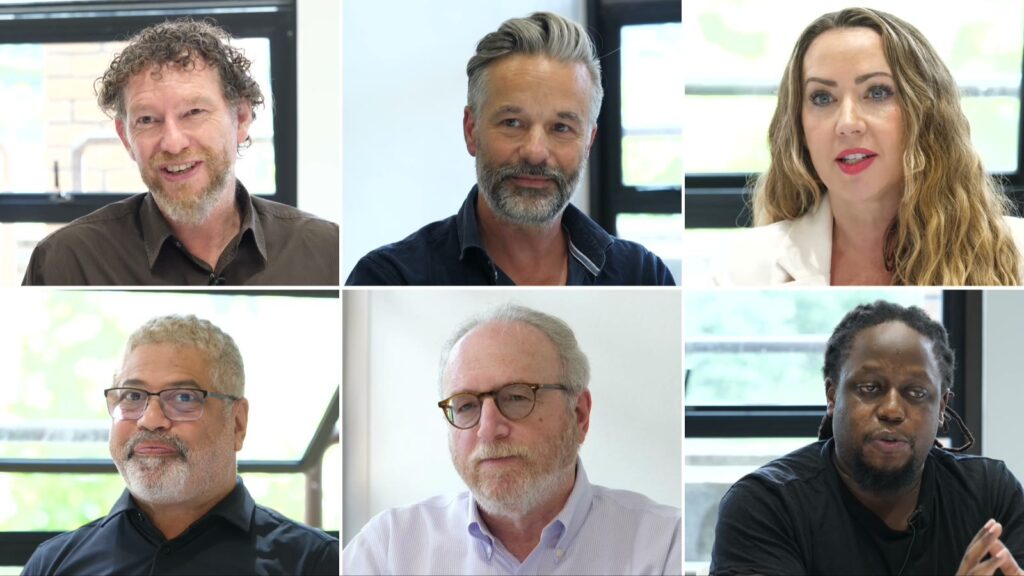
Copyright scholars from South Africa, Canada, Brazil and the United States say the Constitutional Court has cleared the way, and urge lawmakers to pass the Copyright Amendment Bill.
“None of us really create something from scratch and then protect it and commercialise the work. We’re all building on the work that others have done before us.”
Tobias Schonwetter, who directs the IP Unit at the University of Cape Town, has no time for the idea that creators sit on one side of the copyright debate and passive users on the other. Creators rely on copyright exceptions to get started, he says, so “it is just as important for creators to get a solid, robust set of exceptions and limitations into the law as it is for those who are passively using. And who really is passively only using these days?”
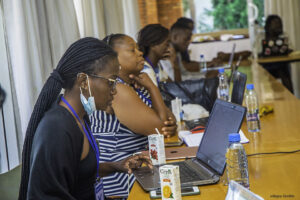
I spoke to him and five other copyright scholars at the Faculty of Law at UCT on Friday 6 November, at the close of a two-day workshop in Cape Town on South Africa’s Copyright Amendment Bill, hosted by the Centre on Knowledge Governance, the UCT IP Unit and Open AIR.
A 1978 law in a digital world
I asked Andrew Rens, a tech-law consultant and researcher based in Cape Town, “Why change a system that some say is working?” Rens answered with a date: “1978. That’s when the current Copyright Act was passed… A lot has happened since 1978.”
The Bill, he explained, seeks “to improve the lives of both groups”: creators get new rights and better compensation for the use of their work, and a set of exceptions, “all of which are carefully crafted”, allows particular uses without payment or permission.
Schonwetter was blunter than academics usually are. Anyone who claims the current regime is working, he said, “does either not know anything about copyright law or does purposefully spread fake news”.
Not long before fire swept from Table Mountain onto the University of Cape Town campus and destroyed invaluable collections, library staff asked Schonwetter whether they could digitise their material to preserve it. The current law gave no clear answer. “If the provisions that are in the Bill now were already law, you would be absolutely allowed to do what you want to do, digitising this material. And soon after, all these materials were lost…”
What the Constitutional Court said
Parliament passed the Bill, but the President referred it to the Constitutional Court, concerned that it might deprive rights holders of property. The Court held that copyright is property for the purposes of section 25 of the Bill of Rights, but it defended the bill quite robustly, deeming the deprivation of property that may result from the legislation fair and not arbitrary. As Rens put it, “with one caveat, one little piece, everything else is constitutional.” Some of the education exceptions were found to be “not only okay, but sort of necessary.”
For Jonathan Band, an intellectual property lawyer based in Washington, DC, the key passages answered the claim that the Bill’s fair use provisions breached South Africa’s international treaty obligations. “The Court in essence said that’s ridiculous,” he said. The Court’s logic was simple: “if it’s okay for the United States, if it’s okay for Taiwan, it’s okay for Canada, it’s okay for the Philippines, why is it not okay for South Africa?”
Nigeria, he noted, passed the same kind of provision with much less controversy, and “the sky has not fallen”.
Lessons from Canada and Brazil
Carys Craig, a law professor at Osgoode Hall Law School in Toronto, has heard the warnings by opponents of the CAB in South Africa that Canada is an example of what not to do. For context, Canadian courts have become more permissive over the past two decades in interpreting the country’s copyright exceptions, in order to ensure access to copyrighted works for education and research.
But Craig says the Canada example is a false alarm for South Africa. Canadian publishers, she said, “certainly have not been decimated, and they’re still in business, and publishing is actually still a very profitable business.” Her worry for South Africa is the delay: “finding just a few paragraphs to be unconstitutional right now has been enough to effectively block the progression of the Bill as a whole. And I think that is really a terrible shame.”
Allan Rocha de Souza, a Brazilian copyright law professor and attorney, explained that in Brazil, where the Constitution ties property to its social function, “the courts actually have interpreted the copyright limitations as being much more expansive and broader than what’s written in the legislation itself”. Although the South African constitution doesn’t talk explicitly about the social role of property, it does allow deprivation of property in the public interest, something emphasised in the Constitutional Court’s support for fair use and copyright exceptions. Hence consideration of property must ensure a balance between owners and society.
Rocha believes the South African Bill does “an absolutely wonderful job on advancing that balance on both sides”. On the current impasse he offered another valuable comparison. In Brazil, he added, if a small section of a bill is found to be unconstitutional the rest of a law would come into effect while the one unconstitutional part was reconsidered.
A message to lawmakers
I closed by asking each panellist for a message to lawmakers. Dr Hanani Hlomani, a technology law and policy specialist whose PhD research was on data, kept it short: “To the policymakers, to the lawmakers: pass the Bill, please. It’s been so long… If it doesn’t work, the courts will invalidate it, we’ll move on.”
Rocha de Souza put the choice starkly: South Africa can be “a shining star that can guide and help many other jurisdictions to move forward towards this balance”, or “just be another example of a failed initiative”. Craig agreed that “now is the time to push this over the line and give the rest of the world something to emulate.”
Rens expects the legislature to “pass all those parts of that are constitutional, which is almost everything according to the Constitutional Court.” Band said the old argument that fair use falls foul of international treaties has now been “buried… once and for all. And I think that that is an enduring legacy that will be enormously beneficial around the world.”
The panellists
Tobias Schonwetter is an Associate Professor at the University of Cape Town, where he directs the IP Unit and the iNtaka Centre for Law & Technology. He specialises in intellectual property and cyberlaw, and has advised the South African government on AI and data policy, and co-leads the Open AIR research project.
Andrew Rens is a scholar and public policy expert on technology regulation, including data, digital sovereignty and AI. He is the founder of Tequity, a tech law consultancy, and has taught law at the University of the Witwatersrand, the University of Cape Town and Duke Law School.
Jonathan Band is an attorney in Washington, DC, specialising in intellectual property policy. He taught at Georgetown University Law Center for over 20 years and is now a senior policy fellow at the Program on Information Justice and Intellectual Property at American University Washington College of Law.
Carys Craig is a Professor of Law at Osgoode Hall Law School, York University, in Toronto. She directs Osgoode’s LLM programme in Intellectual Property Law and its Intellectual Property Law & Technology Program, IP Osgoode.
Allan Rocha de Souza is President and Scientific Director of the Brazilian Copyright Institute (IBDAutoral), and a professor and attorney working on copyright and public policy at universities in Rio de Janeiro.
Hanani Hlomani is a technology law strategist and policy advisor at the University of Cape Town, focused on AI and data governance, intellectual property and digital regulation in Africa.