Limitations and Exceptions

Blog, Broadcast Treaty, WIPO, WIPO-SCCR

Analysis of Agenda Items for WIPO SCCR 47

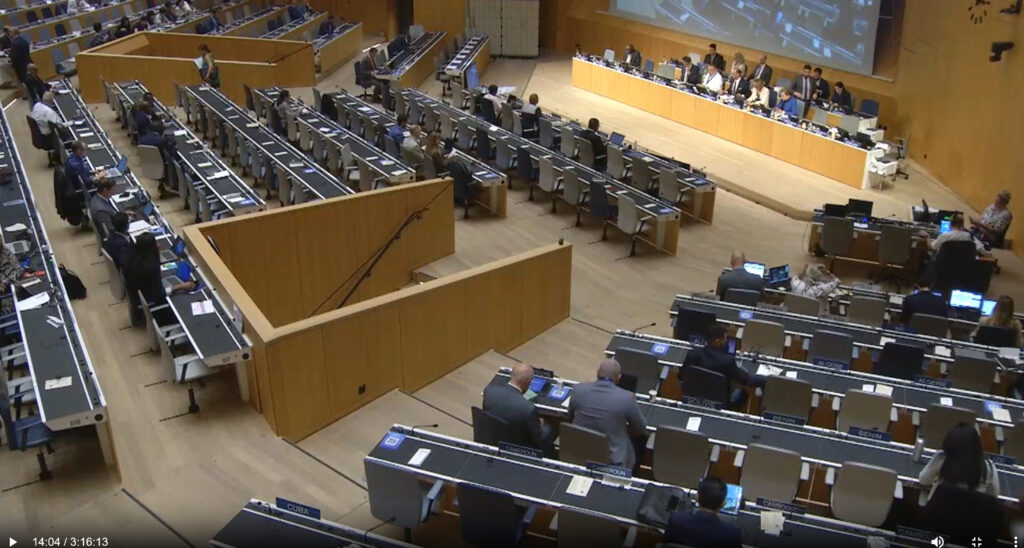
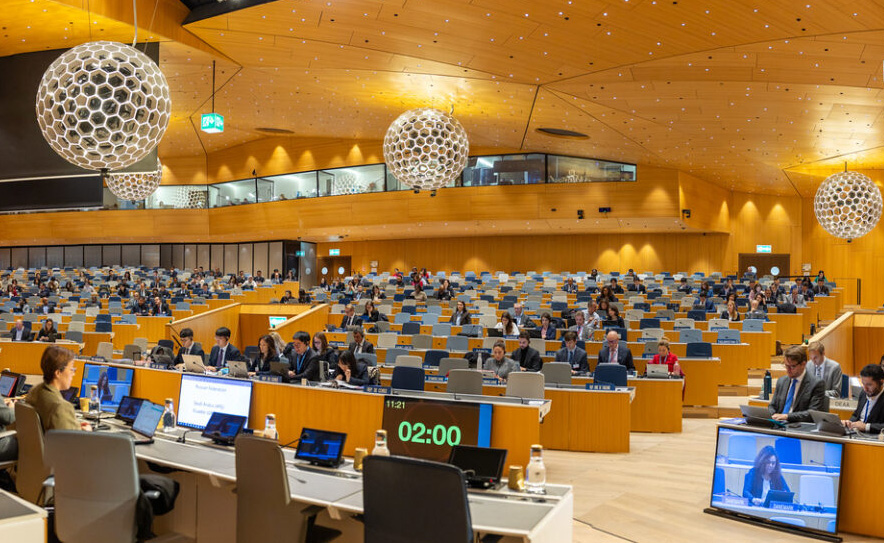
This note, which will be presented at the November 25, CKG Workshop on SCCR 47, provides background information, links to recently published research and analysis, and descriptions of the issues that may be addressed in the 47th meeting of the World Intellectual Property Organization’s Standing Committee on Copyright and Related Rights, December 1-5, 2025. It is published as part of the mission of the Centre on Knowledge Governance to produce information and analysis to promote the public interest in multilateral knowledge governance negotiations. The analysis is presented in the order that the items occur on the SCCR 47 Agenda. 

Blog, Broadcast Treaty, Centre News, WIPO GA, WIPO-SCCR

Centre publishes new analysis on broadcast, limitations and exceptions

This week our research team published a series of new reports. These relate to the work streams in the upcoming Standing Committee on Copyright and Related Rights (SCCR) at the World Intellectual Property Organization (WIPO). Analysis of Agenda Items for WIPO SCCR 47by Sean Flynn This note, which will be presented at the November 25, CKG Workshop on SCCR 47, provides background information, links to recently published research and analysis, and descriptions of the issues that may be addressed in the 47th meeting of the World Intellectual Property Organization’s Standing Committee on Copyright and Related Rights, December 1-5, 2025. It is published as part of the mission of the Centre on Knowledge Governance to produce information and analysis to promote the public interest in multilateral knowledge governance negotiations. The analysis is presented in the order that the items occur on the SCCR 47 Agenda.  Tracing a Century of Broadcasting Rights Debates: 1928–2025Luca Schirru and Sean Flynn This report provides a detailed view of developments concerning broadcasting rights within international copyright law, beginning with the 1928 Rome Revision of the Berne Convention and continuing through the latest SCCR discussions. These SCCR sessions illustrate the ongoing effort to create a new international treaty to update protection for traditional broadcasting and cablecasting against signal piracy, while grappling with complex issues like protection over computer networks and the definition of object and scope. Copyright Limitations and Exceptions in the SCCR: A TimelineLuca Schirru, Ben Cashdan and Sean Flynn The timeline details the progression of discussions within the WIPO SCCR regarding Limitations and Exceptions (L&Es) to copyright. This detailed chronology, spanning from 1996 to 2025, highlights the main proposals, studies, and key milestones concerning L&Es for various sectors, including visually impaired persons, libraries, archives, and educational institutions. It documents the formal inclusion of L&Es on the SCCR agenda, the development of numerous draft treaties and working documents, and the ongoing efforts to reach consensus and implement work programs. Comparison of Proposed Texts on Limitations and Exceptions in SCCR 47Jonathan Band Two new documents have been introduced for the Limitations and Exceptions agenda item: the African Group’s “Proposal on Limitations and Exceptions” (SCCR/47/5) and the Chair’s “Text Proposed” (SCCR/47/8), alongside the earlier U.S. proposal “Limitations for Libraries and Archives” (SCCR/44/5). The tables identify common elements among the three documents and additional areas shared by the Chair and African Group texts, suggesting significant areas of commonality and that further text-based work towards an international legal instrument can start with these documents. Justifications for an Instrument on Copyright Limitations and ExceptionsAditya Gupta and Sean Flynn The authors summarise justifications for an international instrument on limitations and exceptions (L&Es) to copyright, and for expanded limitations and exceptions more generally. The justifications are taken from a review of academic literature. Researchers have posited that such an instrument is necessary to counteract the existing “minimum protection approach” of international treaties, which often prioritizes copyright holders over the public interest, access to knowledge, and competition and development concerns. Is the draft Broadcast Treaty consistent with the General Assembly mandate?Sean Flynn WIPO published a new draft of the proposed Broadcasting Organizations Treaty as SCCR/47/3, which does not differ in its main provisions from previous drafts and raises questions about whether it fulfils the mandate of earlier WIPO General Assemblies. The analysis focuses on substantive changes and controversial provisions, addressing whether there is sufficient “agreement on objectives, specific scope and object of protection”. Four new proposals for SCCR 47Ben Cashdan WIPO has published four new proposals on ways forward for key work streams in the SCCR, scheduled for 1–5 December 2025. The proposals concern exclusive rights for broadcasting organisations, disparities in the remuneration of performers, limitations and exceptions to promote education, research and access to knowledge, and ensuring fair copyright royalties for creators in the digital environment.

Blog, Education, Libraries, WIPO GA, WIPO-SCCR

Copyright Limitations and Exceptions in the SCCR: A Timeline

The timeline presented below details the progression of discussions within the WIPO Standing Committee on Copyright and Related Rights (SCCR) regarding Limitations and Exceptions (L&Es) to copyright. This detailed chronology, spanning from 1996 to 2025, highlights the main proposals, studies, and key milestones concerning L&Es for various sectors, including visually impaired persons, libraries, archives, and educational institutions. It documents the formal inclusion of L&Es on the SCCR agenda, the development of numerous draft treaties and working documents, and the ongoing efforts to reach consensus and implement work programs. This document was prepared based on the documents available on WIPO’s SCCR Meetings webpage as compiled in Schirru, Luca; Vyas, Lokesh; Jawara, Haddija; Ruthes Gonçalves, Lukas; and Flynn, Sean, “Documentary History of the Limitations and Exceptions in the SCCR” (2025). Joint PIJIP/TLS Research Paper Series. 148. See PDF version below. Date Main Developments Short Description 1996 WIPO Internet Treaties Agreed Statement to Article 10 of the WCT affirmed that Contracting Parties may “carry forward and appropriately extend into the digital environment limitations and exceptions” and “devise new exceptions and limitations that are appropriate in the digital network environment.” SCCR/1: 1998 Establishment of the SCCR by the General Assembly (GA) decision.  GA decision creating SCCR included a decision that the committee consider, amongst others, the topics of “Copyright, Related Rights, and Digital Technology” “to consider in particular the impact of digital technology and global information networks on copyright and related rights…”, the protection of audiovisual performances, the protection of databases and the protection of broadcasting organizations (SCCR 1/2). SCCR/8: 2002 L&Es as a matter for future review by the SCCR  The item “implementation of the WCT and WPPT, particularly regarding provisions on technological measures of protection and limitations and exceptions” in the document “Short description of possible subjects for future review by the Standing Committee”, provides that “Concerns have been expressed about the possibility that an uncontrolled use of technological measures together with anti-circumvention legislation and contractual practices will allow rights owners to extend their rights far beyond the bounds of the copyright regime, to the detriment of public interest. At the same time, concern has also been expressed that a narrow definition of exceptions and limitations to the protection of technological measures will unduly restrict reasonable access to and use of protected works” (SCCR/8/2, p.6). SCCR/9: 2003 First SCCR study on limitations and exceptions  First SCCR study of the topic of L&Es in the WIPO treaties: “WIPO Study on Limitations and Exceptions of Copyright and Related Rights in the Digital Environment”, prepared by Mr. Sam Ricketson (SCCR/9/7). L&Es are also addressed in the “survey on implementation provisions of the WCT and WPPT”, prepared by the Secretariat (SCCR/9/6, “The following is a brief summary of the legislative provisions contained in the survey. The summary covers the following issues: […] exceptions and limitations”, p.2) SCCR/12: 2004 Proposal to include L&Es and part of the SCCR agenda Chile’s proposal (SCCR 12/3) to “the inclusion for the Twelfth Session of the Standing Committee on Copyright and Related Rights of the subject of exceptions and limitations to copyright and related rights for the purposes of education, libraries and disabled persons, in the current agenda item referring to “other issues for review”, which would become agenda item 4”. SCCR/13: 2005 Proposal on the Analysis of L&Es “Proposal by Chile on the Analysis of L&Es”, suggesting “three areas of work to be undertaken […] 1. Identification […] of national models and practices concerning exceptions and limitations. 2. Analysis of the exceptions and limitations needed to promote creation and innovation and the dissemination of developments stemming therefrom. 3. Establishment of agreement on exceptions and limitations for purposes of public interest that must be envisaged as a minimum in all national legislations for the benefit of the community;  especially to give access to the most vulnerable or socially prioritized sectors” (SCCR/13/5, p.1).  SCCR/14: 2006 Study on Automated Rights Management Systems and L&Es  A study by Mr. Nic Garnett on “Automated Rights Management Systems and Copyright Limitations and Exceptions” (SCCR/14/5).  2007 WIPO Development Agenda Recommendations WIPO Development Agenda Recommendations, which included recommendations 14 and 17 on IP flexibilities;  Rec. 19 access to knowledge and technology to foster creativity and innovation; Rec. 22 L&Es in norm-setting. SCCR/15 SSCR/S2: 2007 Study on L&Es. Proposal by Mexico on L&Es for Broadcasting A study prepared by Judith Sullivan: “Study on Copyright Limitations and Exceptions for the Visually Impaired” (SCCR/15/7). “Proposal by Mexico relating to article 10 ‘Limitations and Exceptions’”, prepared by the Secretariat (adding a paragraph (3) to article 10 on L&ES, SCCR/S2/4) SCCR/16: 2008 L&Es are formally included on the SCCR’s agenda  Proposal by Brazil, Chile, Nicaragua, and Uruguay (SCCR 16/2, p.2) proposing that “that the Committee implement a plan taking into consideration those three levels of activities outlined in Chile’s 2005 submission, with the objective of achieving a consensus on minimum mandatory exceptions and limitations particularly with regard to educational activities, people with disabilities, libraries and archives, as well as exceptions that foster technological innovation.”  SCCR/18: 2009 Presentation of proposal concerning a Treaty Proposed by WBU “Supplementary information on the WIPO studies on Limitations and Exceptions”, prepared by the Secretariat (SCCR/18/2, at SCCR/17, “it was agreed that ‘in order to update and complement the studies, governments are invited to submit to the Secretariat any supplementary information regarding their national law before February 1, 2009’”, p.1). “Draft questionnaire on Limitations and Exceptions” (SCCR/18/3, “the WIPO Secretariat was requested to prepare a draft questionnaire regarding exceptions and limitations, with particular emphasis on the issues regarding education, libraries and disabled persons”, p.2). “Stakeholders’ Platform: Interim Report, prepared by the Secretariat” (SCCR/18/4, “WIPO Secretariat invited various major stakeholders representing copyright rightholders and VIP interests to take part in two meetings with the aim of exploring their concrete needs, concerns, and suggested approaches in order to achieve the goal of facilitating access to works in alternative formats for people with disabilities”, p.2). “Proposal by Brazil, Ecuador and Paraguay, relating to Limitations and Exceptions: Treaty proposed by the World Blind Union (WBU)”, prepared by the Secretariat (SCCR/18/5, presented “as

Blog, Centre News, WIPO GA, WIPO-SCCR

Comparison of Proposed Texts on Limitations and Exceptions in SCCR 47 

Two documents have been introduced in connection to the Limitations and Exceptions agenda item for SCCR 47 Previously we already had a third document Below are two tables. The first identifies common elements among the African Group Proposal, the Chair’s Text, and the US proposal. The second table identifies common elements addressed by the African Group Proposal and the Chair’s text, but not included in the U.S. document. (It should be noted that the African Group’s Proposal also includes provisions not in the U.S. document or the Chair’s text.) As the attached tables demonstrate, there are significant areas of commonality among all three documents; and even more between the Chair’s text and the African Group Proposal. This suggests that further text-based work in the Committee towards an international legal instrument or instruments concerning exceptions and limitations can start with these documents.  PDF version below Table 1: Common Elements in United States Objectives and Principles for Exceptions and Limitations for Libraries and Archives, African Group Proposal, and Chair’s Proposed Text U.S. Objectives and Principles African Group Proposal Chair’s Text National Exceptions Encourage Member States to adopt well-focused exceptions and limitations in their national laws that are consistent with their international obligations, including the three-step test, and facilitate the public service role of libraries and archives, and maintain the balance between the rights of authors, artists and publishers, and the public interest, particularly in research, education, preservation, and access to information. (p. 2) Encourage Member States, when adopting or revising exceptions and limitations for libraries and archives, to consider adding museums and other non-profit institutions that function as a library, archives, or museum as eligible entities. (p. 2) Contracting Parties shall take all appropriate measures to respect, protect and fulfill the right to receive education and conduct research through appropriate exceptions and limitations in their national laws, consistent with their international obligations, maintaining the balance between the rights of authors and the larger public interest. (p. 15) Member States shall provide an appropriate balance in their copyright and related rights system through limitations and exceptions for the public interest, including for education; research; freedom of expression uses such as for quotation, comment, criticism, review, caricature, parody and pastiche; access to information and news reporting; preservation of cultural heritage; and to facilitate access for persons with disabilities. (p. 15) Contracting Parties shall update, carry forward and appropriately extend into the digital environment limitations and exceptions in their national laws which have been considered acceptable under the Berne Convention, especially under article 10(1) and 10(2), and devise new exceptions and limitations that are appropriate in the digital environment to protect educational and research activities. (p. 15) Limitations and exceptions are an integral part of a balanced copyright system and should contribute to quality preservation, access, education and research, as well as to expand opportunities for all persons with disabilities to fully participate in the cultural life of the community, to enjoy the arts, and to benefit from scientific progress. (p. 6) Promote cooperation among institutions at national, regional and international levels. (p. 6) Research and Education Encourage Member States to enable libraries and archives to carry out their public service role of advancing research and knowledge by adopting exceptions and limitations for purposes of research and scholarship, and to consider adding museums and other non-profit institutions that function as a library, archives, or museum as eligible entities. (p. 3) It shall be permissible to use a work or other subject matter for educational or research purposes to the extent justified by the purpose and provided such utilization is compatible with fair practice. (p. 19) Facilitate access to works for cultural, educational and research purposes, including through digital and online tools, and across borders. (p. 5) Enable cultural heritage institutions as well as educational and research institutions to provide copies and enable access to works to researchers, teachers, students and the public, under appropriate conditions. (p. 5) Preservation Encourage Member States to enable libraries and archives to carry out their public service role of preserving works by adopting exceptions and limitations for their preservation activities, and to consider adding museums and other non-profit institutions that function as a library, archives, or museum as eligible entities. (p. 3) Exceptions and limitations can and should enable libraries, archives, and museums to carry out their public service role of preserving works that comprise the cumulative knowledge, heritage, and culture of the world’s nations and peoples. (p. 3)[E]xceptions and limitations can and should enable libraries, archives, and museums to make copies of published and unpublished works, including highly ephemeral materials, for purposes of preservation and replacement, under certain appropriate circumstances. Those circumstances may include preservation and replacement in both analog and digital formats, or migration of content from obsolete storage formats to more stable formats on an ongoing basis, as reasonably necessary and as incidental to technology for a specific, limited preservation purpose. (p. 3) Contracting Parties shall provide for a limitation or exception to the right ofreproduction in order to allow cultural heritage institutions to make copies of any works or other subject matter that are permanently in their collections, in any format or medium, for the purposes of preservation of such works or other subject matter and to the extent necessary for such preservation. (p. 29) For purposes of this Instrument, “cultural heritage institution” means a publicly accessible library or museum, an archive, or a film or audio heritage institution. (p. 31) Support the preservation of cultural heritage by libraries, archives and museums and other not-for-profit entities performing equivalent functions. (p. 4) Enable cultural heritage institutions to make copies of works, whether published or unpublished, for the purposes of preservation or replacement, including highly ephemeral materials. Such copies may be made in analog or digital formats, and during technological migration, provided they are necessary and incidental to a specific preservation purpose. (p. 4) Enable the preservation of and remote digital access to works, including cross-border, under secure conditions and promote the respect of adequate and effective

Blog, WIPO-SCCR

Justifications for an Instrument on Copyright Limitations and Exceptions

The mandate for working on an international instrument on limitations and exceptions (L&Es) at the World Intellectual property Organization (WIPO) is rooted in the principle of maintaining a “balance between the rights of authors and the larger public interest, particularly education, research and access to information,” as articulated in the Preamble to the 1996 WIPO Copyright Treaty (WCT). The issue has been on the WIPO agenda since 2004, driven initially by proposals from Chile and several other countries in Latin America, and subsequently supported strongly by the African Group. The formal mandate for continued work on L&Es—specifically for libraries and archives, education and research institutions, and ‘other disabilities’—stems from a 2012 mandate from the General Assembly (WO/GA/41/14), which called for continuing discussions “to work towards an appropriate international legal instrument or instruments (whether model law, joint recommendation, treaty and/or other forms)”. This process was accelerated when the African Group’s proposal for a Work Program on L&Es was adopted in 2023 (SCCR/43/8 REV), reaffirming the goal to move towards “the adoption of an appropriate international legal instrument or instruments on exceptions and limitations”, with subsequent drafts, such as SCCR/44/6 (November 2023), setting out detailed methodologies and processes intended to facilitate text-based negotiations on the subject. A draft instrument on limitations and exceptions was submitted by the African Group in October 2025 (SCCR/47/5) Below we summarise justifications for an international instrument on limitations and exceptions (L&Es) to copyright, and for expanded limitations and exceptions more generally. The justifications are taken from a review of academic literature. Researchers have posited that such an instrument is necessary to counteract the existing “minimum protection approach” of international treaties, which often prioritizes copyright holders over the public interest, access to knowledge, and competition and development concerns. To download or print this analysis, see the pdf version below. Benefits of International Harmonization Counterbalance to minimum protection approach; Promoting L&E reform. International copyright treaties have primarily followed a “minimum protection approach” with the result many (especially developing) countries reform laws to meet the evolving international landscape on copyright protection without updating limitations and exceptions. Following the 1996 Internet Treaties, for example, most countries have protections that cover digital works, but often lack the updates necessary to apply exceptions to digital uses. An instrument on L&E can help guide copyright reform to better recognize “the need to maintain a balance between the rights of authors and the larger public interest, particularly education, research and access to information, as reflected in the Berne Convention.” (WCT Preamble). A key example is the Marrakesh treaty, which has promoted extensive reform in exceptions for people with disabilities.  (Geiger and Jütte 2024; Hilty et al. 2021; Longan 2023; Majekolagbe 2025) Defending positive reform An instrument on L&Es would help defend reform efforts against claims that broadening L&Es would violate the international three step test.   (Asay 2021; Okediji and Hugenholtz 2008) Eliminating anticompetitive effects Harmonizing L&Es across international borders can help combat anticompetitive behavior. For example, firms have used inadequate copyright exceptions to inhibit generic pharmaceutical labeling, reverse engineering to create competing products, etc.  (Okediji 2018; Okediji and Hugenholtz 2008) Enabling Cross-Border Use Harmonizing L&Es can help promote cross border uses of materials relying on exceptions, such as a research corpus, educational texts, contents of libraries and archives, etc.   (Flynn et al. 2020; Trimble 2025) Benefits of More Open L&Es for Social and Economic Development Promoting ongoing authorship L&Es promote free expression and authorship that builds upon existing works for subsequent creations such as commentaries, biographies, critical reviews, satire and parody, and other transformations. (Hilty et al. 2021; Samuelson 2018; Yoo 2021) Promoting research (empirical) More open exceptions for research uses are associated with higher levels of academic production and publication, including of projects using computational research that requires making digital copies of whole works (aka text and data mining).  (Flynn and Palmedo 2019; Handke, Guibault, and Vallbé 2021; Palmedo 2019)  Supporting functions of public institutions L&Es enable institutions like libraries and archives to fulfill essential public functions, such as digitization, preservation, making replacement copies, and providing document delivery for research. (Lindsay and Greenleaf 2018; Majekolagbe 2025; Samuelson 2018) Promoting the Dissemination of Knowledge L&Es such as education and research exceptions enable wider dissemination of information through digital platforms, such as for online learning, sharing research files, etc., that can contribute to development and economic and social advancement. (Lindsay and Greenleaf 2018; Okediji 2018; Okediji and Hugenholtz 2008) Promoting Innovation and Competition L&Es foster commerce, competition, and innovation by limiting exclusive rights that might otherwise impede the development of derivative products and services such as interoperable software, recording and storage devices (from the VCR to the cloud), and search and indexing of webpages.  (von Lohmann 2008; Samuelson 2018) Promoting Innovation (Empirical) More open user rights environments are associated with higher firm revenues in information industries, including software and computer systems design, and in complementary industries (e.g., ISPs, web hosts) by legally allowing consumers to copy and share content. This in turn promotes investments in new technological innovation (Flynn and Palmedo 2019; Palmedo 2021) Bibliography  The pdf version follows below:

Blog, Centre News, WIPO-SCCR

Four new proposals for SCCR 47

The World Intellectual property Organization (WIPO) has published four new proposals on ways forward for some of its key work streams in the Standing Committee on Copyright and related Rights (SCCR), to take place from 1st to 5th December 2025. The proposals concern:(i) Exclusive rights for Broadcasting Organisations to protect their content(ii) Addressing Disparities in the Remuneration of Performers(iii) Limitations and Exceptions to Copyright to promote Education, Research and Access to Knowledge, and(iv) Ensuring Fair Copyright Royalties for Creators in the digital environment across the world. Here are the proposals in more details, with links to the source documents and to our analysis. Document Number Title Description Submitted by SCCR/47/3 A new draft of the WIPO Broadcasting Organizations Treaty. This aims to reflect the views of member states expressed at the previous SCCR and also at the WIPO General Assembly in July 2025. It addresses the issue of enhanced and updated protection for broadcasting organizations concerning their programme-carrying signals, which has been on the WIPO agenda since 1998. But does it give broadcasters and streamers too many exclusive rights? See our analysis of the latest draft. SCCR Chair, Vice-Chair, and facilitators SCCR/47/4 A proposal for a Study on the Rights of Audiovisual Performers and their Payment Mechanisms for the Exploitation of their Performances. This requests WIPO to commission a study on the situation of audiovisual performers, examining the legal and economic frameworks governing performers’ rights worldwide, and how these influence payments received for the use of audiovisual performances, especially on digital and on-demand platforms. It aims to assess the impact of the Beijing Treaty on Audiovisual Performances and identify best practices in ensuring performers receive fair payment. African Group SCCR/47/5 A draft Instrument on Limitations and Exceptions for Libraries, Archives, Museums, Education and Research Institutions and People with Disabilities. The draft instrument recognizes the need to maintain a balance between the rights of authors and the larger public interest, such as education, research, and access to information. It specifies permitted uses for education and research, cultural heritage, and for people with any disability that requires accessible formats.See our summary of justifications for L&Es. African Group SCCR/47/6 A proposal for a Legally Binding Instrument on the Governance of Copyright Royalty in Digital Environment: Promoting a Fair Chance in a Globalized World. This working paper proposes a legally binding international instrument to govern copyright royalties in the digital environment. It addresses the disparity between developed and developing countries regarding royalty collection and distribution mechanisms. It identifies four key challenges: the governance of royalty collection and distribution, mechanisms for royalty allocation, the centralization of a global copyright database, and disparities in copyright royalty valuation.Watch our contributions to the remuneration debate Indonesia

Blog, Trade Agreements & IP

Balanced Copyright Protection in the UK-India CETA

            The full text of the Intellectual Property Chapter of the United Kingdom-India Comprehensive Economic and Trade Agreement, signed on July 24, 2025, is now available for review. Overall, it is much more favorable to balanced copyright protection and user rights than previously released drafts and summaries.             The provision for copyright exceptions is the same limited language that first appeared in the UK’s proposed text for the IP chapter leaked in 2022. Article 13.68 Limitations and Exceptions 1. A Party may provide limitations or exceptions in its law to the rights provided for in this Section, but shall confine those limitations or exceptions to certain special cases that do not conflict with a normal exploitation of covered subject matter, and do not unreasonably prejudice the legitimate interests of the right holder. 2. This Article is without prejudice to the scope of applicability of the limitations and exceptions to any rights permitted by the TRIPS Agreement and WIPO administered treaties to which a Party is party.             However, the Chapter contains other important language that promotes balance. Thus, Article 13.2(a), setting forth the Objectives of the Chapter, states: the objectives of this Chapter are … that the protection and enforcement of intellectual property rights should contribute to the promotion of technological innovation and to the transfer and dissemination of technology, to the mutual advantage of producers and users of technological knowledge and in a manner conducive to social and economic welfare, and to a balance of rights and obligations….  (Emphasis supplied.)             The Chapter then sets forth Principles the Parties may follow in formulating amending their laws. First, the Article 13.3(1) provides that a Party may adopt measures necessary “to promote the public interest in sectors of vital importance to its socio-economic and technological development….” Presumably these sectors would include cultural heritage, research, and education.             Second, Article 13.3(2) incorporates language similar to TRIPs Article 40 that appropriate measures may be needed to prevent the abuse of intellectual property rights by right holders or the resort to practices which unreasonably restrain trade or adversely affect the international transfer of technology.             Next, Article 13.4 recites a list of Understandings in respect of the Chapter: [T]he Parties recognise the need to: (a) promote innovation and creativity; (b) facilitate the diffusion of information, knowledge, technology, content, culture and the arts; (c) foster competition and open and efficient markets; (d) maintain an appropriate balance between the rights of intellectual property right holders and the legitimate interests of users and the public interest; (e) establish and maintain transparent intellectual property systems; and (f) promote and maintain adequate and effective protection and enforcement of intellectual property rights to provide confidence to right holders and users, through their respective intellectual property systems, while respecting the principles of transparency and due process, and taking into account the interests of relevant stakeholders, including right holders, service providers, users, and the general public. (Emphasis supplied.) The parties reached these Understandings “having regard to the underlying public policy objectives of their national systems, while recognizing the different levels of economic development and capacity and differences in national legal systems….”             As noted above, the Agreement does not contain detailed obligations concerning copyright exceptions. Nonetheless, Article 13.71 requiring each Party to provide adequate legal protection against unauthorized circumvention of effective technological measures does permit the Parties to take appropriate measures to ensure that beneficiaries may enjoy exceptions and limitations provided for them. Similarly, Article 13.103 requires each Party to maintain a system to limit the liability of Online Service Providers for infringements of copyright committed by users of their services.             Moreover, the language concerning Objectives, Principles, and Understandings provide both the UK and India with sufficient flexibility to adopt robust exceptions that effectively balance the interests of all stakeholders.

Blog, WIPO GA, WIPO-SCCR

WIPO General Assembly Meeting on SCCR Expresses Consensus for Progress on Broadcast and L&E Instruments

Sean Flynn, Luca Schirru, Talia Deady The World Intellectual Property Organization (WIPO) held its General Assembly (GA) this week, including a review of the progress and recommendations of the Standing Committee on Copyright and Related Rights (SCCR). The GA affirmed its mandates to the Committee to continue working on instruments on the protection of broadcasting organizations and limitations and exceptions (L&Es) for libraries, archives, museums, education and research institutions, and for people with disabilities other than visual impairments. Analysis of the statements of regional groups and delegations shows that there is a growing consensus for conclusion of the Broadcasting Treaty under a narrowed form and for pairing it with progress toward at least an instrument on L&Es. This article summarises and analyses the statements of delegations on the SCCR’s work. A companion article provides fuller excerpts of the statements quoted here.  Context   The GA is the apex decision-making body of WIPO. Among other work, at each meeting, the Assembly reviews and affirms or alters its mandates to Standing Committees on the ongoing work. The SCCR is operating under two sets of mandates from the General Assembly.  Decisions from 2006 and 2007 instruct the Committee to seek “agreement on objectives, specific scope and object of protection” on a basic text of a treaty for the protection of broadcast organizations (WO/GA/34/16, 2007) “confined to the protection of broadcasting and cablecasting organizations in the traditional sense” and “based on a signal-based approach” (WO/GA/33/10, 2006).  A decision from 2012 instructs the Committee to work toward an “appropriate international legal instrument or instruments (whether model law, joint recommendation, treaty and/or other forms)” on uses by libraries, archives, museums, educational and research institutions, and persons with other disabilities (WO/GA/41/14). In SCCR 43, the Committee adopted a Work Program on Limitations and Exceptions (SCCR/43/8), including a process to draft “objectives, principles, and options” for instruments. SCCR agendas regularly include work on a number of other agenda items, most of which have been approved in some form by GAs for SCCR discussions, but only Broadcasting and L&Es are subject to GA mandates for the drafting of international instruments.  Broadcasting Organizations Consensus for Concluding a Treaty There continues to be a consensus within the SCCR in favor of concluding the Broadcast Treaty, with many calling for more speed in reaching a conclusion. The groups and countries that spoke in favor of concluding a Broadcasting Treaty included the Asia Pacific Group (APG), Group B, Central European and Baltic States (CEBS), Group of Latin American and Caribbean Countries (GRULAC), African Group (AG), China, European Union (EU), Colombia, Iran, Russian Federation, Mexico, United States, Japan, India, Malawi, Kenya, Saudi Arabia, Algeria, Cameroon, Botswana, France, Kazakhstan, South Africa, Algeria, and Samoa.  Several statements called for speeding progress toward the Treaty’s conclusion. France called for “the Committee to speed up in a constructive manner the work on the draft Treaty.” The Russian Federation called for the Committee “to step up work on the draft WIPO Treaty.” The African Group, Cameroon, Botswana, Kenya, and South Africa expressed concern on the slow progress of work of the SCCR on both broadcasting and L&Es.  Several speakers explicitly endorsed a Diplomatic Conference in the near term. These included both CEBS and the EU, which each mentioned their long-term support for convening of a Diplomatic Conference. China expressed a desire to reach “an agreement on substantive issues … to lay a foundation for the convening of a Diplomatic Conference.” Saudi Arabia specifically supported “holding two sessions in 2025 regarding protecting broadcasting organizations because this will bridge gaps among Member States and will pave the way in order to hold a Diplomatic Conference on this matter.” The Asia Pacific Group, however, urged “continued constructive engagement … without prejudging whether the Committee is in a position to recommend the convening of a Diplomatic Conference.”  Debate Over the Internet Provisions  The main sticking point on the Treaty has long involved the provisions that extend to Internet streaming.  The countries of the EU and CEBS, which support the Internet provisions, have supported convening a diplomatic conference on the current draft text. The EU expressed its support for a “worthwhile” Treaty “which responds to the technological realities of the 21st century.” Similarly, the CEBS group expressed support for a Treaty that “reflects the technological realities of the 21st century,” is “future-oriented,” “accommodates the challenges posed by the digital environment,” and “provides equal protection for transmissions over computer networks.” Many of the groups and countries signaled their opposition to the Internet provisions by calling for closer adherence to the 2006 and 2007 GA decisions.  The US was most explicit in its objections. It stated that the current draft text “exceeds the General Assembly mandate with its inclusion of articles that provide a new right of fixation and that protect signals used in making available to the public stored programs.” It called instead for the Treaty to be “limited to providing traditional broadcasting organizations with a single exclusive right to authorize simultaneous retransmissions to the public of their linear broadcast signals.” Referring to the terms of the 2007 GA’s prerequisites for the recommendation of a diplomatic conference, the US argued that there continue to be “significant questions and concerns … regarding the proposed instrument’s objectives, rights to be granted, and scope of protection.” Accordingly, it called for “much more work” on “these fundamental issues” to make the draft text “acceptable to all Member States.” Japan echoed the statement of the US in observing “different views among Member States on the fundamental issues” and opined that “a flexible approach is needed allowing each Member State to join the treaty while taking into account international and regional circumstances.”  The Asia Pacific Group, represented by Pakistan, recognized “the need to narrow gaps and build consensus in line with the mandate of the Committee.” Iran called for “moving the Committee closer to fulfilling the 2007 General Assembly mandate … limited to the traditional broadcasting organizations and based on a signal-based approach.” Mexico similarly called for an approach “focusing on

Blog, WIPO GA

WIPO GA Opening Statements Signal Debates Ahead

The World Intellectual Property Organization’s General Assembly finished the opening statements of Member States and is now moving toward its substantive work. This note includes quotes of some of the opening statements on key issues facing the General Assembly and in WIPO’s work head.  Support SCCR work on Broadcast and L&E Instruments With the conclusion of two treaties this year  – on disclosure of genetic resources in patents and, on design law – the focus on WIPO’s norm setting is shifting to the Standing Committee on Copyright and Related Rights (SCCR). A key issue in the past several General Assemblies has involved whether to recommend that the current draft treaty be the subject of a diplomatic conference, and if so, whether it will be linked with progress toward an instrument in the lng-stalled limitations and exceptions agenda. The work on Broadcasting is guided by decisions of the GA in 2006 and 2007, calling for “agreement on objectives, specific scope and object of protection” (WO/GA/34/16) on a draft text “confined to the protection of broadcasting and cablecasting organizations in the traditional sense” and “based on a signal-based approach” (WO/GA/33/10, para 107, 2006). The work on limitations and exceptions is guided by the 2012 decision of the GA to work toward an “appropriate international legal instrument or instruments (whether model law, joint recommendation, treaty and/or other forms)” on uses by libraries, archives, museums, educational and research institutions, and persons with other disabilities (WO/GA/41/14).    Broadcast Denmark, on behalf of the EU  “WIPO can count on the continued and active engagement of the EU and its Member States in strengthening the normative agenda of WIPO’s work. We are committed and support moving towards the prompt conclusion of a broadcasting organizations treaty.” Estonia, on behalf of CEBS “We would express our strong support for the timely conclusion of the broadcasting organizations treaty.” India “India remains hopeful for meaningful progress on all pending issues including finalization of a balance[d] Treaty on the protection of broadcasting organizations.” Trinidad and Tobago  “We remain committed to working as well towards a broadcasting treaty.” Hungary “We stand ready to support work towards the adoption of the broadcasting treaty.” Australia “Australia continues to support working towards the Treaty on the Protection of broadcasting organizations”  France “We are attached to the key role of the organization in supporting creative economies and the work of the Standing Committees, particularly when it comes to developing a broadcasting treaty.” Philippines “The Philippines encourages discussions on the proposed Treaty on the Protection of Broadcasting Organizations and strongly supports SCCRs in its endeavors. To recall, the preparatory process was initiated in 1997 in a symposium in Manila. Meanwhile, advances in technologies have generated more piracy, illegal signals and irresponsible use of artificial intelligence. IP protection needs to outpace these advances.” Italy  “The WIPO normative agenda includes the negotiation for a treaty dedicated to broadcasting organizations. Italy supports the adoption of an effective anti-piracy instrument aimed at enhancing the international protection of broadcasting organizations IP content, and thereby contributing to strengthening the principle of territorial exclusivity, which plays a crucial role in securing financing for IP content’s development and distribution.” Finland “In the SCCR Committee, we consider that all necessary preparatory work has been done to finalize a broadcasting treaty.” L&E African Group  The African Group supports advancing discussions on limitations & exceptions for libraries and archives and imitation & exceptions for educational and research institutions for persons with disabilities. Limitations and exceptions are of crucial importance to the African Group. And we acknowledge the support of education and research and for fostering innovation, competition, and economic development, while also supporting the achievement of the Sustainable Development Goals, including the SDG4 and SDG10.” Arab Group (represented by Algeria)  “We are very much interested in the conclusion of a legally binding text as regards exceptions and limitations so that we can maintain a balance between copyright and society in general.” Cameroon “We call for text-based negotiation for the adoption of an international instrument on limitation and exceptions in copyright regarding research, education, museum, archives and people with other disabilities. disabilities as mandated. Delivering on this long overdue subject should be our immediate priority so as to give room for commencement of in-depth discussion on other contemporary topics on IP.” Nigeria “Nigeria supports swift progress in SCCR on balance, limitation and exceptions for education and research.”  Algeria “We support having a balanced approach when it comes to copyrights with priorities to exceptions and limitations mentioned in a legally binding instrument.” Cote d’Ivoire  “My country highlights the importance of guaranteeing equitable access to knowledge and to technologies for developing countries and we encourage WIPO to promote inclusive mechanisms that enable broadened access to works protected by copyright and to essential technologies.” Debate shapes over SDGs and voting on the WIPO Budget In the last meeting of the Program and Budget Committee, the United States opposed references to the SDGs in the Budget, stating  “The United States does not support any proposal unrelated to WIPO’s mandate and intended to advance the implementation of the SDGs. The 2030 Agenda for Sustainable Development and the Sustainable Development Goals advanced a program of soft global governance that is inconsistent with U.S. sovereignty and adverse to the rights and interests of Americans.”  In what might be seen as an explicit rejection of the US position, a number of countries specifically embraced WIPO’s inclusion of the UN Sustainable Development Goals as guiding posts of its work. Support for SDGs Namibia (for African Group) “We acknowledge WIPO’s efforts toward achieving the Sustainable Development Goals and encourage the reflection of these efforts across all the activities of the organization, including the program and budget for 2026.” Pakistan “We commend WIPO’s sustained focus on the Development Agenda and its alignment with the 2030 Agenda. Project-based demand-driven support are practical tools for enhancing IP awareness and strengthening ecosystems that drive innovation and economic growth.”  Jamaica “Intellectual Property both generates and drives economic opportunities that are intrinsically linked to Jamaica’s national

Scroll to Top