
TDM

Artificial Intelligence, Blog, Centre News

Centre Announces Short Course on Intellectual Property and Artificial Intelligence

The Centre on Knowledge Governance is please to announce a new short course on AI and IP to take place in Geneva from September 7-8, 2026. COURSE DESCRIPTION  This intensive two-day course provides a comprehensive, comparative analysis of the evolving legal and policy landscape at the intersection of Intellectual Property (IP) and Artificial Intelligence (AI). Participants will explore pressing legal challenges, including the copyright protection for AI training data, the patentability and copyright of AI-generated outputs, and the balance between proprietary interests and the public interest in research (Text and Data Mining and computational research) and the development of “Public AI.”  The course will feature in-depth comparative analysis of legal frameworks and policy proposals across the European Union (EU), United States (USA), India, Brazil, Singapore, Japan, and in international forums, such as the World Intellectual Property Organization, World Trade Organization and other agencies.  The learning experience will culminate in a practical role-play exercise in which students will draft a model international legal instrument aimed at ensuring fair remuneration for creators while safeguarding the rights of researchers and public interest organizations developing AI infrastructure. This legal instrument will focus on  a range of factors to be used in distinguishing research and public interest uses of AI from commercial competitive uses. LEARNING OBJECTIVES Upon completion of this course, participants will be able to: WHO IS THIS PROGRAMME FOR? This programme is particularly relevant for mid- to senior level practitioners from various organisations working at the intersection of intellectual property and AI policy or scholarship, such as: LECTURERS The Course will be directed by Sean Flynn and Ben Cashdan of the Centre on Knowledge Governance, Geneva Graduate Institute. Guest lecturers will participate in person or online to bring comparative expertise from jurisdictions such as India, Brazil and China and the African continent, in addition to the US and EU. SCHOLARSHIPS 10 scholarships will be available for highly motivated government delegates from developing countries or representatives of public interest organizations who participate in multilateral policy processes on copyright, AI and the rights of researchers. EXPRESSION OF INTEREST (INITIAL APPLICATION) If you are interested in being considered as a student on the course, and/or if you would like to apply for one of our scholarships, please kindly complete the following form:

Blog, Centre News

Italy updates its copyright law to address AI

On September 18, 2025, the Italian Senate definitively approved the country’s first comprehensive framework law on artificial intelligence (AI). The new law also reflects Italy’s commitment to aligning its domestic legal system with the EU Artificial Intelligence Act (Regulation (EU) 2024/1689), ensuring coherence between national rules and the emerging European regulatory framework. Law no. 132 of September 23, 2025 (Provisions and delegations to the Government regarding artificial intelligence), has been published in the Official Gazette no. 223 of September 25, 2025, and it will enter into force on October 10, 2025. It consists of 6 chapters and 28 articles, not only establishing ethical and regulatory frameworks for AI across various sectors but also bringing several changes to the field of copyright law. In particular, Chapter IV, titled “Provisions for the Protection of Users and Copyright,” modifies Article 1 of Law No. 633/1941 (Italy’s Copyright Act) and introduces a new Article 70-septies, adapting the legal framework to the evolving challenges posed by AI-generated content and data mining. Emphasising human authorship The first major change introduced by Article 25,  a), of the new AI law is a revision to Article 1 of the Italian Copyright Act. The phrase “human” has been explicitly added, clarifying that only works of human creativity are eligible for protection under Italian copyright law. The amended text now reads: This law protects works of human creativity in the fields of literature, music, figurative arts, architecture, theatre, and cinematography, whatever the mode or form of expression, even when created with the assistance of artificial intelligence tools, provided they are the result of the author’s intellectual effort. This addition is not merely semantic. It codifies a crucial principle: while AI can be a tool in the creative process, copyright protection remains reserved for human-generated intellectual effort. This positions Italian law in alignment with the broader international trend, seen in the EU, U.S., and UK, of rejecting full legal authorship rights for non-human agents such as AI systems. In practice, this means that works solely generated by AI without significant human input will likely fall outside the scope of copyright protection. Regulating text and data mining for AI The second key innovation is provided by Article 25,  b), of the new AI law, which introduces Article 70-septies in the Italian Copyright Act, providing clarity on the legality of text and data mining (TDM) activities used in the training of AI models. The provision states: 1. Without prejudice to the provisions of the Berne Convention for the Protection of Literary and Artistic Works, reproductions and extractions from works or other materials available online or in databases to which one has lawful access, for the purposes of text and data mining by AI systems, including generative AI, are permitted in accordance with Articles 70-ter and 70-quater. This provision essentially reaffirms that text and data mining (TDM) is permitted under certain conditions, namely where access to the source materials is lawful and the activity complies with the existing TDM exceptions under EU copyright law, as already implemented in Articles 70-ter and 70-quater of the Italian Copyright Act. It mirrors the spirit of the EU Directive 2019/790 on Copyright in the Digital Single Market, which created specific exceptions for TDM, notably distinguishing between scientific and general uses. By formally reiterating the TDM exceptions for the use of AI, Italy seeks to balance the promotion of AI development with the protection of content creators’ rights. However, challenges remain regarding the definition of ‘lawful access’ and the ability of rightsholders to effectively exercise their opt-out rights in relation to TDM activities. Conclusion The recent amendments to Italy’s Copyright Act mark an important step toward harmonising traditional legal frameworks with the realities of emerging technologies, such as AI. By emphasising human authorship and providing clearer legal pathways for text and data mining, the new provisions aim to foster both innovation and respect for intellectual property. The law shall enter into force on the fifteenth day following its publication in the Official Gazette of the Italian Republic. This article was reposted from the original at https://communia-association.org/2025/10/01/italy-updates-its-copyright-law-to-address-ai/
Blog

Ethical Data Scraping for Research – Expert Workshop held in Amsterdam

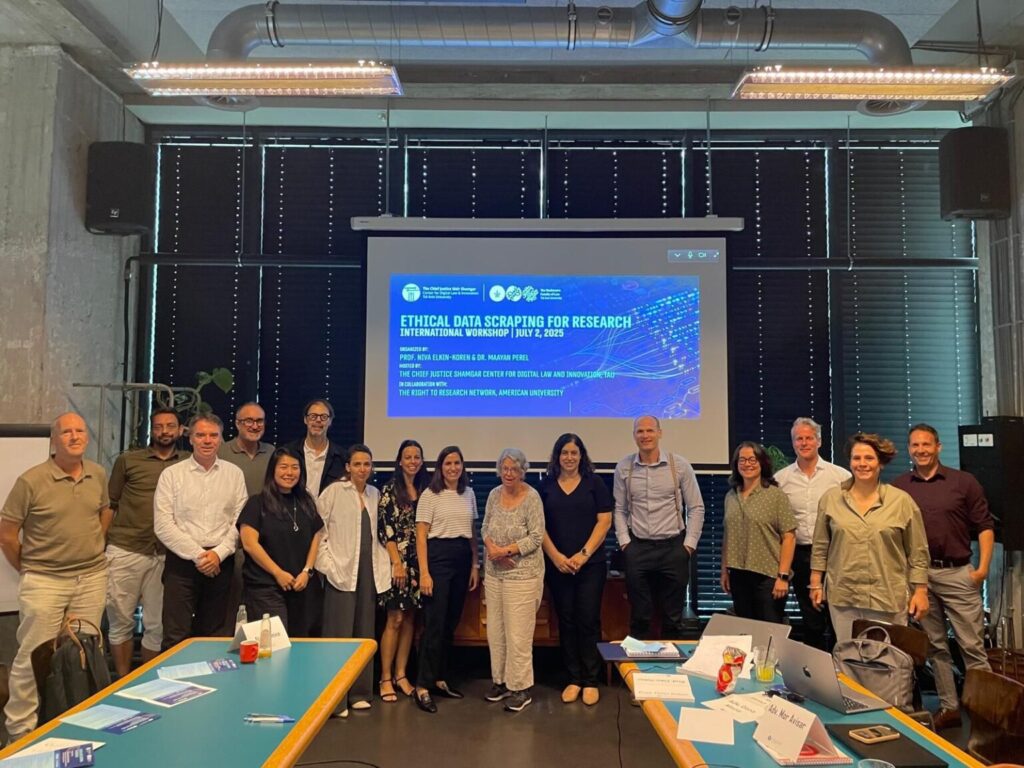
A unique, expert-led workshop on ethical data scraping was organized by Professor Niva Elkin-Koren and Dr. Maayan Perel and hosted by the Shamgar Center of Digital Law and Innovation, Tel Aviv University. The workshop was made possible by the generous support of the Right to Research in International Copyright Law coalition at the American University, especially Professor Sean Flynn, the Director of the Program on Information Justice and Intellectual Property (PIJIP). An interdisciplinary group of information law experts gathered in Amsterdam’s beautiful Volks hotel on July 2, 2025, to discuss data scraping for research and innovation and its ethical boundaries. The event aligned with the agenda of the Standing Committee on Copyright and Related Rights (SCCR), which promotes public interest strategies, coordinated action, and research, and seeks to inform public policy on legal exceptions and limitations for researchers. Data scraping is an essential research tool for academics and scientists across a wide range of disciplines. It is also critical for training artificial intelligence (AI) models and developing innovative research methodologies. The legal boundaries of data scraping attract considerable attention, not only from academics but also from policymakers, governments, courts, technology companies, and data providers worldwide. The boundaries of ethical data scraping— often dependent on the type of data being scraped, the technologies being used, the purpose of scraping, and the applicable legal framework—remain unclear. Consequently, researchers are left to navigate the potential legal risks and changing technological barriers set by tech giants, such as Cloudflare (recently adopting a permission-based approach to data scraping). As a result, researchers may be deterred from engaging in lawful data scraping, at the cost of not engaging in research that can serve the public interest. Moderated by Dr. Maayan Perel and Professor Eldar Haber, the workshop aimed to bring greater clarity to what ethical data scraping is and should be. The workshop applied practical and technical insights from real-world data scraping, analyzed the legal implications of various transatlantic approaches, and proposed guidelines for promoting ethical data scraping for research and development. To obtain a better understanding of how data scraping models work in practice, participants explored a test case model from Bright Data, an international data scraping company, whose model was also discussed in recent litigation with X and Meta. In a stimulating presentation, Bright Data representatives described their publicly available data scraping technology, elaborated on their ethical policies, and presented their “data for good” initiative, which offers scraping opportunities for researchers as well as other stakeholders. To encourage a productive dialogue between academic and business participants, the discussion followed a “red teaming” approach. Red teaming, a concept we adapted from the cybersecurity realm, essentially aims to help organizations proactively identify weaknesses and strengthen their security posture before actual attacks occur. Applying red-teaming’s critical approach, the participants identified potential legal challenges in Bright Data’s data test case model from various perspectives, including intellectual property law, competition law, privacy law, and data protection law, while also identifying points of legal tension between the US and the EU frameworks. The issues highlighted included the legal application of copyright law to information copying and storage; questions of competition law arising from the dominant market actors’ ability to adjust behavior and match prices; and the scope of privacy protection in personal information that data providers voluntarily make publicly accessible.   Next, insights from Bright Data’s test case were used to draw broader observations about what constitutes ethical data scraping in practice, especially for AI training. Key issues included: The workshop concluded with a broader discussion of potential legal, technical, and institutional strategies to promote ethical data scraping for academic research and technological development. Participants identified the need to distinguish between questions of access to data and questions of the use of the data, as each raises different legal issues. Key suggestions included: Participants: Tanya Aplin, Mor Avisar, Balazs Bodo, Sharon Bar Ziv, Sean Flynn, Eldar Haber, Uri Hacohen, Bernt Hugenholtz, Aline Iramina, Matthias Leistner, Dana Mazia, Maayan Perel, Mando Rachovista, Pamela Samuelson, Martin Senftleben, Ben Sobel, Streffan Verhultz, Amit Zac
Blog

Unfair Licensing Practices in the Library Sector

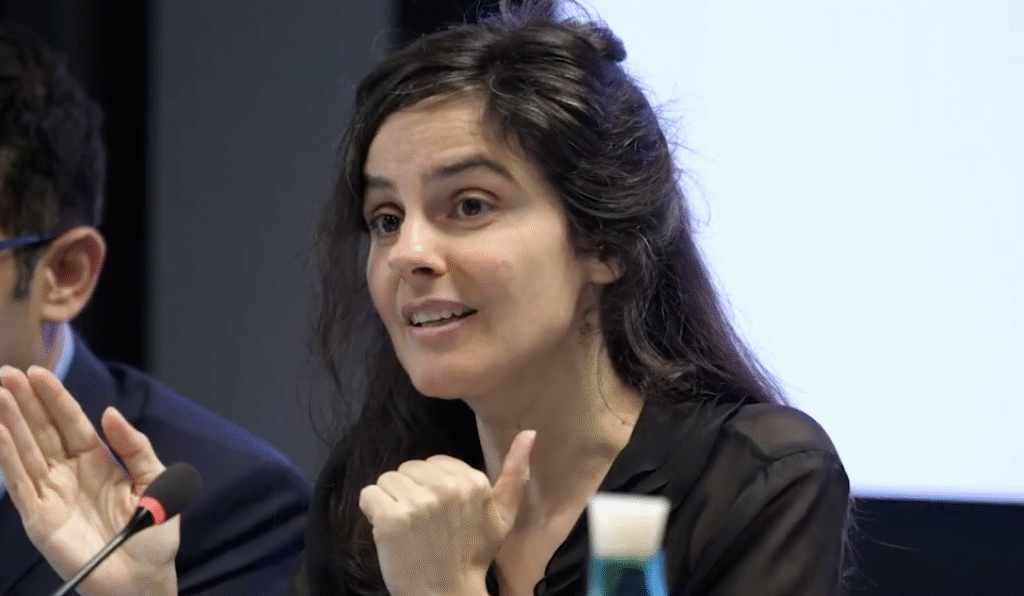
Teresa Nobre outlines a chilling range of practices by publishers to try to restrict the ability of researchers to conduct computational research. From ‘choice of law’ clauses which seek to circumvent EU law, to increased liability and penalties on libraries which fail to police their users. Nobre suggests a series of urgent measures to tip the balance back in favour of libraries and their users, and ultimately in favour of the right to research. This presentation was delivered at the User Rights meeting in Geneva on 17 June 2025. The full text is available below. The transition to licensing We have transitioned from a sales-based model in printed publications to a licence-based model in digital publications. What happens is that even if you have a fit-for-purpose framework that allows libraries to make certain uses of copyrighted works, they still need to rely on licences to have a first access to the material, and that gives publishers a lot of power in determining what libraries can and cannot do with the licensed materials, even if you have exceptions that allow them to make certain uses. Communia’s research We know that these licences tend to be subject to confidentiality agreements, which means that we don’t know what are the terms of these licences.  Communia is a non-profit based in Brussels, we have been involved in copyright reform for many years, we have been coming to the SCCR for many years, and we decided in February this year, we invited licensing managers, so people that are from the library sector, public library and academic library sector in Europe, we invited them to come to Brussels and we held a Chatham House rules meeting. We also invited the European Commission to attend this meeting and observe this meeting. And this environment where people could not attribute each other was the right environment for licensing managers to come and talk about the issues that they are facing with the licences, so the unfair licensing practices, the unfair terms that they are being subject to. So I will be mentioning some of those practices, and I will start with a very hot topic right now, which is the topic of AI, but also text and data mining for scientific research. Maybe I should also tell you that in addition to inviting librarians to come and talk to us in private, in front of the Commission, we also invited them to share with us in confidence clauses that they considered unfair, clauses that are part of those licensing agreements or licensing offers. Efforts to Circumvent the European TDM Directive Maybe here for those that are not European, I should give you a bit of a legal context of Europe. In Europe, six years ago we passed a new directive that guarantees that researchers in Europe can make text and data mining uses of copyrighted materials for scientific research. So we have a mandatory exception for these research uses. And this mandatory exception is protected against contractual overrides. And what does that mean? It means that if a licence says that you cannot make those uses, you don’t need to follow the licence because the law, the European law, protects you.  And what we realised, and we were very surprised, that publishers were actually concerned about prohibiting these uses in Europe when we have a law that allows these uses and prohibits contractual overrides. But that was indeed the case. So we noticed, and they told us, that since 2023, so place it at the same time where generative AI is raising, suddenly all the contracts are saying library users cannot conduct text and data mining on e-books and e-journals that are available in the libraries.  They cannot conduct any related AI uses with those materials.  ‘Choice of Law’ clauses And surprisingly, what was interesting to see was that, well, they were actually concerned about putting those prohibitions in those contracts, although the law would not allow for those prohibitions, because they could circumvent the EU policy, the EU law, and our contractual overrides prohibition by selecting a law that’s outside of Europe. So we know that ‘choice of law’ is typically a clause that the parties need to negotiate and takes time to negotiate. Everyone wants to choose their own law. But in this case, by choosing a law that’s not the national law where the library is located, meaning that’s not the EU law which would protect these uses against contractual overrides, they are able to circumvent basically the EU law and the prohibition of contractual overrides. And that’s enough. So imagine all of the work that we have done throughout the years to have exceptions in place, exceptions that are protected against contractual overrides, is simply circumvented by a choice of law clause. I’m going to give you an example of what prohibition of AI uses in these licences means. And, you know, there’s different ones. And you can see in our report, we gave some examples of it. Prohibition of AI-enabled browsers But publishers go as far as prohibiting the use of browsers with connected AI functionality. People, nowadays, there’s no browsers that do not use AI.  And publishers are prohibiting the library users from using browsers with AI functionality. This is how far it goes. We saw different variations of this. For instance, you see one that’s very simple, straightforward. You cannot conduct text and data mining, which is exactly what the EU law allows you to do. And when it comes to the choice of law, I think typically what we are seeing is that they are choosing U.S. law, maybe because the U.S. law right now, it’s not very clear if it allows these sort of uses or not. If it’s a UK publisher, they will select the U.K. law, which also doesn’t permit as many text and data mining uses as the EU law. So this is the first, let me say, the first category of obstacles and really
Artificial Intelligence, Blog

The Great Flip: Can Opt-Outs be a Permitted Exception? Part II

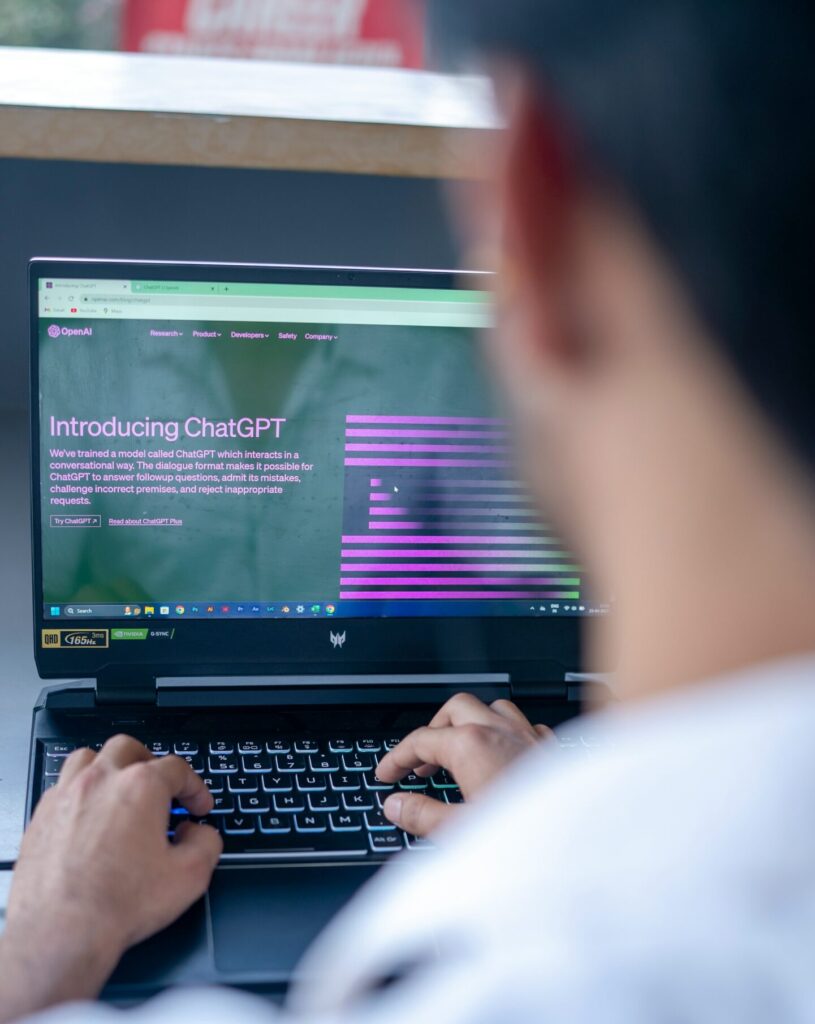
By Lokesh Vyas and Yogesh Badwal. This post was originally published on Spicy IP. In the previous part, we examined whether the opt-out mechanism, as claimed in Gen-AI litigations, constitutes a prohibited formality for the “enjoyment and exercise” of authors’ rights under Article 5(2) of the Berne Convention. And we argued no. In this post, we address the second question: Can opting out be permitted as an exception under the three-step test outlined in Article 9(2)? If you haven’t seen the previous post, some context is helpful. (Or, you can skip this part) As we mentioned in the last post, “Many generative AI models are trained on vast datasets (which can also be copyrighted works) scraped from the internet, often without the explicit consent of content creators, raising legal, ethical, and normative questions. To address this, some AI developers have created and claimed “opt-out mechanisms,” allowing copyright holders or creators to ask that their works not be used in training (e.g., OpenAI’s Policy FAQs).  Opt out under the Copyright Exception A  question arises here: What are the other ways opt-out mechanisms can be justified if the states want to make a mechanism like that? One may say that opt-outs can be valid under the Berne Convention if an exception (e.g., an AI training exception with an inbuilt opt-out possibility) passes the three-step test. And this way, opt-outs can be regarded as a legitimate limit on holders’ exclusive rights. For reference, the three-step test was created in the 1967 revision conference, later followed in Article 13 of TRIPS and Article 10 of WCT. The test creates a room for the nations to make certain exceptions and limitations. Article 9(2) authorises the member countries “to permit the reproduction” of copyright works in 1.) “certain special cases, provided that such reproduction 2.) does not conflict with a normal exploitation of the work and 3.) does not unreasonably prejudice the legitimate interests of the author”.  Although we don’t delve into the test, how opting out can be a part of an exception can be understood from an example. For instance, as Ginsburg exemplifies, if a country states that authors lose their translation rights unless they explicitly reserve or opt out of them, it would violate Article 5(2) because such rights under Berne must apply automatically, without formalities. This actually happened with Turkey in 1931, whose application for membership was rejected due to the condition of deposit for translation rights in its domestic law. (See Ricketson and Ginsburg’s commentary, paragraph 17.18.)  But if an exception (like allowing radio retransmissions in bars) already complies with Berne’s provisions and applies equally to all authors, then letting authors opt out of that exception would give them more rights than Berne requires. And this should be permissible.  Notably, introducing an exception, such as for AI training, must first pass the three-step test. Opt out can be built therein. However, remember that every exception presupposes a prima facie infringement. Within that frame, the opt-out offers the author a chance not to lose. Thus, it creates an inadvertent expansion of her rights beyond the convention.  Additionally, opt-out can fare well with the three-step test due to the factor of “equitable remuneration to authors.” As Gompel notes in his piece, “…‘opt out’ eases compliance with the three-step test because it mitigates some of the adverse effects of the proposed copyright exception. That is, it enables authors to retain exclusivity by opting out of the compensation scheme.”  Another question also exists: Did Berne contain particular provisions that directly allowed an opt-out arrangement? Well, the answer is Yes. Does opting out equal the right to reserve under Article 10bis? Not really. Setting aside the debate over formality and the three-step test, the Berne Convention contains an opt-out-style provision, albeit limited, where authors must explicitly reserve their rights to avoid specific uses of their work. Relevant here is Article 10bis of the Convention, which allows member countries to create exceptions for the reproduction of works published in newspapers on, among other topics, current economic, political, or religious issues. However, it also allows the authors to ‘expressly reserve’ their work from reproduction. Indian Copyright Act, 1957 also contains a similar provision in Section 52(1)(m). Interestingly, the right to reserve exploitation has been part of the Berne Convention since its earliest draft. It first appeared in Article 7 alongside the provision on formalities, which was numbered Article 2 in the draft. Article 7 became Article 9(2) in 1908, when formalities were prohibited and the no-formality rule entered the Berne Convention.  This historical pairing raises a strong presumption: opting out of a specific mode of exploitation cannot automatically be deemed a prohibited formality. Ginsburg confirms this, citing the 1908 Berlin Conference, which clarified that the reservation/opt-out clause (then Article 9(2)) was not considered a formality. But can this special setting (created in Article 10bis(1)) be used to open the door for general opt-out AI exception measures by countries? We doubt it. As the negotiation history of the 1967 revision conference suggests, Article 10bis(1) is a lex specialis, i.e., a narrow and specific exception (See page 1134 of Negotiations, Vol. II). This means that it may derogate from the general no-formalities rule, but it cannot serve as a model for broader declaratory measures.  Conclusion The upshot is that opt-outs may be de facto formalities. However, not all formalities are prohibited under the Berne Convention. The convention enables countries to make some formalities on “the extent of protection.” Three key points emerge from this discussion: One, opting out may not be a formality that prevents the enjoyment and exercise of rights, as Gompel and Sentfeln confirm, and Ginsburg argues otherwise. Two, it can be a part of an AI training exception if such an exception can pass the three-step test. When applying this test, opting out would support the factor of equitable remuneration. Three, Article 10(bis) on the right to reserve cannot be read expansively. While it can be used to justify the three-step test as Sentfleben does, it might not be extended generally. Okay. That’s it from our end. À bientôt’ Primary Sources:-

Scroll to Top