Centre_News

Blog, WIPO

Time for an IP Reset to Protect Health, Education, Creativity and Traditional Knowledge?

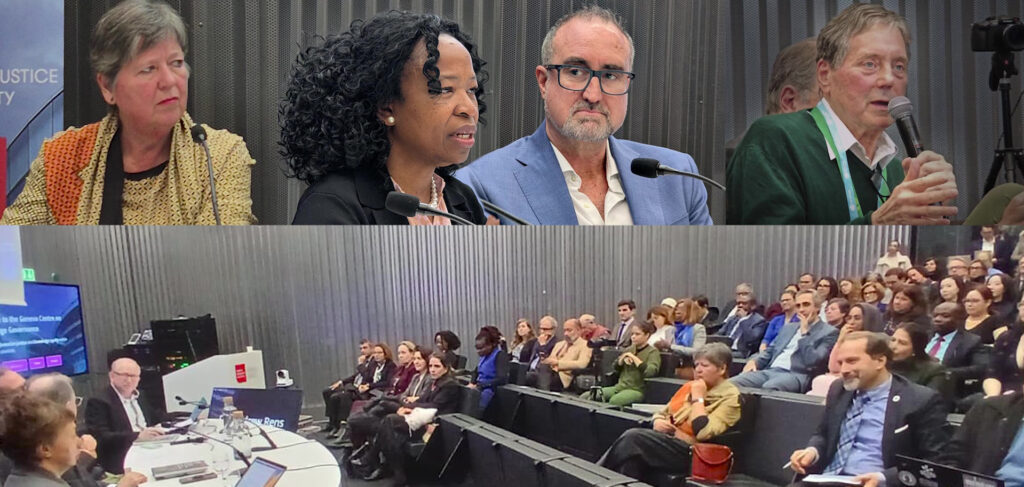
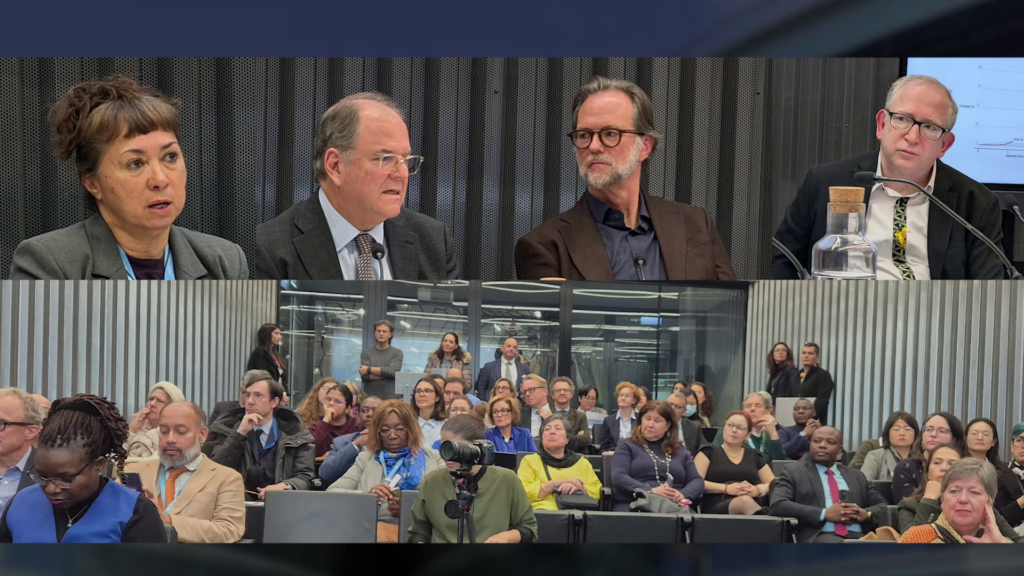
It’s time to put people back into the Intellectual Property system. Currently IP tends to reproduce inequality. IP should support public goods such as health and education. We need to address substitution of creators and markets by AI and we should promote solutions like Public AI to protect research and cultural diversity. The profits earned through the monopoly power of IP should be ‘de-linked’ from the incentive to invest in R&D or creativity, especially in health. Most of all, we need accountability back in the system. These were a few of the recommendations offered by a high-level panel of international professors, top government representatives and practitioners at the recent launch of the Centre on Knowledge Governance at the Geneva Graduate Institute on 3 Dec 2025. The discussion covered many of the topical issues currently being negotiated at the World Intellectual Property Organization (WIPO) and the World Health Organisation (WHO). Disclosure of Traditional Knowledge Former WIPO senior director Wend Wendland talked about his new book which details the long journey to adopt a Treaty on Genetic Resources and Associated Traditional Knowledge (TK), finally passed in 2024 and which requires the disclosure of TK in patent applications, a rare win for marginalised people in the formal IP system. Valmaine Toki, a Maori rights advocate, praised the treaty but said it will remain an imperfect victory until indigenous people have a full seat at the table in fora like WIPO to ensure full benefit sharing in the exploitation of their knowledge.  Remuneration Guilherme Patriota, Brazil’s Ambassador to the WTO said that creativity and innovation, especially in the age of AI, should not be a ‘winner takes all’ scenario skewed towards the interests of large corporations.  The creator of Brazil has a huge music industry, very popular, also very valuable in many ways like many other countries of the South. Actually, it’s kind of a wealth of the South. Nigeria has a huge film and music industry as you do in South Africa. What’s going to happen to that? Is that all going to be fed for free into systems for large language models and AI and they will start to replicate similar types of music? I think individuals should have the rights of remuneration for their individual work and contribution. So that’s what we’re looking for. Make it more human, make the system more human. Harvard Law Professor Ruth Okediji argued that the failure to reward creators is a problem throughout the IP system: The innovators behind the COVID-19 vaccine are not the ones getting the royalties. The employees in the big intermediaries are not the ones getting the remuneration. It’s not just indigenous communities. It’s not just women. It’s not just small and medium enterprises. The entire ecosystem is structured around private arrangements that make equitable dissemination [of benefits] difficult… AI is bringing us to this moment of confrontation in more explicit ways. Let’s remember that it’s not just the scraping of music or the scraping of data. There are labourers in developing countries who are painstakingly, for very little money, involved in this [production of AI models]. There are environmental costs of these large language models and those costs will be borne disproportionately.  So I think to echo something Ambassador Patriota said, this [inequality] is in the DNA of the system. Access to Medicines Participants also talked about the impact of IP monopolies on access, especially to public goods. Leading health advocate Ellen ‘t Hoen expressed disappointment that the IP lessons learnt by the Access to Medicines movement which fought successfully for affordable AIDS medicines in the 1990s were not applied during the Covid19 pandemic.  The vaccines, the COVID-19 vaccines were largely developed with fast, vast amounts of public financing. …That’s exactly what you want. If a crisis hits like that, you want governments to act and spend money in order to solve it. But what they failed to do was attach conditions to that financing. Those conditions could have, for example, been licensing  know-how through the Coronavirus Treatment Acceleration Program (CTAP) or the Medicines Patent Pool. That did not happen. So the IP was quite strong, and the companies at the end of the day became the ones who decided where the vaccines would go, and the vaccines went to the highest bidders. There is the famous case of Canada buying three times the size of its population, while about five people were vaccinated in sub-Saharan Africa.  James Love of Knowledge Ecology International added the problem of global scale: I think we have to really think hard about how you produce works, produce inventions, produce products as public goods in a world where markets are global. They’re not just national. Governments can sort of do public goods at the national level. They have really been bad at doing it at the global level. And I think that proposals like the idea of de-linking the incentive for drug development from the price of the drug, or the idea of a WTO agreement on the supply of public goods, those things are really, really important today. Limitations and Exceptions Ruth Okediji described Limitations and Exceptions to Copyright in a similar vein: There are public goods for which limitations and exceptions are critical. Education would be an example. Every country needs limitations and exceptions that address what happens in the classroom. So I’d say limitations and exceptions for education are super important. We have limitations, for example, for innovation purposes, reverse engineering, decompilations, when it comes to software. This is important in order to both promote interoperability but also to understand what’s behind the hood when you’re looking at a particular technical invention. So I think identifying the category of limitations and exceptions is important and then discerning whether that is a category that at the multilateral level can facilitate consensus because it is the kind of knowledge good for which all countries have a common concern. Archivists are another example. The role of libraries, another example.  Okediji went on to characterise

Blog, Centre News

Centre Launches with Top Thinkers; Video available.

At a packed event at the Geneva Graduate Institute on 3rd December 2025, the Centre on Knowledge Governance held its official launch. The launch featured top thinkers and high level government representatives, with a focus on the future of the Intellectual Property system. The full video of the event is now available to view online. After an introduction by Centre Director Sean Flynn, the event featured the launch of a new book by Wend Wendland, entitled The Journey to the WIPO Treaty on Genetic Resources and Associated Traditional Knowledge. Joining Professor Wendland were His Excellency Ambassador Patriota of Brazil and Maori rights activist, Valmaine Toki. A second panel discussed the future of the IP system, with high level contributions by Harvard Professor Ruth Okediji and Medicines advocate Ellen ‘t Hoen. The event was moderated by Ben Cashdan, a filmmaker from South Africa and former advisor in the office of President Nelson Mandela.

Blog, Centre News

Centre Announces New Advisory Board, Fellows and Faculty Advisors

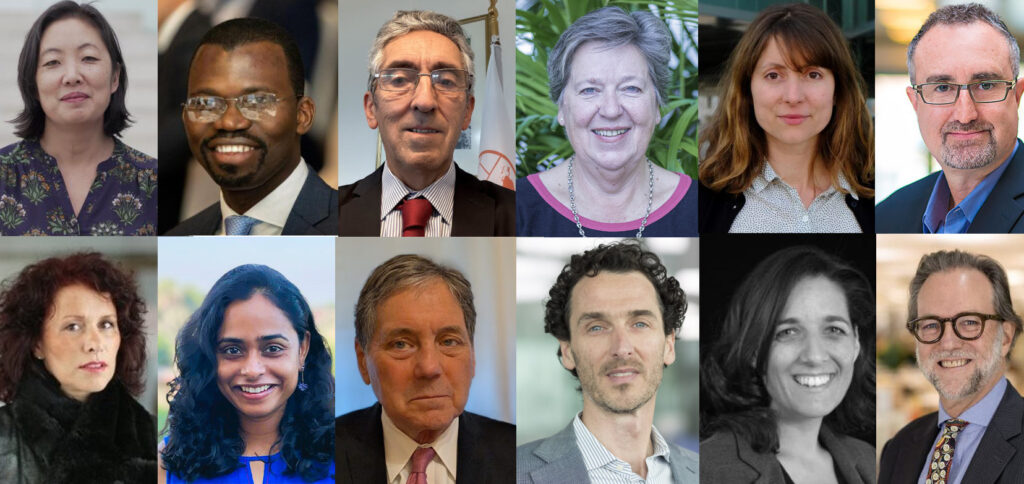
At the launch of the Centre on 3rd December 2025 at the Geneva Graduate Institute, Centre Director Sean Flynn announced new appointments to the advisory bodies of the Centre, including prominent high profile international scholars and thinkers. Advisory Board Joining the top level advisory board are: James Love, Director of Knowledge Ecology International. He advises UN agencies, national governments, international and regional intergovernmental organizations and public health NGOs, and is the author of a number of articles and monographs on innovation and intellectual property rights. Ellen ‘t Hoen, a lawyer and public health advocate. From 1999 until 2009 she was the director of policy for Médecins sans Frontières’ Campaign for Access to Essential Medicines. In 2009 she joined UNITAID in Geneva to set up the Medicines Patent Pool (MPP). She was the MPP’s first executive director until 2012. From 2014 to 2025 she served as the Director of Medicines Law & Policy. Carlos Correa, the Executive Director of the South Centre. He began his term as South Centre Executive Director on 1 July 2018. Prior to this, he was the Special Advisor on Trade and Intellectual Property of the South Centre. Dr. Correa is a renowned international authority on intellectual property and technology issues. Fellows Our inaugural senior fellows are: Wend Wendland, a lawyer from South Africa who has more than 30 years’ experience in intellectual property, in both the private and public sectors. As a Director of the World Intellectual Property Organization (WIPO) for many years until June 2025, he devoted himself to multilateral norm-setting and capacity-building. Wendland is the author of The Journey to the WIPO Treaty on Genetic Resources and Associated Traditional Knowledge Maja Bogataj Jančič, the founder and head of the Intellectual Property Institute (IPI), a private research, training and consulting institution based in Ljubljana, Slovenia.Maja is also the founder and head of the Open Data and Intellectual Property Institute ODIPI. Her recent work focuses on open science, open data, data governance and artificial intelligence, as well as open science issues and the legal framework of copyright and data for research and science. Affiliated Faculty In addition to the Advisory Board and Senior Fellows, the Centre has announced affiliated faculty members from the Geneva Graduate Institute, as follows: Suerie Moon, Co-Director, Global Health Centre. Moon combines academically rigorous research and analysis with policy relevance and impact. Her theoretical contributions to the field include conceptualizing the global health system, defining the functions the system must perform to adequately protect public health, global public goods for health, and identifying the types of governance gaps and power disparities that contribute to health inequity.  David Rodogno, Professor, International History and Politics, Head of Interdisciplinary Programmes, Academic Advisor, Executive Certificate in Advocacy and International Public Affairs. Dr Rodogno was a Research Fellow at the London School of Economics (2002-2004), Foreign Associate Researcher at the Institut d’Histoire du Temps Présent in Paris (2004-2005), RCUK Academic Fellow at the School of History, University of St Andrews (2005-2010), and SNSF – Research Professor (2008-2011). Joost Pauwelyn, Professor of International Law at the Graduate Institute and Co-Director of the Institute’s Centre for Trade and Economic Integration (CTEI). He is also the Murase Visiting Professor of Law at Georgetown University Law Center (since 2014). Joost specializes in international economic law, in particular trade law and investment law, and its relationship to public international law. He also a leading force behind the global www.tradelab.org network of legal clinics on international economic law. Dêlidji Eric DEGILA, Professor of practice of International Relations, Interdisciplinary Programmes and Visiting Faculty in the Department of Political Science and International Relations at the Geneva Graduate Institute. He is the past Chair of the Global South Caucus, International Studies Association, ISA. His research interests range from international politics to African peace and security challenges, diplomacy, migration, and health issues in the Global South. Annabelle Littoz-Monnet, Professor of International Relations and Political Science. Before joining the Institute in 2009, Annabelle Littoz-Monnet was Assistant Professor at the Central European University, Budapest (2005-2009). She has also worked for the Socio-Legal Studies Centre at Oxford University and as a Research fellow at the Royal Institute of International Relations, Brussels (2004-2005). Neha Mishra, Assistant Professor in the international law department of the Geneva Graduate Institute. She researches international legal issues in the digital economy, focusing on international economic law, data flows/governance, and digital trade, and the interface of international law and emerging digital technologies. Carolyn Deere Birkbeck, the Founder and Executive Director of the Forum on Trade, Environment & the SDGs (TESS), housed at the Geneva Graduate Institute. TESS is dedicated to supporting the multilateral dialogue, inclusive international cooperation, and policy action necessary to align trade and trade policies with the urgent need for environmental action, sustainable development, and just transitions.  For more information about all the people at the Centre on Knowledge Governance, visit the people section of our about page.

Artificial Intelligence, Blog, Centre News

Centre Announces Short Course on Intellectual Property and Artificial Intelligence

The Centre on Knowledge Governance is pleased to announce a new short course on AI and IP to take place in Geneva from September 7-8, 2026. COURSE DESCRIPTION  This intensive two-day course provides a comprehensive, comparative analysis of the evolving legal and policy landscape at the intersection of Intellectual Property (IP) and Artificial Intelligence (AI). Participants will explore pressing legal challenges, including the copyright protection for AI training data, the patentability and copyright of AI-generated outputs, and the balance between proprietary interests and the public interest in research (Text and Data Mining and computational research) and the development of “Public AI.”  The course will feature in-depth comparative analysis of legal frameworks and policy proposals across the European Union (EU), United States (USA), India, Brazil, Singapore, Japan, and in international forums, such as the World Intellectual Property Organization, World Trade Organization and other agencies.  The learning experience will culminate in a practical role-play exercise in which students will draft a model international legal instrument aimed at ensuring fair remuneration for creators while safeguarding the rights of researchers and public interest organizations developing AI infrastructure. This legal instrument will focus on  a range of factors to be used in distinguishing research and public interest uses of AI from commercial competitive uses. LEARNING OBJECTIVES Upon completion of this course, participants will be able to: WHO IS THIS PROGRAMME FOR? This programme is particularly relevant for mid- to senior level practitioners from various organisations working at the intersection of intellectual property and AI policy or scholarship, such as: LECTURERS The Course will be directed by Sean Flynn and Ben Cashdan of the Centre on Knowledge Governance, Geneva Graduate Institute. Guest lecturers will participate in person or online to bring comparative expertise from jurisdictions such as India, Brazil and China and the African continent, in addition to the US and EU. SCHOLARSHIPS 10 scholarships will be available for highly motivated government delegates from developing countries or representatives of public interest organizations who participate in multilateral policy processes on copyright, AI and the rights of researchers. EXPRESSION OF INTEREST (INITIAL APPLICATION) If you are interested in being considered as a student on the course, and/or if you would like to apply for one of our scholarships, please kindly complete the following form:

Blog, Broadcast Treaty, Centre News, WIPO GA, WIPO-SCCR

Centre publishes new analysis on broadcast, limitations and exceptions

This week our research team published a series of new reports. These relate to the work streams in the upcoming Standing Committee on Copyright and Related Rights (SCCR) at the World Intellectual Property Organization (WIPO). Analysis of Agenda Items for WIPO SCCR 47by Sean Flynn This note, which will be presented at the November 25, CKG Workshop on SCCR 47, provides background information, links to recently published research and analysis, and descriptions of the issues that may be addressed in the 47th meeting of the World Intellectual Property Organization’s Standing Committee on Copyright and Related Rights, December 1-5, 2025. It is published as part of the mission of the Centre on Knowledge Governance to produce information and analysis to promote the public interest in multilateral knowledge governance negotiations. The analysis is presented in the order that the items occur on the SCCR 47 Agenda.  Tracing a Century of Broadcasting Rights Debates: 1928–2025Luca Schirru and Sean Flynn This report provides a detailed view of developments concerning broadcasting rights within international copyright law, beginning with the 1928 Rome Revision of the Berne Convention and continuing through the latest SCCR discussions. These SCCR sessions illustrate the ongoing effort to create a new international treaty to update protection for traditional broadcasting and cablecasting against signal piracy, while grappling with complex issues like protection over computer networks and the definition of object and scope. Copyright Limitations and Exceptions in the SCCR: A TimelineLuca Schirru, Ben Cashdan and Sean Flynn The timeline details the progression of discussions within the WIPO SCCR regarding Limitations and Exceptions (L&Es) to copyright. This detailed chronology, spanning from 1996 to 2025, highlights the main proposals, studies, and key milestones concerning L&Es for various sectors, including visually impaired persons, libraries, archives, and educational institutions. It documents the formal inclusion of L&Es on the SCCR agenda, the development of numerous draft treaties and working documents, and the ongoing efforts to reach consensus and implement work programs. Comparison of Proposed Texts on Limitations and Exceptions in SCCR 47Jonathan Band Two new documents have been introduced for the Limitations and Exceptions agenda item: the African Group’s “Proposal on Limitations and Exceptions” (SCCR/47/5) and the Chair’s “Text Proposed” (SCCR/47/8), alongside the earlier U.S. proposal “Limitations for Libraries and Archives” (SCCR/44/5). The tables identify common elements among the three documents and additional areas shared by the Chair and African Group texts, suggesting significant areas of commonality and that further text-based work towards an international legal instrument can start with these documents. Justifications for an Instrument on Copyright Limitations and ExceptionsAditya Gupta and Sean Flynn The authors summarise justifications for an international instrument on limitations and exceptions (L&Es) to copyright, and for expanded limitations and exceptions more generally. The justifications are taken from a review of academic literature. Researchers have posited that such an instrument is necessary to counteract the existing “minimum protection approach” of international treaties, which often prioritizes copyright holders over the public interest, access to knowledge, and competition and development concerns. Is the draft Broadcast Treaty consistent with the General Assembly mandate?Sean Flynn WIPO published a new draft of the proposed Broadcasting Organizations Treaty as SCCR/47/3, which does not differ in its main provisions from previous drafts and raises questions about whether it fulfils the mandate of earlier WIPO General Assemblies. The analysis focuses on substantive changes and controversial provisions, addressing whether there is sufficient “agreement on objectives, specific scope and object of protection”. Four new proposals for SCCR 47Ben Cashdan WIPO has published four new proposals on ways forward for key work streams in the SCCR, scheduled for 1–5 December 2025. The proposals concern exclusive rights for broadcasting organisations, disparities in the remuneration of performers, limitations and exceptions to promote education, research and access to knowledge, and ensuring fair copyright royalties for creators in the digital environment.

Scroll to Top