Centre News

Blog, Centre News

Centre Launches with Top Thinkers; Video available.

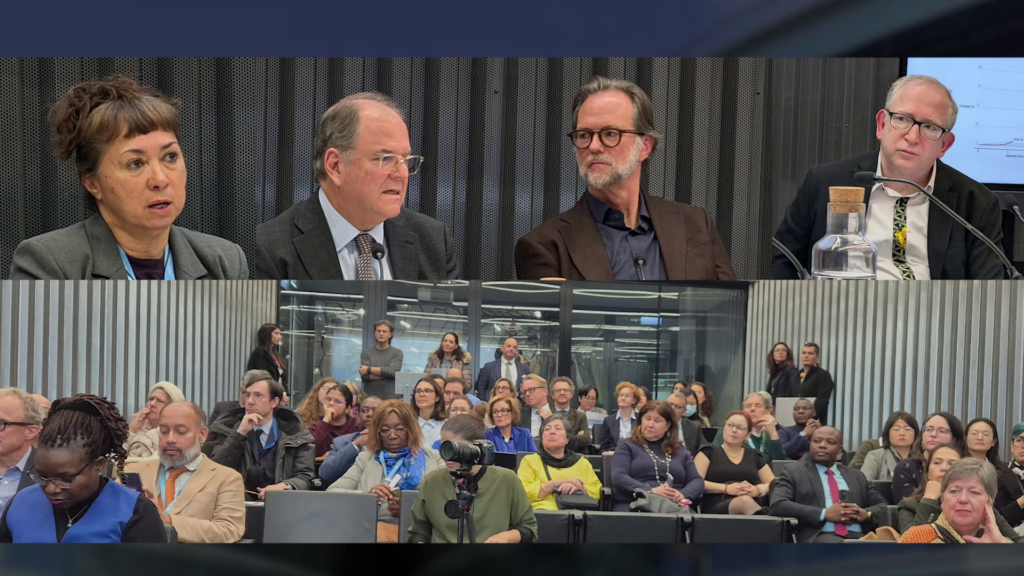
At a packed event at the Geneva Graduate Institute on 3rd December 2025, the Centre on Knowledge Governance held its official launch. The launch featured top thinkers and high level government representatives, with a focus on the future of the Intellectual Property system. The full video of the event is now available to view online. After an introduction by Centre Director Sean Flynn, the event featured the launch of a new book by Wend Wendland, entitled The Journey to the WIPO Treaty on Genetic Resources and Associated Traditional Knowledge. Joining Professor Wendland were His Excellency Ambassador Patriota of Brazil and Maori rights activist, Valmaine Toki. A second panel discussed the future of the IP system, with high level contributions by Harvard Professor Ruth Okediji and Medicines advocate Ellen ‘t Hoen. The event was moderated by Ben Cashdan, a filmmaker from South Africa and former advisor in the office of President Nelson Mandela.

Blog, Centre News

Centre Announces New Advisory Board, Fellows and Faculty Advisors

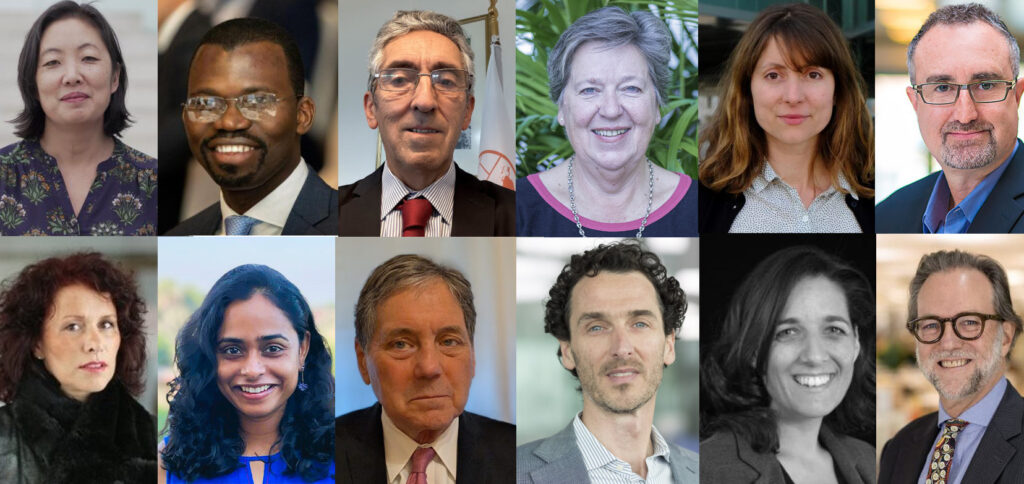
At the launch of the Centre on 3rd December 2025 at the Geneva Graduate Institute, Centre Director Sean Flynn announced new appointments to the advisory bodies of the Centre, including prominent high profile international scholars and thinkers. Advisory Board Joining the top level advisory board are: James Love, Director of Knowledge Ecology International. He advises UN agencies, national governments, international and regional intergovernmental organizations and public health NGOs, and is the author of a number of articles and monographs on innovation and intellectual property rights. Ellen ‘t Hoen, a lawyer and public health advocate. From 1999 until 2009 she was the director of policy for Médecins sans Frontières’ Campaign for Access to Essential Medicines. In 2009 she joined UNITAID in Geneva to set up the Medicines Patent Pool (MPP). She was the MPP’s first executive director until 2012. From 2014 to 2025 she served as the Director of Medicines Law & Policy. Carlos Correa, the Executive Director of the South Centre. He began his term as South Centre Executive Director on 1 July 2018. Prior to this, he was the Special Advisor on Trade and Intellectual Property of the South Centre. Dr. Correa is a renowned international authority on intellectual property and technology issues. Fellows Our inaugural senior fellows are: Wend Wendland, a lawyer from South Africa who has more than 30 years’ experience in intellectual property, in both the private and public sectors. As a Director of the World Intellectual Property Organization (WIPO) for many years until June 2025, he devoted himself to multilateral norm-setting and capacity-building. Wendland is the author of The Journey to the WIPO Treaty on Genetic Resources and Associated Traditional Knowledge Maja Bogataj Jančič, the founder and head of the Intellectual Property Institute (IPI), a private research, training and consulting institution based in Ljubljana, Slovenia.Maja is also the founder and head of the Open Data and Intellectual Property Institute ODIPI. Her recent work focuses on open science, open data, data governance and artificial intelligence, as well as open science issues and the legal framework of copyright and data for research and science. Affiliated Faculty In addition to the Advisory Board and Senior Fellows, the Centre has announced affiliated faculty members from the Geneva Graduate Institute, as follows: Suerie Moon, Co-Director, Global Health Centre. Moon combines academically rigorous research and analysis with policy relevance and impact. Her theoretical contributions to the field include conceptualizing the global health system, defining the functions the system must perform to adequately protect public health, global public goods for health, and identifying the types of governance gaps and power disparities that contribute to health inequity.  David Rodogno, Professor, International History and Politics, Head of Interdisciplinary Programmes, Academic Advisor, Executive Certificate in Advocacy and International Public Affairs. Dr Rodogno was a Research Fellow at the London School of Economics (2002-2004), Foreign Associate Researcher at the Institut d’Histoire du Temps Présent in Paris (2004-2005), RCUK Academic Fellow at the School of History, University of St Andrews (2005-2010), and SNSF – Research Professor (2008-2011). Joost Pauwelyn, Professor of International Law at the Graduate Institute and Co-Director of the Institute’s Centre for Trade and Economic Integration (CTEI). He is also the Murase Visiting Professor of Law at Georgetown University Law Center (since 2014). Joost specializes in international economic law, in particular trade law and investment law, and its relationship to public international law. He also a leading force behind the global www.tradelab.org network of legal clinics on international economic law. Dêlidji Eric DEGILA, Professor of practice of International Relations, Interdisciplinary Programmes and Visiting Faculty in the Department of Political Science and International Relations at the Geneva Graduate Institute. He is the past Chair of the Global South Caucus, International Studies Association, ISA. His research interests range from international politics to African peace and security challenges, diplomacy, migration, and health issues in the Global South. Annabelle Littoz-Monnet, Professor of International Relations and Political Science. Before joining the Institute in 2009, Annabelle Littoz-Monnet was Assistant Professor at the Central European University, Budapest (2005-2009). She has also worked for the Socio-Legal Studies Centre at Oxford University and as a Research fellow at the Royal Institute of International Relations, Brussels (2004-2005). Neha Mishra, Assistant Professor in the international law department of the Geneva Graduate Institute. She researches international legal issues in the digital economy, focusing on international economic law, data flows/governance, and digital trade, and the interface of international law and emerging digital technologies. Carolyn Deere Birkbeck, the Founder and Executive Director of the Forum on Trade, Environment & the SDGs (TESS), housed at the Geneva Graduate Institute. TESS is dedicated to supporting the multilateral dialogue, inclusive international cooperation, and policy action necessary to align trade and trade policies with the urgent need for environmental action, sustainable development, and just transitions.  For more information about all the people at the Centre on Knowledge Governance, visit the people section of our about page.

Artificial Intelligence, Blog, Centre News

Centre Announces Short Course on Intellectual Property and Artificial Intelligence

The Centre on Knowledge Governance is pleased to announce a new short course on AI and IP to take place in Geneva from September 7-8, 2026. COURSE DESCRIPTION  This intensive two-day course provides a comprehensive, comparative analysis of the evolving legal and policy landscape at the intersection of Intellectual Property (IP) and Artificial Intelligence (AI). Participants will explore pressing legal challenges, including the copyright protection for AI training data, the patentability and copyright of AI-generated outputs, and the balance between proprietary interests and the public interest in research (Text and Data Mining and computational research) and the development of “Public AI.”  The course will feature in-depth comparative analysis of legal frameworks and policy proposals across the European Union (EU), United States (USA), India, Brazil, Singapore, Japan, and in international forums, such as the World Intellectual Property Organization, World Trade Organization and other agencies.  The learning experience will culminate in a practical role-play exercise in which students will draft a model international legal instrument aimed at ensuring fair remuneration for creators while safeguarding the rights of researchers and public interest organizations developing AI infrastructure. This legal instrument will focus on  a range of factors to be used in distinguishing research and public interest uses of AI from commercial competitive uses. LEARNING OBJECTIVES Upon completion of this course, participants will be able to: WHO IS THIS PROGRAMME FOR? This programme is particularly relevant for mid- to senior level practitioners from various organisations working at the intersection of intellectual property and AI policy or scholarship, such as: LECTURERS The Course will be directed by Sean Flynn and Ben Cashdan of the Centre on Knowledge Governance, Geneva Graduate Institute. Guest lecturers will participate in person or online to bring comparative expertise from jurisdictions such as India, Brazil and China and the African continent, in addition to the US and EU. SCHOLARSHIPS 10 scholarships will be available for highly motivated government delegates from developing countries or representatives of public interest organizations who participate in multilateral policy processes on copyright, AI and the rights of researchers. EXPRESSION OF INTEREST (INITIAL APPLICATION) If you are interested in being considered as a student on the course, and/or if you would like to apply for one of our scholarships, please kindly complete the following form:

Blog, Broadcast Treaty, Centre News, WIPO GA, WIPO-SCCR

Centre publishes new analysis on broadcast, limitations and exceptions

This week our research team published a series of new reports. These relate to the work streams in the upcoming Standing Committee on Copyright and Related Rights (SCCR) at the World Intellectual Property Organization (WIPO). Analysis of Agenda Items for WIPO SCCR 47by Sean Flynn This note, which will be presented at the November 25, CKG Workshop on SCCR 47, provides background information, links to recently published research and analysis, and descriptions of the issues that may be addressed in the 47th meeting of the World Intellectual Property Organization’s Standing Committee on Copyright and Related Rights, December 1-5, 2025. It is published as part of the mission of the Centre on Knowledge Governance to produce information and analysis to promote the public interest in multilateral knowledge governance negotiations. The analysis is presented in the order that the items occur on the SCCR 47 Agenda.  Tracing a Century of Broadcasting Rights Debates: 1928–2025Luca Schirru and Sean Flynn This report provides a detailed view of developments concerning broadcasting rights within international copyright law, beginning with the 1928 Rome Revision of the Berne Convention and continuing through the latest SCCR discussions. These SCCR sessions illustrate the ongoing effort to create a new international treaty to update protection for traditional broadcasting and cablecasting against signal piracy, while grappling with complex issues like protection over computer networks and the definition of object and scope. Copyright Limitations and Exceptions in the SCCR: A TimelineLuca Schirru, Ben Cashdan and Sean Flynn The timeline details the progression of discussions within the WIPO SCCR regarding Limitations and Exceptions (L&Es) to copyright. This detailed chronology, spanning from 1996 to 2025, highlights the main proposals, studies, and key milestones concerning L&Es for various sectors, including visually impaired persons, libraries, archives, and educational institutions. It documents the formal inclusion of L&Es on the SCCR agenda, the development of numerous draft treaties and working documents, and the ongoing efforts to reach consensus and implement work programs. Comparison of Proposed Texts on Limitations and Exceptions in SCCR 47Jonathan Band Two new documents have been introduced for the Limitations and Exceptions agenda item: the African Group’s “Proposal on Limitations and Exceptions” (SCCR/47/5) and the Chair’s “Text Proposed” (SCCR/47/8), alongside the earlier U.S. proposal “Limitations for Libraries and Archives” (SCCR/44/5). The tables identify common elements among the three documents and additional areas shared by the Chair and African Group texts, suggesting significant areas of commonality and that further text-based work towards an international legal instrument can start with these documents. Justifications for an Instrument on Copyright Limitations and ExceptionsAditya Gupta and Sean Flynn The authors summarise justifications for an international instrument on limitations and exceptions (L&Es) to copyright, and for expanded limitations and exceptions more generally. The justifications are taken from a review of academic literature. Researchers have posited that such an instrument is necessary to counteract the existing “minimum protection approach” of international treaties, which often prioritizes copyright holders over the public interest, access to knowledge, and competition and development concerns. Is the draft Broadcast Treaty consistent with the General Assembly mandate?Sean Flynn WIPO published a new draft of the proposed Broadcasting Organizations Treaty as SCCR/47/3, which does not differ in its main provisions from previous drafts and raises questions about whether it fulfils the mandate of earlier WIPO General Assemblies. The analysis focuses on substantive changes and controversial provisions, addressing whether there is sufficient “agreement on objectives, specific scope and object of protection”. Four new proposals for SCCR 47Ben Cashdan WIPO has published four new proposals on ways forward for key work streams in the SCCR, scheduled for 1–5 December 2025. The proposals concern exclusive rights for broadcasting organisations, disparities in the remuneration of performers, limitations and exceptions to promote education, research and access to knowledge, and ensuring fair copyright royalties for creators in the digital environment.

Blog, Centre News, Traditional Knowledge

A Paradigm Shift with an Uncertain Future: Prof Wend Wendland on the WIPO Treaty on Genetic Resources and Associated Traditional Knowledge

On 25 September 2025, Professor Wend Wendland, delivered the 14th Peter Jaszi Distinguished Lecture at American University in Washington D.C.. The event was hosted by the Program on Information Justice and Intellectual Property. For over 25 years at WIPO, Prof. Wendland played a critical role in the area of traditional knowledge, including as the Director of the Traditional Knowledge Division and Secretary of the Intergovernmental Committee (IGC). His lecture, titled “Beyond Adoption: Why it Matters and What’s Next for the WIPO Treaty on IP, Genetic Resources and Associated Traditional Knowledge?”, celebrated the recent adoption of this landmark agreement. In his lecture, Professor Wendland described the Treaty as a ‘historic’ event and a ‘paradigm shift’ in intellectual property. He highlighted that it is the first international IP treaty championed by developing countries and Indigenous Peoples, making them policy-makers rather than policy-takers. The Treaty’s core feature is a new mandatory requirement for patent applicants to disclose the origin of genetic resources and associated traditional knowledge. This aims to combat biopiracy and reconcile innovation with biodiversity conservation and equitable benefit-sharing. This transparency is expected to improve the patent system’s quality and efficacy, while also contributing to environmental, economic, and social justice by acknowledging the role of Indigenous Peoples as stewards of biodiversity. Despite his enthusiasm, Wendland acknowledged the Treaty’s limitations, noting that it does not create new rights in traditional knowledge, and does not directly ensure compensation for provider countries and Indigenous Peoples. It represents what could be agreed upon by consensus after a 25-year struggle, demonstrating strategic pragmatism. The adoption itself is significant, marking a step forward in the evolution of the IP system and providing a platform for a more inclusive conversation about the future of IP. However, Wendland cautioned that the treaty’s adoption alone is not enough; its true significance will depend on its practical implementation and effectiveness. Finally, Wendland discussed the path forward, stressing the immediate need for the Treaty to come into force, which requires ratification by 15 countries. He expressed concern that this process might be slower than hoped, with some major countries like the USA, Japan, and the Republic of Korea opposing the treaty, and others like India and China not yet signing it. Potential hurdles for ratification include political reluctance to recognise Indigenous Peoples, conflicts with existing national laws, and pressure from trading partners. Wendland concluded by urging policymakers, patent offices, and the international community to work towards bringing the Treaty to life, ensuring its paradigm-shifting potential is realised in practice. Watch the full presentation here.

Centre News

Tracking AI for Good in the Global South: Our TDM Case Studies are Online

The Geneva Centre on Knowledge Governance has been researching cases of Computational Research (or Text and Data Mining) aimed at public interest outcomes in Africa, Latin America and elsewhere. From a health chatbot in South Africa to a culturally-sensitive LLM for Chile and Latin America, we document the work of AI developers, especially in the Global South. This is part of our work to analyse whether and how copyright and AI policies need to contain provisions which consider the social impact of AI. See our Case Studies on Text and Data Mining.

Centre News

How will Gen-AI lawsuits Impact Copyright? We Help You Keep Track.

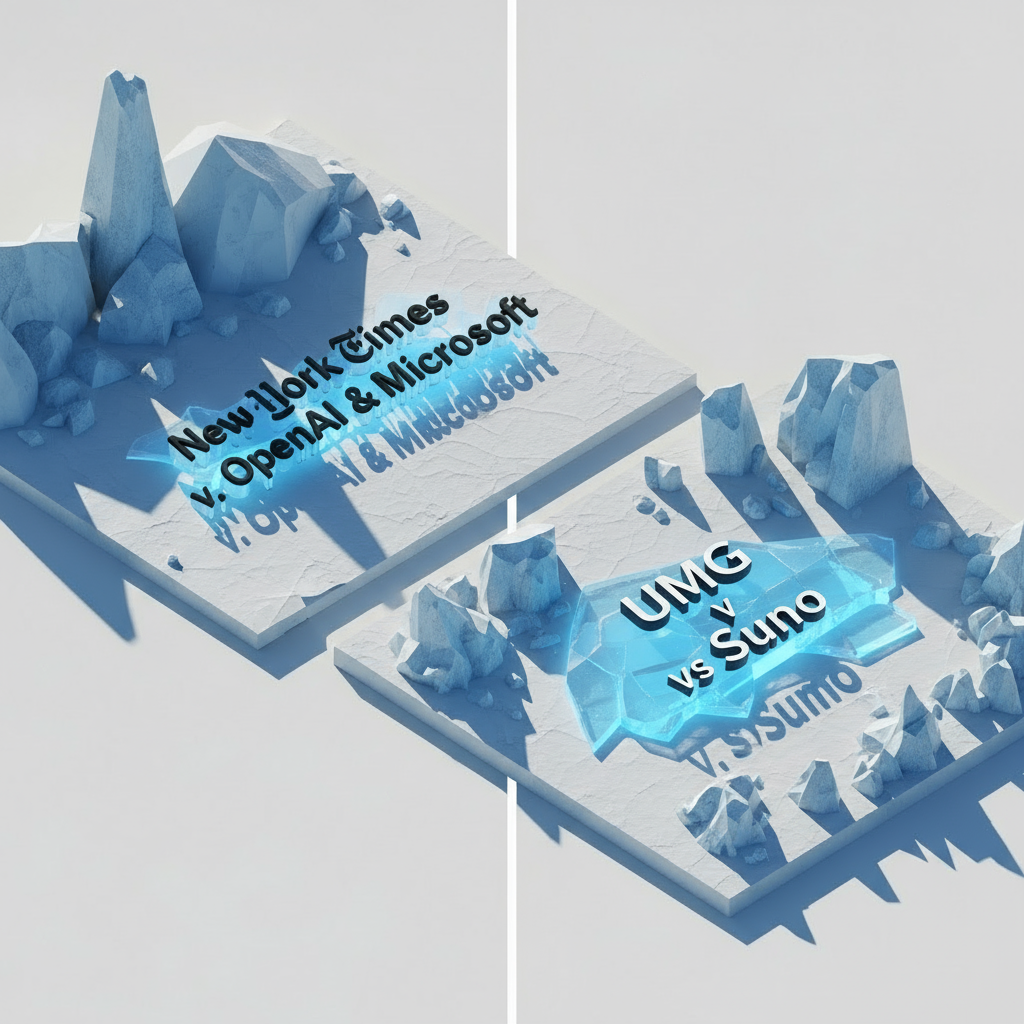
Are you trying to keep track of all the litigation by rights holders and creators against Generative AI companies? Litigation is under way covering a range of works, from musical compositions to books and journalism. In some cases the arguments presented and judgements handed down in these cases may begin to define the likely policy direction for copyright in the age of AI. In the first of a series of articles and papers on this topic, Geneva Centre counsel Andrés Izquierdo wrote an Infojustice blog entitled AI, Copyright, and the Future of Creativity: Notes from the Panama International Book Fair. Watch this space for more.

Centre News

It is Official: The Centre will Launch between September and November 2025

It is official – the Centre on Knowledge Governance will be launching in the coming months. In September and October 2025 we expect to publish some of our new research, including our case studies of Computational Research and AI for Good in the Global South. In November and December we will be present at the upcoming WIPO meetings, including the CDIP and SCCR47. Watch this space for announcements and for special events in Geneva and online. See our calendar for all upcoming events: https://knowledgegov.org/events/

Scroll to Top